

Patient Basics: Pain
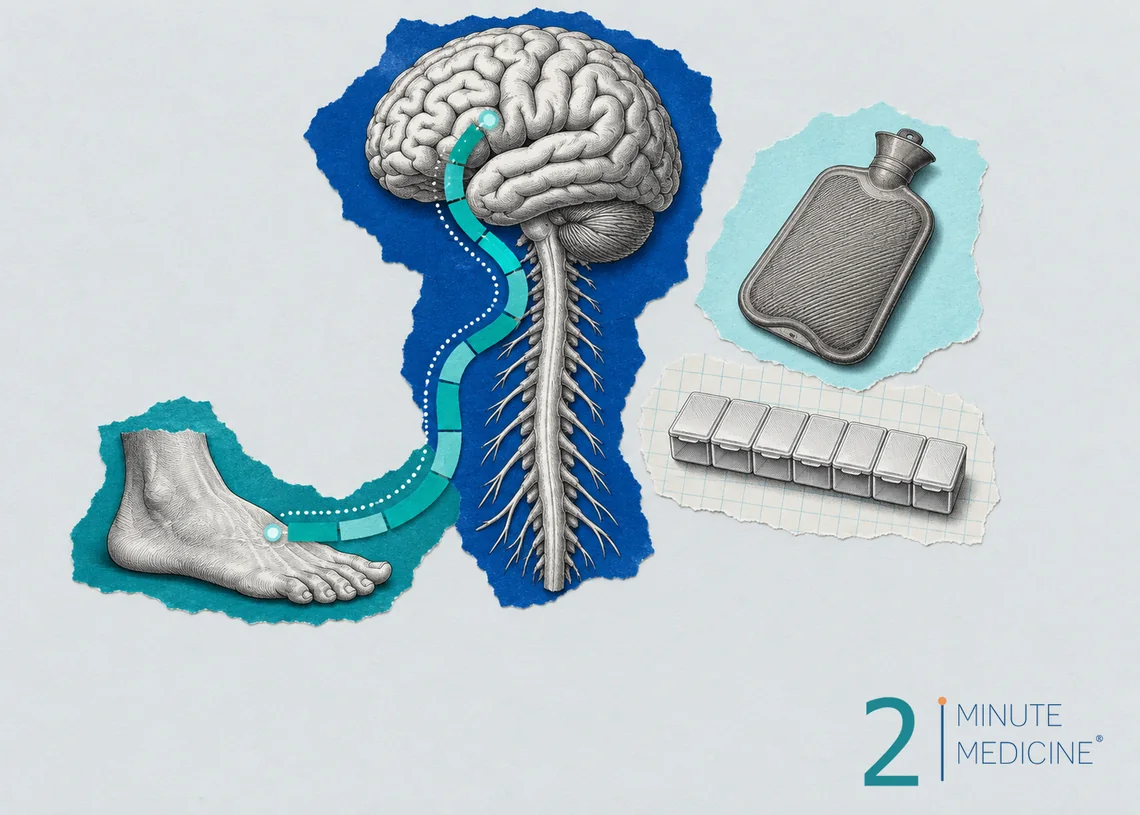
Pain is the body’s alarm system. Nerves send signals to the brain when tissue is hurt or at risk, and the brain decides how much it hurts. Short-term pain usually fades as the body heals. Pain that lasts longer than about 3 months is called chronic pain, and it often takes a mix of treatments, with and without medicine, to bring it under control.
Key points
- Acute pain warns you of an injury or illness. Chronic pain can continue after healing, because the nerves and brain stay on high alert.
- Describing your pain clearly helps your doctor find the cause.
- Over-the-counter medicines, heat or cold, movement and physical therapy help many kinds of pain.
- Opioids have a limited role and carry a risk of addiction and overdose.
- Call 911 for sudden, severe pain in the chest, head or belly.
How pain works
Special nerve endings in the skin, muscles, joints and organs react to injury, heat, pressure or swelling. They send signals through nerves to the spinal cord and up to the brain. The brain then decides how strong the pain feels and where it is. Sleep, stress, mood, past experiences and what you expect all change how loud that signal seems. This is why the same injury can hurt more on a bad day.
Types of pain
- Acute pain starts suddenly and has a clear cause, such as a cut, a broken bone, surgery or an infection. It usually eases within days or weeks.
- Chronic pain lasts more than about 3 months. Back pain, arthritis, migraine, nerve damage and fibromyalgia are common causes. About 1 in 5 US adults lives with it.
- Nerve pain (neuropathic pain) comes from damaged or irritated nerves. It often burns, tingles, shoots or feels like electric shocks. Diabetes, shingles, sciatica and chemotherapy can cause it.
- Tissue pain (nociceptive pain) comes from damage or swelling in skin, muscles, bones, joints or organs. It is often aching, throbbing or sharp.
- Pain from an oversensitive nervous system (nociplastic pain) happens when nerves and the brain become overly sensitive and amplify signals, even without clear damage. Fibromyalgia is an example.
- Referred pain is felt in a different place from its source. Heart trouble can cause pain in the jaw or left arm, for example.
Describing your pain to a doctor
There is no blood test or scan that measures pain, so what you say matters. Before your visit, note:
- Where it hurts, and whether it spreads anywhere
- When it started and what you were doing
- What it feels like: sharp, dull, burning, stabbing, throbbing or cramping
- How strong it is on a scale of 0 (none) to 10 (worst you can imagine)
- Whether it comes and goes or is always there
- What makes it better or worse
- How it affects your sleep, work, mood and daily life
- What you’ve tried and whether it helped
Depending on the cause, your doctor may order blood tests, X-rays, an MRI or nerve tests.
How pain is treated
The first step is to treat the cause when there is one. Most pain also responds to a mix of the approaches below.
Medicines
- Acetaminophen (Tylenol) eases mild to moderate pain and fever. Too much can damage the liver, so stay under the daily limit on the label, and check cold and flu products, which often contain it too.
- Nonsteroidal anti-inflammatory drugs (NSAIDs) such as ibuprofen and naproxen ease pain and swelling. They can cause stomach bleeding and kidney problems and raise blood pressure. Ask a doctor before using them if you have heart or kidney disease or ulcers, or take a blood thinner.
- Creams and patches with diclofenac, lidocaine or capsaicin can help joint, muscle or nerve pain in one spot.
- Medicines for nerve pain, such as gabapentin, pregabalin, duloxetine and amitriptyline, calm overactive nerves.
- Opioids, such as oxycodone and morphine, are used for severe short-term pain, such as after surgery, and for cancer pain. They can cause constipation, drowsiness, slowed breathing, addiction and overdose. Keep them locked up and never mix them with alcohol or sleeping pills. Ask about having naloxone, which can reverse an overdose, at home.
- Suzetrigine is a newer non-opioid pill approved in 2025 for short-term, moderate to severe pain.
Treatments without medicine
- Ice for the first day or two after an injury, then heat for stiff muscles and joints
- Physical therapy and regular, gentle exercise such as walking, swimming, yoga or tai chi
- Cognitive behavioral therapy (CBT), which teaches skills to manage pain and the stress that comes with it
- Mindfulness, relaxation and better sleep habits
- Acupuncture, massage or a TENS unit, a small device that sends mild electrical pulses through the skin
Procedures
For some long-term pain, a pain specialist may suggest injections, such as steroid shots into a joint or near the spine, nerve blocks, or an implanted device that sends signals to the spinal cord. Surgery helps when there is a fixable problem, such as a pinched nerve.
Living with chronic pain
With chronic pain, the goal is often to do more of what matters to you, even if some pain remains. Many people do best with a team, such as a primary care doctor, a physical therapist, a psychologist and a pain specialist. Pace your activities, keep moving in small steps, and protect your sleep. Long-term pain is closely tied to depression and anxiety, and treating those can ease the pain too.
If pain leaves you feeling hopeless or thinking about ending your life, call or text 988 for the Suicide & Crisis Lifeline. If you are worried about how you use pain medicines, the SAMHSA helpline at 1-800-662-4357 is free and confidential.
When pain needs urgent care
Call 911 for:
- Chest pain or pressure, especially with shortness of breath, sweating, or pain spreading to the arm, jaw or back
- A sudden, severe headache, or a headache with weakness, confusion or trouble speaking
- Sudden, severe belly pain, or belly pain with a hard, swollen belly
- Pain after a serious injury, or with a limb that looks bent the wrong way
- Back pain with new weakness in the legs or loss of bladder or bowel control
See a doctor soon for pain that lasts more than a few weeks, wakes you at night, keeps getting worse, or comes with fever or weight loss you can’t explain.
Common questions about pain
Why does pain feel worse at night?
At night, there is less to distract you, so the brain pays more attention to pain signals. Lying still can stiffen sore joints, and some conditions flare at night. Poor sleep then makes the next day’s pain worse. Pain that wakes you every night, or comes with fever or weight loss, should be checked.
Can I take ibuprofen and acetaminophen together?
Many adults can, because the two drugs work in different ways and don’t interact. Follow the dose limits for each on the label. Check with a doctor or pharmacist first if you have kidney, liver or heart disease, stomach ulcers, or take a blood thinner.
Why do I still hurt after my injury has healed?
The nervous system can stay on high alert after an injury and keep sending pain signals, even once the tissue has healed. This is called central sensitization, and the pain is real. Gradual exercise, physical therapy, CBT and some nerve pain medicines can help calm the system.
Can stress make pain worse?
Yes. Stress tightens muscles, disrupts sleep and makes the brain more sensitive to pain signals. Anxiety and depression can turn up pain, and pain can worsen mood, so the two feed each other. Relaxation skills, exercise, counseling and treating depression often reduce pain.
Questions to ask your doctor
- What do you think is causing my pain?
- Do I need any tests?
- Which medicines are best for me, and what are their risks?
- Would physical therapy, counseling or a pain specialist help?
- What should I do if the pain gets worse?
Learn more
- Pain (MedlinePlus, U.S. National Library of Medicine)
- Pain (National Institute of Neurological Disorders and Stroke)
This guide is general information and doesn’t replace advice from your own doctor. Last updated October 2026.
RelatedReports







 Get the app