

Patient Basics: Pneumoconiosis
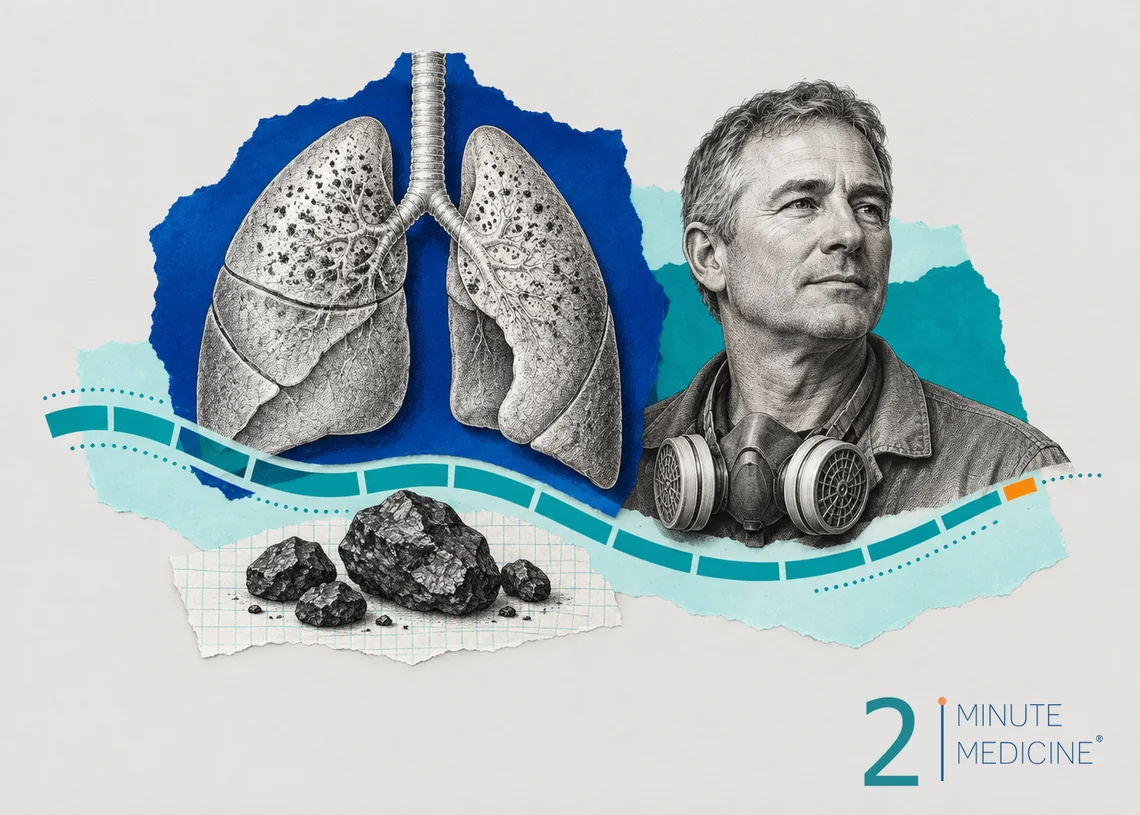
Pneumoconiosis is lung scarring caused by breathing in mineral dust, usually at work, over many years. The best-known types are black lung from coal dust, silicosis from silica dust and asbestosis from asbestos fibers. The damage can’t be undone, and it can keep getting worse after the exposure stops. Dust control and good-fitting respirators can prevent it.
Key points
- It usually takes 10 years or more of exposure to cause disease, but heavy silica exposure can cause it much faster.
- Early pneumoconiosis often causes no symptoms. Cough and shortness of breath come later.
- Your work history, a chest X-ray or CT scan, and breathing tests are the keys to diagnosis.
- There is no cure. Treatment eases symptoms and tries to slow the damage.
- Quitting smoking and avoiding more dust are the most helpful steps.
What causes pneumoconiosis
Tiny dust particles get past the nose and airways and settle deep in the air sacs of the lungs. The body’s cleanup cells try to swallow and remove them but can’t break them down. Over time, the ongoing irritation causes inflammation and scar tissue (fibrosis). Scarred lung is stiff and doesn’t pass oxygen into the blood well.
Common types
- Coal workers’ pneumoconiosis (black lung). Affects coal miners. Cases have risen again in the Appalachian region in recent decades, including severe forms in younger miners. Cutting through rock that contains silica along with the coal is thought to be one reason.
- Silicosis. Caused by crystalline silica in sand, stone, concrete and some manufactured products. People at risk include miners, quarry and foundry workers, sandblasters, construction workers who cut or grind concrete, and workers who cut engineered stone countertops. Engineered stone can cause severe silicosis within a few years.
- Asbestosis. Caused by asbestos fibers, once widely used in insulation, shipbuilding, brake pads and building materials. Disease often appears 20 to 40 years after exposure.
- Less common types come from talc, iron, aluminum, beryllium and hard metals such as tungsten carbide.
Symptoms
- Shortness of breath, first with activity and later at rest
- A cough that lingers, sometimes with phlegm. Coal miners may cough up black mucus.
- Chest tightness
- Tiredness
- In advanced disease, swollen legs and bluish lips from low oxygen and strain on the heart
Related health risks
- Tuberculosis (TB). Silicosis makes TB much more likely.
- Lung cancer. Silica and asbestos both raise the risk, and smoking multiplies it.
- Mesothelioma. A cancer of the lining around the lungs, linked to asbestos.
- COPD. Long-term airway damage that makes breathing harder.
- Kidney and autoimmune disease, such as rheumatoid arthritis, which are more common after silica exposure.
How pneumoconiosis is diagnosed
Tell your doctor about every job you’ve had, including how long you worked and what dust you were around. Tests include:
- Chest X-ray. Small spots or scarring in the lungs. Specially trained readers grade X-rays for dust disease.
- High-resolution CT scan. Shows early or subtle changes more clearly.
- Breathing tests (pulmonary function tests). Show how well the lungs move air and pass oxygen to the blood.
- Oxygen level at rest and during walking.
- TB testing for people with silicosis.
- Biopsy, only now and then, when the cause isn’t clear.
Underground and surface coal miners in the US can get free, regular chest X-rays through a federal health monitoring program run by NIOSH.
How pneumoconiosis is treated
No treatment removes the dust or reverses the scarring. Care focuses on protecting the lung you have and helping you breathe and stay active.
- Stop further exposure. This may mean changing jobs or tasks.
- Quit smoking and avoid secondhand smoke.
- Inhalers can ease wheezing and shortness of breath when the airways are also narrowed.
- Pulmonary rehabilitation, a supervised exercise and breathing program, helps you do more with less breathlessness.
- Oxygen therapy for low oxygen levels.
- Vaccines against flu, pneumonia, COVID-19 and, for older adults, RSV, because lung infections hit harder.
- TB treatment if a test shows TB infection.
- Antifibrotic medicine, such as nintedanib, may be used when scarring keeps getting worse.
- Lung transplant for a small number of people with severe disease.
Prevention at work
- Use water sprays when cutting or grinding (wet methods) and tools with dust collection.
- Make sure there is good ventilation.
- Wear a respirator suited to the dust, fit-tested and worn correctly. A paper dust mask is not enough.
- Don’t eat, drink or smoke in dusty areas, and change out of dusty clothes before going home.
- Take part in medical monitoring your employer offers.
- Leave old asbestos in homes alone. Hire licensed professionals to remove it.
Federal agencies such as OSHA and the Mine Safety and Health Administration set dust limits. Former coal miners with black lung may qualify for federal Black Lung Benefits, and other workers may qualify for workers’ compensation.
When to see a doctor
- A cough or shortness of breath that lasts more than a few weeks, if you’ve worked around dust
- Coughing up blood
- Fever, night sweats or weight loss, which can be signs of TB or cancer
- Breathing that is getting worse
Call 911 for severe trouble breathing, chest pain, or blue or gray lips.
Common questions about pneumoconiosis
Is pneumoconiosis the same as black lung?
Black lung is one type of pneumoconiosis, caused by coal mine dust. Pneumoconiosis is the umbrella term for lung scarring from any mineral dust, including silica (silicosis) and asbestos (asbestosis). The types share symptoms but differ in their other risks, such as TB with silica or mesothelioma with asbestos.
Can pneumoconiosis be cured?
No. The scarring is permanent, and in some people it keeps spreading even after they leave the dusty job. Stopping exposure, quitting smoking, pulmonary rehab and oxygen can help people breathe better and stay active. A lung transplant is an option for a few people with severe disease.
How long does it take to get pneumoconiosis?
Most types take 10 to 20 years or more of regular exposure. Asbestosis often shows up 20 years or more after the first exposure. Very heavy silica exposure, such as cutting engineered stone without water or a respirator, can cause serious silicosis in under 10 years.
Questions to ask your doctor
- What type of pneumoconiosis do I have, and how advanced is it?
- Do I need to change my job?
- Should I be tested for TB or screened for lung cancer?
- Would pulmonary rehab or oxygen help me?
- Who can help me apply for benefits or workers’ compensation?
Learn more
- Coal worker’s pneumoconiosis (MedlinePlus, U.S. National Library of Medicine)
- Silicosis (MedlinePlus, U.S. National Library of Medicine)
This guide is general information and doesn’t replace advice from your own doctor. Last updated October 2026.






 Get the app