

Patient Basics: Retrograde Ejaculation
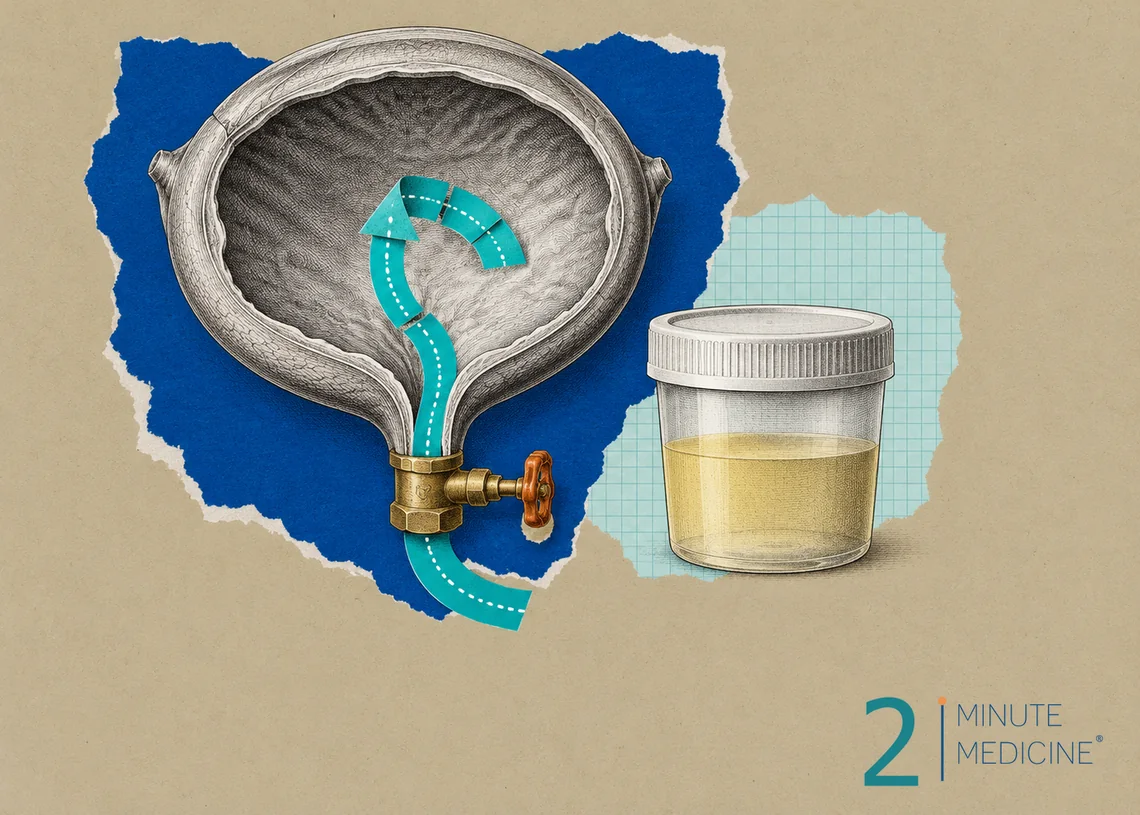
Retrograde ejaculation happens when semen flows backward into the bladder during orgasm instead of leaving through the penis. You still feel the orgasm, but little or no semen comes out. It isn’t harmful to your health. It matters mainly if you want to father a child, and there are good ways to help with that.
Key points
- A muscle at the opening of the bladder normally closes during ejaculation. If it stays open, semen goes into the bladder.
- Common causes are certain prostate and blood pressure medicines, prostate surgery, and nerve damage from diabetes.
- Cloudy urine after sex, and little or no semen, are the main signs.
- A urine test done right after orgasm confirms it.
- Changing a medicine often fixes it. If not, sperm can be collected from the urine for fertility treatment.
How it happens
During ejaculation, semen moves into the urethra, the tube that carries both urine and semen out through the penis. At the same moment, a ring of muscle at the neck of the bladder squeezes shut. This sends the semen forward and out. If that muscle doesn’t close, the semen takes the easier path back into the bladder. It mixes with urine and leaves the body the next time you urinate.
What causes retrograde ejaculation
- Medicines. Alpha-blockers used for an enlarged prostate, such as tamsulosin and silodosin, are a common cause. Some medicines for high blood pressure, depression and mental health conditions can also do it.
- Prostate or bladder surgery. Operations that remove tissue from inside the prostate, such as TURP (transurethral resection of the prostate), often affect the bladder neck. Many men have retrograde ejaculation afterward.
- Nerve damage. Diabetes, multiple sclerosis and spinal cord injury can harm the nerves that close the bladder neck.
- Other surgery. Surgery to remove lymph nodes in the back of the belly, often done for testicular cancer, and some colon or rectal operations can damage these nerves.
Symptoms
- An orgasm with only a few drops of semen, or none (a “dry orgasm”)
- Cloudy urine the first time you urinate after sex or masturbation
- Trouble getting a partner pregnant
Retrograde ejaculation doesn’t cause pain, and it doesn’t affect erections or how orgasm feels for most men. If you have pain, blood in your semen or urine, or trouble getting an erection, something else may be going on.
How it’s diagnosed
Your doctor will ask about your health, past surgeries and every medicine you take, including those bought without a prescription. The main test is simple. You give a urine sample soon after an orgasm. If the lab finds a lot of sperm in it, the diagnosis is confirmed.
Other conditions can also cause low or no semen, such as a blockage in the tubes that carry semen, or a problem where the body doesn’t release semen at all. If no sperm show up in the urine, your doctor may order more tests. You may be sent to a urologist, a specialist in the urinary tract and male reproductive organs.
Retrograde ejaculation treatment
If you don’t plan to have children and the change doesn’t bother you, you may not need treatment. Retrograde ejaculation doesn’t damage the bladder.
Changing a medicine
If a medicine is the cause, your doctor may suggest a different one. Semen often flows normally again within days to weeks of stopping it. Don’t stop a prescribed medicine on your own. Talk with your doctor first.
Medicines that help the bladder neck close
Some medicines can tighten the muscle at the bladder neck. They include pseudoephedrine, a decongestant, and imipramine, an older antidepressant. These work best when the cause is nerve damage, and less well after prostate surgery. They can raise blood pressure or cause other side effects, so take them only as your doctor directs.
Help with fertility
If medicines don’t work, sperm can still be collected. You take a medicine that makes your urine less acidic, which protects the sperm. You then empty your bladder, have an orgasm, and give a urine sample. A lab separates the sperm from the urine. The sperm can be placed in your partner’s uterus (intrauterine insemination) or used for in vitro fertilization (IVF). A fertility specialist can explain the options.
Lowering your risk
Most causes can’t be avoided, but a few steps help:
- Before prostate surgery, ask how likely this side effect is. Some newer procedures for an enlarged prostate are designed to protect ejaculation.
- When starting a medicine for the prostate, ask whether it is known to affect ejaculation and whether another choice would suit you.
- If you have diabetes, keeping blood sugar in your target range lowers the risk of nerve damage.
When to see a doctor
- You notice little or no semen during orgasm
- You and your partner have been trying to get pregnant for a year without success, or six months if your partner is 35 or older
- You have pain with ejaculation, or blood in your semen or urine
Common questions about retrograde ejaculation
Is retrograde ejaculation permanent?
It depends on the cause. When a medicine such as tamsulosin is to blame, normal ejaculation usually returns after you stop it. After TURP or nerve damage, it is often permanent, though medicines that tighten the bladder neck help some men, and sperm can still be collected for fertility treatment.
Is retrograde ejaculation dangerous?
No. It’s a common side effect of some prostate medicines and operations, and it doesn’t harm your health or damage the bladder. The semen leaves your body the next time you urinate. A doctor should still check any new change in your semen, since diabetes or another cause may need treatment.
Can retrograde ejaculation be fixed at home?
There’s no proven home remedy. If you have diabetes, keeping your blood sugar in range helps protect the nerves involved. Pseudoephedrine is sold without a prescription, but it can raise blood pressure and cause other side effects, so use it for this only with your doctor’s advice.
Questions to ask your doctor
- What do you think is causing this?
- Could one of my medicines be the cause, and is there another option?
- Will this go away on its own?
- Do I need treatment if I’m not trying to have children?
- If we want a child, should I see a fertility specialist?
Learn more
- Retrograde ejaculation (MedlinePlus, U.S. National Library of Medicine)
This guide is general information and doesn’t replace advice from your own doctor. Last updated October 2026.






 Get the app