Praziquantel (Biltricide) is associated with higher cure rate than albendazole (Zentel) in the treatment of clonorchiasis
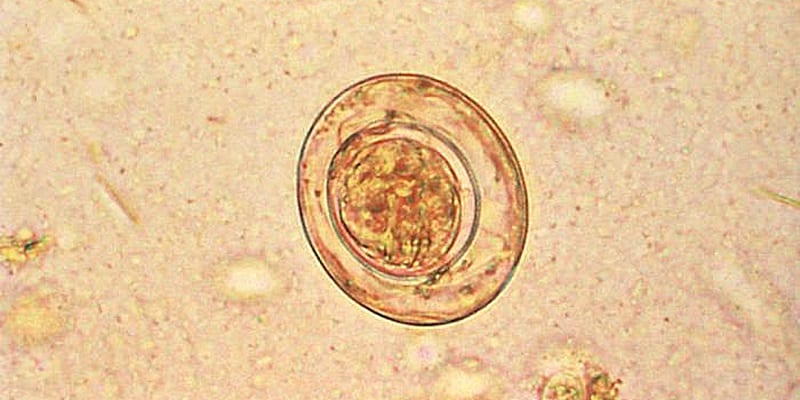
1. In the treatment of Clonorchis sinensis, albendazole (Zentel) demonstrates a high egg reduction rate but a significantly lower cure rate compared to praziquantel (Biltricide).
Evidence Rating Level: 1 (Excellent)
Study Rundown: Clonorchiasis is caused by infection with Clonorchis sinensis, a helminth parasite, and can lead to significant morbidities, including cholelithiasis, cholangitis, cholecystitis, and fatal cholangiocarcinoma. Although it infects over 13 million people worldwide, praziquantel is currently the only recommended medication for treatment. However, praziquantel is associated with a high burden of side effects. Recent studies have investigated the efficacy of albendazole, although evidence remains limited and no randomized controlled trials have compared praziquantel with albendazole.
This study was an open-label phase 2 randomized controlled trial conducted in China from April 2025 to May 2025. Participants included adults aged 18 to 70 years with one C. sinensis egg in at least two of three Kato–Katz thick smears of two stool samples. These patients were stratified into light intensity stratum (eggs per gram of feces (EPG): 1–999) and moderate plus heavy intensity stratum (EPG:≥1000; 1000–9999 for moderate, and ≥10 000 for heavy) and randomized 1:1 to receive either praziquantel (25 mg/kg 3 times daily for 1 day) or albendazole (400 mg twice a day for 4 days) in each intensity stratum. The primary outcomes of this study were the cure status and egg reduction of C. sinensis as measured through two stool samples collected three to four weeks after treatment.
Overall, this study found praziquantel was associated with a significantly higher cure rate compared to albendazole. Both treatments led to a high egg reduction rate. Adverse events were lower in patients in the light intensity stratum receiving albendazole compared to praziquantel.
Click here to read this study in BMC Medicine
Relevant reading: Efficacy of drugs against clonorchiasis and opisthorchiasis: a systematic review and network meta-analysis
In-Depth [randomized clinical trial]: The only recommended treatment for clonorchiasis is praziquantel, which has a high burden of side effects. Although recent trials have explored albendazole for clonorchiasis, evidence is limited, and no studies to date have compared praziquantel and albendazole in a randomized controlled trial. This phase 2 study compared clonorchiasis cure rate and egg reduction in adults with Clonorchis sinensis infection.
This trial included 102 patients who were stratified into light intensity and moderate plus heavy intensity strata. In the light intensity stratum, 26 patients (mean [SD] age, 55.7 [7.0] years; 80.8% male) received praziquantel and 26 patients (mean [SD] age, 51.9 [10.5] years; 76.9% male) received albendazole. In the moderate plus heavy intensity stratum, 25 patients (mean [SD] age, 55.3 [6.5] years; 92% male) received praziquantel and 25 patients (mean [SD] age, 51.2 [8.0] years; 96% female) received albendazole. At follow-up, the cure rates were 84.0% (21/25, 95% CI: 63.9%-95.5%) and 30.8% (8/26, 14.3%-51.8%) in the praziquantel and albendazole groups, respectively, in the light intensity stratum (χ²=14.7, p<0.001). The cure rates were 60.9% (14/23, 38.5%-80.3%) and 8.0% (2/25, 1.0%-26.0%) in the praziquantel and albendazole groups, respectively, in the moderate plus heavy intensity stratum (χ²=15.1, p<0.001). The egg reduction rates were 99.9% (99.7%-
100.0%), 97.1% (94.1%-98.8%), 100.0% (99.9%-100.0%), and 98.9% (97.8%-99.5%), respectively. 33.3% (17/51) of patients in the praziquantel groups and 17.6% (9/51) of patients in the albendazole groups experienced side effects. Common adverse events in the praziquantel groups included fatigue, vertigo, and nausea. There were no major adverse events in either group.
Image: PD
©2026 2 Minute Medicine, Inc. All rights reserved. No works may be reproduced without expressed written consent from 2 Minute Medicine, Inc. Inquire about licensing here. No article should be construed as medical advice and is not intended as such by the authors or by 2 Minute Medicine, Inc.