

Patient Basics: Rocky Mountain Spotted Fever
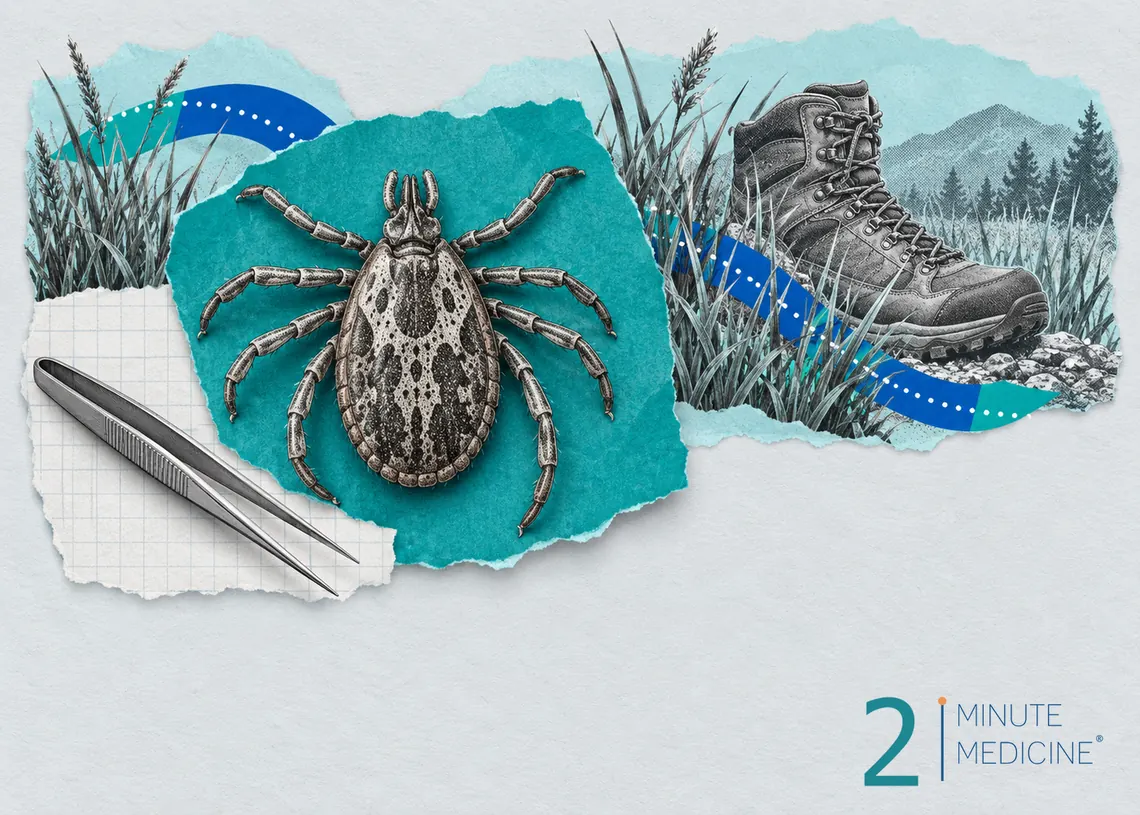
Rocky Mountain spotted fever (RMSF) is a serious bacterial infection that ticks pass to people when they bite. It starts like the flu, with fever and headache, and a spotted rash usually follows a few days later. It can become life-threatening within days, so doctors start the antibiotic doxycycline as soon as they suspect it, without waiting for test results.
Key points
- Despite the name, most US cases come from the Southeast and South Central states, such as Arkansas, Missouri, North Carolina, Oklahoma and Tennessee.
- Symptoms usually start 3 to 12 days after a tick bite. Many people don’t remember the bite.
- The rash often begins around the wrists and ankles. Some people never get a rash.
- Doxycycline is the best treatment for adults and children of all ages. Starting it in the first 5 days matters most.
- There is no vaccine. Preventing tick bites is the best protection.
What causes Rocky Mountain spotted fever
The cause is a bacterium called Rickettsia rickettsii. In the eastern and central US, the American dog tick carries it. In the West, the Rocky Mountain wood tick does, and in parts of Arizona and Mexico, the brown dog tick. When an infected tick feeds, it passes the bacteria into your blood. They infect the cells that line small blood vessels, which leak and become damaged.
Most cases happen from late spring through summer, when ticks are active and people spend more time outdoors. People who live near wooded or grassy areas, and people with dogs that roam outside, have a higher risk. RMSF doesn’t spread from person to person.
Rocky Mountain spotted fever symptoms
Early symptoms
- Fever and chills
- Severe headache
- Muscle aches
- Nausea, vomiting and poor appetite
- Belly pain, which can be mistaken for appendicitis, especially in children
The rash
The rash usually appears 2 to 4 days after the fever starts. It begins as small, flat, pink spots that don’t itch, often around the wrists, forearms and ankles. From there it moves inward over the limbs and body, and it may reach the palms and soles. Around day 5 or 6, the spots can turn into tiny red or purple dots that look like pinpoint bruises. This later rash is a sign of severe illness. On darker skin, the rash can be hard to see.
Severe illness
Without early treatment, RMSF can damage the brain, lungs, heart and kidneys. It can cause confusion, seizures, trouble breathing and shock, and it can be fatal. Some survivors of severe illness have lasting problems such as hearing loss, nerve damage or the loss of fingers, toes or limbs from blocked blood flow.
How it’s diagnosed
Doctors make the first diagnosis from your symptoms and the chance you’ve been around ticks. Tell them about any tick bite, time outdoors, or travel, even if you never saw a tick.
Blood tests can show low platelets, low sodium and liver irritation. An antibody blood test confirms RMSF, but it is often negative in the first week, so a second sample is taken 2 to 4 weeks later. A skin biopsy of the rash or a PCR blood test can sometimes find the bacteria sooner. Treatment should never wait for these results.
How Rocky Mountain spotted fever is treated
Doxycycline, an antibiotic, works best. The CDC recommends it for adults and for children of every age, because the risk from RMSF is far greater than any risk from a short course. It is usually taken for 5 to 7 days and for at least 3 days after the fever is gone. Most people start to feel better within 1 to 2 days. Other antibiotics, such as those often used for fevers in children, don’t work against RMSF.
People who are very sick need hospital care, with IV doxycycline, fluids and support for organs. During pregnancy, doctors weigh the options carefully, but doxycycline is still often the first choice because the illness is so dangerous.
Preventing tick bites
- Stay on the center of trails, away from tall grass and brush.
- Use an EPA-registered insect repellent on skin, such as DEET, picaridin, IR3535 or oil of lemon eucalyptus.
- Treat clothing, shoes and gear with permethrin, or buy pre-treated clothes.
- Wear long sleeves and long pants, and tuck pants into socks.
- Check your whole body after being outdoors, including the scalp, behind the ears, armpits, waist, groin and behind the knees. Check children and pets too.
- Shower within 2 hours of coming inside, and put clothes in a hot dryer for 10 minutes.
- Ask your vet about tick control for dogs, and keep the yard mowed.
How to remove a tick
- Grasp the tick with fine-tipped tweezers as close to the skin as you can.
- Pull straight up with steady, even pressure. Don’t twist or jerk.
- Clean the bite and your hands with rubbing alcohol or soap and water.
- Dispose of the tick by flushing it, or seal it in a bag or tape.
Don’t use nail polish, petroleum jelly or heat to make a tick let go. Avoid crushing a tick with your fingers, because the bacteria can enter through small breaks in the skin.
When to see a doctor
- Fever, headache or body aches within 2 weeks of a tick bite or time in tick areas
- A rash on the wrists, ankles, palms or soles along with fever
- A child with fever and rash in summer, especially in a high-risk state
Get emergency care for confusion, a stiff neck, seizures, trouble breathing, very little urine, or purple spots that spread.
Common questions about Rocky Mountain spotted fever
Where is Rocky Mountain spotted fever found?
RMSF occurs across most of the continental US, as well as Canada, Mexico and parts of Central and South America. Despite its name, few cases come from the Rocky Mountain states today. Most US cases are reported from Arkansas, Missouri, North Carolina, Oklahoma and Tennessee, and outbreaks also occur in parts of Arizona.
Can dogs get Rocky Mountain spotted fever?
Yes. Dogs can get sick with fever, poor appetite and joint pain, and vets also treat them with doxycycline. A sick dog can’t pass the infection directly to you, but it can carry infected ticks into the home. Tick-control products for dogs lower the risk for the whole household.
Is doxycycline OK for young children?
Yes, for RMSF. The CDC and American Academy of Pediatrics recommend doxycycline for children of all ages with suspected RMSF. Older warnings about tooth staining came from related drugs, and short courses of doxycycline haven’t been shown to stain teeth. Children under 10 have a higher risk of dying from RMSF.
Questions to ask your doctor
- Could my symptoms be RMSF or another tick-borne illness?
- How long should I take doxycycline?
- When should I expect to feel better?
- What signs mean I need to come back right away?
- How can I protect my family and pets from ticks?
Learn more
- About Rocky Mountain spotted fever (Centers for Disease Control and Prevention)
- Rocky Mountain spotted fever (MedlinePlus, U.S. National Library of Medicine)
This guide is general information and doesn’t replace advice from your own doctor. Last updated October 2026.






 Get the app