

Patient Basics: Soft Tissue Sarcoma
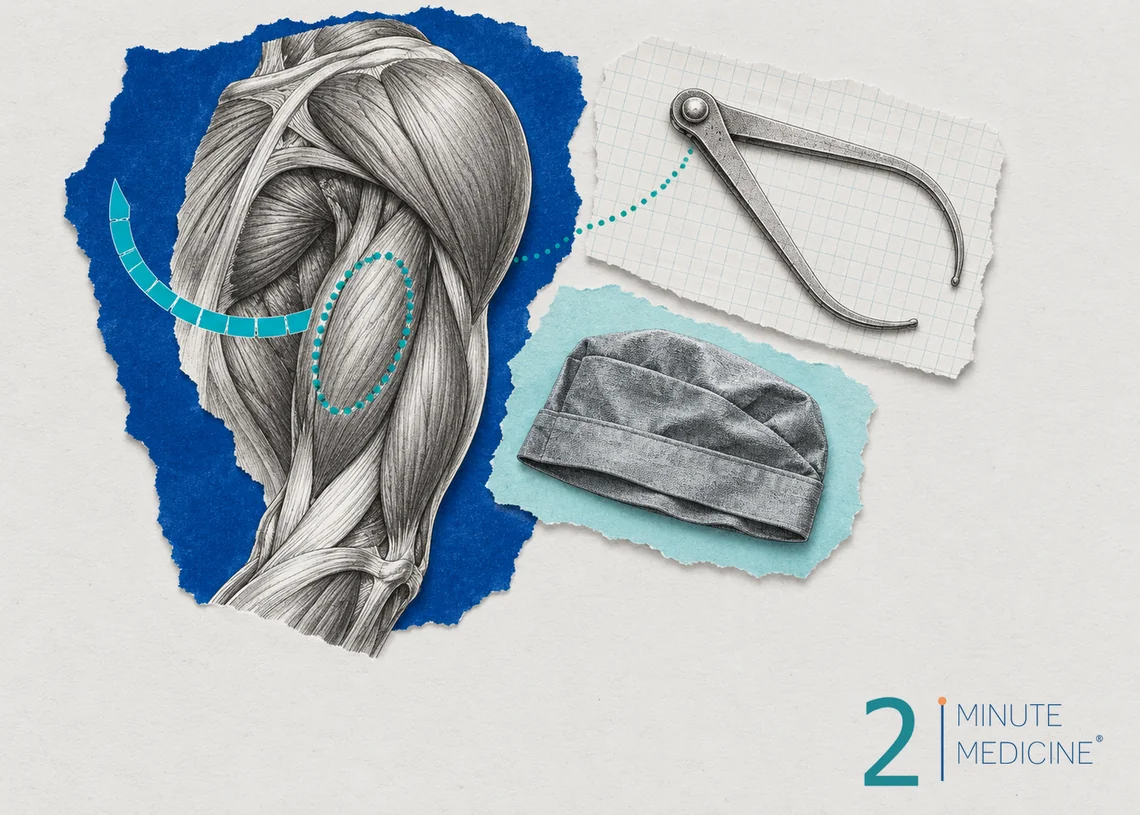
A soft tissue sarcoma is a cancer that starts in the tissues that connect, support and surround other parts of the body, such as fat, muscle, tendons, blood vessels and nerves. It is rare, and there are many types. It most often shows up as a painless lump in the thigh, arm or trunk, or deep in the belly. Most lumps are harmless, but a lump that is large, deep or growing should be checked, and sarcomas are best treated at a specialist center.
Key points
- About 13,000 people in the US are diagnosed with soft tissue sarcoma each year. It can happen at any age.
- Warning signs are a lump bigger than a golf ball, one that grows over weeks or months, one that sits deep under the muscle, or one that hurts.
- An MRI and a biopsy, planned by a sarcoma team, come before any surgery.
- Surgery is the main treatment, often with radiation. Chemotherapy or targeted drugs help some types.
- Most people keep their arm or leg. Amputation is rarely needed today.
What causes soft tissue sarcoma
Most sarcomas have no known cause. They start when cells in soft tissue pick up gene changes that make them grow out of control. Things that raise the risk include:
- Past radiation therapy for another cancer. A sarcoma can appear in the treated area many years later.
- Inherited conditions, such as Li-Fraumeni syndrome, neurofibromatosis type 1 and hereditary retinoblastoma
- Long-term swelling of an arm or leg (lymphedema), which can lead to a rare blood vessel sarcoma
- Certain chemicals, such as vinyl chloride, used in making plastics
An injury doesn’t cause sarcoma. A bump sometimes draws attention to a lump that was already there.
Types of soft tissue sarcoma
There are more than 50 types, named for the kind of tissue the cancer looks like. Some of the more common ones are:
- Liposarcoma, which looks like fat tissue
- Leiomyosarcoma, from smooth muscle, often in the belly, uterus or blood vessel walls
- Undifferentiated pleomorphic sarcoma, often in the legs of older adults
- Synovial sarcoma, often near joints in younger adults
- Myxofibrosarcoma, usually in the arms or legs of older adults
- Rhabdomyosarcoma, the most common type in children
Gastrointestinal stromal tumors (GIST), Kaposi sarcoma and desmoid tumors are related but are treated differently. The type, along with the grade (how fast the cells seem to grow), helps guide treatment.
Soft tissue sarcoma symptoms
- A lump or swelling that is usually painless at first
- A lump that keeps getting bigger
- Pain or numbness if the tumor presses on nerves or muscles
- For tumors deep in the belly: pain, a feeling of fullness after small meals, swelling or constipation
Tumors in the back of the belly (retroperitoneum) can grow very large before they cause symptoms.
How it’s diagnosed
- Imaging. An MRI is the best test for a lump in an arm or leg. A CT scan is used for the belly and to check the lungs, where sarcoma most often spreads.
- Biopsy. A core needle biopsy, usually guided by ultrasound or CT, takes small strips of tissue. It should be planned with the surgeon who will do the main operation, so the needle path can be removed later.
- Lab tests on the sample, including gene tests, pin down the exact type and grade. A second opinion from a sarcoma pathologist is common.
Having a lump cut out without imaging and a biopsy first can make later surgery larger and harder. If a doctor suggests removing a deep or large lump, ask whether it has been checked for sarcoma.
How soft tissue sarcoma is treated
Treatment is planned by a team that may include a sarcoma surgeon, a radiation oncologist and a medical oncologist.
- Surgery removes the tumor along with a rim of healthy tissue around it. Most people with sarcoma in an arm or leg have limb-sparing surgery. Plastic surgeons may help close the wound or restore function.
- Radiation therapy is often given before or after surgery to lower the chance the cancer comes back in the same place.
- Chemotherapy with drugs such as doxorubicin and ifosfamide is used for some high-grade or large tumors, and for cancer that has spread. Other options include gemcitabine with docetaxel, trabectedin and eribulin.
- Targeted and newer treatments help certain types. Examples include imatinib for GIST, nirogacestat for desmoid tumors, and a cell therapy, afamitresgene autoleucel, for some synovial sarcomas. Immunotherapy helps a few types.
- Clinical trials are an important option because sarcoma is rare.
Recovery and follow-up
After surgery on an arm or leg, physical therapy helps you regain strength and movement. Follow-up visits with scans of the tumor area and the chest are usually every few months for the first 2 to 3 years, then less often. Most recurrences show up within the first few years, but checkups often continue for 10 years.
When to see a doctor
- A lump bigger than a golf ball (about 2 inches, or 5 centimeters)
- A lump that is growing
- A lump that feels deep or fixed in place
- A lump that hurts
- A lump that comes back after it was removed
- Belly pain or fullness that doesn’t go away
Common questions about soft tissue sarcoma
Can a lipoma turn into a sarcoma?
It is very rare for an ordinary lipoma, a soft, harmless fatty lump just under the skin, to become cancer. Some liposarcomas can look like a lipoma at first, though. A fatty lump that is large, deep, growing or hard should have an MRI to be sure.
How fast does a soft tissue sarcoma grow?
It varies. Low-grade sarcomas can grow slowly over months or years. High-grade sarcomas can grow noticeably in weeks. Any lump that is getting bigger, at any speed, is a reason to see a doctor and ask about imaging.
Is soft tissue sarcoma curable?
Often, yes. When the tumor is found while it is still in one place and is fully removed, many people are cured. The outlook is harder for high-grade or very large tumors and for cancer that has spread. Treatment at a sarcoma center gives the best chance.
Is soft tissue sarcoma painful?
Usually not at first. Many sarcomas are painless lumps, which is one reason people wait to have them checked. Pain may come later if the tumor presses on nerves, muscles or organs. A painless lump that is growing still needs a doctor’s visit.
Questions to ask your doctor
- What type and grade of sarcoma do I have?
- Should I be treated at a sarcoma center?
- Will I need radiation or chemotherapy, and in what order?
- How will surgery affect how I move or use my limb?
- How often will I need follow-up scans?
Learn more
- Soft tissue sarcoma treatment (National Cancer Institute)
- Soft tissue sarcoma (MedlinePlus, U.S. National Library of Medicine)
This guide is general information and doesn’t replace advice from your own doctor. Last updated October 2026.
RelatedReports






 Get the app