

Patient Basics: Sputum Evaluation (and Sputum Induction)
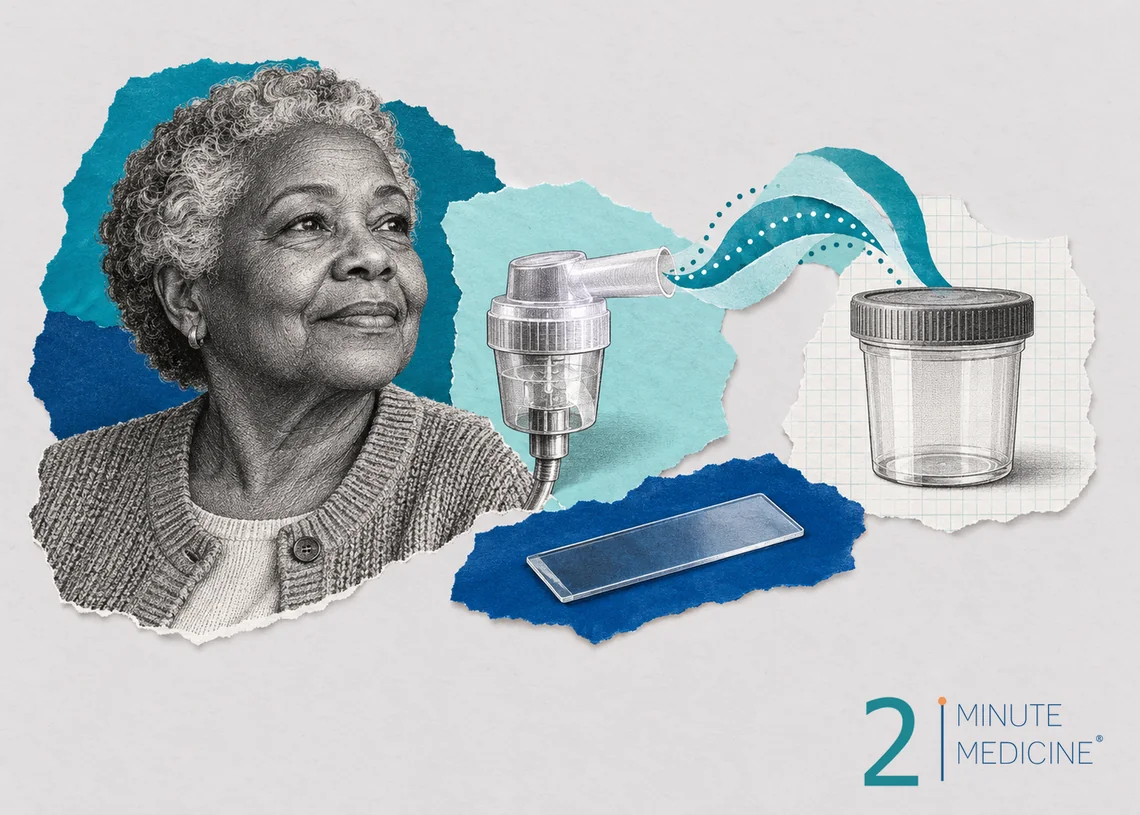
A sputum test checks mucus coughed up from deep in the lungs for germs such as pneumonia or tuberculosis (TB) bacteria. When you can’t cough any up, sputum induction helps by having you breathe a fine, salty mist that loosens mucus and brings on a cough. Both are painless, though induction can make you cough hard for a while.
Key points
- Sputum is the thick mucus (phlegm) from the lungs and lower airways. Spit and mucus from the back of the nose won’t give useful results.
- The best sample is usually the first deep cough of the morning, before you eat or drink.
- Testing for TB usually needs 2 or 3 samples collected on different occasions.
- Sputum induction takes about 15 to 30 minutes and is done in a clinic or hospital.
- Some results come back the same day, while TB cultures can take up to 6 to 8 weeks.
Why a sputum test is done
- Pneumonia or a chest infection. A Gram stain and culture identify the bacteria and show which antibiotics will work.
- Tuberculosis. A smear looks for TB germs under a microscope, a rapid genetic test detects TB and some drug resistance within a day or two, and a culture confirms it.
- Long-term lung conditions, such as cystic fibrosis, bronchiectasis and COPD, to track infections and pick the right treatment.
- Fungal infections or Pneumocystis pneumonia, mainly in people with weak immune systems.
- Abnormal cells (cytology), in some cases where lung cancer is a concern. This is used less often today than scans and biopsies.
- Asthma. Some specialist clinics count certain white blood cells (eosinophils) in sputum to guide asthma treatment.
How to collect a sputum sample
You’ll get a sterile cup with a lid. Don’t touch the inside of the cup or lid.
- If you can, collect it first thing in the morning, before eating or drinking.
- Rinse your mouth with plain water. Don’t use mouthwash or toothpaste first, because they can kill germs in the sample.
- Take 3 slow, deep breaths, holding each for a few seconds.
- On the next breath, cough hard from deep in your chest.
- Spit the mucus into the cup. Aim for about 1 to 2 teaspoons.
- Close the lid tightly and label it as you were shown.
- Take it to the lab within 1 to 2 hours, or keep it in the refrigerator if you were told to.
Extra water the evening before, or breathing steam from a hot shower, can loosen mucus. If you might have TB, collect the sample outdoors or in a well-ventilated room away from others.
How sputum induction works
Sputum induction is used when you can’t cough up a sample on your own, or when a deep sample is needed. Breathing in salty water (hypertonic saline) draws fluid into the airways, thins the mucus and triggers a productive cough.
Before sputum induction
- You may be asked not to eat for 1 to 2 hours beforehand, since coughing can cause gagging.
- Tell the staff if you have asthma or COPD. You’ll usually get a quick-relief inhaler, such as albuterol, first to keep your airways open.
- Your breathing may be checked with a peak flow meter or spirometry before and after.
During sputum induction
You sit upright and breathe the mist through a mouthpiece or mask connected to a nebulizer. Every few minutes, the therapist asks you to cough deeply and spit into the cup. This goes on for up to about 15 to 20 minutes, until enough sputum is collected. If TB is possible, the test is done in a special room or booth with air flow that keeps germs from spreading, and staff wear fitted masks.
Afterward and possible risks
You can usually go back to normal activities right away. Side effects of induction include:
- Coughing fits and a salty taste
- Wheezing or chest tightness, especially with asthma. Staff watch for this and give an inhaler if needed.
- Nausea or gagging
- Feeling lightheaded or tired
Your results
- Gram stain: often the same day
- Bacterial culture: usually 2 to 3 days, with antibiotic sensitivity results a day or so later
- TB smear and rapid TB test: 1 to 2 days
- TB culture: up to 6 to 8 weeks
- Fungal culture: up to a few weeks
A normal result shows only the usual mix of germs from the mouth and throat. A sample that’s mostly saliva may need to be repeated. If a germ is found, your doctor will choose a treatment that works against it. A positive TB result means you’ll start treatment and may need to stay home until you’re no longer contagious, and your local health department will help check close contacts.
When to call your doctor
- You can’t produce a sample after several tries
- Fever, chills or a cough that keeps getting worse
- Streaks of blood in your sputum
Call 911 for severe trouble breathing, chest pain, or coughing up more than a small amount of blood.
Common questions about sputum tests and sputum induction
Is sputum induction painful?
No, it isn’t painful, but it can be unpleasant. The salty mist makes most people cough a lot, and some feel a scratchy throat, nausea or chest tightness. These effects fade soon after the test. Tell the staff right away if you feel short of breath.
What is the difference between sputum and saliva?
Saliva is the thin, watery fluid in your mouth. Sputum is thicker mucus brought up from the lungs and lower airways with a deep cough. It may be clear, white, yellow, green or streaked with blood. Labs can tell the difference, and a saliva sample usually has to be redone.
Why do I need more than one sputum sample for TB?
TB germs aren’t always present in every sample, so collecting 2 or 3 samples, often 8 to 24 hours apart with at least one early in the morning, raises the chance of finding them. Multiple negative samples also help show that someone isn’t contagious.
What happens if sputum induction doesn’t work?
Your doctor may try again on another day or use a different test. Options include a bronchoscopy, where a thin scope collects fluid directly from the lungs, or, for TB in young children, a sample of stomach fluid. A blood test or skin test can also show past TB exposure.
Questions to ask your doctor
- What is my sputum being tested for?
- How many samples do you need, and when should I collect them?
- Should I use my inhaler before sputum induction?
- When will I get the results?
- Do I need to stay away from others while I wait?
Learn more
- Sputum culture (MedlinePlus, U.S. National Library of Medicine)
This guide is general information and doesn’t replace advice from your own doctor. Last updated October 2026.






 Get the app