

Patient Basics: Superficial Thrombophlebitis
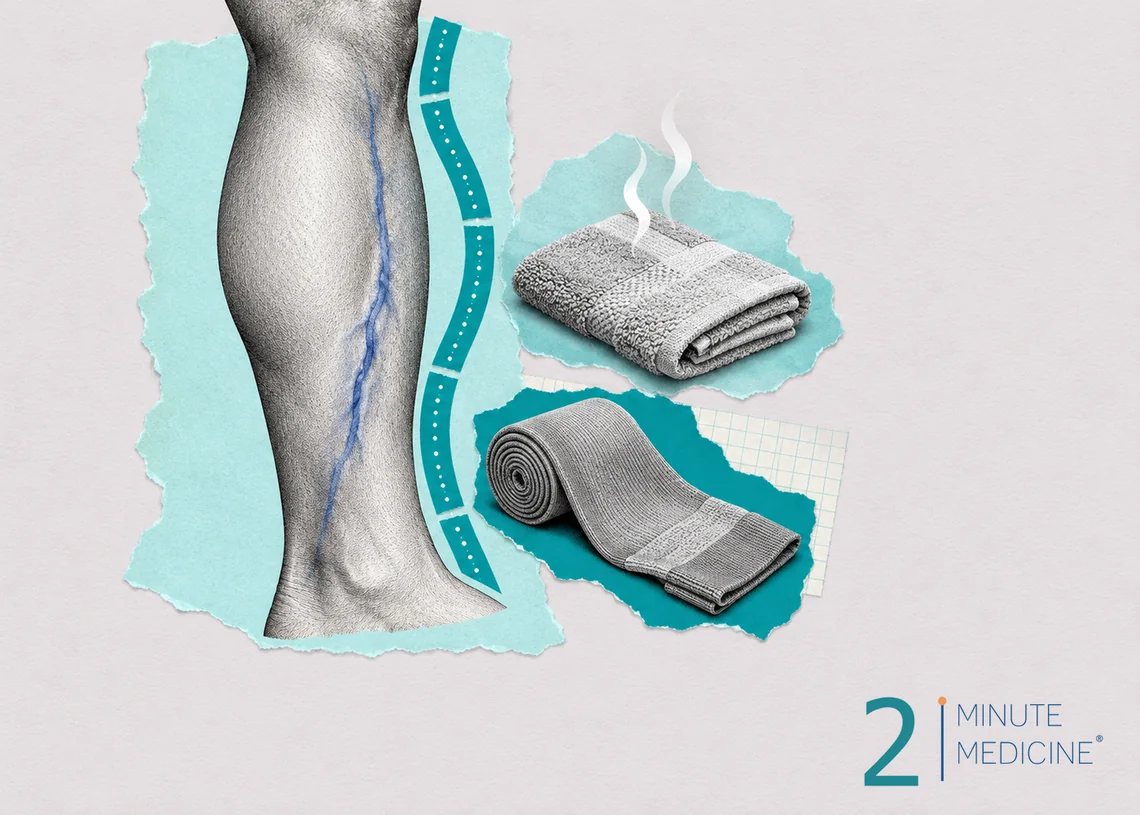
Superficial thrombophlebitis is a blood clot with inflammation in a vein just under the skin, most often in the leg or arm. The vein turns into a tender, warm, firm cord, and the skin over it may look red. Many doctors now call it superficial vein thrombosis. It usually settles within a few weeks with simple care, but some clots spread into deeper veins, so it’s worth having a doctor check it.
Key points
- Common causes are varicose veins, an IV line or injection, an injury, and long stretches without moving.
- An ultrasound is often done, because some people also have a clot in a deep vein.
- Warm compresses, raising the limb, anti-inflammatory pain relievers and staying active help most people.
- A longer clot, or one close to a deep vein, may need a blood thinner for several weeks.
- Call 911 for sudden shortness of breath or chest pain.
Surface veins and deep veins
Your legs and arms have two sets of veins. Superficial veins run just under the skin. You can often see them, such as the long vein on the inner side of the leg (the great saphenous vein). Deep veins run inside the muscles and carry most of the blood back to the heart.
A clot in a deep vein is called deep vein thrombosis (DVT). Pieces of it can break off and travel to the lungs, which is called a pulmonary embolism. Clots in surface veins rarely do this. They can, though, grow along the vein until they reach the point where it joins a deep vein, which is why doctors pay attention to where a clot is and how long it is.
What causes superficial thrombophlebitis
- Varicose veins. Blood moves slowly in these swollen, twisting veins, so clots form more easily. This is the most common cause in the legs.
- An IV line or injection. The plastic tube or the medicine going through it can irritate the vein wall, usually in the hand or arm. Injecting drugs can do the same, and can bring in germs that infect the vein.
- Injury. A bump or blow to a vein can start a clot.
- Not moving. Long car or plane trips, bed rest and recovery from surgery slow blood flow.
- Hormones. Pregnancy, the weeks after giving birth, estrogen birth control and hormone therapy raise clotting risk.
- Clotting problems. Inherited conditions such as factor V Leiden, or a past clot.
- Other conditions. Cancer can cause clots that keep appearing in different veins. Rare causes include Behçet disease and Buerger disease, which is linked to smoking.
Older age, obesity and smoking add to the risk. A rare form called Mondor disease affects a vein on the chest wall or breast.
Symptoms
- A red, warm, tender streak along a vein
- A vein that feels hard, like a cord or a string of beads
- Mild swelling and aching in the area
- Itching, and later a brown or darker patch of skin
Fever is unusual unless the vein is infected. Swelling of the whole leg, or deep calf pain, points more toward DVT. Redness that spreads in a wide patch instead of following a vein may be a skin infection (cellulitis).
How it’s diagnosed
A doctor can often recognize it by looking at and feeling the vein. A duplex ultrasound, a painless scan using sound waves, measures how long the clot is, how close it is to a deep vein, and whether there’s also a DVT. This matters most for clots in the leg. Blood tests for clotting problems or checks for cancer are sometimes done if clots keep coming back or there’s no clear cause.
How superficial thrombophlebitis is treated
Home care
- Put a warm, damp cloth on the vein for 15 to 20 minutes a few times a day.
- Raise your leg or arm on pillows when you’re resting.
- Take an anti-inflammatory pain reliever such as ibuprofen or naproxen, or use diclofenac gel on the skin, if your doctor says it’s right for you.
- Wear compression stockings if your doctor suggests them, especially if you have varicose veins.
- Keep walking and doing daily activities. Bed rest isn’t needed. Don’t rub or massage the vein.
Blood thinners
If a leg clot is about 2 inches (5 centimeters) long or more, or sits close to a deep vein, your doctor may prescribe a blood thinner. Fondaparinux, a daily shot under the skin, is a common choice for about six weeks. A pill such as rivaroxaban is another option. A clot that reaches right up to a deep vein is treated like a DVT, usually for at least three months.
Clots from an IV or injection
The IV line is removed, and warm compresses and pain relievers usually ease it within days. If the vein is infected, which is more likely after injecting drugs, you’ll need antibiotics, and sometimes the vein is drained or removed. If you inject drugs, the SAMHSA helpline (1-800-662-4357) can connect you with treatment and support.
Recovery
Pain and redness usually ease within one to two weeks. The hard lump can take several weeks or months to fade, and the skin may stay darker for a while. If varicose veins keep causing clots, treating the veins later, for example by sealing them with heat, can stop it from happening again.
Lowering your risk
- On long trips, get up and walk every hour or two, and flex your ankles while sitting.
- Stay active and keep a healthy weight.
- Don’t smoke.
- Ask about treatment for painful varicose veins.
- In the hospital, tell your nurse right away if an IV site becomes sore, red or swollen.
When to see a doctor
- A new tender, red, hard vein, especially in the leg
- Symptoms that get worse, or don’t improve after a week
- Swelling of the whole leg or arm
- Fever, pus or redness that spreads
- Clots that keep coming back, or appear without a clear reason
Call 911 for sudden shortness of breath, chest pain, coughing up blood, a racing heartbeat or fainting. These can be signs of a clot in the lungs.
Common questions about superficial thrombophlebitis
Is superficial thrombophlebitis dangerous?
Usually not. Most clots in surface veins stay small and heal on their own. The main concern is that some spread into a deep vein or happen along with a DVT, which can lead to a clot in the lungs. An ultrasound helps your doctor decide whether you need a blood thinner.
How long does superficial thrombophlebitis last?
Redness and pain usually fade within one to two weeks. The firm cord under the skin can take a few weeks to several months to go away. If you’re on a blood thinner for it, treatment usually lasts about six weeks. Tell your doctor if it isn’t steadily improving.
Can an injection or IV cause thrombophlebitis?
Yes. An IV tube or an irritating medicine can inflame the vein and cause a clot, usually in the hand or arm. It often shows up a day or two after the IV is placed, or even after it’s removed. Warm compresses and removing the line usually clear it up.
Should I walk with superficial thrombophlebitis?
Yes, walking is encouraged. Moving keeps blood flowing and lowers the chance of the clot growing. Avoid long periods of sitting or standing still, and raise the leg when you rest. Ask your doctor before very hard exercise or contact sports if you’re taking a blood thinner.
Questions to ask your doctor
- Do I need an ultrasound to check for a deep vein clot?
- Is my clot long enough, or close enough to a deep vein, to need a blood thinner?
- Which pain reliever can I take?
- Should I wear compression stockings, and for how long?
- Should my varicose veins be treated?
Learn more
- Thrombophlebitis (MedlinePlus, U.S. National Library of Medicine)
This guide is general information and doesn’t replace advice from your own doctor. Last updated October 2026.






 Get the app