
• About
  • Masthead
  • License Content
  • Advertise
  • Press Releases
  • Newsroom
  • RSS/Email List
  • 2MM Podcast
  • Write for us
  • Contact Us
2 Minute Medicine
No Result
View All Result

No products in the cart.

Sign in
SUBSCRIBE
  • About
  • Specialties
    • All Specialties, All Recent Reports
    • Cardiology
    • Chronic Disease
    • Dermatology
    • Emergency
    • Endocrinology
    • Gastroenterology
    • Imaging and Intervention
    • Infectious Disease
    • Nephrology
    • Neurology
    • Obstetrics
    • Oncology
    • Ophthalmology
    • Pediatrics
    • Pharma
    • Preclinical
    • Psychiatry
    • Public Health
    • Pulmonology
    • Rheumatology
    • Surgery
    • Rewinds
    • The Scan
  • EvidencePulse™
  • HypeCheck™
  • AI News
  • Classics™
    • 2MM+ Online Access
    • Paperback and Ebook
  • Tools
    • NPI Registry Lookup
    • RVU Search
    • Physician Pay by Specialty
    • ICD-10 Code Lookup
    • FDA Drug Approvals
    • Drug Safety for Breastfeeding/Pregnancy
    • Clinical Guidelines
    • Medical Calculators
    • ECG Reference
      • QTc Calculator
      • Sgarbossa Criteria
      • ECG Axis Calculator
      • AV Block Helper
  • Rankings
    • Medical School Rankings
    • Residency Rankings
  • Partners
    • License Content
    • Advertise with Us
2 Minute Medicine
  • About
  • Specialties
    • All Specialties, All Recent Reports
    • Cardiology
    • Chronic Disease
    • Dermatology
    • Emergency
    • Endocrinology
    • Gastroenterology
    • Imaging and Intervention
    • Infectious Disease
    • Nephrology
    • Neurology
    • Obstetrics
    • Oncology
    • Ophthalmology
    • Pediatrics
    • Pharma
    • Preclinical
    • Psychiatry
    • Public Health
    • Pulmonology
    • Rheumatology
    • Surgery
    • Rewinds
    • The Scan
  • EvidencePulse™
  • HypeCheck™
  • AI News
  • Classics™
    • 2MM+ Online Access
    • Paperback and Ebook
  • Tools
    • NPI Registry Lookup
    • RVU Search
    • Physician Pay by Specialty
    • ICD-10 Code Lookup
    • FDA Drug Approvals
    • Drug Safety for Breastfeeding/Pregnancy
    • Clinical Guidelines
    • Medical Calculators
    • ECG Reference
      • QTc Calculator
      • Sgarbossa Criteria
      • ECG Axis Calculator
      • AV Block Helper
  • Rankings
    • Medical School Rankings
    • Residency Rankings
  • Partners
    • License Content
    • Advertise with Us
Sign in
SUBSCRIBE
2 Minute Medicine
Sign in
Subscribe
2 Minute MedicineFree on Google PlayGet
✦EvidencePulse™by 2 Minute Medicine3 reportsYou askedtop stroke trials 2026Synthesizing medical evidence...Top 2026 stroke trial results:OCEANIC — ischemic stroke: 6.2% vs 8.4%OPTION* — mRS 0–1: 43.6% vs 34.2%ORIENTAL* — mRS 0–2: 58.6% vs 46.6%*Higher sICH in intervention armsParticipants randomizedNOCEANIC12,327OPTION570ORIENTAL564Ask about guidelines or landmark trials...↑Try EvidencePulse™Ask the evidence. Get the signal.Try it now →
Home Health A to Z

Patient Basics: Tetanus (Lockjaw)
by2 Minute Medicine
October 30, 2026
in Health A to Z
Reading Time: 5 mins read
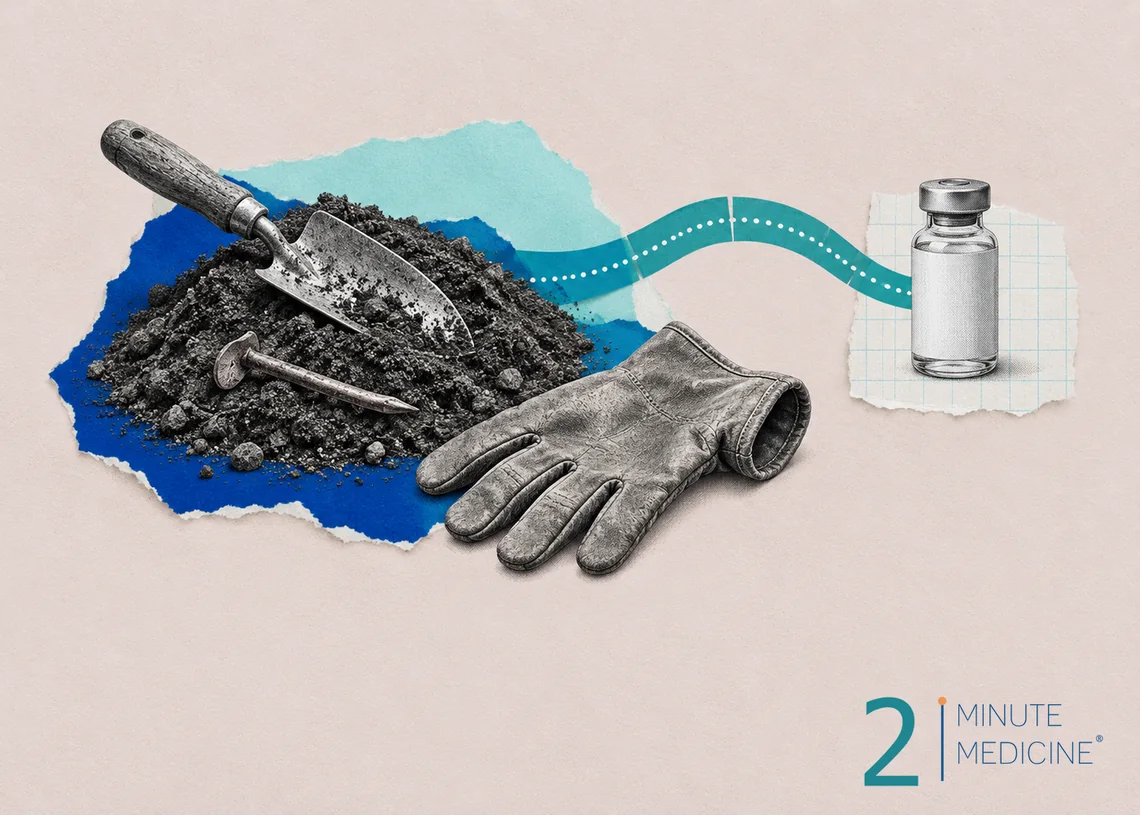
Collage of a bent old nail and a garden trowel in soil, a work glove and a small blank tetanus vaccine vial
Share on FacebookShare on TwitterShare on LinkedIn

Tetanus is a serious illness caused by a germ that lives in soil, dust and animal manure. It gets into the body through a break in the skin and makes a poison that causes painful, uncontrolled muscle stiffness, often starting in the jaw. That’s why it is sometimes called lockjaw. It is rare in the US because of vaccines, and staying up to date on your shots is the best protection.

Key points

  • Tetanus comes from bacteria called Clostridium tetani, which can enter through any wound, even a small one.
  • The first sign is often a stiff jaw, followed by stiffness in the neck, back and belly, and painful spasms.
  • It doesn’t spread from person to person.
  • Adults need a tetanus booster every 10 years, and sometimes sooner after a dirty or deep wound.
  • Having tetanus once doesn’t protect you from getting it again. You still need the vaccine.

How people get tetanus

Tetanus bacteria survive for years as hardy spores in the ground. When spores get into a wound where there is little oxygen, they wake up, grow and release a toxin. The toxin travels along nerves to the spinal cord and blocks the signals that tell muscles to relax.

Wounds that carry the most risk include:

  • Puncture wounds, such as stepping on a nail or a splinter
  • Cuts or scrapes dirtied with soil, dust or manure
  • Crush injuries, burns and frostbite
  • Animal bites
  • Injecting drugs with unclean needles
  • Long-lasting wounds such as foot ulcers in people with diabetes

Rust doesn’t cause tetanus. A rusty nail matters because it is often dirty and makes a deep wound. In some countries, newborns still get tetanus when the umbilical cord is cut or covered with something unclean. Vaccinating mothers prevents this.

Tetanus symptoms

Symptoms most often start about 3 to 21 days after the injury, and the wound may have healed by then.

  • A tight jaw that is hard to open (lockjaw)
  • Stiff neck, shoulders and back
  • Back muscles that pull so hard the back arches and the head tips back (opisthotonos)
  • Trouble swallowing
  • Hard, rigid belly muscles
  • Painful muscle spasms that can be set off by noise, light or touch
  • Fever, sweating, a fast heartbeat and changes in blood pressure

Spasms can become strong enough to make breathing hard or to break bones. About 1 in 10 people who get tetanus die, even with good care.

RELATED REPORTS

Routine childhood vaccinations disrupted by the 2020 global pandemic

Tdap vaccination in pregnancy effective in preventing pertussis in infants

How it’s diagnosed

No lab test confirms tetanus. Doctors make the diagnosis from the symptoms, a physical exam and the story of a recent wound. They also check vaccine records. Tests may be done to rule out other problems that cause stiffness or spasms, such as a reaction to a medicine, meningitis or a dental infection.

How tetanus is treated

Tetanus is treated in the hospital, usually in the intensive care unit. Care may include:

  • Tetanus immune globulin (TIG). These are antibodies given as a shot to neutralize toxin that hasn’t yet reached the nerves.
  • Wound care. The wound is cleaned and any dead tissue is removed.
  • Antibiotics, often metronidazole, to kill the bacteria still in the wound.
  • Medicines for spasms, such as diazepam or other sedatives, and magnesium.
  • Breathing support. Many people need a breathing machine (ventilator) for a time.
  • A quiet, dim room to cut down on triggers for spasms.
  • A tetanus vaccine series, started during the hospital stay.

Recovery

The toxin’s effects wear off slowly as the nerves recover. Spasms can go on for several weeks, and full recovery may take months. Physical therapy helps rebuild strength.

Tetanus shots and wound care

The tetanus vaccine is combined with protection against diphtheria and, usually, whooping cough (pertussis).

  • Children get 5 doses of DTaP between 2 months and 6 years of age.
  • Preteens get a Tdap booster at 11 or 12.
  • Adults need a Td or Tdap booster every 10 years.
  • Pregnant people get Tdap during each pregnancy, which also protects the newborn from whooping cough.

After a wound, wash it right away with soap and clean water and cover it. A clean, minor wound calls for a booster only if your last shot was over 10 years ago. A dirty, deep or serious wound calls for one if your last shot was over 5 years ago. If you never had the full vaccine series or don’t know, you may also need TIG.

When to see a doctor

  • A deep, dirty or puncture wound, or an animal bite
  • Any wound if you don’t know the date of your most recent tetanus shot
  • A wound that becomes red, swollen or painful

Call 911 for jaw stiffness, trouble swallowing, muscle spasms or trouble breathing, especially after a recent wound.

Common questions about tetanus

How soon after an injury do I need a tetanus shot?

Get it as soon as you can, ideally within a day or two. A shot given later is still worth having, because tetanus can take up to 3 weeks to show up. If you never had the full vaccine series, you may also need TIG right away.

What are the side effects of a tetanus shot?

Most people get a sore, red or swollen arm where the shot went in. Some have a mild fever, a headache or feel tired for a day or two. Serious allergic reactions are very rare, and the shot is safe during pregnancy.

Can you survive tetanus?

Yes, most people survive with hospital care, though about 1 in 10 die. Recovery is slow because the nerves have to grow new endings to replace the ones the toxin blocked. Most survivors get back to normal over several months.

Questions to ask your doctor

  • Am I up to date on my tetanus vaccine?
  • Do I need a booster for this wound?
  • Should I get Tdap instead of Td?
  • How should I care for this wound at home?

Learn more

  • About tetanus (Centers for Disease Control and Prevention)
  • Tetanus (MedlinePlus, U.S. National Library of Medicine)

This guide is general information and doesn’t replace advice from your own doctor. Last updated October 2026.

Tags: tetanus
Previous Post

Patient Basics: Telogen Effluvium

Next Post

Patient Basics: Syphilis

RelatedReports

Pediatrics

Routine childhood vaccinations disrupted by the 2020 global pandemic

August 18, 2021
Infectious Disease

Tdap vaccination in pregnancy effective in preventing pertussis in infants

April 3, 2017
Infectious Disease

[Policy Statement] American Academy of Pediatrics releases updated vaccination schedule

January 28, 2013
Next Post
Syphilis collage: a brass microscope, a magnified circle of spiral-shaped bacteria and a blank wall calendar page

Patient Basics: Syphilis

Takayasu's arteritis collage: a young woman, an artery with a narrowed section, a blood pressure cuff and a pill organizer

Patient Basics: Takayasu's Arteritis

Collage on Tay-Sachs disease: a young woman in profile, a DNA helix ribbon, an engraved nerve cell and a capped sample tube

Patient Basics: Tay-Sachs Disease

✦ EvidencePulse™ by 2 Minute Medicine 3 reports You asked top stroke trials 2026 Synthesizing medical evidence... Top 2026 stroke trial results: OCEANIC — ischemic stroke: 6.2% vs 8.4% OPTION* — mRS 0–1: 43.6% vs 34.2% ORIENTAL* — mRS 0–2: 58.6% vs 46.6% *Higher sICH in intervention arms Participants randomizedN OCEANIC 12,327 OPTION 570 ORIENTAL 564 Ask about guidelines or landmark trials... Try EvidencePulse™ Get the signal. Try it now → Physician-trained medical AI by 2 Minute Medicine

2MM+ All Access

Full details →
$4.99 /month

3-day free trial · cancel anytime

  • ✓100+ physician-written reports
  • ✓EvidencePulse™ + HypeCheck™
  • ✓Ad-free reading + newsletters
Start 3-day free trial

Then $4.99/month. Manage renewal in your account.

2 Minute Medicine® is an award winning, physician-run, expert medical media company. Our content is curated, written and edited by practicing health professionals who have clinical and scientific expertise in their field of reporting. Our editorial management team is comprised of highly-trained MD physicians. Join numerous brands, companies, and hospitals who trust our licensed content.

Recent Reports

  • Removing Race and Ethnicity From Dialysis Mortality Risk Adjustment Changes Facility Performance Rankings
  • AI Model Shows Promise in Predicting PTSD Risk Following Trauma
  • 2 Minute Medicine Rewind November 16, 2026
License Content
Terms of Use | Disclaimer
Cookie Policy

Get the app

Read 2 Minute Medicine on iPhone, iPad and Android.

Download on the App StoreGet it on Google Play
QR code for www.2minutemedicine.com/app
On a computer? Scan this with your phone’s camera.
2MM+ All Access Full details →

The medical literature, distilled daily.

Monthly plan selected: $4.99 /month.

$4.99/month

3-day free trial · cancel anytime

Start 3-day free trial

Then $4.99/month. Manage renewal in your account.

Yearly plan selected: $49.90 /year.

$49.90/year

2 months free

Start 3-day free trial

Then $49.90/year.

Membership benefits

  • ✓100+ new physician-written study summaries monthly, 12,000+ searchable
  • ✓AI EvidencePulse™ + HypeCheck™
  • ✓Ad-free reading + newsletters
  • ✓FDA drug approvals + clinical calculators

Already a member? Sign in

  • Get the app
  • About
  • Specialties
    • All Specialties, All Recent Reports
    • Cardiology
    • Chronic Disease
    • Dermatology
    • Emergency
    • Endocrinology
    • Gastroenterology
    • Imaging and Intervention
    • Infectious Disease
    • Nephrology
    • Neurology
    • Obstetrics
    • Oncology
    • Ophthalmology
    • Pediatrics
    • Pharma
    • Preclinical
    • Psychiatry
    • Public Health
    • Pulmonology
    • Rheumatology
    • Surgery
    • Rewinds
    • The Scan
  • EvidencePulse™
  • HypeCheck™
  • AI News
  • Classics™
    • 2MM+ Online Access
    • Paperback and Ebook
  • Tools
    • NPI Registry Lookup
    • RVU Search
    • Physician Pay by Specialty
    • ICD-10 Code Lookup
    • FDA Drug Approvals
    • Drug Safety for Breastfeeding/Pregnancy
    • Clinical Guidelines
    • Medical Calculators
    • ECG Reference
      • QTc Calculator
      • Sgarbossa Criteria
      • ECG Axis Calculator
      • AV Block Helper
  • Rankings
    • Medical School Rankings
    • Residency Rankings
  • Partners
    • License Content
    • Advertise with Us
No Result
View All Result

© 2026 2 Minute Medicine, Inc. - Physician-written medical news.


