• About
  • Masthead
  • License Content
  • Advertise
  • Press Releases
  • Newsroom
  • RSS/Email List
  • 2MM Podcast
  • Write for us
  • Contact Us
2 Minute Medicine
No Result
View All Result

No products in the cart.

Sign in
SUBSCRIBE
  • About
  • Specialties
    • All Specialties, All Recent Reports
    • Cardiology
    • Chronic Disease
    • Dermatology
    • Emergency
    • Endocrinology
    • Gastroenterology
    • Imaging and Intervention
    • Infectious Disease
    • Nephrology
    • Neurology
    • Obstetrics
    • Oncology
    • Ophthalmology
    • Pediatrics
    • Pharma
    • Preclinical
    • Psychiatry
    • Public Health
    • Pulmonology
    • Rheumatology
    • Surgery
    • Rewinds
    • The Scan
  • EvidencePulse™
  • HypeCheck™
  • AI News
  • Classics™
    • 2MM+ Online Access
    • Paperback and Ebook
  • Tools
    • NPI Registry Lookup
    • RVU Search
    • Physician Pay by Specialty
    • ICD-10 Code Lookup
    • FDA Drug Approvals
    • Drug Safety for Breastfeeding/Pregnancy
    • Clinical Guidelines
    • Medical Calculators
    • ECG Reference
      • QTc Calculator
      • Sgarbossa Criteria
      • ECG Axis Calculator
      • AV Block Helper
  • Rankings
    • Medical School Rankings
    • Residency Rankings
  • Partners
    • License Content
    • Advertise with Us
2 Minute Medicine
  • About
  • Specialties
    • All Specialties, All Recent Reports
    • Cardiology
    • Chronic Disease
    • Dermatology
    • Emergency
    • Endocrinology
    • Gastroenterology
    • Imaging and Intervention
    • Infectious Disease
    • Nephrology
    • Neurology
    • Obstetrics
    • Oncology
    • Ophthalmology
    • Pediatrics
    • Pharma
    • Preclinical
    • Psychiatry
    • Public Health
    • Pulmonology
    • Rheumatology
    • Surgery
    • Rewinds
    • The Scan
  • EvidencePulse™
  • HypeCheck™
  • AI News
  • Classics™
    • 2MM+ Online Access
    • Paperback and Ebook
  • Tools
    • NPI Registry Lookup
    • RVU Search
    • Physician Pay by Specialty
    • ICD-10 Code Lookup
    • FDA Drug Approvals
    • Drug Safety for Breastfeeding/Pregnancy
    • Clinical Guidelines
    • Medical Calculators
    • ECG Reference
      • QTc Calculator
      • Sgarbossa Criteria
      • ECG Axis Calculator
      • AV Block Helper
  • Rankings
    • Medical School Rankings
    • Residency Rankings
  • Partners
    • License Content
    • Advertise with Us
Sign in
SUBSCRIBE
2 Minute Medicine
Sign in
Subscribe
2 Minute MedicineFree on Google PlayGet
✦EvidencePulse™by 2 Minute Medicine3 reportsYou askedtop stroke trials 2026Synthesizing medical evidence...Top 2026 stroke trial results:OCEANIC — ischemic stroke: 6.2% vs 8.4%OPTION* — mRS 0–1: 43.6% vs 34.2%ORIENTAL* — mRS 0–2: 58.6% vs 46.6%*Higher sICH in intervention armsParticipants randomizedNOCEANIC12,327OPTION570ORIENTAL564Ask about guidelines or landmark trials...↑Try EvidencePulse™Ask the evidence. Get the signal.Try it now →
Home Health A to Z

Patient Basics: Foot Ulcers
by2 Minute Medicine
October 30, 2026
in Health A to Z
Reading Time: 6 mins read
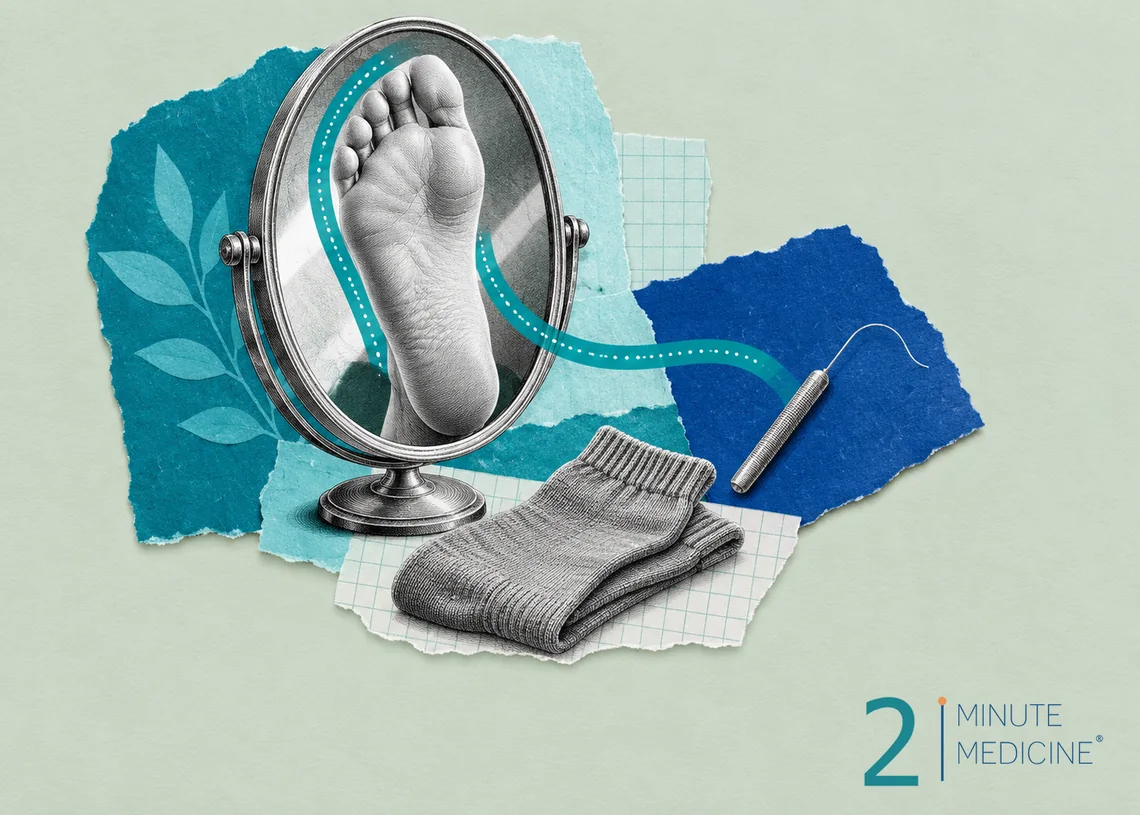
Collage of a sole checked for a foot ulcer in a hand mirror, a thin nylon filament tester and a pair of folded socks
Share on FacebookShare on TwitterShare on LinkedIn

A foot ulcer is a break in the skin of the foot that heals slowly or not at all. Most foot ulcers happen in people with diabetes or poor blood flow to the legs. Because these sores often don’t hurt, they can get deep or infected before anyone notices. Checking your feet every day and getting early care are the best ways to save the foot.

Key points

  • Nerve damage from diabetes and blocked leg arteries are the main causes.
  • Many ulcers start under a callus or from shoes that rub, on a spot you can’t feel.
  • Taking pressure off the sore is as important as any dressing or medicine.
  • An infected ulcer can spread to the bone and may lead to amputation if it isn’t treated quickly.
  • If you have diabetes, look at your feet every day and see a doctor for any sore, blister or color change.

What causes foot ulcers

  • Nerve damage (neuropathy). Years of high blood sugar can damage the nerves in the feet. You may not feel a pebble in your shoe, a blister or a burn from hot water. Pressure keeps hitting the same spot, often the ball of the foot or the big toe, until the skin breaks down. These are the most common type of diabetic foot ulcer, called neuropathic ulcers.
  • Poor blood flow. Peripheral artery disease narrows the arteries in the legs, often from smoking, diabetes, high blood pressure or high cholesterol. Without enough blood, even a small cut can’t heal. These ulcers often form on the toes, heels or edges of the foot and tend to be painful.
  • Foot shape changes. Bunions, hammertoes, and collapse of the foot’s bones from nerve damage (Charcot foot) create new pressure points.
  • Pressure from lying in bed. In people who can’t move much, the heels can develop pressure sores.
  • Vein problems. Leaky leg veins cause swelling and sores. These usually form above the ankle rather than on the foot itself.

Smoking, poor blood sugar control, kidney disease, a past ulcer or amputation, and poor eyesight that makes it hard to check your feet all raise the risk.

Signs to look for

  • An open sore or a crater in the skin, often with a ring of thick callus around it
  • Drainage or stains on your socks
  • A dark spot or blood under a callus
  • Redness, warmth or swelling in part of the foot
  • A bad smell
  • Toes or skin that look pale, blue or black

Many people with nerve damage feel little or no pain, so don’t wait for pain before acting.

How doctors check an ulcer

  • Foot exam. The doctor measures the sore, checks how deep it goes, and looks for infection. Gently probing the base of the ulcer can show whether it reaches bone.
  • Feeling and blood flow tests. A thin nylon filament pressed on the foot checks feeling. Blood pressure cuffs at the ankle and arm, compared with each other, check blood flow. An ultrasound may look at the arteries.
  • X-ray or MRI to look for bone infection (osteomyelitis) or a hidden broken bone
  • Blood tests for infection and blood sugar control
  • A sample from the wound if it looks infected, to choose the right antibiotic

Foot ulcer treatment

Ulcers heal best with a team that may include a podiatrist (foot doctor), a wound care nurse, a vascular surgeon and your diabetes doctor.

  • Taking pressure off (offloading). This is the most important step for ulcers from nerve damage. Options include a special cast that spreads weight across the whole foot, a removable boot, special shoes or inserts, and crutches or a wheelchair for a while. Every step on the ulcer slows healing.
  • Cleaning out the wound (debridement). A clinician trims away dead tissue and callus so healthy tissue can grow. This often needs repeating at follow-up visits.
  • Dressings. Keep the ulcer clean, covered and slightly moist. Your care team will show you how to change the dressing and how often.
  • Treating infection. Infected ulcers need antibiotics. Deep infections, abscesses or infected bone may need surgery.
  • Improving blood flow. If arteries are blocked, a vascular specialist may open them with a balloon and stent, or bypass them with surgery.
  • Controlling blood sugar and quitting smoking. Both help wounds heal.
  • Compression with wraps or stockings for ulcers caused by vein problems, after blood flow in the arteries has been checked

Slow-healing ulcers may be treated with a wound vacuum, which gently draws fluid out through a sealed dressing, or with skin substitutes or oxygen treatment in a pressure chamber. If an infection is severe or tissue has died, removing part of a toe or foot may be the safest choice.

Recovery and coming back

Healing often takes weeks to months. Even after a sore closes, ulcers come back in many people, often within a year or two. Wearing the shoes or inserts your team recommends and keeping regular foot visits make a big difference.

RELATED REPORTS

2MM: AI Roundup –Lilly launches TuneLab AI drug discovery, smart wound healing bandage, and Punjab cancer screening [September 25th, 2025]

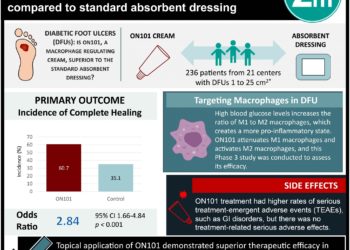
#VisualAbstract: Novel macrophage-regulating cream demonstrated superior therapeutic efficacy for the treatment of diabetic foot ulcers compared to standard absorbent dressing

Protecting your feet

  • Look at the tops, soles and between the toes of both feet every day. Use a mirror, or ask someone to help.
  • Wash your feet daily in lukewarm water. Test the water with your elbow first, and dry well between the toes.
  • Use lotion on dry skin, but not between the toes.
  • Never walk barefoot, even at home.
  • Check inside your shoes for stones or rough spots before putting them on.
  • Wear shoes that fit well and clean, dry socks without tight bands.
  • Don’t cut corns or calluses yourself, or use corn removers. See a podiatrist.
  • Have your feet checked at every diabetes visit, and get a full foot exam at least once a year.

When to see a doctor

  • Any open sore, blister or cut on the foot that hasn’t started healing in a few days, if you have diabetes or poor circulation
  • A callus with a dark spot or blood under it
  • New swelling, warmth or change in the shape of your foot
  • Pain in your calves when you walk that goes away with rest

Get emergency care for spreading redness, red streaks, pus or a bad smell, fever or chills, high blood sugar that won’t come down, or a foot that’s suddenly cold, pale, blue, black or very painful.

Common questions about foot ulcers

What does a foot ulcer look like?

Usually a round, open sore or crater, often on the ball of the foot, the big toe or the heel. The base may be pink, red, yellow or black. An ulcer from nerve damage often has a thick ring of callus around it, while one from poor blood flow tends to look punched out and pale.

How long does a diabetic foot ulcer take to heal?

Most take weeks to a few months, as long as pressure stays off the sore, blood flow is good and any infection is treated. Deep ulcers and those with poor circulation can take much longer. An ulcer that hasn’t shrunk by about half in 4 weeks needs a new plan.

Is a deep foot ulcer serious?

Yes. An ulcer that reaches tendon or bone can lead to a bone infection and, in some cases, amputation. Deep ulcers need prompt care from a foot or wound specialist, often with X-rays or an MRI, antibiotics and sometimes surgery.

Can you get a foot ulcer without diabetes?

Yes. Blocked leg arteries, leaky leg veins, pressure sores from lying in bed, and nerve damage from other causes, such as heavy drinking or low vitamin B12, can all lead to ulcers. Shoes that rub and changes in foot shape add to the risk.

Questions to ask your doctor

  • What caused my ulcer?
  • Is it infected, and does it reach the bone?
  • Is blood flow to my foot good enough to heal it?
  • How should I take pressure off my foot, and for how long?
  • What shoes should I wear once it heals?

Learn more

  • Diabetes and foot problems (National Institute of Diabetes and Digestive and Kidney Diseases)
  • Diabetic foot (MedlinePlus, U.S. National Library of Medicine)

This guide is general information and doesn’t replace advice from your own doctor. Last updated October 2026.

Tags: Foot Ulcers
Previous Post

Patient Basics: Food Poisoning

Next Post

Patient Basics: Fallopian Tube Cancer

RelatedReports

2 Minute Medicine AI Roundup editorial illustration
AI Roundup

2MM: AI Roundup –Lilly launches TuneLab AI drug discovery, smart wound healing bandage, and Punjab cancer screening [September 25th, 2025]

September 28, 2025
#VisualAbstract: Novel macrophage-regulating cream demonstrated superior therapeutic efficacy for the treatment of diabetic foot ulcers compared to standard absorbent dressing
StudyGraphics

#VisualAbstract: Novel macrophage-regulating cream demonstrated superior therapeutic efficacy for the treatment of diabetic foot ulcers compared to standard absorbent dressing

September 16, 2021
Updated USPSTF guidelines favor treatment of mild gestational diabetes
Chronic Disease

Novel macrophage-regulating cream demonstrated superior therapeutic efficacy for the treatment of diabetic foot ulcers compared to standard absorbent dressing

September 8, 2021
Next Post
Fallopian tube cancer collage: a drawing of a fallopian tube and its fringed end beside an ovary, a microscope and a gown

Patient Basics: Fallopian Tube Cancer

Febrile seizure collage: a plush bear on a soft blanket, a thermometer, a blank stopwatch and an engraved brain

Patient Basics: Febrile Seizures

Collage on eczema: an inner elbow crease with a dry patch, a jar of thick moisturizer, a cotton swatch and a water drop

Patient Basics: Eczema (Atopic Dermatitis)

✦ EvidencePulse™ by 2 Minute Medicine 3 reports You asked top stroke trials 2026 Synthesizing medical evidence... Top 2026 stroke trial results: OCEANIC — ischemic stroke: 6.2% vs 8.4% OPTION* — mRS 0–1: 43.6% vs 34.2% ORIENTAL* — mRS 0–2: 58.6% vs 46.6% *Higher sICH in intervention arms Participants randomizedN OCEANIC 12,327 OPTION 570 ORIENTAL 564 Ask about guidelines or landmark trials... Try EvidencePulse™ Get the signal. Try it now → Physician-trained medical AI by 2 Minute Medicine

2MM+ All Access

Full details →
$4.99 /month

3-day free trial · cancel anytime

  • ✓100+ physician-written reports
  • ✓EvidencePulse™ + HypeCheck™
  • ✓Ad-free reading + newsletters
Start 3-day free trial

Then $4.99/month. Manage renewal in your account.

2 Minute Medicine® is an award winning, physician-run, expert medical media company. Our content is curated, written and edited by practicing health professionals who have clinical and scientific expertise in their field of reporting. Our editorial management team is comprised of highly-trained MD physicians. Join numerous brands, companies, and hospitals who trust our licensed content.

Recent Reports

  • Nipocalimab patient interviews identify mouth dryness as the most important symptom to improve in phase 2 Sjögren’s disease data
  • CDC reports 5,182 confirmed measles cases in the United States in 2026
  • In selected patients with anterior-circulation large-vessel stroke 24-72 hours after onset, thrombectomy improved 90-day function but increased hemorrhage and death
License Content
Terms of Use | Disclaimer
Cookie Policy

Get the app

Read 2 Minute Medicine on iPhone, iPad and Android.

Download on the App StoreGet it on Google Play
QR code for www.2minutemedicine.com/app
On a computer? Scan this with your phone’s camera.
2MM+ All Access Full details →

The medical literature, distilled daily.

Monthly plan selected: $4.99 /month.

$4.99/month

3-day free trial · cancel anytime

Start 3-day free trial

Then $4.99/month. Manage renewal in your account.

Yearly plan selected: $49.90 /year.

$49.90/year

2 months free

Start 3-day free trial

Then $49.90/year.

Membership benefits

  • ✓100+ physician-written reports
  • ✓AI EvidencePulse™ + HypeCheck™
  • ✓Ad-free reading + newsletters
  • ✓FDA drug approvals + clinical calculators

Already a member? Sign in

  • Get the app
  • About
  • Specialties
    • All Specialties, All Recent Reports
    • Cardiology
    • Chronic Disease
    • Dermatology
    • Emergency
    • Endocrinology
    • Gastroenterology
    • Imaging and Intervention
    • Infectious Disease
    • Nephrology
    • Neurology
    • Obstetrics
    • Oncology
    • Ophthalmology
    • Pediatrics
    • Pharma
    • Preclinical
    • Psychiatry
    • Public Health
    • Pulmonology
    • Rheumatology
    • Surgery
    • Rewinds
    • The Scan
  • EvidencePulse™
  • HypeCheck™
  • AI News
  • Classics™
    • 2MM+ Online Access
    • Paperback and Ebook
  • Tools
    • NPI Registry Lookup
    • RVU Search
    • Physician Pay by Specialty
    • ICD-10 Code Lookup
    • FDA Drug Approvals
    • Drug Safety for Breastfeeding/Pregnancy
    • Clinical Guidelines
    • Medical Calculators
    • ECG Reference
      • QTc Calculator
      • Sgarbossa Criteria
      • ECG Axis Calculator
      • AV Block Helper
  • Rankings
    • Medical School Rankings
    • Residency Rankings
  • Partners
    • License Content
    • Advertise with Us
No Result
View All Result

© 2026 2 Minute Medicine, Inc. - Physician-written medical news.