• About
  • Masthead
  • License Content
  • Advertise
  • Press Releases
  • Newsroom
  • RSS/Email List
  • 2MM Podcast
  • Write for us
  • Contact Us
2 Minute Medicine
No Result
View All Result

No products in the cart.

Sign in
SUBSCRIBE
  • About
  • Specialties
    • All Specialties, All Recent Reports
    • Cardiology
    • Chronic Disease
    • Dermatology
    • Emergency
    • Endocrinology
    • Gastroenterology
    • Imaging and Intervention
    • Infectious Disease
    • Nephrology
    • Neurology
    • Obstetrics
    • Oncology
    • Ophthalmology
    • Pediatrics
    • Pharma
    • Preclinical
    • Psychiatry
    • Public Health
    • Pulmonology
    • Rheumatology
    • Surgery
    • Rewinds
    • The Scan
  • EvidencePulse™
  • HypeCheck™
  • AI News
  • Classics™
    • 2MM+ Online Access
    • Paperback and Ebook
  • Tools
    • NPI Registry Lookup
    • RVU Search
  • Partners
    • License Content
    • Advertise with Us
2 Minute Medicine
  • About
  • Specialties
    • All Specialties, All Recent Reports
    • Cardiology
    • Chronic Disease
    • Dermatology
    • Emergency
    • Endocrinology
    • Gastroenterology
    • Imaging and Intervention
    • Infectious Disease
    • Nephrology
    • Neurology
    • Obstetrics
    • Oncology
    • Ophthalmology
    • Pediatrics
    • Pharma
    • Preclinical
    • Psychiatry
    • Public Health
    • Pulmonology
    • Rheumatology
    • Surgery
    • Rewinds
    • The Scan
  • EvidencePulse™
  • HypeCheck™
  • AI News
  • Classics™
    • 2MM+ Online Access
    • Paperback and Ebook
  • Tools
    • NPI Registry Lookup
    • RVU Search
  • Partners
    • License Content
    • Advertise with Us
Sign in
SUBSCRIBE
2 Minute Medicine
Sign in
Subscribe
2 Minute MedicineFree on Google PlayGet
✦ EvidencePulse™ by 2 Minute Medicine 2026 evidence scan 3 reports You asked top stroke trials 2026 Synthesizing medical evidence... Top 2026 stroke trial results: OCEANIC — ischemic stroke: 6.2% vs 8.4% OPTION* — mRS 0–1: 43.6% vs 34.2% ORIENTAL* — mRS 0–2: 58.6% vs 46.6% *Higher sICH in intervention arms Participants randomizedN OCEANIC 12,327 OPTION 570 ORIENTAL 564 Ask about guidelines or landmark trials... ↑ Try EvidencePulse™ Ask the evidence.
Get the signal.
Try it now → Physician-trained medical AI by 2 Minute Medicine
Home All Specialties Chronic Disease

Optogenetic therapy may partially restore vision in retinitis pigmentosa

byZhenyu LiandThomas Su
October 23, 2026
in Chronic Disease, Ophthalmology, Pharma
Reading Time: 3 mins read
A woman using a red light therapy device while seated, surrounded by workout equipment and papers, suggesting engagement in wellness practices.
Share on FacebookShare on TwitterShare on LinkedIn

1. In this phase 1 trial involving subjects with advanced retinitis pigmentosa, optogenetic therapy was associated with improved light sensitivity and partial recovery of visual function.

2. Most ocular adverse events were mild or moderate, although a severe, transient central retinal artery occlusion occurred immediately after injection and resolved within minutes.

Evidence Rating Level: 2 (Good)

Study Rundown: Retinitis pigmentosa describes a group of inherited retinal disorders in which progressive photoreceptor loss can result in irreversible blindness. Gene augmentation has benefited some patients with a specific genetic subtype, but treatment options remain limited for most affected individuals. Optogenetic therapy may serve as an alternative treatment pathway by conferring light-sensitivity to surviving retinal neurons, such as ganglion cells. This multicenter, open-label study evaluated the safety and exploratory visual effects of an intravitreal viral vector encoding ChrimsonR, a light-sensitive protein, combined with goggles that projected amber-light patterns onto the retina. Treatment was associated with increased light sensitivity in several participants. Additionally, a subset of individuals also experienced partial improvements in object detection, localization, and orientation discrimination. Functional gains were generally variable, and there was no restoration of high-acuity vision. All but one ocular adverse event was mild or moderate, and the single severe event was a retinal arterial occlusion after injection which resolved promptly with treatment. This study was limited by the small sample size and the exploratory nature of visual outcomes. Overall, these findings were promising and may justify continued investigation of optogenetic therapy advanced retinitis pigmentosa.

Click to read the study in NEJM

Relevant Reading: Efficacy and safety of voretigene neparvovec (AAV2-hRPE65v2) in patients with RPE65-mediated inherited retinal dystrophy: a randomised, controlled, open-label, phase 3 trial

RELATED REPORTS

Personalized visual perceptual learning digital therapy may improve vision post-stroke

Clearside’s CLS-AX shows promise in treatment of wet age-related macular degeneration

In-Depth [prospective cohort]: The multicenter PIONEER study was a phase 1, open-label, dose-escalation study involving 10 adults with advanced retinitis pigmentosa. Participants received a single intravitreal injection of an AAV2.7m8 vector encoding ChrimsonR–tdTomato into the worse-seeing eye. Doses were 5.0 × 10¹⁰, 1.5 × 10¹¹, or 5.0 × 10¹¹ vector genomes per eye. Safety was the primary outcome, and exploratory functional assessments included full-field stimulus threshold (FST) testing and various behavioral tasks. A total of four participants completed five-year follow-up. Nine participants experienced 34 ocular adverse events: 23 mild, 10 moderate, and one severe event. The single severe event was a central retinal artery occlusion which resolved within minutes after iopidine administration. Intraocular inflammation occurred in seven participants and also resolved with treatment without sequelae. No systemic adverse events were attributed to the vector or injection procedure, although three mild systemic events were attributed to the goggles. Light sensitivity increased in 7 participants, with improvements ranging from 2.0-fold to 62.3-fold. Of these, six met the threshold for clinically meaningful improvement, defined as approximately fourfold greater sensitivity. Eight participants completed the principal behavioral tests and were classified as responders. Exploratory electroencephalographic testing in five selected participants showed a mean improvement in decoding accuracy for periodic visual stimuli of 7.6 percentage points (95% confidence interval, -0.1 to 15.4). Overall, these results suggest that optogenetic therapy for retinitis pigmentosa was tolerable and may demonstrate some small efficacy signals.

Citation: Sahel JA, Futterknecht S, Audo I, Martel JN, Ling S, Pagot C, et al. Optogenetic Therapy for Restoring Aspects of Visual Function. N Engl J Med. 2026 Oct 8;395(14):1399-1408. doi: 10.1056/nejmoa2602215. Epub 2026 Oct 7. PMID: 42842903.

© 2026 2 Minute Medicine, Inc. All rights reserved. No part of this article may be reproduced, distributed or transmitted in any form or by any means without the prior written permission of 2 Minute Medicine, Inc. To license this content, contact 2 Minute Medicine, Inc. This article is for informational and educational purposes only; it is not medical advice and does not replace the judgment of a qualified healthcare professional.
Image: © 2 Minute Medicine

Tags: opsinoptogeneticphase 1Retinitis Pigmentosavision
Previous Post

An artificial intelligence system for human papillomavirus-positive dual stain cervical cancer screening reads p16-Ki67 slides

RelatedReports

Non-alcoholic fatty liver disease and risk of incident acute myocardial infarction and stroke: findings from matched cohort study of 18 million European adults
Chronic Disease

Personalized visual perceptual learning digital therapy may improve vision post-stroke

May 30, 2025
Antioxidants, omega-3 lack benefit in age-related macular degeneration
Pharma

Clearside’s CLS-AX shows promise in treatment of wet age-related macular degeneration

October 28, 2024
#VisualAbstract Aflibercept Biosimilar MYL-1701P vs. Aflibercept in Diabetic Macular Edema
StudyGraphics

#VisualAbstract Aflibercept Biosimilar MYL-1701P vs. Aflibercept in Diabetic Macular Edema

September 30, 2024
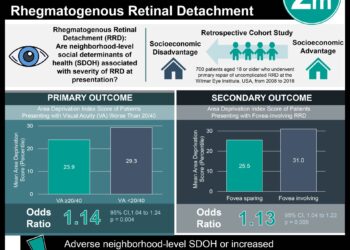
#VisualAbstract Adverse Social Determinants of Health are Associated with More Severe Rhegmatogenous Retinal Detachment
StudyGraphics

#VisualAbstract Adverse Social Determinants of Health are Associated with More Severe Rhegmatogenous Retinal Detachment

August 27, 2024
✦ EvidencePulse™ by 2 Minute Medicine 2026 evidence scan 3 reports You asked top stroke trials 2026 Synthesizing medical evidence... Top 2026 stroke trial results: OCEANIC — ischemic stroke: 6.2% vs 8.4% OPTION* — mRS 0–1: 43.6% vs 34.2% ORIENTAL* — mRS 0–2: 58.6% vs 46.6% *Higher sICH in intervention arms Participants randomizedN OCEANIC 12,327 OPTION 570 ORIENTAL 564 Ask about guidelines or landmark trials... Try EvidencePulse™ Get the signal. Try it now → Physician-trained medical AI by 2 Minute Medicine

2MM+ All Access

Full details →
$4.99 /month

3-day free trial · cancel anytime

  • ✓100+ physician-written reports
  • ✓EvidencePulse™ + HypeCheck™
  • ✓Ad-free reading + newsletters
Start 3-day free trial

Then $4.99/month. Manage renewal in your account.

NPI Lookup · Free

Look up any US clinician

Search by name or NPI number, live from the CMS NPI Registry.

  • OIG exclusion check
  • Licenses and specialties
  • No account needed
Open NPI Lookup →

2 Minute Medicine® is an award winning, physician-run, expert medical media company. Our content is curated, written and edited by practicing health professionals who have clinical and scientific expertise in their field of reporting. Our editorial management team is comprised of highly-trained MD physicians. Join numerous brands, companies, and hospitals who trust our licensed content.

Recent Reports

  • Optogenetic therapy may partially restore vision in retinitis pigmentosa
  • An artificial intelligence system for human papillomavirus-positive dual stain cervical cancer screening reads p16-Ki67 slides
  • Elevated low-density lipoprotein cholesterol is a risk factor for atherosclerotic disease irrespective of familial hypercholesterolemia status
License Content
Terms of Use | Disclaimer
Cookie Policy

Get the app

Read 2 Minute Medicine on iPhone, iPad and Android.

Download on the App StoreGet it on Google Play
QR code for www.2minutemedicine.com/app
On a computer? Scan this with your phone’s camera.
2MM+ All Access Full details →

The medical literature, distilled daily.

Monthly plan selected: $4.99 /month.

$4.99/month

3-day free trial · cancel anytime

Start 3-day free trial

Then $4.99/month. Manage renewal in your account.

Yearly plan selected: $49.90 /year.

$49.90/year

2 months free

Start 3-day free trial

Then $49.90/year.

Membership benefits

  • ✓100+ physician-written reports
  • ✓AI EvidencePulse™ + HypeCheck™
  • ✓Ad-free reading + newsletters
  • ✓NPI watchlist + bulk NPI verification

Already a member? Sign in

  • About
  • Specialties
    • All Specialties, All Recent Reports
    • Cardiology
    • Chronic Disease
    • Dermatology
    • Emergency
    • Endocrinology
    • Gastroenterology
    • Imaging and Intervention
    • Infectious Disease
    • Nephrology
    • Neurology
    • Obstetrics
    • Oncology
    • Ophthalmology
    • Pediatrics
    • Pharma
    • Preclinical
    • Psychiatry
    • Public Health
    • Pulmonology
    • Rheumatology
    • Surgery
    • Rewinds
    • The Scan
  • EvidencePulse™
  • HypeCheck™
  • AI News
  • Classics™
    • 2MM+ Online Access
    • Paperback and Ebook
  • Tools
    • NPI Registry Lookup
    • RVU Search
  • Partners
    • License Content
    • Advertise with Us
No Result
View All Result

© 2026 2 Minute Medicine, Inc. - Physician-written medical news.