
• About
  • Masthead
  • License Content
  • Advertise
  • Press Releases
  • Newsroom
  • RSS/Email List
  • 2MM Podcast
  • Write for us
  • Contact Us
2 Minute Medicine
No Result
View All Result

No products in the cart.

Sign in
SUBSCRIBE
  • About
  • Specialties
    • All Specialties, All Recent Reports
    • Cardiology
    • Chronic Disease
    • Dermatology
    • Emergency
    • Endocrinology
    • Gastroenterology
    • Imaging and Intervention
    • Infectious Disease
    • Nephrology
    • Neurology
    • Obstetrics
    • Oncology
    • Ophthalmology
    • Pediatrics
    • Pharma
    • Preclinical
    • Psychiatry
    • Public Health
    • Pulmonology
    • Rheumatology
    • Surgery
    • Rewinds
    • The Scan
  • EvidencePulse™
  • HypeCheck™
  • AI News
  • Classics™
    • 2MM+ Online Access
    • Paperback and Ebook
  • Tools
    • NPI Registry Lookup
    • RVU Search
    • Physician Pay by Specialty
    • ICD-10 Code Lookup
    • FDA Drug Approvals
    • Drug Safety for Breastfeeding/Pregnancy
    • Clinical Guidelines
    • Medical Calculators
    • ECG Reference
      • QTc Calculator
      • Sgarbossa Criteria
      • ECG Axis Calculator
      • AV Block Helper
  • Rankings
    • Medical School Rankings
    • Residency Rankings
  • Partners
    • License Content
    • Advertise with Us
2 Minute Medicine
  • About
  • Specialties
    • All Specialties, All Recent Reports
    • Cardiology
    • Chronic Disease
    • Dermatology
    • Emergency
    • Endocrinology
    • Gastroenterology
    • Imaging and Intervention
    • Infectious Disease
    • Nephrology
    • Neurology
    • Obstetrics
    • Oncology
    • Ophthalmology
    • Pediatrics
    • Pharma
    • Preclinical
    • Psychiatry
    • Public Health
    • Pulmonology
    • Rheumatology
    • Surgery
    • Rewinds
    • The Scan
  • EvidencePulse™
  • HypeCheck™
  • AI News
  • Classics™
    • 2MM+ Online Access
    • Paperback and Ebook
  • Tools
    • NPI Registry Lookup
    • RVU Search
    • Physician Pay by Specialty
    • ICD-10 Code Lookup
    • FDA Drug Approvals
    • Drug Safety for Breastfeeding/Pregnancy
    • Clinical Guidelines
    • Medical Calculators
    • ECG Reference
      • QTc Calculator
      • Sgarbossa Criteria
      • ECG Axis Calculator
      • AV Block Helper
  • Rankings
    • Medical School Rankings
    • Residency Rankings
  • Partners
    • License Content
    • Advertise with Us
Sign in
SUBSCRIBE
2 Minute Medicine
Sign in
Subscribe
2 Minute MedicineFree on Google PlayGet
✦EvidencePulse™by 2 Minute Medicine3 reportsYou askedtop stroke trials 2026Synthesizing medical evidence...Top 2026 stroke trial results:OCEANIC — ischemic stroke: 6.2% vs 8.4%OPTION* — mRS 0–1: 43.6% vs 34.2%ORIENTAL* — mRS 0–2: 58.6% vs 46.6%*Higher sICH in intervention armsParticipants randomizedNOCEANIC12,327OPTION570ORIENTAL564Ask about guidelines or landmark trials...↑Try EvidencePulse™Ask the evidence. Get the signal.Try it now →
Home Health A to Z

Patient Basics: Tachycardia (Fast Heart Rate)
by2 Minute Medicine
October 30, 2026
in Health A to Z
Reading Time: 6 mins read
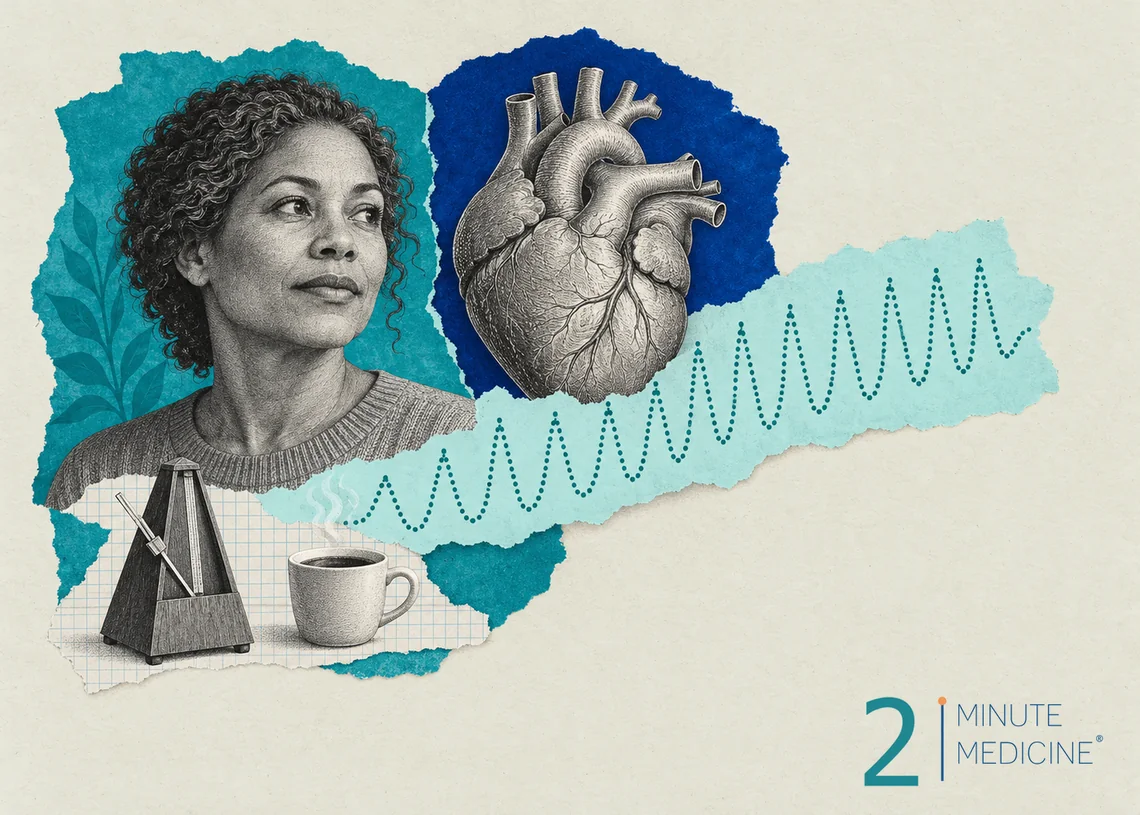
Collage on tachycardia: a calm woman beside an engraved heart, a teal ribbon in quick peaks, a metronome and a coffee cup
Share on FacebookShare on TwitterShare on LinkedIn

Tachycardia means a fast heart rate, more than 100 beats a minute at rest in adults. Often it’s how the body reacts to exercise, fever or stress. Sometimes it comes from a problem with the heart’s electrical system that needs treatment. A fast heartbeat with chest pain, fainting or trouble breathing needs emergency care.

Key points

  • A normal resting heart rate for adults is 60 to 100 beats a minute.
  • Common harmless causes include exercise, fear, caffeine, fever and dehydration.
  • Some fast rhythms, such as atrial fibrillation and supraventricular tachycardia, need treatment. Ventricular tachycardia can be life-threatening.
  • An ECG (heart tracing) is the key test. A wearable monitor can catch rhythms that come and go.
  • Many fast rhythms can be controlled with medicine or fixed with a procedure called ablation.

How the heartbeat works

Each heartbeat starts with an electrical signal from the sinus node, a small cluster of cells in the upper right chamber of the heart. The signal spreads through the two upper chambers (atria), passes through a relay point called the AV node, and then moves into the two lower chambers (ventricles), which pump blood out to the body. Tachycardia happens when the sinus node fires faster than usual, or when another part of the heart takes over and sends out signals too quickly.

What causes tachycardia

Sinus tachycardia

The rhythm is normal, only faster. It usually means the body needs more blood flow for some reason. Causes include:

  • Exercise, excitement, anxiety or pain
  • Fever or infection. A fever can make your heart pound or race (palpitations).
  • Dehydration or blood loss
  • Anemia (too few red blood cells)
  • An overactive thyroid
  • Caffeine, nicotine, alcohol, and drugs such as cocaine or methamphetamine
  • Some medicines, including decongestants and asthma inhalers
  • A blood clot in the lungs (pulmonary embolism), which is an emergency

Some people, most often young women, have a big jump in heart rate when they stand up, along with dizziness and tiredness. This may be a condition called postural orthostatic tachycardia syndrome (POTS).

Fast rhythms from the upper chambers

  • Supraventricular tachycardia (SVT) starts and stops suddenly, often at rest. It’s usually caused by an extra electrical pathway that lets the signal loop around and around. It can feel frightening but is rarely dangerous.
  • Atrial fibrillation (AFib) makes the upper chambers quiver, so the heartbeat is fast and irregular. It raises the risk of stroke because blood clots can form in the heart.
  • Atrial flutter is similar to AFib, but the rhythm is more regular.

Fast rhythms from the lower chambers

Ventricular tachycardia (VT) begins in the ventricles. It most often happens in people with heart disease, such as a past heart attack or a weak heart muscle. The heart beats so fast it can’t fill properly, so blood pressure can drop. VT can turn into ventricular fibrillation, a chaotic rhythm that stops the heart from pumping (cardiac arrest).

Tachycardia symptoms

  • A racing, pounding or fluttering feeling in the chest (palpitations)
  • Dizziness or lightheadedness
  • Shortness of breath
  • Chest pain or pressure
  • Tiredness
  • Fainting

Some people feel nothing at all, and the fast rate is found during a checkup or by a smartwatch.

RELATED REPORTS

The Scan by 2 Minute Medicine®: Competition and COVID, Anti-Anaphylaxis, Pulling the Plug on Psychedelics and POTS in the Pool:

Intranasal etripamil effective for conversion of paroxysmal supraventricular tachycardia

How it’s diagnosed

  • ECG. Sticky pads on your chest record the heart’s electrical activity. It shows the type of rhythm if the fast heartbeat happens during the test.
  • Wearable monitors. A Holter monitor records for a day or two. A patch or event monitor can be worn for a few weeks. A tiny recorder placed under the skin can track the heart for years.
  • Blood tests check for anemia, thyroid problems and the levels of salts such as potassium.
  • Echocardiogram. An ultrasound of the heart shows its size and how well it pumps.
  • Exercise test. Your heart is recorded while you walk on a treadmill.
  • Electrophysiology study. Thin wires are passed through a vein to the heart to map its electrical signals. It’s often done at the same time as an ablation.

Recordings from a smartwatch can help your doctor, so bring them to your visit.

Tachycardia treatment

For sinus tachycardia, treating the cause, such as fever, dehydration or an overactive thyroid, brings the rate down. For other fast rhythms, options include:

  • Vagal maneuvers. Some episodes of SVT stop if you bear down hard, as if having a bowel movement, or splash your face with ice-cold water. Ask your doctor to show you how.
  • Medicines. Beta-blockers (such as metoprolol) and calcium channel blockers (such as diltiazem) slow the heart rate. Other drugs help keep the heart in a normal rhythm. In the emergency department, a fast-acting IV drug called adenosine can stop SVT.
  • Blood thinners. Many people with AFib or atrial flutter take these to lower the risk of stroke.
  • Cardioversion. A controlled electric shock, given while you’re sedated, resets the heart to a normal rhythm.
  • Catheter ablation. A doctor threads a thin tube through a vein to the heart and uses heat or cold to destroy the small area causing the fast rhythm. It cures most SVT and helps many people with AFib.
  • Implantable cardioverter-defibrillator (ICD). People at risk of dangerous VT may get this small device placed under the skin. It watches the heart and gives a shock to stop a life-threatening rhythm.

Lowering your risk

  • Cut back on caffeine and alcohol if they set off episodes.
  • Don’t smoke or vape, and avoid stimulant drugs.
  • Ask a pharmacist before taking cold medicines that contain decongestants.
  • Keep your blood pressure, weight and any sleep apnea under control.
  • Drink enough fluids, especially in hot weather.

When to see a doctor

  • Episodes of a racing or pounding heart that keep coming back
  • A resting heart rate over 100 most of the time
  • A smartwatch alert for an irregular rhythm
  • Dizziness or tiredness along with a fast heartbeat

Call 911 for a fast heartbeat with chest pain, fainting, severe shortness of breath or confusion. If someone collapses and isn’t breathing, call 911, start CPR and use an AED (automated external defibrillator) if one is nearby.

Common questions about tachycardia

Can a fever cause heart palpitations?

Yes. A fever speeds up the heart by roughly 10 beats a minute for each degree Celsius (about 2°F), and you may feel it pounding or racing. The rate should settle as the fever comes down. See a doctor if it stays fast after the fever breaks, or you feel faint or short of breath.

Is tachycardia dangerous?

It depends on the cause. A fast rate from exercise, fever or fear is harmless and settles once the trigger passes, and SVT is rarely dangerous. Ventricular tachycardia and untreated AFib can be serious, especially in people with heart disease, and need prompt care.

Can anxiety cause tachycardia?

Yes. Anxiety and panic release adrenaline, which can push the heart past 100 beats a minute. The rhythm is normal and slows once the feeling passes. A rhythm problem can also make you feel anxious, so see a doctor if racing spells start suddenly, come on at rest or cause fainting.

Questions to ask your doctor

  • What type of tachycardia do I have?
  • Is it dangerous, or mostly uncomfortable?
  • What might be setting off my episodes?
  • Would ablation be a good option for me?
  • What should I do if an episode starts at home?

Learn more

  • What is an arrhythmia? (National Heart, Lung, and Blood Institute)
  • Arrhythmia (MedlinePlus, U.S. National Library of Medicine)

This guide is general information and doesn’t replace advice from your own doctor. Last updated October 2026.

Tags: Tachycardia
Previous Post

Patient Basics: Swimmer’s Ear (Otitis Externa)

Next Post

Patient Basics: Tendonitis (Tendinitis)

RelatedReports

The Scan by 2 Minute Medicine®:  Ultra-Trail du Mont-Blanc, Taylor Swift, NBA rookie Chet Holmgren and Magic Mushrooms!
The Scan by 2 Minute Medicine®

The Scan by 2 Minute Medicine®: Competition and COVID, Anti-Anaphylaxis, Pulling the Plug on Psychedelics and POTS in the Pool:

August 20, 2024
Chronic Disease

Intranasal etripamil effective for conversion of paroxysmal supraventricular tachycardia

July 25, 2023
Next Post
Subarachnoid hemorrhage collage of a brain seen from below with a small berry-shaped aneurysm, a clock and an ambulance

Patient Basics: Subarachnoid Hemorrhage

Collage of an older woman, a skull with a thin crescent of subdural hematoma under the bone, a cane and a scanner ring

Patient Basics: Subdural Hematoma

Stomach cancer collage: a calm middle-aged man, an engraved stomach with a teal ribbon, and a bowl of broth with a spoon

Patient Basics: Stomach Cancer

✦ EvidencePulse™ by 2 Minute Medicine 3 reports You asked top stroke trials 2026 Synthesizing medical evidence... Top 2026 stroke trial results: OCEANIC — ischemic stroke: 6.2% vs 8.4% OPTION* — mRS 0–1: 43.6% vs 34.2% ORIENTAL* — mRS 0–2: 58.6% vs 46.6% *Higher sICH in intervention arms Participants randomizedN OCEANIC 12,327 OPTION 570 ORIENTAL 564 Ask about guidelines or landmark trials... Try EvidencePulse™ Get the signal. Try it now → Physician-trained medical AI by 2 Minute Medicine

2MM+ All Access

Full details →
$4.99 /month

3-day free trial · cancel anytime

  • ✓100+ physician-written reports
  • ✓EvidencePulse™ + HypeCheck™
  • ✓Ad-free reading + newsletters
Start 3-day free trial

Then $4.99/month. Manage renewal in your account.

2 Minute Medicine® is an award winning, physician-run, expert medical media company. Our content is curated, written and edited by practicing health professionals who have clinical and scientific expertise in their field of reporting. Our editorial management team is comprised of highly-trained MD physicians. Join numerous brands, companies, and hospitals who trust our licensed content.

Recent Reports

  • CDC reports 5,182 confirmed measles cases in the United States in 2026
  • In selected patients with anterior-circulation large-vessel stroke 24-72 hours after onset, thrombectomy improved 90-day function but increased hemorrhage and death
  • Mavacamten reduced left ventricular outflow tract obstruction more than placebo in adolescents with symptomatic obstructive hypertrophic cardiomyopathy
License Content
Terms of Use | Disclaimer
Cookie Policy

Get the app

Read 2 Minute Medicine on iPhone, iPad and Android.

Download on the App StoreGet it on Google Play
QR code for www.2minutemedicine.com/app
On a computer? Scan this with your phone’s camera.
2MM+ All Access Full details →

The medical literature, distilled daily.

Monthly plan selected: $4.99 /month.

$4.99/month

3-day free trial · cancel anytime

Start 3-day free trial

Then $4.99/month. Manage renewal in your account.

Yearly plan selected: $49.90 /year.

$49.90/year

2 months free

Start 3-day free trial

Then $49.90/year.

Membership benefits

  • ✓100+ physician-written reports
  • ✓AI EvidencePulse™ + HypeCheck™
  • ✓Ad-free reading + newsletters
  • ✓FDA drug approvals + clinical calculators

Already a member? Sign in

  • Get the app
  • About
  • Specialties
    • All Specialties, All Recent Reports
    • Cardiology
    • Chronic Disease
    • Dermatology
    • Emergency
    • Endocrinology
    • Gastroenterology
    • Imaging and Intervention
    • Infectious Disease
    • Nephrology
    • Neurology
    • Obstetrics
    • Oncology
    • Ophthalmology
    • Pediatrics
    • Pharma
    • Preclinical
    • Psychiatry
    • Public Health
    • Pulmonology
    • Rheumatology
    • Surgery
    • Rewinds
    • The Scan
  • EvidencePulse™
  • HypeCheck™
  • AI News
  • Classics™
    • 2MM+ Online Access
    • Paperback and Ebook
  • Tools
    • NPI Registry Lookup
    • RVU Search
    • Physician Pay by Specialty
    • ICD-10 Code Lookup
    • FDA Drug Approvals
    • Drug Safety for Breastfeeding/Pregnancy
    • Clinical Guidelines
    • Medical Calculators
    • ECG Reference
      • QTc Calculator
      • Sgarbossa Criteria
      • ECG Axis Calculator
      • AV Block Helper
  • Rankings
    • Medical School Rankings
    • Residency Rankings
  • Partners
    • License Content
    • Advertise with Us
No Result
View All Result

© 2026 2 Minute Medicine, Inc. - Physician-written medical news.


