

Patient Basics: Swimmer’s Ear (Otitis Externa)
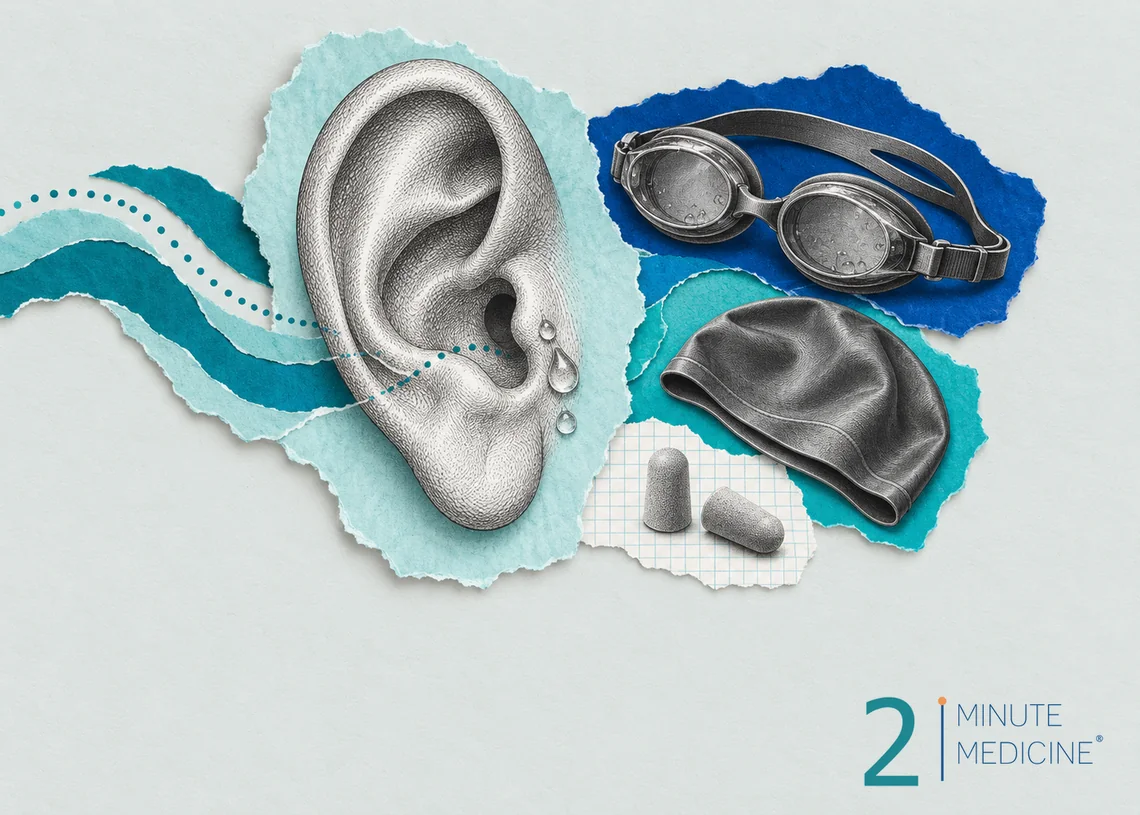
Swimmer’s ear (otitis externa) is an infection in the outer ear canal. The canal is the tube that runs from the opening of the ear to the eardrum. It usually starts when water stays trapped in the ear and softens the skin, letting bacteria grow. The ear hurts, especially when the outer ear is pulled or pressed. Prescription ear drops clear most cases within a week to 10 days.
Key points
- Swimming, showering, cotton swabs, earbuds and hearing aids can all set it off.
- Pain when you tug on the earlobe or press the flap in front of the ear is a classic sign.
- It is different from a middle ear infection, which sits behind the eardrum and is common in young children after colds.
- Antibiotic ear drops are the main treatment. Pills are rarely needed.
- Keeping ears dry and leaving earwax alone are the best ways to prevent it.
What causes swimmer’s ear
The skin of the ear canal is thin, and earwax normally protects it by repelling water and keeping germs out. When the canal stays wet or the skin gets scratched, that protection breaks down. Bacteria, most often Pseudomonas or Staphylococcus, then grow in the warm, damp skin. Less often, a fungus causes it.
Things that raise the risk:
- Swimming, especially in lakes or rivers, or frequent long showers
- Living in a hot, humid climate
- Cleaning the ears with cotton swabs, fingers, hairpins or keys
- Earbuds, earplugs and hearing aids that rub the skin or trap moisture
- Skin conditions such as eczema, psoriasis or dandruff in the ear canal
- Hair spray, hair dye or other products that get into the ear
- Very narrow or hairy ear canals
Swimmer’s ear symptoms
- Ear pain that can become severe, often worse when chewing
- Pain when the outer ear is pulled or the small flap in front of the ear canal is pressed
- Itching inside the ear, often the first sign
- Redness and swelling of the ear canal
- Clear, cloudy or yellow fluid draining from the ear
- A blocked or full feeling, and muffled hearing
- Swollen, tender glands in front of or behind the ear
Fever is uncommon. Swelling can spread to the outer ear or the side of the face if the infection gets worse.
How it’s diagnosed
A doctor looks into your ear with a lighted scope (otoscope) and gently moves the outer ear to check for pain. The canal often looks red, swollen and wet, and it may be too swollen to see the eardrum. If the infection is severe, keeps coming back or doesn’t improve with drops, the doctor may swab the fluid and send it to a lab to find the germ.
How swimmer’s ear is treated
Ear drops
Prescription drops are the main treatment, usually for 7 to 10 days. They may contain an antibiotic such as ciprofloxacin or ofloxacin, often with a steroid to bring down swelling, or an acid solution that makes the canal less friendly to germs. If a fungus is the cause, antifungal drops are used. Tell your doctor if you have a hole in your eardrum or ear tubes, because some drops can harm the middle ear.
To put drops in well:
- Warm the bottle in your hand for a few minutes so the drops don’t cause dizziness.
- Lie on your side with the sore ear facing up.
- Fill the ear canal with the drops, then press gently on the flap in front of the ear a few times to push them in.
- Stay lying down for 3 to 5 minutes.
If it’s hard to put in your own drops, ask someone to help.
Other treatment
- Cleaning. A doctor may gently clear fluid and debris from the canal so the drops can reach the skin.
- Ear wick. If the canal is swollen shut, a small sponge may be placed inside to carry the drops deeper. It falls out or is removed in a few days.
- Pain relief. Ibuprofen or acetaminophen helps. A warm, dry cloth held over the ear may ease the ache.
- Antibiotic pills are needed only if the infection spreads beyond the ear canal, or for some people with diabetes or a weak immune system.
While it heals
- Keep the ear dry. Skip swimming for about 7 to 10 days, and protect the ear in the shower.
- Don’t put earbuds, earplugs or hearing aids in until the pain is gone, unless your doctor says otherwise.
- Don’t put cotton swabs, oils or home remedies in the ear.
Pain usually starts to ease within 2 to 3 days of starting drops.
Preventing swimmer’s ear
- After swimming or showering, tilt your head to each side to let water run out, and gently dry the outer ear with a towel.
- Use a hair dryer on the lowest, coolest setting, held at least a foot from the ear, to dry the canal.
- Wear a swim cap or well-fitting swim earplugs if you swim often or have had swimmer’s ear before.
- Ask your doctor about drying drops after swimming. Don’t use them if you have ear tubes or a hole in your eardrum.
- Leave earwax alone. Never put cotton swabs or other objects into the ear canal.
- Clean earbuds and hearing aids regularly, and give your ears a break from them.
When to see a doctor
- Ear pain, itching or drainage that lasts more than a day or two
- Symptoms that aren’t better 2 to 3 days after starting drops
- Swimmer’s ear that keeps coming back
Get care right away for severe pain, fever, redness or swelling spreading to the outer ear or face, weakness of the face, or dizziness. Older adults with diabetes or a weak immune system should be seen quickly, because a rare, serious form (necrotizing otitis externa) can spread to the bones of the skull.
Common questions about swimmer’s ear
How do I keep water out of my ears in the shower?
Wear a shower cap that covers your ears, or use soft silicone or foam earplugs. A cotton ball coated with petroleum jelly, placed in the opening of the ear but not pushed in, also works. Afterward, tilt your head to let water drain and dry your outer ear with a towel.
Is swimmer’s ear contagious?
No, swimmer’s ear doesn’t spread from person to person. It comes from germs that grow in a damp, irritated ear canal. People who swim in the same pool or lake may get it at the same time because they share the same wet conditions. Sharing earbuds isn’t a good idea, though.
How long does swimmer’s ear last?
With prescription drops, most people feel better in 2 to 3 days and are fully healed in 7 to 10 days. Without treatment, mild cases may clear slowly, but many get worse and more painful. Keep using the drops for as long as prescribed, even after the pain is gone.
Questions to ask your doctor
- Is this swimmer’s ear or a middle ear infection?
- Is my eardrum intact, and which drops are right for me?
- How long should I stay out of the water?
- When can I use my earbuds or hearing aids again?
- How can I stop this from coming back?
Learn more
- Swimmer’s ear (MedlinePlus, U.S. National Library of Medicine)
This guide is general information and doesn’t replace advice from your own doctor. Last updated October 2026.






 Get the app