

Patient Basics: Middle-Ear Infection (Otitis Media)
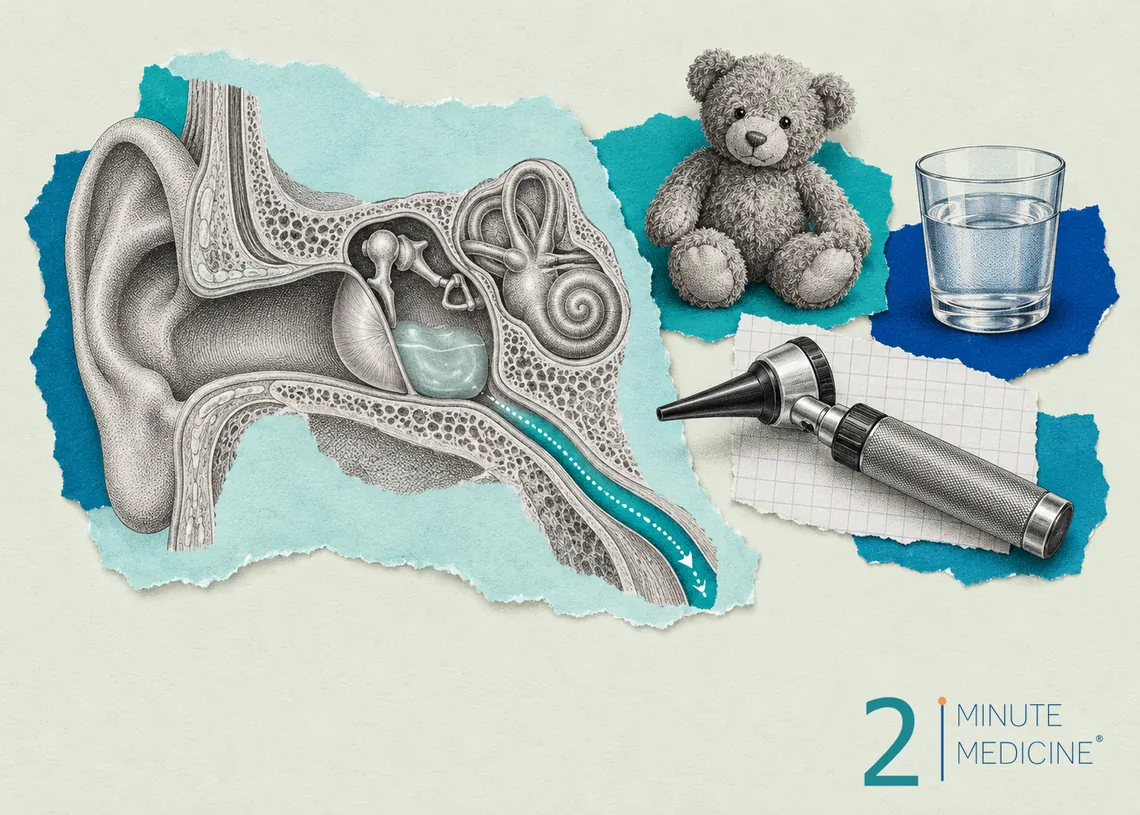
A middle-ear infection (otitis media) is an infection in the small, air-filled space behind the eardrum. It is one of the most common reasons young children see a doctor, and adults can get it too. Most infections clear up within a few days, and treating the pain comes first.
Key points
- Ear infections usually start after a cold, when swelling blocks the tube that drains the middle ear.
- Children between 6 months and 2 years old get them most often.
- Pain medicine such as acetaminophen or ibuprofen is the first step. Many children over 6 months with mild symptoms get better without antibiotics.
- When an antibiotic is needed, amoxicillin is the usual choice.
- Fluid can stay behind the eardrum for weeks after the infection is gone. It usually drains by itself.
- Vaccines, a smoke-free home and breastfeeding all lower a baby’s risk.
What causes a middle-ear infection
The middle ear sits between the eardrum and the inner ear. It holds three tiny bones that pass sound along. A narrow channel, the eustachian tube, links the middle ear to the back of the nose and throat. It lets air in and lets fluid drain out.
A cold, the flu or an allergy flare can make this tube swell shut. Fluid then collects behind the eardrum, and germs from the nose and throat grow in it. The trapped fluid and pus push on the eardrum, and that causes the pain.
Children get more ear infections than adults because their eustachian tubes are shorter, narrower and flatter, so they drain less well.
Things that raise the risk
- Being between 6 months and 2 years old
- Going to day care, where colds spread easily
- Breathing tobacco smoke at home
- Drinking from a bottle while lying flat
- A family history of ear infections
- Large adenoids (lumps of tissue at the back of the nose), a cleft palate or Down syndrome
Ear infection symptoms in adults and children
Older children and adults usually notice:
- Ear pain, often worse when lying down
- Muffled hearing or a full feeling in the ear
- Fever
Babies and toddlers can’t tell you their ear hurts. Watch for:
- Tugging or rubbing at one ear
- More crying and fussing than usual, mostly at night
- Trouble sleeping or feeding
- Fever
- Not turning toward quiet sounds
Sometimes the pressure makes a small tear in the eardrum. Yellow or blood-tinged fluid then leaks from the ear, and the pain often eases fast. The tear usually heals on its own within a few weeks.
How it’s diagnosed
The doctor looks in the ear with a lighted tool called an otoscope. An infected eardrum is often red and bulges outward from the pus behind it. Some otoscopes puff a little air at the eardrum to see if it moves. An eardrum that barely moves points to fluid behind it. Lab tests are rarely needed.
How a middle-ear infection is treated
Pain relief
Treat the pain right away, whether or not an antibiotic is given.
- Acetaminophen (Tylenol) or ibuprofen (Advil, Motrin) eases pain and fever. Ibuprofen is not for babies under 6 months. Ask your doctor or pharmacist for the right dose for your child’s weight.
- Never give aspirin to children or teens. It is linked to Reye’s syndrome, a rare but serious illness.
- A warm cloth held over the ear may help.
- Don’t put any drops in an ear that is leaking fluid unless a doctor tells you to.
Waiting or antibiotics
Many ear infections get better on their own. For a child over 6 months with mild symptoms, doctors often suggest watching and waiting for 2 to 3 days. If the child isn’t better by then, or gets worse, an antibiotic is started. Some doctors hand you a prescription to fill only if it’s needed.
Antibiotics are usually started right away for:
- Babies under 6 months
- Severe ear pain, or a fever of 102.2°F (39°C) or higher
- Children under 2 with infection in both ears
- Fluid leaking from the ear
Amoxicillin is usually the first choice. If a child took amoxicillin in the past month, or doesn’t improve on it, the doctor may switch to amoxicillin with clavulanate (Augmentin). People with a penicillin allergy get a different drug. Most children feel better within 2 to 3 days. Give every dose, even after your child seems well.
Antibiotics can cause diarrhea and diaper rash, and using them too often helps germs resist them. Decongestants and antihistamines don’t help ear infections.
Ear tubes
Some children get one infection after another, or have fluid that stays for months and dulls their hearing. An ear, nose and throat (ENT) doctor may suggest ear tubes. In a short operation under general anesthesia, the surgeon makes a tiny opening in the eardrum and places a small tube in it. The tube lets air in and fluid out. Tubes usually fall out on their own in 6 to 18 months.
Fluid that stays behind
Fluid often lingers behind the eardrum after the infection clears. Doctors call this otitis media with effusion. It doesn’t usually hurt, but it can muffle hearing for a while. Most of the time it drains within 3 months without treatment. The doctor may recheck the ear and test your child’s hearing if it lasts longer, or sooner if your child has speech or learning delays.
Lowering the risk
- Keep vaccines up to date, including the pneumococcal vaccine and a yearly flu shot from 6 months of age.
- Keep your child away from tobacco smoke and vape clouds.
- Breastfeed if you can, ideally for at least 6 months.
- Hold your baby upright for bottle feeds, and don’t put a baby to bed with a bottle.
- Wash hands often, especially during cold season.
When to see a doctor
- Ear pain that is severe or lasts more than a day
- Any fever in a baby under 3 months
- Fluid, pus or blood leaking from the ear
- No improvement after 2 to 3 days of waiting or of antibiotics
- Hearing that still seems muffled weeks later, or speech that seems slow to develop
Get emergency care for redness, swelling or tenderness behind the ear, or an ear that starts to stick out. These can be signs of mastoiditis, an infection of the bone behind the ear. Also get help fast for a stiff neck, a severe headache, unusual sleepiness, confusion or a face that droops on one side.
Common questions about middle-ear infections
Are ear infections contagious?
No, the ear infection itself doesn’t pass from person to person. The colds and other viruses that lead to ear infections do spread easily, though. Hand washing, covering coughs and keeping a child with a fever home from day care all help limit them.
Can adults get a middle-ear infection?
Yes, though adults get them less often than children. In adults, an infection usually follows a cold or an allergy flare, and treatment is much the same. An adult with repeat infections, or fluid in one ear that won’t clear, should see an ENT doctor to check the back of the nose.
Do ear infections go away on their own?
Many do. A large share of middle-ear infections clear within 2 to 3 days without antibiotics, especially in children over 2 with mild symptoms. Pain medicine helps in the meantime. If pain or fever isn’t better after 2 to 3 days, or gets worse, see a doctor about an antibiotic.
How is a middle-ear infection different from swimmer’s ear?
Swimmer’s ear (otitis externa) is an infection of the skin in the ear canal, outside the eardrum. It often follows swimming, and tugging the earlobe makes it hurt more. It is treated with ear drops. A middle-ear infection sits behind the eardrum, often follows a cold, and drops don’t reach it.
Questions to ask your doctor
- Does my child need an antibiotic now, or can we wait?
- What dose of pain medicine is right for my child?
- When should the ear be checked again?
- Should my child have a hearing test?
- How many infections would make ear tubes worth thinking about?
Learn more
- Ear infections (MedlinePlus, U.S. National Library of Medicine)
- Ear infections in children (National Institute on Deafness and Other Communication Disorders)
This guide is general information and doesn’t replace advice from your own doctor. Last updated October 2026.






 Get the app