• About
  • Masthead
  • License Content
  • Advertise
  • Submit Press Release
  • RSS/Email List
  • 2MM Podcast
  • Write for us
  • Contact Us
2 Minute Medicine
No Result
View All Result

No products in the cart.

SUBSCRIBE
  • About
  • Specialties
    • All Specialties, All Recent Reports
    • Cardiology
    • Chronic Disease
    • Dermatology
    • Emergency
    • Endocrinology
    • Gastroenterology
    • Imaging and Intervention
    • Infectious Disease
    • Nephrology
    • Neurology
    • Obstetrics
    • Oncology
    • Ophthalmology
    • Pediatrics
    • Pharma
    • Preclinical
    • Psychiatry
    • Public Health
    • Pulmonology
    • Rheumatology
    • Surgery
  • Tools+
    • EvidencePulse™
    • HypeCheck™
    • NPI Registry Lookup
    • RVU Search
  • Pharma
  • AI Roundup
  • The Scan+
  • Classics™+
    • 2MM+ Online Access
    • Paperback and Ebook
  • Rewinds
  • Partners
    • License Content
    • Submit Press Release
    • Advertise with Us
  • Account
    • Subscribe
    • My account
    • Cart
    • Sign-in
2 Minute Medicine
  • About
  • Specialties
    • All Specialties, All Recent Reports
    • Cardiology
    • Chronic Disease
    • Dermatology
    • Emergency
    • Endocrinology
    • Gastroenterology
    • Imaging and Intervention
    • Infectious Disease
    • Nephrology
    • Neurology
    • Obstetrics
    • Oncology
    • Ophthalmology
    • Pediatrics
    • Pharma
    • Preclinical
    • Psychiatry
    • Public Health
    • Pulmonology
    • Rheumatology
    • Surgery
  • Tools+
    • EvidencePulse™
    • HypeCheck™
    • NPI Registry Lookup
    • RVU Search
  • Pharma
  • AI Roundup
  • The Scan+
  • Classics™+
    • 2MM+ Online Access
    • Paperback and Ebook
  • Rewinds
  • Partners
    • License Content
    • Submit Press Release
    • Advertise with Us
  • Account
    • Subscribe
    • My account
    • Cart
    • Sign-in
SUBSCRIBE
2 Minute Medicine
Subscribe
EvidencePulse™ by 2 Minute Medicine 2026 evidence scan 3 reports You asked top stroke trials 2026 Synthesizing medical evidence... Top 2026 stroke trial results: OCEANIC — ischemic stroke: 6.2% vs 8.4% OPTION* — mRS 0–1: 43.6% vs 34.2% ORIENTAL* — mRS 0–2: 58.6% vs 46.6% *Higher sICH in intervention arms Participants randomizedN OCEANIC 12,327 OPTION 570 ORIENTAL 564 Ask about guidelines or landmark trials... ↑ Try EvidencePulse™ Ask the evidence.
Get the signal.
Try it now → Physician-trained medical AI by 2 Minute Medicine
Home All Specialties Chronic Disease

Somatostatin may not reduce risk of pancreatitis post endoscopic retrograde cholangiopancreatography
byRehan SaiyedandChaz Carrier
July 4, 2014
in Chronic Disease, Gastroenterology, Surgery
Reading Time: 3 mins read
Somatostatin may not reduce risk of pancreatitis post endoscopic retrograde cholangiopancreatography
Share on FacebookShare on Twitter

1. There was no significant reduction in the incidence of pancreatitis following endoscopic retrograde cholangiopancreatography with administration of somatostatin compared to placebo controls. 

Evidence Rating Level: 1 (Excellent)       

Study Rundown: Acute pancreatitis is a significant and potentially fatal complication of endoscopic retrograde cholangiopancreatography (ERCP). Recent studies have elucidated a physiologic role for somatostatin in reducing the incidence of pancreatitis and several meta-analyses have also provided clinical evidence to the same effect. However, given the small sample sizes and variation in drug delivery and dosage across previous studies, much contention still remains regarding its clinical benefit. The lack of difference in the incidence of pancreatitis observed in this study disputes the clinical utility of prophylactic somatostatin administration in preventing pancreatitis following ERCP. Further, no significant difference was identified when comparing the frequencies of mild, moderate, or severe pancreatitis between the somatostatin and control groups. Stratification by high risk and low risk of developing pancreatitis also did not yield any significant differences between both groups. The authors employed a strong study design utilizing a randomized, double-blinded, placebo-controlled trial to readily isolate the effect of the drug on rates of pancreatitis post ERCP. However, despite the discord regarding the therapeutic dose of clinically effective somatostatin prophylaxis, the authors did not vary the administration and dosage of the drug in the study group, and, thus, could not discount an insufficient dosage as a causative factor for the lack of observed difference. Additionally, while the results of the study provide no support for the use of prophylactic somatostatin in all patients undergoing ERCP, it does not rule out the benefit of its administration in patients with specific risk factors for acute pancreatitis, such as Sphincter of Oddi dsyfunction.

Click to read the study in Endoscopy

Relevant Reading: Meta-analysis: somatostatin or its long-acting analogue, octreotide, for prophylaxis against post-ERCP pancreatitis

In-Depth [randomized controlled trial]: A total of 510 patients undergoing ERCP at a single center were included in the study. 255 were randomized to each group. The somatostatin cohort received an intravenous bolus of somatostatin followed by a 4 hour continuous infusion of the drug while the placebo group were administered an analogous dose of saline. Patients undergoing surgeries performed on an outpatient basis were monitored in the hospital for 6 hours post ERCP and were discharged if no symptoms were noted. Further testing was done if a complication was suspected in that time. The overall complication rate was 14.3%. 7.5% of patients receiving somatostatin developed acute pancreatitis, compared to 6.7% of placebo patients (RR 1.12; 95%CI 0.59-2.1, p=0.73). When considering only higher risk patients, rates of developing acute pancreatitis were not significantly different between somatostatin (8.2%) and placebo (9%) groups (RR 0.91; 95%CI 0.38-2.2). No complications or adverse effects to somatostatin, itself, were noted.

RELATED REPORTS

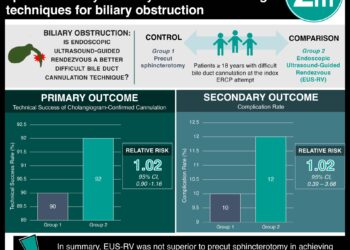
VisualAbstract: Ultrasound-guided rendezvous and precut sphincterotomy similarly effective as salvage techniques for biliary obstruction

Prophylactic pancreatic stent plus indomethacin reduces rates of pancreatitis following endoscopic retrograde cholangiopancreatography

Physician-controlled wire-guided cannulation may improve rates of success in endoscopic retrograde cholangiopancreatography

More from this author: Meniscal allograft transplantation may improve knee function, Intraoperative PEEP levels may not affect post-operative pulmonary complications, Lower rates of repeat intervention following ureteroscopy for kidney stones 

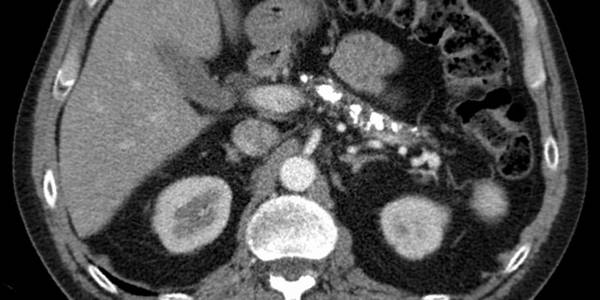
Image: CC/Wiki

©2012-2014 2minutemedicine.com. All rights reserved. No works may be reproduced without expressed written consent from 2minutemedicine.com. Disclaimer: We present factual information directly from peer reviewed medical journals. No post should be construed as medical advice and is not intended as such by the authors, editors, staff or by 2minutemedicine.com. PLEASE SEE A HEALTHCARE PROVIDER IN YOUR AREA IF YOU SEEK MEDICAL ADVICE OF ANY SORT. 
Tags: ERCPpancreatitits
Previous Post

Welfare policies increase physician workload in UK

Next Post

No association found between time to appendectomy and appendix perforation

RelatedReports

VisualAbstract: Ultrasound-guided rendezvous and precut sphincterotomy similarly effective as salvage techniques for biliary obstruction
StudyGraphics

VisualAbstract: Ultrasound-guided rendezvous and precut sphincterotomy similarly effective as salvage techniques for biliary obstruction

September 5, 2024
Mild-to-moderate hypertriglyceridemia associated with higher risk of acute pancreatitis
Chronic Disease

Prophylactic pancreatic stent plus indomethacin reduces rates of pancreatitis following endoscopic retrograde cholangiopancreatography

March 27, 2024
Covered self-expanding metallic stents noninferior to plastic stents in benign biliary strictures
Gastroenterology

Physician-controlled wire-guided cannulation may improve rates of success in endoscopic retrograde cholangiopancreatography

May 6, 2023
ABCD2 Score: Predicting Early Stroke Risk After Transient Ischemic Attack (TIA) [Classics Series]
Radiology Classics

Magnetic resonance cholangiopancreatography diagnoses bile duct obstruction with high sensitivity and specificity [Classics Series]

August 4, 2022
Next Post
Pediatric appendicitis outcomes in Canada not superior to US

No association found between time to appendectomy and appendix perforation

Afatinib shows increased progression-free survival in non-small-cell lung cancer

Brachytherapy following sublobar resection did not reduce local NSCLC recurrence

Eosinophilic infiltrates have limited diagnostic utility in alopecia areata

Eosinophilic infiltrates have limited diagnostic utility in alopecia areata

EvidencePulse™ by 2 Minute Medicine 2026 evidence scan 3 reports You asked top stroke trials 2026 Synthesizing medical evidence... Top 2026 stroke trial results: OCEANIC — ischemic stroke: 6.2% vs 8.4% OPTION* — mRS 0–1: 43.6% vs 34.2% ORIENTAL* — mRS 0–2: 58.6% vs 46.6% *Higher sICH in intervention arms Participants randomizedN OCEANIC 12,327 OPTION 570 ORIENTAL 564 Ask about guidelines or landmark trials... ↑ Try EvidencePulse™ Ask the evidence.
Get the signal.
Try it now → Physician-trained medical AI by 2 Minute Medicine

2MM+ All Access

Full details →
$4.99 /month

5-day free trial · cancel anytime

  • ✓100+ physician-written reports
  • ✓EvidencePulse™ + HypeCheck™
  • ✓Ad-free reading + newsletters
Start 5-day free trial

Then $4.99/month. Manage renewal in your account.

2 Minute Medicine® is an award winning, physician-run, expert medical media company. Our content is curated, written and edited by practicing health professionals who have clinical and scientific expertise in their field of reporting. Our editorial management team is comprised of highly-trained MD physicians. Join numerous brands, companies, and hospitals who trust our licensed content.

Recent Reports

  • Transanastomotic tubes not linked to anastomotic stricture after esophageal atresia repair
  • Artificial intelligence (AI) chatbot reduced depression, anxiety, and eating disorder risk symptoms
  • Real-time AI guidance enters live brain tumor surgery
License Content
Terms of Use | Disclaimer
Cookie Policy
Cleantalk Pixel
2MM+ All Access Full details →

The medical literature, distilled daily.

Monthly plan selected: $4.99 /month.

$4.99/month

5-day free trial · cancel anytime

Start 5-day free trial

Then $4.99/month. Manage renewal in your account.

Yearly plan selected: $49.90 /year.

$49.90/year

2 months free · only $4.16/month

Start 5-day free trial

Then $49.90/year. Manage renewal in your account.

Membership benefits

  • ✓100+ physician-written reports
  • ✓AI EvidencePulse™ + HypeCheck™
  • ✓Ad-free reading + newsletters

Already a member? Sign in

  • About
  • Specialties
    • All Specialties, All Recent Reports
    • Cardiology
    • Chronic Disease
    • Dermatology
    • Emergency
    • Endocrinology
    • Gastroenterology
    • Imaging and Intervention
    • Infectious Disease
    • Nephrology
    • Neurology
    • Obstetrics
    • Oncology
    • Ophthalmology
    • Pediatrics
    • Pharma
    • Preclinical
    • Psychiatry
    • Public Health
    • Pulmonology
    • Rheumatology
    • Surgery
  • Tools
    • EvidencePulse™
    • HypeCheck™
    • NPI Registry Lookup
    • RVU Search
  • Pharma
  • AI Roundup
  • The Scan
  • Classics™
    • 2MM+ Online Access
    • Paperback and Ebook
  • Rewinds
  • Partners
    • License Content
    • Submit Press Release
    • Advertise with Us
  • Account
    • Subscribe
    • My account
    • Cart
    • Sign-in
No Result
View All Result

© 2026 2 Minute Medicine, Inc. - Physician-written medical news.