• About
  • Masthead
  • License Content
  • Advertise
  • Submit Press Release
  • RSS/Email List
  • 2MM Podcast
  • Write for us
  • Contact Us
2 Minute Medicine
No Result
View All Result

No products in the cart.

SUBSCRIBE
  • About
  • Specialties
    • All Specialties, All Recent Reports
    • Cardiology
    • Chronic Disease
    • Dermatology
    • Emergency
    • Endocrinology
    • Gastroenterology
    • Imaging and Intervention
    • Infectious Disease
    • Nephrology
    • Neurology
    • Obstetrics
    • Oncology
    • Ophthalmology
    • Pediatrics
    • Pharma
    • Preclinical
    • Psychiatry
    • Public Health
    • Pulmonology
    • Rheumatology
    • Surgery
  • Tools+
    • EvidencePulse™
    • HypeCheck™
    • NPI Registry Lookup
    • RVU Search
  • Pharma
  • AI Roundup
  • The Scan+
  • Classics™+
    • 2MM+ Online Access
    • Paperback and Ebook
  • Rewinds
  • Partners
    • License Content
    • Submit Press Release
    • Advertise with Us
  • Account
    • Subscribe
    • My account
    • Cart
    • Sign-in
2 Minute Medicine
  • About
  • Specialties
    • All Specialties, All Recent Reports
    • Cardiology
    • Chronic Disease
    • Dermatology
    • Emergency
    • Endocrinology
    • Gastroenterology
    • Imaging and Intervention
    • Infectious Disease
    • Nephrology
    • Neurology
    • Obstetrics
    • Oncology
    • Ophthalmology
    • Pediatrics
    • Pharma
    • Preclinical
    • Psychiatry
    • Public Health
    • Pulmonology
    • Rheumatology
    • Surgery
  • Tools+
    • EvidencePulse™
    • HypeCheck™
    • NPI Registry Lookup
    • RVU Search
  • Pharma
  • AI Roundup
  • The Scan+
  • Classics™+
    • 2MM+ Online Access
    • Paperback and Ebook
  • Rewinds
  • Partners
    • License Content
    • Submit Press Release
    • Advertise with Us
  • Account
    • Subscribe
    • My account
    • Cart
    • Sign-in
SUBSCRIBE
2 Minute Medicine
Subscribe
EvidencePulse™ by 2 Minute Medicine 2026 evidence scan 3 reports You asked top stroke trials 2026 Synthesizing medical evidence... Top 2026 stroke trial results: OCEANIC — ischemic stroke: 6.2% vs 8.4% OPTION* — mRS 0–1: 43.6% vs 34.2% ORIENTAL* — mRS 0–2: 58.6% vs 46.6% *Higher sICH in intervention arms Participants randomizedN OCEANIC 12,327 OPTION 570 ORIENTAL 564 Ask about guidelines or landmark trials... ↑ Try EvidencePulse™ Ask the evidence.
Get the signal.
Try it now → Physician-trained medical AI by 2 Minute Medicine
Home All Specialties Imaging and Intervention

Spiculation of breast masses seen on mammography represents adipose invasion

byXiaofan PanandDylan Wolman
October 20, 2015
in Imaging and Intervention, Obstetrics, Oncology
Reading Time: 3 mins read
Spiculation of breast masses seen on mammography represents adipose invasion
Share on FacebookShare on Twitter

1. In patients with invasive breast cancer who underwent surgery, tumor spiculation was detected on mammographic evaluation in all patients with histologic evidence of marginal adipose tissue while only three-quarters of non-spiculated masses showed adipose invasion.

2.Mammographic evidence of spiculation was independently associated with adipose tissue invasion, higher histologic grade, increased breast density, and higher body mass index (BMI).

Evidence Rating Level: 2 (Good)

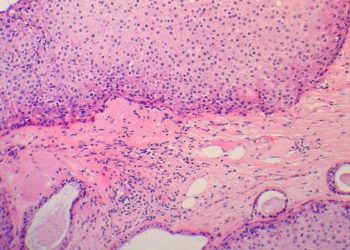
Study Rundown: Breast cancer is one of the most common malignancies diagnosed in women worldwide, and the second greatest cause of female morbidity and mortality in the United States. Invasive breast cancers are frequently difficult to manage, and any insight into the complex interaction between tumor cells and their interaction with the surrounding microenvironment could help catch these high risk tumors early. The mammographic finding of masses with “spiculation,” or dense regions with radiating lines with clustered, star-like, pleomorphic microcalcifications, is suspicious for malignancy.  To this end, a deeper understanding of the histopathologic mechanism by which tumors come to display spiculation or other mammographic findings suggestive of malignancy may help predict tumor subtype and provide prognostic clues. The current study sought to characterize the histologic basis for breast tumors displaying spiculation on mammography. Spiculated masses are the most commonly observed mammographic finding suggestive of invasive carcinoma and were therefore the subject of the present study. However, some post-operative scars may appear quite spiculated and resemble cancer; a careful clinical examination, additional mammographic views, and needle or surgical biopsy are often required to confirm disease. This study retrospectively compared histological findings in patients with biopsy-proven invasive breast cancer and mammographically spiculated masses to those without spiculation, finding that marginal adipose tissue invasion was present in all patients with spiculated masses but only in 77% of those without mammographic evidence of spiculation. This suggested that the development of spiculation may be due to the interaction between tumor cells and their fatty local environment and may be of a different character than non-spiculated tumors, which adds to a body of evidence that showed that spiculated tumors were more likely to be of the non-basal phenotype and of the luminal A subtype. Additionally, other factors independently associated with spiculation were found to be higher histologic grade, dense breast tissue, and greater body mass index. Limitations of this study include its observational and retrospective nature, in addition to a limited interval of follow-up, which may have contributed to lack of significance found for disease-free survival between comparison groups. Additionally, the researchers note that several of the lesions were miscategorized on imaging analysis, which may have further skewed the data.

Click to read the study in Radiology

Relevant Reading: Prognostic impact of marginal adipose tissue invasion in ductal carcinoma of the breast

RELATED REPORTS

Historical redlining associated with lower breast cancer screening across urban neighborhoods

Cognitive behaviour therapy may be superior to bright light therapy for insomnia in women with breast cancer undergoing chemotherapy

Tumour microenvironment factors may influence cancer progression and response to tamoxifen (Nolvadex) in patients with estrogen receptor-positive and human epidermal growth factor receptor 2 breast cancer

In-Depth [retrospective cohort]: Patient medical records of 478 individuals with primary invasive carcinoma of the breast diagnosed between 1999 and 2009 were reviewed for this study. All subjects (median age: 56 yrs; age range: 26 to 96 yrs) underwent surgery and were followed for a median length of 74 months (range: 4–165 months). 136 spiculated tumors and 342 nonspiculated tumors were characterized on mammography. Using regression models and the Kaplan-Meier method, comparisons of clinical-pathologic findings between subjects with and without appearance of spiculation on mammography were studied. 100% (136 of 136 tumors) of the spiculated tumors were positive for adipose tissue invasion on histological examination, while 77% (264 of 342) of nonspiculated masses were observed for adipose invasion (P < 0.001). Other factors independently associated with spiculation were concluded on multivariate analysis included histologic grade (P < 0.001), dense breast (P = 0.002), and BMI (P = 0.02). Events used to determine the disease-free survival analysis included death due to primary, recurrent and metastatic breast cancers. No significant difference in overall survival rate between patients with spiculation on mammography and those without was found (disease-free survival: p = 0.09; overall survival: p = 0.23). Despite the similar prognoses between groups, patients who had tumors with spiculation were more likely to have hormone sensitive disease (estrogen receptor positive: p = 0.004; progesterone receptor positive: p = 0.001) and low grade tumors (p < 0.001) than patients without mammographically spiculated tumors.

Image: PD

©2015 2 Minute Medicine, Inc. All rights reserved. No works may be reproduced without expressed written consent from 2 Minute Medicine, Inc. Inquire about licensing here. No article should be construed as medical advice and is not intended as such by the authors or by 2 Minute Medicine, Inc.


Tags: Breast Cancermammography
Previous Post

Physician-hospital integration associated with increased outpatient health care prices

Next Post

Noninvasive DNA assay detects rejection and infection in lung transplant patients [PreClinical]

RelatedReports

Oncology

Historical redlining associated with lower breast cancer screening across urban neighborhoods

September 13, 2026
Sleep duration, sleepiness, chronotype have variable associations with teen self-regulation
Chronic Disease

Cognitive behaviour therapy may be superior to bright light therapy for insomnia in women with breast cancer undergoing chemotherapy

September 3, 2026
Variability in interpretation of breast biopsy slides associated with low verification of atypia and ductal carcinoma in situ
Chronic Disease

Tumour microenvironment factors may influence cancer progression and response to tamoxifen (Nolvadex) in patients with estrogen receptor-positive and human epidermal growth factor receptor 2 breast cancer

August 13, 2026
Sleep duration, sleepiness, chronotype have variable associations with teen self-regulation
Weekly Rewinds

2 Minute Medicine Rewind August 10, 2026

August 10, 2026
Next Post
Ambrisentan found ineffective against idiopathic pulmonary fibrosis

Noninvasive DNA assay detects rejection and infection in lung transplant patients [PreClinical]

Transthoracic echocardiography can rule out endocarditis in low-risk bacteremic patients

Rising resistance to antibiotic prophylaxis in surgery and chemotherapy

Adverse pregnancy outcomes associated with thrombophilias [Classics Series]

The SPAF trial: Warfarin and aspirin reduce the risk of stroke in atrial fibrillation [Classics Series]

EvidencePulse™ by 2 Minute Medicine 2026 evidence scan 3 reports You asked top stroke trials 2026 Synthesizing medical evidence... Top 2026 stroke trial results: OCEANIC — ischemic stroke: 6.2% vs 8.4% OPTION* — mRS 0–1: 43.6% vs 34.2% ORIENTAL* — mRS 0–2: 58.6% vs 46.6% *Higher sICH in intervention arms Participants randomizedN OCEANIC 12,327 OPTION 570 ORIENTAL 564 Ask about guidelines or landmark trials... ↑ Try EvidencePulse™ Ask the evidence.
Get the signal.
Try it now → Physician-trained medical AI by 2 Minute Medicine

2MM+ All Access

Full details →
$4.99 /month

5-day free trial · cancel anytime

  • ✓100+ physician-written reports
  • ✓EvidencePulse™ + HypeCheck™
  • ✓Ad-free reading + newsletters
Start 5-day free trial

Then $4.99/month. Manage renewal in your account.

2 Minute Medicine® is an award winning, physician-run, expert medical media company. Our content is curated, written and edited by practicing health professionals who have clinical and scientific expertise in their field of reporting. Our editorial management team is comprised of highly-trained MD physicians. Join numerous brands, companies, and hospitals who trust our licensed content.

Recent Reports

  • Daraxonrasib extends survival in metastatic pancreatic cancer
  • Artificial intelligence (AI) scribes showed mixed effects on documentation time and improvements in physician well-being
  • A lower threshold for referral to the emergency department for outpatient hyperkalemia may reduce mortality
License Content
Terms of Use | Disclaimer
Cookie Policy
Cleantalk Pixel
2MM+ All Access Full details →

The medical literature, distilled daily.

Monthly plan selected: $4.99 /month.

$4.99/month

5-day free trial · cancel anytime

Start 5-day free trial

Then $4.99/month. Manage renewal in your account.

Yearly plan selected: $49.90 /year.

$49.90/year

2 months free · only $4.16/month

Start 5-day free trial

Then $49.90/year. Manage renewal in your account.

Membership benefits

  • ✓100+ physician-written reports
  • ✓AI EvidencePulse™ + HypeCheck™
  • ✓Ad-free reading + newsletters

Already a member? Sign in

  • About
  • Specialties
    • All Specialties, All Recent Reports
    • Cardiology
    • Chronic Disease
    • Dermatology
    • Emergency
    • Endocrinology
    • Gastroenterology
    • Imaging and Intervention
    • Infectious Disease
    • Nephrology
    • Neurology
    • Obstetrics
    • Oncology
    • Ophthalmology
    • Pediatrics
    • Pharma
    • Preclinical
    • Psychiatry
    • Public Health
    • Pulmonology
    • Rheumatology
    • Surgery
  • Tools
    • EvidencePulse™
    • HypeCheck™
    • NPI Registry Lookup
    • RVU Search
  • Pharma
  • AI Roundup
  • The Scan
  • Classics™
    • 2MM+ Online Access
    • Paperback and Ebook
  • Rewinds
  • Partners
    • License Content
    • Submit Press Release
    • Advertise with Us
  • Account
    • Subscribe
    • My account
    • Cart
    • Sign-in
No Result
View All Result

© 2026 2 Minute Medicine, Inc. - Physician-written medical news.