2 Minute Medicine Rewind August 10, 2026

Melatonin Use and Polysomnographic Sleep Architecture in Children
1. In an observational study of pediatric patients, melatonin use may be associated with a decreased percentage of rapid eye movement (REM) sleep compared to melatonin nonusers.
Evidence Rating Level: 2 (Good)
Melatonin has been used by up to 19% of pediatric patients in the past 30 days. It is available without a prescription, and despite being the most commonly used sleep supplement, there has been little research studying its effects on objective sleep architecture in children. Randomized clinical trials have used data from actigraphy or parent-reported outcomes rather than the gold standard of polysomnography (PSG). Multiple domains of sleep architecture, such as REM sleep and slow-wave sleep, have been linked to pediatric growth, neurodevelopment, and emotional regulation. It is essential to better understand how melatonin affects these domains. This cross-sectional study used a database of 3984 PSG studies from patients evaluated at the Nationwide Children’s Hospital. After excluding duplicate and technically inadequate PSGs, 3392 children were included. Of 346 melatonin users (mean [SD] age, 9.5 [4.7] years), 200 (57.8%) were male, and 146 (42.2%) were female. 6 (1.7%) were Asian, 81 (23.4%) were Black or African American, 13 (3.8%) were Hispanic, 214 (61.8%) were White, and 45 (13.0%) were another race. Patients in the melatonin group had a higher comorbidity burden (mean [SD], 10.0 [2.8] vs 7.1 [3.2] unique ICD-10 chapters; P < .001) and lower rates of obstructive sleep apnea (237 [68.5%] vs 2324 [76.3%]; P = .002). After propensity score matching, 342 melatonin users (98.8%) were matched with 342 nonusers. Melatonin users had a lower median percentage of REM sleep than matched nonusers (16.7% [IQR, 11.6%-22.0%] vs 19.0% [IQR, 14.6%-23.2%]; P = .003). There were no significant differences in the other 14 PSG outcomes (including total sleep time, sleep efficiency, sleep onset latency, non-REM sleep stages, respiratory indices, arousal index, periodic limb movements, and oxygen desaturation index).
1. In patients with estrogen receptor (ER)+ and human epidermal growth factor receptor 2 (HER2)- breast cancer, certain tumour microenvironments (TMEs) were associated with improved breast cancer progression and treatment response to tamoxifen.
Evidence Rating Level: 1 (Excellent)
The TME of tumour, immune, and stromal cells varies depending on breast cancer estrogen receptor status. This variability has been shown to influence the survival of breast cancer patients. For example, studies have shown that the presence of CD8+ and activated memory T cells in ER-negative tumours has been associated with increased survival. Thus, it is important to consider TME in addition to ER status. This is a secondary analysis of the Stockholm Tamoxifen Trial 3 (STO-3), which randomized 1780 patients with lymph-node negative breast cancer to two years of adjuvant tamoxifen (40 mg daily) or no adjuvant. 513 patients with available primary tumour formalin-fixed paraffin-embedded material and ER+/HER2- status were included in subset analysis. 274 were treated with tamoxifen (45-54 years: 25 (10.5%); 55-64 years: 118 (49.4%); 65-74 years: 96 (40.1%)) and 239 were untreated (45-54 years: 21 (7.7%); 55-64 years: 139 (50.7%); 65-74 years: 114 (41.6%)). There were no significant differences in tumour size, tumour grade, or progesterone receptor status. The authors determined the normalized enrichment score for 18 TME cell types and summed the standardized scores for all immune cell types to produce one aggregated immune score: “immune abundance”. Low immune abundance was significantly associated with higher ER expression (p<0.001). Furthermore, tamoxifen-treated patients with low immune scores had improved distant recurrence-free interval (DRFI) compared to untreated patients (p<0.001). When considering specific cell types, intermediate endothelial (p<0.001), low fibroblast abundances (p=0.042), and intermediate fibroblast abundances (p=0.009) were also associated with significantly improved DRFI.
Care Navigation, Self-Measured Blood Pressure, and Health Coaching for Postpartum Care
1. A health coaching intervention combined with self-measured blood pressure (SMBP) monitoring for postpartum women was associated with significantly greater engagement with primary care and significantly greater reductions in systolic and diastolic blood pressure (BP).
Evidence Rating Level: 1 (Excellent)
Hypertensive disorders of pregnancy (HDP) affect up to 16% of pregnancies in the United States and are associated with increased rates of chronic hypertension, heart failure, and cardiovascular death. HDP can occur in the postpartum period, where frequent follow-up is essential for better BP control. However, multiple barriers to follow-up exist, with some trials showing up to 30% of postpartum patients having unresolved hypertension. SMBP monitoring with health coaching has been shown to be an effective, at-home intervention to manage hypertension and support behaviour change. This study adapted a hypertension coaching intervention to create the Staying Healthy After Childbirth–My Hypertension Education And Reaching Target Postpartum (STAC–MyHEARTp; hereafter, STAC). STAC was a 6-week remote program that provided a home BP monitor, training on how to measure BP at home, daily SMBP monitoring, and surveillance and treatment. 140 postpartum women diagnosed with HDP were recruited and randomized to receive STAC (n = 70; mean [SD] age, 33.3 [5.1] years) or standard of care (n = 70; mean [SD] age, 33.4 [5.0] years). 29 (41.1%) and 29 (41.1%) patients had chronic hypertension, 25 (35.7%) and 22 (31.4%) patients had gestational hypertension, 6 (8.6%) and 6 (8.6%) patients had mild preeclampsia, and 10 (14.3%) and 13 (18.6%) patients had severe preeclampsia in the intervention and control groups, respectively. At the time of enrollment, 40 (57.1%) participants in the intervention group and 44 (63.8%) in the control group were using an antihypertensive medication. Primary care visit attendance was significantly higher in the intervention group than the control group (49 of 69 [71.0%] vs 27 of 69 [39.1%]; relative risk [RR], 2.00 [95% CI, 1.34-2.97], P < .001). At 12 months postpartum, the intervention significantly reduced systolic BP (mean difference, −5.6 [95% CI, −9.4 to −1.7] mm Hg, P = .005) and diastolic BP (mean difference, −4.5 [95% CI, −7.7 to −1.3] mm Hg, P = .006) compared to control. BP control (<130/80 mm Hg) was also significantly more likely with the intervention group (26 of 47 [55.3%] vs 19 of 61 [31.1%]; RR, 1.73 [95% CI, 1.13-2.66]; P = .02).
1. In adult women with endometriosis, surgery was associated with an increased quality of life independent of their #Enzian classification.
Evidence Rating Level: 2 (Good)
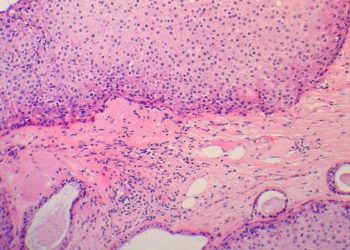
Endometriosis affects 7-10% of women of reproductive age and has a heterogeneous presentation, ranging from superficial peritoneal implants to involvement of retroperitoneal structures. The wide range of symptoms associated with endometriosis has led to the development of various questionnaires and classification systems, such as the Endometriosis Health Profile-30 (EHP-30) and revised American Society for Reproductive Medicine (rASRM) system. #Enzian is a newer classification system based on the location (peritoneal compartment (P), ovarian compartment (O), tubo-ovarian condition (T), rectovaginal septum/uterosacral ligament compartment (B), rectal compartment (C), adenomyosis (FA), bladder involvement (FB), and ureteral involvement (FU)) and size of lesions, and includes scores for deep endometriosis. This study sought to investigate the association between #Enzian scores and quality of life after surgery. Women aged 18-50 years undergoing surgery for suspected endometriosis were prospectively recruited and included in the final analysis if endometriosis was confirmed by histopathological examination. 627 women (median [IQR] age, 32 [28-36] years) were included in the final cohort, with 430 and 325 completing the 6-month and 12-month follow-ups, respectively. The most frequently involved #Enzian compartments were P (86%), B (45%), and FA (42%). Compared with baseline, median EHP-30 scores decreased markedly at both 6 months (median 34.4, p < 0.001) and 12 months (median 31.1, p < 0.001). No significant difference was observed between 6 and 12 months. None of the #Enzian compartment locations significantly predicted EHP-30 scores at baseline, 6 months, or 12 months, with the exception of FB involvement and baseline EHP-30 score (p = 0.024). The article notes only 24 (3.83%) patients had 24 involvement. Baseline EHP-30 score (p < 0.001) and complete resection (p = 0.001) significantly predicted EHP-30 score at 6 months.
1. In critically injured trauma patients with difficult airways, there were no statistically significant differences in first-pass success between bougie-guided and stylet-guided intubation.
Evidence Rating Level: 1 (Excellent)
First-pass intubation failure during emergency airway management is associated with hypoxia, aspiration, hemodynamic instability, and cardiac arrest. This is particularly true in critically injured trauma patients, which occurs during unpredictable circumstances, including maxillofacial injuries, airway contamination with blood or secretions, and cervical spine immobilisation. Currently, operator preference rather than specific guidelines determines the use of a bougie or stylet in intubation. Previous studies have compared these two adjuncts, but were conducted in heterogeneous populations. This prospective, randomised, parallel-group clinical trial included critically injured adults requiring intubation with an endotracheal tube and at least one difficult airway characteristic (suspected cervical spine injuries, maxillofacial trauma, facial and upper airway thermal burns, body mass index >35 kg/m², large tongue, short neck, restricted mouth opening, and airway contamination). 188 patients were randomized to receive bougie-guided (n= 94; mean [SD] age, 39.97 [16.03] years; 19.1% female) or stylet-guided (n = 94; mean [SD] age, 39.7 [16.84] years; 22.3% female) intubation. The most frequent mechanisms of injury were road traffic accidents (130 patients, 69.1%), fall-related injuries (35 patients, 18.6%), burns (12 patients, 6.4%), and assault (7 patients, 3.7%). The Injury Severity Score (p=0.610) and distribution of mechanisms of injury (p=0.441) were comparable between the groups. First-pass intubation success was achieved in 67 of 94 patients (71.3%) in the bougie group and 63 of 94 patients (67.0%) in the stylet group (absolute difference: 4.3 percentage points; 95% CI, −8.9 to 17.2 percentage points; p=0.53). There were no significant differences in time to successful first-attempt intubation between the bougie and stylet groups (mean difference, seconds [95% CI]: 1.58 seconds [−2.80, 5.97]; p=0.48). 22 of 94 patients (23.4%) in the bougie group and 27 of 94 patients (28.7%) in the stylet group were intubated on the second attempt. Four patients in each group were intubated on the second attempt after crossover to the other adjunct. There were no significant differences in peri-intubation complications (cardiac arrest, aspiration, oro-dental/airway injury, bradycardia, desaturation, hypotension, esophageal intubation).
©2026 2 Minute Medicine, Inc. All rights reserved. No works may be reproduced without expressed written consent from 2 Minute Medicine, Inc. Inquire about licensing here. No article should be construed as medical advice and is not intended as such by the authors or by 2 Minute Medicine, Inc.