2 Minute Medicine Rewind March 16, 2026
1. High-frequency oscillatory ventilation (HFOV) may reduce the incidence of bronchopulmonary dysplasia (BPD) compared with conventional mechanical ventilation (CMV) in infants born at 34 weeks’ gestation or earlier with neonatal respiratory distress syndrome (NARDS).
Evidence Rating Level: 1 (Excellent)
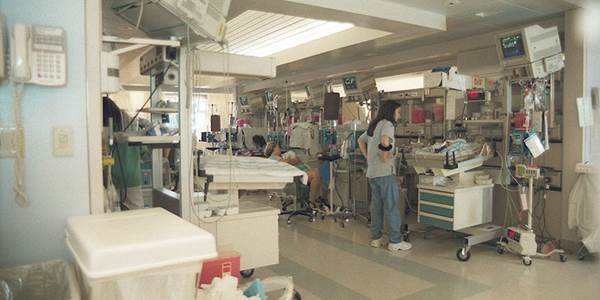
NARDS is a serious condition in premature infants and remains a leading cause of neonatal mortality. However, it is unclear if HFOV or CMV should be the preferred first-line therapy. A previous study found HFOV did not significantly reduce BPD risk compared with CMV in infants born between 24 and 42 weeks with NARDS, although subgroup analysis suggested benefit in infants born at 34 weeks or less. This single-center, single-blinded randomized controlled trial sought to compare the incidence of BPD in infants born between 25 weeks 0 days and 34 weeks 6 days and diagnosed with NARDS. Patients were initially stabilized with CMV and randomized to transition to HFOV (n = 181; mean [SD] age, 30.60 [2.42] weeks; 44.2% female) or continue with CMV (n = 205; mean [SD] age, 31.00 [ 2.42] weeks; 37.1% female). BPD was assessed using 2 definitions: 1) Eunice Kennedy Shriver National Institute of Child Health and Human Development (NICHD); 2) Jensen et al, 2019. Overall, 154 (39.9%) and 83 (21.5%) developed BPD according to definitions 1 and 2, respectively. Elective HFOV reduced the risk of BPD by 8.0% (34.3% vs 44.9%; relative risk, 0.92; 95% CI, 0.86-0.99) according to definition 1 and by 32.0% (17.1% vs 25.4%; relative risk 0.68; 95% CI, 0.45-1.00) according to definition 2 compared with CMV. There were no significant differences in mortality, stage 2 or higher retinopathy of prematurity, stage 2 or higher necrotizing enterocolitis, or grade 3 or higher intraventricular hemorrhage. Overall, HFOV may reduce the incidence of BPD compared with CMV in infants born at 34 weeks’ gestation or earlier with NARDS.
1. Neoadjuvant immunoradiotherapy with camrelizumab and radiotherapy demonstrated favourable pathologic tumour regression and safety in the management of resectable locally advanced esophageal squamous cell carcinoma (ESCC).
Evidence Rating Level: 2 (Good)
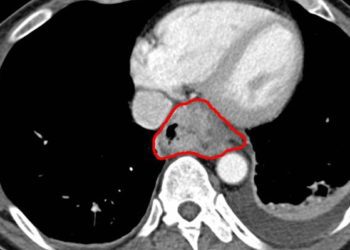
Standard treatment for locally advanced ESCC involves neoadjuvant chemoradiotherapy followed by surgery. However, distant metastasis remains common, and chemotherapy can result in substantial toxicity. Camrelizumab, a humanized anti-programmed cell death protein 1 (PD-1) monoclonal antibody, in combination with chemotherapy, has been studied in ESCC management. This improved pathological complete response rates but led to high-grade toxicities. It has been shown that immunotherapy combined with radiotherapy leads to synergistic effects. This approach has been studied in other cancers, but evidence in ESCC remains limited. This single-arm, phase II trial included patients aged 18-75 years with histologically confirmed ESCC. 25 patients (mean [SD] age, 62.2 [6.9] years; 20% female) received nIRT with camrelizumab and radiotherapy. Camrelizumab 200 mg was administered intravenously on day 1 of each of two 21-day cycles. Neoadjuvant radiotherapy was delivered 5 days per week using intensity-modulated radiotherapy (IMRT). Patients who showed no disease progression or new metastases underwent esophagectomy 4-8 weeks following nIRT. Three patients did not undergo surgery (one radiographic complete response with refusal of surgery, one disease progression, and one withdrawal). Major pathologic response and pathologic complete response occurred in 12 of 22 patients (54.5%) and 8 of 22 patients (36.4%), respectively. No grade 3 or higher treatment-related adverse events were observed. The most common side effects were radiation esophagitis (36% patients) and transient leukopenia (28% patients). At a median follow-up of 36 months, 5 patients experienced recurrence. Overall, camrelizumab demonstrated good tolerance, low toxicity, and favourable pathologic tumour regression.
Awake burr hole craniotomy for chronic subdural hematoma: a phase 2 randomized controlled trial
1. In patients with chronic subdural hematoma (cSDH) requiring burr hole craniotomy, operation under local anesthesia (LA) was safe, well-tolerated, and associated with significantly reduced risks of postoperative delirium compared to general anesthesia (GA).
Evidence Rating Level: 1 (Excellent)
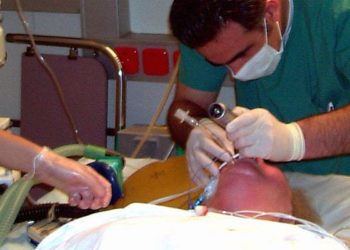
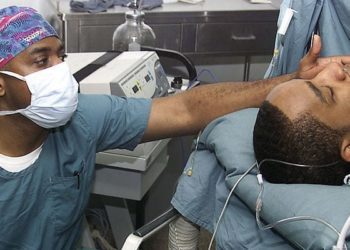
cSDH is projected to become the most common cranial neurosurgical condition by 2030. Present standard management is burr hole craniotomy. However, the procedure is generally performed under GA while the elderly, the population most at risk for cSDH, is vulnerable to complications associated with GA such as postoperative delirium. Burr hole craniotomy under LA has been performed, although there is a significant knowledge gap surrounding its safety and efficacy. This parallel-group, single-center, open-label, prospective randomized clinical trial included adults aged 18 years or older who had a confirmed diagnosis of cSDH, and required hematoma evacuation. 50 patients were randomized to undergo surgery under GA (propofol and remifentanil; n = 25; mean [SD] age, 77.3 [10.4] years; 20% female) or LA (bupivacaine and lidocaine; n = 25; mean [SD] age, 78.1 [9.3] years; 28% female). LA was associated with a significantly lower rate of postoperative delirium (4% vs 32%, OR 0.09; 95%CI, 0.01-0.79; p=0.03; NNT=4) and significantly lower procedural times (139.3±53.0 vs 196.0±52.1 minutes; p=0.002). The overall complication rate was 8% in the LA group and 32% in the GA group (OR 0.18; 95% CI, 0.03-0.96; p = 0.08; NNT = 5). The severity of complications was comparable between groups. Overall, burr hole craniotomy for cSDH under LA is safe, well-tolerated, and leads to significantly lower risks of postoperative delirium compared to GA.
Sivelestat and Incidence of Acute Respiratory Distress Syndrome After Cardiovascular Surgery
1. Sivelestat significantly reduced the incidence of postoperative acute respiratory distress syndrome (ARDS) compared to placebo in adult patients undergoing cardiac surgery requiring cardiopulmonary bypass (CPB).
Evidence Rating Level: 1 (Excellent)
ARDS is a common postoperative complication after cardiac surgery with CPB, with very high mortality rates. Neutrophil elastase (NE) is a key amplifier of pulmonary inflammation and has been implicated in the pathophysiology of ARDS. Sivelestat sodium, a selective NE inhibitor, is effective in treating ARDS. However, its role in reducing the risk of ARDS among patients after cardiovascular surgery requiring CPB is unknown. This randomized, placebo-controlled clinical trial evaluated the efficacy and safety of sivelestat. 382 patients aged 50-80 years scheduled for elective cardiac surgery requiring CPB were randomized to receive sivelestat (n = 190; mean [SD] age, 62.5 [6.0] years; 47.9% female) or placebo (n = 192; mean [SD] age, 63.3 [6.4] years; 42.2% female). The sivelestat group had significantly lower rates of ARDS (16.8% [32 of 190] vs 31.2% [60 of 192]; P < .001), and 90-day mortality (1.1% [2 of 190] vs 5.2% [10 of 192]; P = .02). There were significant reductions in multiple inflammatory markers across postoperative days 1 to 7 (systemic immune-inflammation index (SII; P = .009) (A), interleukin 6 (IL-6; P = .001) (B), neutrophil elastase (NE; P < .001) (C), interleukin 8 (IL-8; P = .012) (D), tumor necrosis factor (TNF; P = .03) (E), and procalcitonin (PCT; P = .001)). Furthermore, adverse events did not significantly differ between groups. Overall, sivelestat is effective at reducing the risk of ARDS and 90-day all-cause mortality.
1. Alcohol misuse among older adults is common but the delivery of evidence-based interventions such as referral services and pharmacotherapy remains low in the emergency department.
Evidence Rating Level: 2 (Good)
Alcohol misuse is a growing, underrecognized, and undertreated health condition in older adults (defined here as adults 55 years old and older), who often present to the ED not in overt intoxication, but for alcohol-related consequences such as falls, medication-related adverse events, and functional decline. Although EDs are increasingly implementing routine alcohol screening, there is a poor understanding of how this links to timely intervention. This retrospective cohort study of 11 EDs included 698,308 ED encounters among adults aged ≥ 55 years old. 39,912 (5.7%) screened positive for alcohol misuse, representing 27,423 unique patients. Approximately half (47%) were aged 55–64, 41% were aged 65–79, and 12% were aged ≥ 80 years. Overall, 58% of encounters involved male patients, with a more equal distribution by gender and older age. Men accounted for 58% of encounters, with gender differences narrowing with age. Social work and physical therapist involvement significantly increased with increasing Alcohol Use Disorders Identification Test – Consumption (AUDIT-C) scores. Naltrexone and acamprosate prescribing were rare (2.3% and < 1%, respectively) but increased significantly with increasing AUDIT-C scores. Despite increasing use of alcohol screening tools in the ED, delivery of evidence-based interventions such as referral services and pharmacotherapy remains uncommon.
Image: PD
©2026 2 Minute Medicine, Inc. All rights reserved. No works may be reproduced without expressed written consent from 2 Minute Medicine, Inc. Inquire about licensing here. No article should be construed as medical advice and is not intended as such by the authors or by 2 Minute Medicine, Inc.