High-flow nasal oxygen therapy may not be superior to standard oxygen therapy after cardiac surgery
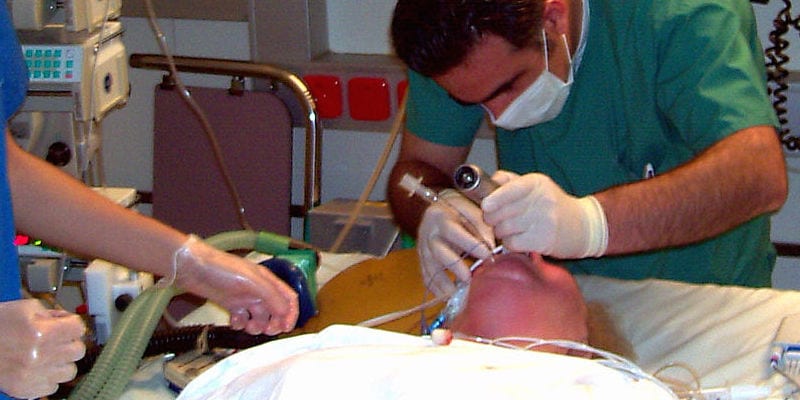
1. Routine high-flow nasal oxygen therapy (HFNOT) following extubation did not improve outcomes compared to standard oxygen therapy (SOT) in patients with an elevated risk of pulmonary complications undergoing cardiac surgery.
Evidence Rating Level: 1 (Excellent)
Pulmonary complications are common after cardiac surgery, particularly in high-risk groups such as smokers and those with preexisting lung diseases. Compared to SOT, HFNOT increases patient comfort, reduces the work of breathing, and improves oxygenation. A previous study showed routine HFNOT after cardiac surgery might reduce hospital stay and intensive care unit readmission. This multicenter, open-label, parallel-group, randomized clinical trial included patients 18 years or older who underwent elective or urgent cardiac surgery with cardiopulmonary bypass and had one or more risk factors for postoperative pulmonary complications (chronic obstructive pulmonary disease, asthma, lower respiratory tract infection in the last 4 weeks, a body mass index (calculated as weight in kilograms divided by height in meters squared) of 35 or greater, or current or recent heavy smoking (>10 pack-years)). Patients were randomized to receive either HFNOT (started at 40% inspired oxygen and flow of 30 L/min; n = 640; mean [SD] age, 62.7 [10.5] years; 29.2% female) or SOT (30% to 40% inspired oxygen and flow 2 to 6 L/min via nasal prongs or nonrebreathing mask; n = 640; mean [SD] age 63.2 (10.5) years; 31.4% female). Adherence required treatment with the allocated intervention for a minimum of 16 hours following extubation. The primary outcome was days alive and at home in the first 90 days (DAH90). The median DAH90 was 0 (IQR, 0-79) for the HFNOT group and 0 (IQR, 0-87) for the SOT group (median difference, 0 [95% CI, 0-0]; P = .75). The median numbers of days alive and out of hospital were not significantly different (82 [IQR, 77-84] in the HFNOT group vs 82 [IQR, 78-84] in the SOT group). Adverse events and serious adverse events were similar in both groups. Overall, prophylactic HFNOT does not seem to improve outcomes compared to SOT.
Click here to read the study in JAMA Network Open
Image: PD
©2026 2 Minute Medicine, Inc. All rights reserved. No works may be reproduced without expressed written consent from 2 Minute Medicine, Inc. Inquire about licensing here. No article should be construed as medical advice and is not intended as such by the authors or by 2 Minute Medicine, Inc.