

Segment 4b/5 resection offers no survival advantage over wedge resection in gallbladder cancer
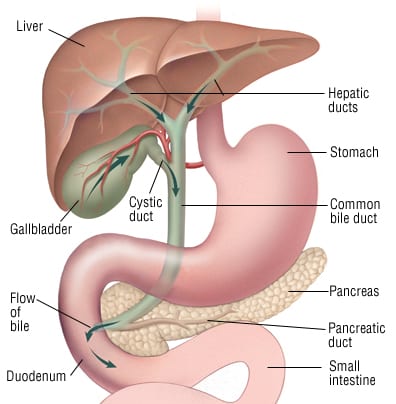
1. The more invasive segment 4b/5 resection did not improve overall or disease-free survival compared to wedge resection in gallbladder cancer.
2. Segment 4b/5 resection was associated with longer surgeries and more blood loss.
Evidence Rating Level: 1 (Excellent)
Study Rundown: Gallbladder cancer is an aggressive malignancy in which radical cholecystectomy remains the primary treatment. However, the optimal extent of liver resection is debated, with anatomic segment 4b/5 resection theoretically improving tumor clearance despite limited evidence. This study compared anatomic segment 4b/5 resection with nonanatomic wedge resection in patients undergoing radical cholecystectomy for gallbladder cancer. The patients were randomized intraoperatively after confirmation of resectable disease. Across a median follow-up of just over two years, there were no meaningful differences in overall survival or disease-free survival between the two surgical approaches. Postoperative outcomes, including complication rates, mortality, and recurrence rates, were also comparable between groups. However, the segment 4b/5 approach was associated with longer operative times and greater intraoperative blood loss. These findings suggest that a more extensive anatomic liver resection may not provide oncologic benefit compared to a less invasive wedge resection. In practice, this suggests that wedge resection may be a reasonable option, with similar outcomes and less operative complexity. Strengths of this study included its randomized design and inclusion of a broad range of tumor stages, resulting in strong internal validity and applicability. Limitations included its single-center setting and open-label design, which may limit generalizability.
Click to read the study in Annals of Surgery
Relevant Reading: Hepatectomy strategy for T2 gallbladder cancer between segment IVb and V resection and wedge resection: A propensity score-matched study
In-Depth [randomized controlled trial]: This study was a phase III, single-center, open-label randomized controlled trial conducted at a tertiary oncology center in India between May 2014 and December 2023. Eligible patients had resectable gallbladder cancer without evidence of metastatic or unresectable disease during intraoperative assessment. In total, 163 patients were randomized 1:1 intraoperatively to undergo either anatomic segment 4b/5 resection (n = 83) or nonanatomic wedge resection (n = 80) as part of radical cholecystectomy. The primary endpoint was overall survival (OS), with secondary endpoints including disease-free survival (DFS) and postoperative complications. The procedures were all performed by a senior hepatobiliary surgeon. The segment 4b/5 group had a significantly longer mean surgery time (318 vs. 287 minutes, P = .009) and greater intraoperative blood loss (265 mL vs. 223 mL, P = .05). There were no differences in overall morbidity (20.0% vs. 21.6%, P = .94), clinically significant morbidity defined as grade III or higher (6.3% vs. 6.0%, P = .79), rates of bile leak (2.5% vs. 4.8%, P = .71), or 90-day mortality (1.3% vs. 2.4%, P = .97) between the two groups. The rates of R0 resection were also similar. At a median follow-up of 27 months, there was no difference in DFS (HR 0.8, 95% CI 0.47-1.4, P = .50) or OS (HR 0.6, 95% CI 0.36-1.14, P = .12). The estimated 3-year OS was 64.4% in the segment 4b/5 group and 79.3% in the wedge group, with corresponding DFS rates of 59.2% and 63.3%. The recurrence patterns were also similar between groups, including gallbladder fossa recurrence (5 vs. 6 cases, P = .94), with an overall recurrence rate of 31.1%. A subgroup analysis of patients with pT2-T4 disease (n = 133) also showed no differences in DFS (HR 0.95, 95% CI 0.54-1.67, P = .87) or OS (HR 0.66, 95% CI 0.36-1.2, P = .17). Overall, although segment 4b/5 resection achieved a larger specimen volume and wider liver margins, this approach did not result in improved oncologic outcomes.
Image: PD
©2026 2 Minute Medicine, Inc. All rights reserved. No works may be reproduced without expressed written consent from 2 Minute Medicine, Inc. Inquire about licensing here. No article should be construed as medical advice and is not intended as such by the authors or by 2 Minute Medicine, Inc.


