

• About
  • Masthead
  • License Content
  • Advertise
  • RSS/Email List
  • 2MM Podcast
  • Write for us
  • Contact Us
2 Minute Medicine
No Result
View All Result

No products in the cart.

Sign in
SUBSCRIBE
  • About
  • Specialties
    • All Specialties, All Recent Reports
    • Cardiology
    • Chronic Disease
    • Dermatology
    • Emergency
    • Endocrinology
    • Gastroenterology
    • Imaging and Intervention
    • Infectious Disease
    • Nephrology
    • Neurology
    • Obstetrics
    • Oncology
    • Ophthalmology
    • Pediatrics
    • Pharma
    • Preclinical
    • Psychiatry
    • Public Health
    • Pulmonology
    • Rheumatology
    • Surgery
    • Rewinds
    • The Scan
  • EvidencePulse™
  • HypeCheck™
  • AI News
  • Classics™
    • 2MM+ Online Access
    • Paperback and Ebook
  • Tools
    • NPI Registry Lookup
    • RVU Search
  • Partners
    • License Content
    • Advertise with Us
2 Minute Medicine
  • About
  • Specialties
    • All Specialties, All Recent Reports
    • Cardiology
    • Chronic Disease
    • Dermatology
    • Emergency
    • Endocrinology
    • Gastroenterology
    • Imaging and Intervention
    • Infectious Disease
    • Nephrology
    • Neurology
    • Obstetrics
    • Oncology
    • Ophthalmology
    • Pediatrics
    • Pharma
    • Preclinical
    • Psychiatry
    • Public Health
    • Pulmonology
    • Rheumatology
    • Surgery
    • Rewinds
    • The Scan
  • EvidencePulse™
  • HypeCheck™
  • AI News
  • Classics™
    • 2MM+ Online Access
    • Paperback and Ebook
  • Tools
    • NPI Registry Lookup
    • RVU Search
  • Partners
    • License Content
    • Advertise with Us
Sign in
SUBSCRIBE
2 Minute Medicine
Sign in
Subscribe
✦ EvidencePulse™ by 2 Minute Medicine 2026 evidence scan 3 reports You asked top stroke trials 2026 Synthesizing medical evidence... Top 2026 stroke trial results: OCEANIC — ischemic stroke: 6.2% vs 8.4% OPTION* — mRS 0–1: 43.6% vs 34.2% ORIENTAL* — mRS 0–2: 58.6% vs 46.6% *Higher sICH in intervention arms Participants randomizedN OCEANIC 12,327 OPTION 570 ORIENTAL 564 Ask about guidelines or landmark trials... ↑ Try EvidencePulse™ Ask the evidence.
Get the signal.
Try it now → Physician-trained medical AI by 2 Minute Medicine
Home All Specialties Oncology

Treatment with chemoradiotherapy before systemic chemotherapy for rectal adenocarcinoma is a potential non-surgical option
byKassandra McFarlaneandSze Wah Samuel Chan
May 9, 2022
in Oncology
Reading Time: 2 mins read
Radiofrequency ablation of hepatic metastases in colorectal cancer linked with improved survival
Share on FacebookShare on TwitterShare on LinkedIn

1. Disease-free survival was not impacted by the order in which chemoradiotherapy CRT and systemic chemotherapy is provided

2. Higher rectum preservation rate was found when providing CRT before systemic chemotherapy

Evidence Rating Level: 1 (Excellent)

Study Rundown: The treatment for locally advanced rectal adenocarcinoma includes total mesorectal excision (TME), which is invasive and can result in a decreased quality of life. Previous studies imply that variable neoadjuvant chemoradiotherapy treatment may permit organ preservation. This study aimed to determine whether patients who were treated with total neoadjuvant therapy (TNT) and either subsequent TME or selective watch-and-wait (WW) had an improved disease-free survival (DFS) when compared to the historical DFS associated with standard therapy (chemoradiotherapy (CRT), TME, post-operative adjuvant chemotherapy). Additionally, this study examined the difference in organ preservation rates between patients receiving either induction chemotherapy (INCT) followed by CRT or chemoradiotherapy followed by consolidation chemotherapy (CRT-CNCT). The DFS at 3 years for each of the two groups did not differ compared to the historical 3 year DFS rate (76% for both groups, compared to 75% for historical rate). Distant metastasis-free survival was 84% for the INCT group, and 82% for the CNCT group, while local recurrence-free survival was 94% for both groups. Rectum preservation rates (TME-free survival) were 47% for the INCT group and 60% for the CNCT group. Limitations to this study include the lack of a non-surgical arm as a comparator (likely owing to low accrual rates if there was) and comparison to historical DFS which is cautiously interpreted compared to direct comparison. Overall, a higher rectum preservation rate was found when providing CRT before systemic chemotherapy in patients receiving treatment for stage II or III rectal adenocarcinoma and cautiously comparable to historical DFS which may represent a potential non-surgical option for patients.

Click to read the study in The Journal of Clinical Oncology

Relevant Reading: Quality of life after sphincter preservation surgery or abdominoperineal resection for low rectal cancer (ASPIRE): A long-term prospective, multicentre, cohort study

RELATED REPORTS

Variable homicide mortality rates among women aged 15-44 years depending on state abortion policy

An artificial intelligence model demonstrates the potential for improving the efficiency of structural heart disease screening using electrocardiograms

In-Depth [randomized controlled trial]: This prospective, multi-centre, randomized and nonblinded clinical trial randomly assigned 324 adult patients who had stage II or III rectal adenocarcinoma to receive either induction chemotherapy (INCT) followed by chemoradiotherapy (CRT) or chemoradiotherapy followed by consolidation chemotherapy (CRT-CNCT). The INCT-CRT group was comprised of 158 patients, while the CRT-CNCT group had 166. The treatments were either oral capecitabine or continuous infusion fluorouracil during radiotherapy. An additional treatment of either 8 cycles of fluorouracil, leucovorin, and oxaliplatin or 5 cycles of capecitabine and oxaliplatin were provided before or after CRT. Tumour response was determined at 8 +/- 4 weeks post-TNT. The 3-year DFS rates were 76% for both groups and did not differ from the historical rate; 95% confidence interval (CI), 69% to 84% for the INCT-CRT group and 95% CI, 69% to 83% for the CRT-CNCT group. The historical DFS was 75%. Local recurrence-free survival was 94% for both the INCT and CNCT groups (95%CIs are 89% to 99% and 90% to 98%, respectively). Distant metastasis-free survival was 84% for the INCT group (95% CI, 77% to 91%), and 82% for the CNCT group (95% CI, 75% to 89%). Rectum preservation rates were 47% for the INCT group (95% CI, 39% to 56%) and 60% for the CNCT group (95% CI, 52% to 68%).

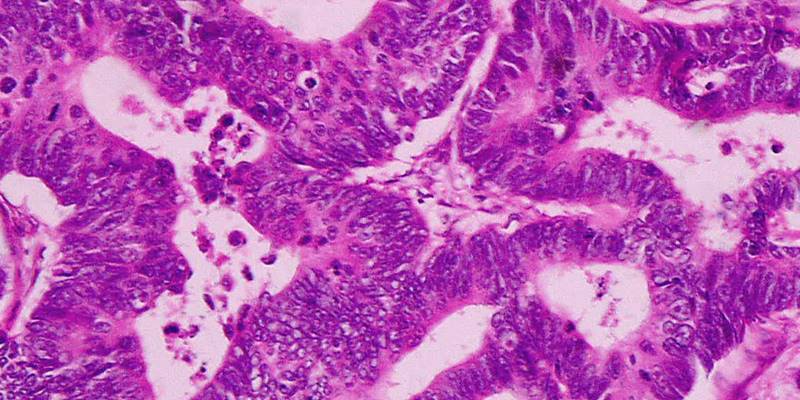
Image: PD

©2022 2 Minute Medicine, Inc. All rights reserved. No works may be reproduced without expressed written consent from 2 Minute Medicine, Inc. Inquire about licensing here. No article should be construed as medical advice and is not intended as such by the authors or by 2 Minute Medicine, Inc.


Previous Post

Neoadjuvant nivolumab improves survival in patients with resectable non-small cell lung cancer

Next Post

Preterm birth associated with differences in optic disc morphology in adulthood

RelatedReports

Collage of torn-gray map pieces with orange route from left to a doorway on the right, over a dark backdrop; scales of justice at top; '2 Minute Medicine' logo in bottom right.
Obstetrics

Variable homicide mortality rates among women aged 15-44 years depending on state abortion policy

October 21, 2026
An illustration featuring a heart within a house, with a stethoscope, a scale, and medication, symbolizing heart failure home hospital care.
Artificial Intelligence

An artificial intelligence model demonstrates the potential for improving the efficiency of structural heart disease screening using electrocardiograms

October 21, 2026
An artistic representation featuring a door with a key, symbolizing access or opportunity, alongside images of buildings and a heartbeat line, suggesting themes of health and housing.
Chronic Disease

A community health initiative in low-income areas may reduce hospital admission rates

October 20, 2026
Two pieces of fabric showing stitching techniques with surgical tools in the foreground, indicating procedures for hernia repair.
Gastroenterology

Induction with remimazolam (Byfavo) for patients undergoing laparoscopic gastrointestinal surgery may reduce post-operative delirium compared with propofol

October 20, 2026
Next Post
Blindness and visual impairment decreasing worldwide

Preterm birth associated with differences in optic disc morphology in adulthood

Increased number of daily steps linked with decreased mortality in older women

An implantable system overcomes orthostatic hypotension in a patient with multiple-system atrophy

Complement mutation linked to poor response to eculizumab

Mitapivat efficacious in treating pyruvate kinase deficiency

✦ EvidencePulse™ by 2 Minute Medicine 2026 evidence scan 3 reports You asked top stroke trials 2026 Synthesizing medical evidence... Top 2026 stroke trial results: OCEANIC — ischemic stroke: 6.2% vs 8.4% OPTION* — mRS 0–1: 43.6% vs 34.2% ORIENTAL* — mRS 0–2: 58.6% vs 46.6% *Higher sICH in intervention arms Participants randomizedN OCEANIC 12,327 OPTION 570 ORIENTAL 564 Ask about guidelines or landmark trials... Try EvidencePulse™ Get the signal. Try it now → Physician-trained medical AI by 2 Minute Medicine

2MM+ All Access

Full details →
$4.99 /month

3-day free trial · cancel anytime

  • ✓100+ physician-written reports
  • ✓EvidencePulse™ + HypeCheck™
  • ✓Ad-free reading + newsletters
Start 3-day free trial

Then $4.99/month. Manage renewal in your account.

NPI Lookup · Free

Look up any US clinician

Search by name or NPI number, live from the CMS NPI Registry.

  • OIG exclusion check
  • Licenses and specialties
  • No account needed
Open NPI Lookup →

2 Minute Medicine® is an award winning, physician-run, expert medical media company. Our content is curated, written and edited by practicing health professionals who have clinical and scientific expertise in their field of reporting. Our editorial management team is comprised of highly-trained MD physicians. Join numerous brands, companies, and hospitals who trust our licensed content.

Recent Reports

  • Variable homicide mortality rates among women aged 15-44 years depending on state abortion policy
  • An artificial intelligence model demonstrates the potential for improving the efficiency of structural heart disease screening using electrocardiograms
  • A community health initiative in low-income areas may reduce hospital admission rates
License Content
Terms of Use | Disclaimer
Cookie Policy
2MM+ All Access Full details →

The medical literature, distilled daily.

Monthly plan selected: $4.99 /month.

$4.99/month

3-day free trial · cancel anytime

Start 3-day free trial

Then $4.99/month. Manage renewal in your account.

Yearly plan selected: $49.90 /year.

$49.90/year

2 months free

Start 3-day free trial

Then $49.90/year.

Membership benefits

  • ✓100+ physician-written reports
  • ✓AI EvidencePulse™ + HypeCheck™
  • ✓Ad-free reading + newsletters
  • ✓NPI watchlist + bulk NPI verification

Already a member? Sign in

  • About
  • Specialties
    • All Specialties, All Recent Reports
    • Cardiology
    • Chronic Disease
    • Dermatology
    • Emergency
    • Endocrinology
    • Gastroenterology
    • Imaging and Intervention
    • Infectious Disease
    • Nephrology
    • Neurology
    • Obstetrics
    • Oncology
    • Ophthalmology
    • Pediatrics
    • Pharma
    • Preclinical
    • Psychiatry
    • Public Health
    • Pulmonology
    • Rheumatology
    • Surgery
    • Rewinds
    • The Scan
  • EvidencePulse™
  • HypeCheck™
  • AI News
  • Classics™
    • 2MM+ Online Access
    • Paperback and Ebook
  • Tools
    • NPI Registry Lookup
    • RVU Search
  • Partners
    • License Content
    • Advertise with Us
No Result
View All Result

© 2026 2 Minute Medicine, Inc. - Physician-written medical news.