• About
  • Masthead
  • License Content
  • Advertise
  • Submit Press Release
  • RSS/Email List
  • 2MM Podcast
  • Write for us
  • Contact Us
2 Minute Medicine
No Result
View All Result

No products in the cart.

SUBSCRIBE
  • About
  • Specialties
    • All Specialties, All Recent Reports
    • Cardiology
    • Chronic Disease
    • Dermatology
    • Emergency
    • Endocrinology
    • Gastroenterology
    • Imaging and Intervention
    • Infectious Disease
    • Nephrology
    • Neurology
    • Obstetrics
    • Oncology
    • Ophthalmology
    • Pediatrics
    • Pharma
    • Preclinical
    • Psychiatry
    • Public Health
    • Pulmonology
    • Rheumatology
    • Surgery
  • Tools+
    • EvidencePulse™
    • HypeCheck™
    • NPI Registry Lookup
    • RVU Search
  • Pharma
  • AI Roundup
  • The Scan+
  • Classics™+
    • 2MM+ Online Access
    • Paperback and Ebook
  • Rewinds
  • Partners
    • License Content
    • Submit Press Release
    • Advertise with Us
  • Account
    • Subscribe
    • My account
    • Cart
    • Sign-in
2 Minute Medicine
  • About
  • Specialties
    • All Specialties, All Recent Reports
    • Cardiology
    • Chronic Disease
    • Dermatology
    • Emergency
    • Endocrinology
    • Gastroenterology
    • Imaging and Intervention
    • Infectious Disease
    • Nephrology
    • Neurology
    • Obstetrics
    • Oncology
    • Ophthalmology
    • Pediatrics
    • Pharma
    • Preclinical
    • Psychiatry
    • Public Health
    • Pulmonology
    • Rheumatology
    • Surgery
  • Tools+
    • EvidencePulse™
    • HypeCheck™
    • NPI Registry Lookup
    • RVU Search
  • Pharma
  • AI Roundup
  • The Scan+
  • Classics™+
    • 2MM+ Online Access
    • Paperback and Ebook
  • Rewinds
  • Partners
    • License Content
    • Submit Press Release
    • Advertise with Us
  • Account
    • Subscribe
    • My account
    • Cart
    • Sign-in
SUBSCRIBE
2 Minute Medicine
Subscribe
EvidencePulse™ by 2 Minute Medicine 2026 evidence scan 3 reports You asked top stroke trials 2026 Synthesizing medical evidence... Top 2026 stroke trial results: OCEANIC — ischemic stroke: 6.2% vs 8.4% OPTION* — mRS 0–1: 43.6% vs 34.2% ORIENTAL* — mRS 0–2: 58.6% vs 46.6% *Higher sICH in intervention arms Participants randomizedN OCEANIC 12,327 OPTION 570 ORIENTAL 564 Ask about guidelines or landmark trials... ↑ Try EvidencePulse™ Ask the evidence.
Get the signal.
Try it now → Physician-trained medical AI by 2 Minute Medicine
Home All Specialties Cardiology

Microaxial flow pump improves infarct-related cardiogenic shock outcomes
byJayden BerdugoandKiera Liblik
April 25, 2024
in Cardiology, Emergency
Reading Time: 3 mins read
Long-term outcomes for off-pump and on-pump CABG are similar
Share on FacebookShare on Twitter

1. In this randomized controlled trial, in patients with infarct-relate cardiogenic shock, death from any cause was lower in the group that received the microaxial flow pump compared to the group that received the standard care. 

2. The composite safety endpoint occurred in more patients in the microaxial flow pump group than in the standard care group.

Evidence Rating Level: 1 (Excellent)

Study Rundown: One possible severe complication of ST-segment elevation myocardial infarction (STEMI) is cardiogenic shock, which is associated with a high risk of mortality. Cardiogenic shock develops when the cardiac output is too low to meet the body’s metabolic needs; thus, prevention would indicate restoring adequate perfusion. One method used in past studies is the percutaneous microaxial flow pump, a type of active mechanical circulatory support system. However, it is unknown whether using this routinely would be of benefit or harm to patients with STEMI-associated cardiogenic shock. To assess the efficacy of this system in treating cardiogenic shock in patients with STEMI, a randomized trial was conducted comparing it to standard care. The eligible participants were randomized using a web-based randomization system based on the timing relative to the revascularization procedure and location of STEMI (anterior or nonanterior). Death due to any cause at 180 days was the main endpoint, while the secondary endpoints were days alive and spent out of the hospital, treatment escalation to additional mechanical circulatory support, heart transplantation, or death from any cause.  The limitations of the study were the strict inclusion criteria and lack of race data, which limited generalizability. Overall, the study found that treating patients with STEMI-related cardiogenic shock with a microaxial flow pump led to a lower risk of death compared to standard care at 180 days. However, the risk of adverse events was higher in the intervention group.

Click here to read the study in NEJM

In-Depth [randomized controlled trial]: This randomized control trial assessed the impact of a microaxial flow pump on the recovery of STEMI patients with cardiogenic shock. If patients were 18 years or older and had STEMI and cardiogenic shock, they were eligible to participate. Cardiogenic shock was defined as hypotension, insufficient perfusion to end organs, an arterial lactate level of 2.5 mmol per liter or higher, and a left ventricular ejection fraction of less than 45%. Participants were excluded if they had right ventricular failure or were resuscitated for an out-of-hospital cardiac arrest and were comatose on hospital arrival. After screening and obtaining consent, 355 patients were randomized into the microaxial flow pump group (n=179) or the standard-care group (n=176). In the microaxial flow-pump group, death from any cause resulted in 82 of the 179 participants (45.8%), whereas in the standard care group, death resulted in 103 of 176 participants (58.5%) (hazard ratio, 0.74; 95% Confidence Interval [CI], 0.55 to 0.99; p=0.04). When comparing adverse events between the two groups, the microaxial-flow-pump group had a composite safety end-point event occurred in 43 patients (24.0%), whereas the standard-care group had this endpoint in 11 (6.2%) of patients (relative risk, 4.74; 95% CI, 2.36 to 9.55). The relative risk was also compared between the two groups. It was 2.06 (95% CI, 1.15 to 3.66) for moderate or severe bleeding, 5.15 (95% CI, 1.11 to 23.84) for limb ischemia, 1.98 (95% CI, 1.27 to 3.09) for renal-replacement therapy, and 2.79 (95% CI, 1.20 to 6.48) for sepsis with a positive blood culture. In summary, microaxial flow pump use resulted in lower mortality in STEMI-related cardiogenic shock patients as compared to standard care.

RELATED REPORTS

Emergency department triaging decisions supported by artificial intelligence (AI) led to improved triaging accuracy and patient flow

A lower threshold for referral to the emergency department for outpatient hyperkalemia may reduce mortality

Chronic exposure to particulate matter is associated with increased cardiovascular risk

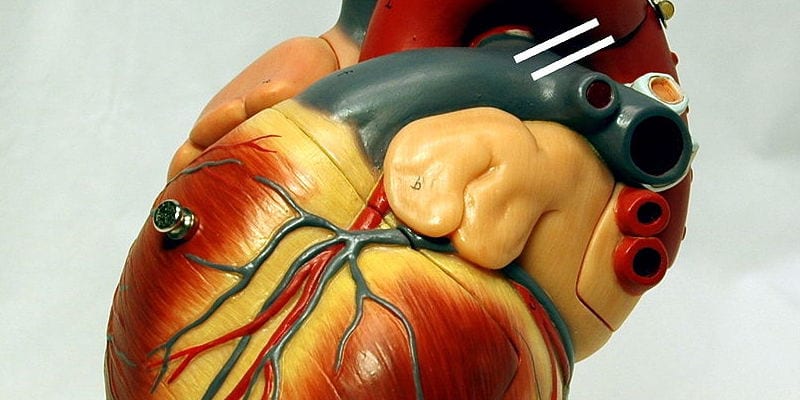
Image: PD

©2024 2 Minute Medicine, Inc. All rights reserved. No works may be reproduced without expressed written consent from 2 Minute Medicine, Inc. Inquire about licensing here. No article should be construed as medical advice and is not intended as such by the authors or by 2 Minute Medicine, Inc.


Tags: cardiogenic shockcardiologyemergencyinfarct-related cardiogenic shockMicroaxial flow pumpSTEMI
Previous Post

#VisualAbstract: Empagliflozin does not significantly reduce the risk of heart failure or death in patients after acute myocardial infarction

Next Post

Respiratory syncytial virus disproportionately affects pre-term infants over term infants

RelatedReports

Artificial Intelligence

Emergency department triaging decisions supported by artificial intelligence (AI) led to improved triaging accuracy and patient flow

September 21, 2026
Emergency

A lower threshold for referral to the emergency department for outpatient hyperkalemia may reduce mortality

September 16, 2026
Cardiology

Chronic exposure to particulate matter is associated with increased cardiovascular risk

September 10, 2026
Rivaroxaban likely reduces risk of recurrent stroke in specific subgroup of patients with embolic stroke of undetermined source
Cardiology

The mortality in-hospital for patients undergoing elective catheter ablation for atrial fibrillation is low

September 4, 2026
Next Post
High error rate among parents measuring liquid medications

Respiratory syncytial virus disproportionately affects pre-term infants over term infants

Unenhanced magnetic resonance imaging highly sensitive and specific for acute appendicitis

Appendicitis hospitalization care costs higher among patients with delayed diagnosis of appendicitis

#VisualAbstract: Hepatitis E vaccine shows promising 10-year efficacy in the Chinese population

#VisualAbstract: Hepatitis E vaccine shows promising 10-year efficacy in the Chinese population

EvidencePulse™ by 2 Minute Medicine 2026 evidence scan 3 reports You asked top stroke trials 2026 Synthesizing medical evidence... Top 2026 stroke trial results: OCEANIC — ischemic stroke: 6.2% vs 8.4% OPTION* — mRS 0–1: 43.6% vs 34.2% ORIENTAL* — mRS 0–2: 58.6% vs 46.6% *Higher sICH in intervention arms Participants randomizedN OCEANIC 12,327 OPTION 570 ORIENTAL 564 Ask about guidelines or landmark trials... ↑ Try EvidencePulse™ Ask the evidence.
Get the signal.
Try it now → Physician-trained medical AI by 2 Minute Medicine

2MM+ All Access

Full details →
$4.99 /month

5-day free trial · cancel anytime

  • ✓100+ physician-written reports
  • ✓EvidencePulse™ + HypeCheck™
  • ✓Ad-free reading + newsletters
Start 5-day free trial

Then $4.99/month. Manage renewal in your account.

2 Minute Medicine® is an award winning, physician-run, expert medical media company. Our content is curated, written and edited by practicing health professionals who have clinical and scientific expertise in their field of reporting. Our editorial management team is comprised of highly-trained MD physicians. Join numerous brands, companies, and hospitals who trust our licensed content.

Recent Reports

  • High maternal egg-peanut intake not associated with reduced infant allergy
  • The rotavirus vaccine (ROTASIIL) may reduce the incidence of hospitalization for rotavirus gastroenteritis in children
  • Emergency department triaging decisions supported by artificial intelligence (AI) led to improved triaging accuracy and patient flow
License Content
Terms of Use | Disclaimer
Cookie Policy
Cleantalk Pixel
2MM+ All Access Full details →

The medical literature, distilled daily.

Monthly plan selected: $4.99 /month.

$4.99/month

5-day free trial · cancel anytime

Start 5-day free trial

Then $4.99/month. Manage renewal in your account.

Yearly plan selected: $49.90 /year.

$49.90/year

2 months free · only $4.16/month

Start 5-day free trial

Then $49.90/year. Manage renewal in your account.

Membership benefits

  • ✓100+ physician-written reports
  • ✓AI EvidencePulse™ + HypeCheck™
  • ✓Ad-free reading + newsletters

Already a member? Sign in

  • About
  • Specialties
    • All Specialties, All Recent Reports
    • Cardiology
    • Chronic Disease
    • Dermatology
    • Emergency
    • Endocrinology
    • Gastroenterology
    • Imaging and Intervention
    • Infectious Disease
    • Nephrology
    • Neurology
    • Obstetrics
    • Oncology
    • Ophthalmology
    • Pediatrics
    • Pharma
    • Preclinical
    • Psychiatry
    • Public Health
    • Pulmonology
    • Rheumatology
    • Surgery
  • Tools
    • EvidencePulse™
    • HypeCheck™
    • NPI Registry Lookup
    • RVU Search
  • Pharma
  • AI Roundup
  • The Scan
  • Classics™
    • 2MM+ Online Access
    • Paperback and Ebook
  • Rewinds
  • Partners
    • License Content
    • Submit Press Release
    • Advertise with Us
  • Account
    • Subscribe
    • My account
    • Cart
    • Sign-in
No Result
View All Result

© 2026 2 Minute Medicine, Inc. - Physician-written medical news.