• About
  • Masthead
  • License Content
  • Advertise
  • Submit Press Release
  • RSS/Email List
  • 2MM Podcast
  • Write for us
  • Contact Us
2 Minute Medicine
No Result
View All Result

No products in the cart.

SUBSCRIBE
  • About
  • Specialties
    • All Specialties, All Recent Reports
    • Cardiology
    • Chronic Disease
    • Dermatology
    • Emergency
    • Endocrinology
    • Gastroenterology
    • Imaging and Intervention
    • Infectious Disease
    • Nephrology
    • Neurology
    • Obstetrics
    • Oncology
    • Ophthalmology
    • Pediatrics
    • Pharma
    • Preclinical
    • Psychiatry
    • Public Health
    • Pulmonology
    • Rheumatology
    • Surgery
  • Tools+
    • EvidencePulse™
    • HypeCheck™
    • NPI Registry Lookup
    • RVU Search
  • Pharma
  • AI Roundup
  • The Scan+
  • Classics™+
    • 2MM+ Online Access
    • Paperback and Ebook
  • Rewinds
  • Partners
    • License Content
    • Submit Press Release
    • Advertise with Us
  • Account
    • Subscribe
    • My account
    • Cart
    • Sign-in
2 Minute Medicine
  • About
  • Specialties
    • All Specialties, All Recent Reports
    • Cardiology
    • Chronic Disease
    • Dermatology
    • Emergency
    • Endocrinology
    • Gastroenterology
    • Imaging and Intervention
    • Infectious Disease
    • Nephrology
    • Neurology
    • Obstetrics
    • Oncology
    • Ophthalmology
    • Pediatrics
    • Pharma
    • Preclinical
    • Psychiatry
    • Public Health
    • Pulmonology
    • Rheumatology
    • Surgery
  • Tools+
    • EvidencePulse™
    • HypeCheck™
    • NPI Registry Lookup
    • RVU Search
  • Pharma
  • AI Roundup
  • The Scan+
  • Classics™+
    • 2MM+ Online Access
    • Paperback and Ebook
  • Rewinds
  • Partners
    • License Content
    • Submit Press Release
    • Advertise with Us
  • Account
    • Subscribe
    • My account
    • Cart
    • Sign-in
SUBSCRIBE
2 Minute Medicine
Subscribe
Home All Specialties Chronic Disease

Novel human antibody protects mice from H7N9 flu virus [PreClinical]

byJudith KandelandJessica Lau
August 28, 2015
in Chronic Disease, Infectious Disease, Preclinical
Reading Time: 3 mins read
Vaccines for predicted influenza strains may provide wide protection [PreClinical]
Share on FacebookShare on Twitter


1. VIS410, a human antibody which targets the hemagglutinin (HA) glycoprotein on the surface of flu viruses, showed strong binding to a variety of influenza A virus strains based on computational and in vitro experiments.

2. Administration of VIS410 either alone or in combination with oseltamivir, a neuraminidase inhibitor, led to increased survival and mitigated cytokine response in various mouse models of H7N9 challenge.

Evidence Rating Level: 2 (Good)    

Study Rundown: Influenza virus remains a significant cause of human mortality and morbidity, and particularly virulent strains such as H7N9 are associated with greater adverse patient outcomes despite available treatments. Current flu vaccines use inactivated virus antigens to provoke antibody production, and infections are also therapeutically treated with neuraminidase inhibitors such as oseltamivir. This work instead tested an antibody to broadly target HA in H7N9 and other virus strains, for use as a pre- or post-infection treatment.

The authors first used computational methods to design the VIS410 antibody candidate based on its ability to bind HAs from multiple virus strains. In vitro experiments confirmed predicted binding affinities. In an initial set of animal experiments, one-time therapeutic administration of VIS410 increased survival in mice given a lethal dose of the H3N2 strain. In a mouse model of lethal H7N9 challenge, treatment with VIS410 alone or with daily administration of oseltamivir increased survival when compared to oseltamivir treatment alone. In a separate murine model of sublethal H7N9 challenge, mice prophylactically given VIS410 in combination with twice daily oseltamivir showed lower lung cytokine levels than those given mock treatment.

RELATED REPORTS

2MM: AI Roundup: NHS England expands Microsoft Copilot nationwide, ARPA-H advances autonomous cardiovascular AI, FDA advisors back Moderna’s mRNA influenza vaccine, and UpDoc earns first clearance for a patient-facing large language model

Concomitant COVID-19 and influenza vaccination not linked to increased adverse events

Adjuvanted influenza vaccines and high-dose influenza vaccines may have similar effectiveness in adult patients

Overall, this work represents a promising new and potent antibody-based approach to treating influenza infection. Future work should address optimization of VIS410 administration, including whether it should be given prophylactically or therapeutically. Additionally, safety of VIS410 must be rigorously evaluated before the drug can be considered for clinical use.

Click to read the study in PNAS

Relevant Reading: Clinical Findings in 111 Cases of Influenza A (H7N9) Virus Infection

In-Depth [animal study]: Initial computational experiments focused on developing an antibody to bind to the HA stem region, whose highly interconnected trimeric interface may be more resistant to mutation than other HA regions. In vitro enzyme-linked immunosorbent assays confirmed the high binding affinity of VIS410 for a variety of flu viruses, with dissociation constants measuring 50-730 pM.

An initial baseline animal experiment involved challenging BALB/c mice with a lethal intranasal dose of H3N2. Intraperitoneal administration of 2.5-20 mg/kg VIS410 48 hours after exposure increased survival compared to placebo-treated mice (p<0.001, n=10-15 per group). Next, DBA mice were used to model lethal H7N9 infection, since they are more sensitive to influenza infection than other mice. Mice given 50 mg/kg VIS410 24 hours before H7N9 exposure and again 48 hours after exposure showed increased survival over mice given 50 mg/kg oseltamivir twice daily for 8 days (p=0.015, n=10 per group). Combining one dose of VIS410 with daily oseltamivir treatment improved survival as compared to administering oseltamivir alone (p<0.001, n=10 per group).

A third animal model involved subjecting C57BL/6 mice to a sublethal dose of H7N9. Animals given 50 mg/kg VIS410 at 12 hours before infection combined with 40 mg/kg oseltamivir twice daily showed lower lung viral loads than mock-treated animals at 5 days following inoculation (p=0.002, n=6 per group). In comparison to mock-treated mice, the combination-treated animals also showed lower levels of several cytokines, including monocyte chemotactic protein-3 (MCP-3), interferon gamma-induced protein 10 (IP-10), and macrophage inflammatory protein 1α (MIP-1α) (p<0.05 for each, n=3 per group).

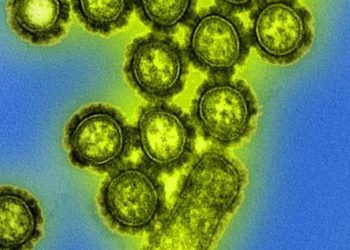
Image: PD

©2015 2 Minute Medicine, Inc. All rights reserved. No works may be reproduced without expressed written consent from 2 Minute Medicine, Inc. Inquire about licensing here. No article should be construed as medical advice and is not intended as such by the authors or by 2 Minute Medicine, Inc.

Tags: influenza
Previous Post

Sleep deprivation in attending physicians not linked to adverse outcomes in elective daytime surgical procedures

Next Post

Teens identifying with goth subculture at higher risk of depression and self-harm

RelatedReports

Collage of medical tech icons circling a central chip with 'AI Roundup' title and 2 Minute Medicine logo in teal background.
AI Roundup

2MM: AI Roundup: NHS England expands Microsoft Copilot nationwide, ARPA-H advances autonomous cardiovascular AI, FDA advisors back Moderna’s mRNA influenza vaccine, and UpDoc earns first clearance for a patient-facing large language model

September 3, 2026
Social networks play key roles in parental vaccination decisions
Infectious Disease

Concomitant COVID-19 and influenza vaccination not linked to increased adverse events

June 29, 2026
Live attenuated vaccine less effective in recent influenza season
Emergency

Adjuvanted influenza vaccines and high-dose influenza vaccines may have similar effectiveness in adult patients

May 15, 2026
Medical vaccine exemptions increase after elimination of nonmedical exemptions
Cardiology

Influenza vaccination improves survival and reduces readmissions in patients hospitalized for acute heart failure

October 29, 2025
Next Post
High dose antidepressants may increase self-harm risk among children, young adults

Teens identifying with goth subculture at higher risk of depression and self-harm

Pediatric pulmonary hypertension, a growing healthcare burden

Combination therapy associated with improved outcomes in pulmonary arterial hypertension

No significant improvement in older adult cognitive function with moderate physical activity

No significant improvement in older adult cognitive function with moderate physical activity

EvidencePulse™ by 2 Minute Medicine 2026 evidence scan 3 reports You asked top stroke trials 2026 Synthesizing medical evidence... Top 2026 stroke trial results: OCEANIC — ischemic stroke: 6.2% vs 8.4% OPTION* — mRS 0–1: 43.6% vs 34.2% ORIENTAL* — mRS 0–2: 58.6% vs 46.6% *Higher sICH in intervention arms Participants randomizedN OCEANIC 12,327 OPTION 570 ORIENTAL 564 Ask about guidelines or landmark trials... ↑ Try EvidencePulse™ Ask the evidence.
Get the signal.
Try it now → Physician-trained medical AI by 2 Minute Medicine

2MM+ All Access

Full details →
$4.99 /month

5-day free trial · cancel anytime

  • ✓100+ physician-written reports
  • ✓EvidencePulse™ + HypeCheck™
  • ✓Ad-free reading + newsletters
Start 5-day free trial

Then $4.99/month. Manage renewal in your account.

2 Minute Medicine® is an award winning, physician-run, expert medical media company. Our content is curated, written and edited by practicing health professionals who have clinical and scientific expertise in their field of reporting. Our editorial management team is comprised of highly-trained MD physicians. Join numerous brands, companies, and hospitals who trust our licensed content.

Recent Reports

  • Earlier Genetic Testing Predicts Bilateral Mastectomy in Young BRCA Carriers
  • Uterine-Sparing Mesh Repair Outperforms Hysterectomy for Prolapse
  • Daraxonrasib showed antitumor activity in previously treated RAS-mutant non–small-cell lung cancer
License Content
Terms of Use | Disclaimer
Cookie Policy
Cleantalk Pixel
  • About
  • Specialties
    • All Specialties, All Recent Reports
    • Cardiology
    • Chronic Disease
    • Dermatology
    • Emergency
    • Endocrinology
    • Gastroenterology
    • Imaging and Intervention
    • Infectious Disease
    • Nephrology
    • Neurology
    • Obstetrics
    • Oncology
    • Ophthalmology
    • Pediatrics
    • Pharma
    • Preclinical
    • Psychiatry
    • Public Health
    • Pulmonology
    • Rheumatology
    • Surgery
  • Tools
    • EvidencePulse™
    • HypeCheck™
    • NPI Registry Lookup
    • RVU Search
  • Pharma
  • AI Roundup
  • The Scan
  • Classics™
    • 2MM+ Online Access
    • Paperback and Ebook
  • Rewinds
  • Partners
    • License Content
    • Submit Press Release
    • Advertise with Us
  • Account
    • Subscribe
    • My account
    • Cart
    • Sign-in
No Result
View All Result

© 2026 2 Minute Medicine, Inc. - Physician-written medical news.

2MM+ All Access Full details →

The medical literature, distilled daily.

Monthly plan selected: $4.99 /month.

$4.99/month

5-day free trial · cancel anytime

Start 5-day free trial

Then $4.99/month. Manage renewal in your account.

Yearly plan selected: $49.90 /year.

$49.90/year

2 months free · only $4.16/month

Start 5-day free trial

Then $49.90/year. Manage renewal in your account.

Membership benefits

  • ✓100+ physician-written reports
  • ✓AI EvidencePulse™ + HypeCheck™
  • ✓Ad-free reading + newsletters

Already a member? Sign in