

• About
  • Masthead
  • License Content
  • Advertise
  • Submit Press Release
  • RSS/Email List
  • 2MM Podcast
  • Write for us
  • Contact Us
2 Minute Medicine
No Result
View All Result

No products in the cart.

SUBSCRIBE
  • About
  • Specialties
    • All Specialties, All Recent Reports
    • Cardiology
    • Chronic Disease
    • Dermatology
    • Emergency
    • Endocrinology
    • Gastroenterology
    • Imaging and Intervention
    • Infectious Disease
    • Nephrology
    • Neurology
    • Obstetrics
    • Oncology
    • Ophthalmology
    • Pediatrics
    • Pharma
    • Preclinical
    • Psychiatry
    • Public Health
    • Pulmonology
    • Rheumatology
    • Surgery
  • Tools+
    • EvidencePulse™
    • HypeCheck™
    • NPI Registry Lookup
    • RVU Search
  • Pharma
  • AI Roundup
  • The Scan+
  • Classics™+
    • 2MM+ Online Access
    • Paperback and Ebook
  • Rewinds
  • Partners
    • License Content
    • Submit Press Release
    • Advertise with Us
  • Account
    • Subscribe
    • My account
    • Cart
    • Sign-in
2 Minute Medicine
  • About
  • Specialties
    • All Specialties, All Recent Reports
    • Cardiology
    • Chronic Disease
    • Dermatology
    • Emergency
    • Endocrinology
    • Gastroenterology
    • Imaging and Intervention
    • Infectious Disease
    • Nephrology
    • Neurology
    • Obstetrics
    • Oncology
    • Ophthalmology
    • Pediatrics
    • Pharma
    • Preclinical
    • Psychiatry
    • Public Health
    • Pulmonology
    • Rheumatology
    • Surgery
  • Tools+
    • EvidencePulse™
    • HypeCheck™
    • NPI Registry Lookup
    • RVU Search
  • Pharma
  • AI Roundup
  • The Scan+
  • Classics™+
    • 2MM+ Online Access
    • Paperback and Ebook
  • Rewinds
  • Partners
    • License Content
    • Submit Press Release
    • Advertise with Us
  • Account
    • Subscribe
    • My account
    • Cart
    • Sign-in
SUBSCRIBE
2 Minute Medicine
Subscribe
EvidencePulse™ by 2 Minute Medicine 2026 evidence scan 3 reports You asked top stroke trials 2026 Synthesizing medical evidence... Top 2026 stroke trial results: OCEANIC — ischemic stroke: 6.2% vs 8.4% OPTION* — mRS 0–1: 43.6% vs 34.2% ORIENTAL* — mRS 0–2: 58.6% vs 46.6% *Higher sICH in intervention arms Participants randomizedN OCEANIC 12,327 OPTION 570 ORIENTAL 564 Ask about guidelines or landmark trials... ↑ Try EvidencePulse™ Ask the evidence.
Get the signal.
Try it now → Physician-trained medical AI by 2 Minute Medicine
Home All Specialties Preclinical

Combination therapy effectively treats hepatocellular carcinoma in mice [PreClinical]
byCorinne FoleyandJessica Lau
November 17, 2016
in Preclinical
Reading Time: 3 mins read
Prognostic nomograms predict survival after chemoembolization of hepatocellular carcinoma
Share on FacebookShare on Twitter


1. When combined with hepatic artery ligation, the current treatment for hepatocellular carcinoma (HCC), tirapazimine (TPZ) was found to decrease tumor recurrence in mice.

2. TPZ and hepatic artery ligation together led to almost complete necrosis of tumor cells in mice with HCC.

Evidence Rating Level: 3 (Average)

Study Rundown: Transarterial chemoembolization (TACE) is the current main treatment for patients with HCC, however it is only temporarily effective with a high recurrence rate and low survival rate. This treatment works by starving the tumor cells of key nutrients and oxygen for survival, however not all tumor cells experience lethal oxygen deprivation. Because of this incomplete tumor cell death, the researchers in this study tested the effect of a similar technique in mice along with TPZ, a hypoxia-activated cytotoxic agent. The hope was that this combination therapy would effectively kill off all tumor cells, including ones that still survived following TACE.

This combination therapy was tested in hepatitis B virus X protein (HBx) transgenic mice, a mouse model that spontaneously develops HCC. After confirming the efficacy of hepatic artery ligation and determining the optimal concentration of TPZ, a combination of these two therapies were tested. These mice showed near complete necrosis of tumor cells with a minimal effect on noncancerous cells. An MRI of the liver of these mice taken a few months after treatment demonstrated that there was no recurrence of the tumor.

RELATED REPORTS

High intake of sugar-sweetened beverages is associated with increased risk of hepatocellular carcinoma

Nivolumab plus ipilimumab improves survival over lenvatinib or sorafenib in liver cancer

Durvalumab and bevacizumab plus chemoembolization improves progression-free survival in hepatocellular carcinoma

This treatment is promising due to its ability to kill more cancerous cells than the current treatment used, and could potential prevent or delay remission. Despite these results, there were many differences in the procedure formed on mice and humans, as well as other differences that are not directly translatable. Although more steps will need to be taken to determine whether this method will increase the efficacy of HCC treatment, this study provides a new potential treatment to help increase survival in patients with HCC.

Click to read the study in PNAS

Relevant Reading: Molecular mechanism of tirapazamine (SR 4233, Win 59075)-induced hepatocyte toxicity under low oxygen concentrations

In-Depth [animal study]: Using HBx transgenic mice, the left hepatic artery was ligated (L-HAL) and measures of hypoxia were assessed. Erythropoietin and HIF-1α levels were found to be elevated through RT-PCR and Western blotting, respectively. These effects were only noted in the left lobe of the liver. After confirming the efficacy of L-HAL, a variety of doses of TPZ was tested for optimal efficacy, and 3 mg/kg was found to be best tolerated in these mice.

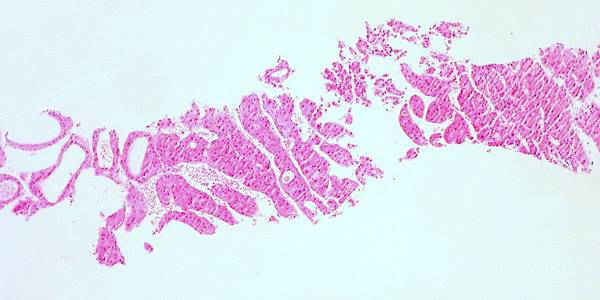
The effect of a combination of treatments was then tested. Mice containing palpable tumors were injected through their tail veins with either 3 mg/kg TPZ, saline, or 10 mg/kg doxorubicin, the current treatment used alongside HAL. They then underwent L-HAL and their tissue was stained with hematoxylin and eosin to visualize cell necrosis. Whereas only around 5% necrosis was observed in mice treated with doxorubicin, the TPZ-HAL treated mice showed >99% necrosis. In addition, whereas no histopathological changes were noted in the control mice, 99% of the cancer cells treated with TPZ-HAL underwent hepatic necrosis.

Finally, the long-term effects of this combined treatment were tested using contrast-enhanced liver MRI. Once again, cell necrosis was noted in the tumor cells specifically. After following these mice for 120 days, their tumor did not grow back and instead became cystic. Although no other tumor regrew in that location, some tumors were noted in alternate lobes of the liver.

Image: PD

©2016 2 Minute Medicine, Inc. All rights reserved. No works may be reproduced without expressed written consent from 2 Minute Medicine, Inc. Inquire about licensing here. No article should be construed as medical advice and is not intended as such by the authors or by 2 Minute Medicine, Inc.

Tags: hepatocellular carcinoma
Previous Post

Reduced risk of hyperkalemia with sacubitril/valsartan compared to enalapril in presence of mineralocorticoid receptor antagonist: The PARADIGM-HF trial

Next Post

2 Minute Medicine Rewind November 14, 2016

RelatedReports

Quick Take: Influence of HIV Infection on the Natural History of Hepatocellular Carcinoma: Results From a Global Multicohort Study
All Specialties

High intake of sugar-sweetened beverages is associated with increased risk of hepatocellular carcinoma

June 19, 2026
Prognostic indicators for transarterial chemoembolization in patients with hepatocellular carcinoma with extrahepatic spread identified
Chronic Disease

Nivolumab plus ipilimumab improves survival over lenvatinib or sorafenib in liver cancer

August 27, 2025
Prognostic indicators for transarterial chemoembolization in patients with hepatocellular carcinoma with extrahepatic spread identified
Chronic Disease

Durvalumab and bevacizumab plus chemoembolization improves progression-free survival in hepatocellular carcinoma

March 13, 2025
Prognostic indicators for transarterial chemoembolization in patients with hepatocellular carcinoma with extrahepatic spread identified
Chronic Disease

Transarterial chemoembolization with pembrolizumab and levatinib improves survival in unresectable hepatocellular carcinoma

March 5, 2025
Next Post
Endostatin directly binds androgen receptors to treat prostate cancer [PreClinical]

2 Minute Medicine Rewind November 14, 2016

Anti-TNF therapy for inflammatory bowel disease may induce skin lesions

Ustekinumab linked with efficacy in treatment of Crohn’s disease: The UNITI-1 & 2, IM-UNITI trials

USPSTF recommends biennial screening mammography in 50 to 74 year-old women

Palbociclib taken with letrozole increases progression-free survival in breast cancer patients

EvidencePulse™ by 2 Minute Medicine 2026 evidence scan 3 reports You asked top stroke trials 2026 Synthesizing medical evidence... Top 2026 stroke trial results: OCEANIC — ischemic stroke: 6.2% vs 8.4% OPTION* — mRS 0–1: 43.6% vs 34.2% ORIENTAL* — mRS 0–2: 58.6% vs 46.6% *Higher sICH in intervention arms Participants randomizedN OCEANIC 12,327 OPTION 570 ORIENTAL 564 Ask about guidelines or landmark trials... ↑ Try EvidencePulse™ Ask the evidence.
Get the signal.
Try it now → Physician-trained medical AI by 2 Minute Medicine

2MM+ All Access

Full details →
$4.99 /month

5-day free trial · cancel anytime

  • ✓100+ physician-written reports
  • ✓EvidencePulse™ + HypeCheck™
  • ✓Ad-free reading + newsletters
Start 5-day free trial

Then $4.99/month. Manage renewal in your account.

2 Minute Medicine® is an award winning, physician-run, expert medical media company. Our content is curated, written and edited by practicing health professionals who have clinical and scientific expertise in their field of reporting. Our editorial management team is comprised of highly-trained MD physicians. Join numerous brands, companies, and hospitals who trust our licensed content.

Recent Reports

  • Deficits in executive function are not universal among patients with alcohol use disorder
  • Choice of bicarbonate-buffered solution versus compound sodium lactate as the intraoperative crystalloid solution during abdominal surgery remains unclear
  • Artificial intelligence (AI)-based coronary calcium quantification successfully identified patients who could benefit from lipid-lowering therapy
License Content
Terms of Use | Disclaimer
Cookie Policy
Cleantalk Pixel
2MM+ All Access Full details →

The medical literature, distilled daily.

Monthly plan selected: $4.99 /month.

$4.99/month

5-day free trial · cancel anytime

Start 5-day free trial

Then $4.99/month. Manage renewal in your account.

Yearly plan selected: $49.90 /year.

$49.90/year

2 months free · only $4.16/month

Start 5-day free trial

Then $49.90/year. Manage renewal in your account.

Membership benefits

  • ✓100+ physician-written reports
  • ✓AI EvidencePulse™ + HypeCheck™
  • ✓Ad-free reading + newsletters

Already a member? Sign in

  • About
  • Specialties
    • All Specialties, All Recent Reports
    • Cardiology
    • Chronic Disease
    • Dermatology
    • Emergency
    • Endocrinology
    • Gastroenterology
    • Imaging and Intervention
    • Infectious Disease
    • Nephrology
    • Neurology
    • Obstetrics
    • Oncology
    • Ophthalmology
    • Pediatrics
    • Pharma
    • Preclinical
    • Psychiatry
    • Public Health
    • Pulmonology
    • Rheumatology
    • Surgery
  • Tools
    • EvidencePulse™
    • HypeCheck™
    • NPI Registry Lookup
    • RVU Search
  • Pharma
  • AI Roundup
  • The Scan
  • Classics™
    • 2MM+ Online Access
    • Paperback and Ebook
  • Rewinds
  • Partners
    • License Content
    • Submit Press Release
    • Advertise with Us
  • Account
    • Subscribe
    • My account
    • Cart
    • Sign-in
No Result
View All Result

© 2026 2 Minute Medicine, Inc. - Physician-written medical news.