

• About
  • Masthead
  • License Content
  • Advertise
  • Submit Press Release
  • RSS/Email List
  • 2MM Podcast
  • Write for us
  • Contact Us
2 Minute Medicine
No Result
View All Result

No products in the cart.

SUBSCRIBE
  • Specialties
    • All Specialties, All Recent Reports
    • Cardiology
    • Chronic Disease
    • Dermatology
    • Emergency
    • Endocrinology
    • Gastroenterology
    • Imaging and Intervention
    • Infectious Disease
    • Nephrology
    • Neurology
    • Obstetrics
    • Oncology
    • Ophthalmology
    • Pediatrics
    • Pharma
    • Preclinical
    • Psychiatry
    • Public Health
    • Pulmonology
    • Rheumatology
    • Surgery
  • Tools
    • EvidencePulse™
    • RVU Search
    • NPI Registry Lookup
  • Pharma
  • AI News
  • The Scan+
  • Classics™+
    • 2MM+ Online Access
    • Paperback and Ebook
  • Rewinds
  • Partners
    • License Content
    • Submit Press Release
    • Advertise with Us
  • Account
    • Subscribe
    • Sign-in
    • My account
2 Minute Medicine
  • Specialties
    • All Specialties, All Recent Reports
    • Cardiology
    • Chronic Disease
    • Dermatology
    • Emergency
    • Endocrinology
    • Gastroenterology
    • Imaging and Intervention
    • Infectious Disease
    • Nephrology
    • Neurology
    • Obstetrics
    • Oncology
    • Ophthalmology
    • Pediatrics
    • Pharma
    • Preclinical
    • Psychiatry
    • Public Health
    • Pulmonology
    • Rheumatology
    • Surgery
  • Tools
    • EvidencePulse™
    • RVU Search
    • NPI Registry Lookup
  • Pharma
  • AI News
  • The Scan+
  • Classics™+
    • 2MM+ Online Access
    • Paperback and Ebook
  • Rewinds
  • Partners
    • License Content
    • Submit Press Release
    • Advertise with Us
  • Account
    • Subscribe
    • Sign-in
    • My account
SUBSCRIBE
2 Minute Medicine
Subscribe
Home All Specialties Chronic Disease

Antibody-based imaging can monitor prostate cancer progression [PreClinical]
byChristine YoonandJessica Lau
January 17, 2017
in Chronic Disease, Imaging and Intervention, Oncology, Preclinical
Reading Time: 3 mins read
0
Share on FacebookShare on Twitter

1. In a mouse model of prostate cancer (PCa), a radiolabeled antibody (89Zr-11B6) targeting the androgen receptor (AR) pathway noninvasively detected AR-active primary and metastatic PCa lesions.

2. Using 89Zr-11B6, tumor response to treatment was monitored and demonstrated the utility of this imaging technique to assess disease activity as a function of therapeutic treatment.

Evidence Rating Level: 2 (Good)

Study Rundown: AR signaling activity is a hallmark of PCa progression and has been therapeutically targeted with androgen deprivation treatments, but reactivation of the AR pathway typically occurs and indicates a refractory disease state. Techniques to monitor disease progression and treatment efficacy are lacking since levels of prostate-specific antigen (PSA), which also denotes AR activity, are susceptible to changes based on various other factors. In this work, an antibody-based imaging technique was developed to enable noninvasive detection and monitoring of PCa tumors based on AR activity.

Initially, the radiolabeled 89Zr-11B6 antibody, which detects AR-regulated human kallikrein-related peptidase 2 (hK2), was tested in mice genetically engineered to express hK2 in the prostate. Positron emission tomography (PET) was used to determine that 89Zr-11B6 did not radiolabel tissues in control mice whereas injection with 89Zr-11B6 led to specific labeling of prostate tissue in the genetically engineered hK2-expressing mice. Moreover, metastatic lesions were also detected by PET with 89Zr-11B6 in mice with bone xenografts of various AR-active PCa. In the bone metastasis model of PCa, PET with 89Zr-11B6 was also able to detect changes in tumor AR activity after therapeutic intervention. Specifically, after surgical castration, 89Zr-11B6 uptake decreased by over 50%. Incidentally, conventional metrics for evaluating treatment efficacy, like PSA and 18F-sodium fluoride (18F-NaF) readings, remained unchanged.

This study demonstrated the utility of an antibody-based imaging method to detect PCa and monitor treatment efficacy based on AR activity changes over time. Currently, a humanized version of 89Zr-11B6 is being evaluated for safety before entering into human clinical trials. Success of this new method may not only improve diagnosis of PCa but also help adjust treatment plans based on real-time evaluations of effectiveness.

RELATED REPORTS

Pfizer’s Talzenna combo significantly delays prostate cancer progression

2 Minute Medicine: Pharma Roundup – Pfizer’s Talzenna delays prostate cancer progression, apixaban lowers VTE bleeding risk, Lilly’s retatrutide hits Phase III metabolic targets, and FDA warns Novo Nordisk over safety reporting violations [March 2026]

New model enhances prediction of prostate cancer-specific mortality

Click to read the study in Science Translational Medicine

Relevant Reading: Mechanisms of Androgen Receptor Activation in Castration-Resistant Prostate Cancer

In-Depth [animal study]: Transgenic C57BL/6 KLK2 mice were generated to express prostate-specific hK2 under the probasin promotor. 89Zr-11B6 (50 µg) was administered through tail-vein injection and PET imaging was completed 96 hours later using a microPET Focus 120 scanner. While no uptake of 89Zr-11B6 was seen in wild-type C57BL/6 mice, 89Zr-11B6 was able to accumulate within and identify the prostate tissue in hK2-expressing transgenic mice.

To generate the bone metastasis models, male CB-17 severe combined immunodeficient mice were injected with 1×10⁵ cells (VCaP, LNCaP-AR, and PC3 control) in the tibia. The VCaP and LNCaP-AR cell lines were chosen to represent two different forms (osteoblastic and osteolytic, respectively) of bone metastases. In both cases, 89Zr-11B6 was able to detect lesions in the tibia, with the intensity of signal directly correlating with differences in relative hK2 expression levels. The PC3 line was chosen as an AR-negative control, which demonstrated little accumulation of 89Zr-11B6 in the PET results.

In the LNCaP-AR intraosseous model, 89Zr-11B6 was also evaluated for its ability to track changes to the tumor’s AR activity in response to therapeutic treatment. After surgical castration, 89Zr-11B6 uptake decreased from nearly 20% injected activity/gram (IA/g) to less than 10% IA/g (p<0.005, n=5 per group). However, standard blood PSA levels (n=4 per group) before and after castration did not change, and conventional methods to detect metastatic bone disease using 18F-NaF imaging did not reveal changes to lesion AR activity (n=5 per group).

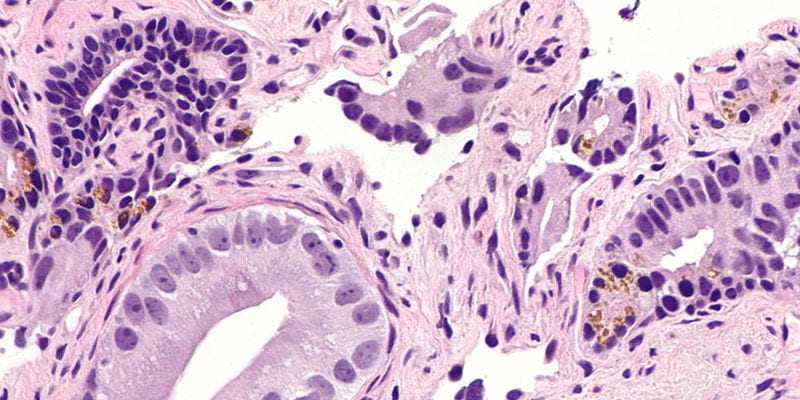
Image: PD

©2016 2 Minute Medicine, Inc. All rights reserved. No works may be reproduced without expressed written consent from 2 Minute Medicine, Inc. Inquire about licensing here. No article should be construed as medical advice and is not intended as such by the authors or by 2 Minute Medicine, Inc.
Tags: prostate cancer
Previous Post

No difference between placebo, amitriptyline and topiramate in reducing pediatric migraine: The CHAMP trial

Next Post

2 Minute Medicine Rewind January 16, 2017

RelatedReports

Radiation plus hormone therapy may improve prostate cancer survival
Oncology

Pfizer’s Talzenna combo significantly delays prostate cancer progression

April 1, 2026
2 Minute Medicine: Pharma Roundup: Price Hikes, Breakthrough Approvals, Legal Showdowns, Biotech Expansion, and Europe’s Pricing Debate [May 12nd, 2025]
Endocrinology

2 Minute Medicine: Pharma Roundup – Pfizer’s Talzenna delays prostate cancer progression, apixaban lowers VTE bleeding risk, Lilly’s retatrutide hits Phase III metabolic targets, and FDA warns Novo Nordisk over safety reporting violations [March 2026]

March 30, 2026
Testosterone replacement in male cancer survivors helps improve body composition
Oncology

New model enhances prediction of prostate cancer-specific mortality

January 12, 2026
Population-based risk factors and geographical trends identified for vitiligo
Oncology

Increasing cancer incidence rates in younger and older adults worldwide

October 20, 2025
Next Post
Combined MRI and NIH stroke scores may predict stroke prognosis

2 Minute Medicine Rewind January 16, 2017

UTI associated with increased risk of preeclampsia

Review suggests use of standard rather than intensive blood pressure treatment in the elderly

pH-sensitive nanoparticles reduce cancer growth by deoxygenating tumor tissue [PreClinical]

pH-sensitive nanoparticles reduce cancer growth by deoxygenating tumor tissue [PreClinical]

2 Minute Medicine® is an award winning, physician-run, expert medical media company. Our content is curated, written and edited by practicing health professionals who have clinical and scientific expertise in their field of reporting. Our editorial management team is comprised of highly-trained MD physicians. Join numerous brands, companies, and hospitals who trust our licensed content.

Recent Reports

  • A multidisciplinary home-based intervention may reduce risk of falls after stroke
  • Prednisone may have bone and cardiovascular benefits compared to hydrocortisone therapy in adrenal insufficiency
  • Lilly’s retatrutide achieves significant weight loss and A1C reduction in Phase 3 trial
License Content
Terms of Use | Disclaimer
Cookie Policy
Privacy Statement (EU)
Disclaimer

The Classics in Medicine Paperback Released!

Over the past 30 years, the transition from print to digital media has contributed to an exponential increase in medical literature. In response, 2 Minute Medicine presents 160+ authoritative, physician-written summaries of the most cited landmark trials in medicine.

amazon-logo_blackGet-it-on-iBooks-badge

Click anywhere to close this announcement

  • Specialties
    • All Specialties, All Recent Reports
    • Cardiology
    • Chronic Disease
    • Dermatology
    • Emergency
    • Endocrinology
    • Gastroenterology
    • Imaging and Intervention
    • Infectious Disease
    • Nephrology
    • Neurology
    • Obstetrics
    • Oncology
    • Ophthalmology
    • Pediatrics
    • Pharma
    • Preclinical
    • Psychiatry
    • Public Health
    • Pulmonology
    • Rheumatology
    • Surgery
  • Tools
    • EvidencePulse™
    • RVU Search
    • NPI Registry Lookup
  • Pharma
  • AI News
  • The Scan
  • Classics™
    • 2MM+ Online Access
    • Paperback and Ebook
  • Rewinds
  • Partners
    • License Content
    • Submit Press Release
    • Advertise with Us
  • Account
    • Subscribe
    • Sign-in
    • My account
No Result
View All Result

© 2026 2 Minute Medicine, Inc. - Physician-written medical news.