• About
  • Masthead
  • License Content
  • Advertise
  • Submit Press Release
  • RSS/Email List
  • 2MM Podcast
  • Write for us
  • Contact Us
2 Minute Medicine
No Result
View All Result

No products in the cart.

SUBSCRIBE
  • Specialties
    • All Specialties, All Recent Reports
    • Cardiology
    • Chronic Disease
    • Dermatology
    • Emergency
    • Endocrinology
    • Gastroenterology
    • Imaging and Intervention
    • Infectious Disease
    • Nephrology
    • Neurology
    • Obstetrics
    • Oncology
    • Ophthalmology
    • Pediatrics
    • Pharma
    • Preclinical
    • Psychiatry
    • Public Health
    • Pulmonology
    • Rheumatology
    • Surgery
  • Tools
    • EvidencePulse™
    • RVU Search
    • NPI Registry Lookup
  • Pharma
  • AI News
  • The Scan+
  • Classics™+
    • 2MM+ Online Access
    • Paperback and Ebook
  • Rewinds
  • Partners
    • License Content
    • Submit Press Release
    • Advertise with Us
  • Account
    • Subscribe
    • Sign-in
    • My account
2 Minute Medicine
  • Specialties
    • All Specialties, All Recent Reports
    • Cardiology
    • Chronic Disease
    • Dermatology
    • Emergency
    • Endocrinology
    • Gastroenterology
    • Imaging and Intervention
    • Infectious Disease
    • Nephrology
    • Neurology
    • Obstetrics
    • Oncology
    • Ophthalmology
    • Pediatrics
    • Pharma
    • Preclinical
    • Psychiatry
    • Public Health
    • Pulmonology
    • Rheumatology
    • Surgery
  • Tools
    • EvidencePulse™
    • RVU Search
    • NPI Registry Lookup
  • Pharma
  • AI News
  • The Scan+
  • Classics™+
    • 2MM+ Online Access
    • Paperback and Ebook
  • Rewinds
  • Partners
    • License Content
    • Submit Press Release
    • Advertise with Us
  • Account
    • Subscribe
    • Sign-in
    • My account
SUBSCRIBE
2 Minute Medicine
Subscribe
Home All Specialties Oncology

Stockholm3 outperforms PSA for detecting significant prostate cancer 

byAdrian WongandMichaela Dowling
June 22, 2026
in Oncology, Urology
Reading Time: 3 mins read
0
Share on FacebookShare on Twitter

1. In this randomized screening trial, the multivariable Stockholm3 test provided greater clinical net benefit and substantially fewer false-negative results than prostate-specific antigen (PSA) screening among men aged 50-74 years.

2. Compared with PSA, Stockholm3 detected more cases of clinically significant prostate cancer and missed fewer clinically significant cancers while maintaining a similar false-positive rate.

Evidence Rating Level: 1 (Excellent)

Study Rundown: Early detection of prostate cancer through screening can reduce mortality, but PSA screening alone may lead to unnecessary biopsies and overdiagnosis of low-risk disease while showing limited sensitivity for clinically significant prostate cancer (csPC) and lethal cancer. Prebiopsy magnetic resonance imaging (MRI) and secondary biomarkers can improve screening performance by reducing unnecessary biopsies and limiting detection of low-risk cancers. This study compared the short-term screening performance of PSA alone with Stockholm3, a multivariable screening test that combines PSA, secondary biomarkers, a polygenic risk score, and clinical factors, including age, family history of prostate cancer, and prior negative biopsy. In a cohort of more than 12,000 men, Stockholm3 demonstrated greater clinical net benefit than PSA across a range of biopsy risk thresholds. Compared with PSA, Stockholm3 detected more cases of csPC while generating a similar number of false-positive results and missing fewer clinically significant cancers. It also demonstrated substantially higher sensitivity for csPC detection while maintaining comparable specificity. Sensitivity analyses using alternative screening thresholds consistently showed improved csPC detection with Stockholm3 at similar false-positive rates. The study’s generalizability is limited by low participation rates, short follow-up, and a geographically restricted cohort. Nevertheless, the findings suggest that Stockholm3 offers greater clinical benefit than PSA alone, particularly through improved detection of clinically significant disease and fewer missed cancers. Longer-term studies are needed to confirm these findings.

Click to read this study in AIM

Relevant Reading: Stockholm3 Versus Prostate-specific Antigen in Prostate Cancer Screening: 9-year Outcomes Demonstrating Improved Detection of Aggressive Cancers and Reduced Overdiagnosis from the STHLM3 Trial

RELATED REPORTS

Pfizer’s Talzenna combo significantly delays prostate cancer progression

2 Minute Medicine: Pharma Roundup – Pfizer’s Talzenna delays prostate cancer progression, apixaban lowers VTE bleeding risk, Lilly’s retatrutide hits Phase III metabolic targets, and FDA warns Novo Nordisk over safety reporting violations [March 2026]

New model enhances prediction of prostate cancer-specific mortality

In-Depth [randomized controlled trial]: This study reports the 2-year follow-up results of a randomized screening trial comparing the performance of PSA and Stockholm3 for detecting clinically significant prostate cancer (csPC). Men aged 50-74 years living in the Stockholm region were eligible if they had no history of prostate cancer, no recent biopsy, no contraindications to MRI, and no severe comorbidities. All participants underwent both PSA and Stockholm3 testing. Men with elevated results (PSA ≥3 ng/mL or Stockholm3 ≥11) were randomly assigned to either systematic biopsy alone or MRI with both systematic and targeted biopsy. The primary outcome was a diagnosis of csPC (grade group ≥2) during 2 years of follow-up. Of 49,118 invited men, 12,750 enrolled, and 12,670 were included in the final analysis after excluding those who died or emigrated. At baseline, 12.1% of participants had elevated PSA levels and 13.3% had elevated Stockholm3 scores. During follow-up, 443 men were diagnosed with csPC. Older participants had higher PSA and Stockholm3 values and a greater prevalence of csPC. Decision curve analyses demonstrated that Stockholm3 provided greater clinical net benefit than PSA across a range of biopsy risk thresholds, resulting in fewer missed cancers with a similar number of unnecessary biopsies. Stockholm3 detected 400 cases of csPC (90%) and missed 43 cases, compared with 327 detected cases (74%) and 116 missed cases for PSA. False-positive rates were comparable between the two approaches (11% for Stockholm3 versus 10% for PSA). Per 1,000 men screened, Stockholm3 detected more csPC cases than PSA (31.6 vs. 25.8) while producing a similar number of false-positive results (101.8 vs. 95.0). It also missed substantially fewer csPC cases (3.4 vs. 9.2 per 1,000 screened). Sensitivity for csPC detection was 90% for Stockholm3 compared with 74% for PSA, while specificity was similar (89% vs. 90%). Sensitivity analyses using alternative screening thresholds consistently showed improved csPC detection with Stockholm3 at comparable false-positive rates. Overall, Stockholm3 demonstrated greater net clinical benefit than PSA alone for detecting clinically significant prostate cancer.

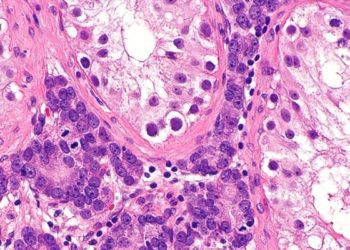
Image: PD

©2026 2 Minute Medicine, Inc. All rights reserved. No works may be reproduced without expressed written consent from 2 Minute Medicine, Inc. Inquire about licensing here. No article should be construed as medical advice and is not intended as such by the authors or by 2 Minute Medicine, Inc.

Tags: #prostate cancer screeningprostate cancerprostate cancer detectionprostate specific antigen (PSA)
Previous Post

Telehealth yields modest improvements in diabetes outcomes 

RelatedReports

Radiation plus hormone therapy may improve prostate cancer survival
Oncology

Pfizer’s Talzenna combo significantly delays prostate cancer progression

April 9, 2026
2 Minute Medicine: Pharma Roundup: Price Hikes, Breakthrough Approvals, Legal Showdowns, Biotech Expansion, and Europe’s Pricing Debate [May 12nd, 2025]
Endocrinology

2 Minute Medicine: Pharma Roundup – Pfizer’s Talzenna delays prostate cancer progression, apixaban lowers VTE bleeding risk, Lilly’s retatrutide hits Phase III metabolic targets, and FDA warns Novo Nordisk over safety reporting violations [March 2026]

March 30, 2026
Testosterone replacement in male cancer survivors helps improve body composition
Oncology

New model enhances prediction of prostate cancer-specific mortality

January 12, 2026
Population-based risk factors and geographical trends identified for vitiligo
Oncology

Increasing cancer incidence rates in younger and older adults worldwide

October 20, 2025

2 Minute Medicine® is an award winning, physician-run, expert medical media company. Our content is curated, written and edited by practicing health professionals who have clinical and scientific expertise in their field of reporting. Our editorial management team is comprised of highly-trained MD physicians. Join numerous brands, companies, and hospitals who trust our licensed content.

Recent Reports

  • Stockholm3 outperforms PSA for detecting significant prostate cancer 
  • Telehealth yields modest improvements in diabetes outcomes 
  • Delayed CIN2 treatment does not increase cancer risk 
License Content
Terms of Use | Disclaimer
Cookie Policy
Privacy Statement (EU)
Disclaimer
  • Specialties
    • All Specialties, All Recent Reports
    • Cardiology
    • Chronic Disease
    • Dermatology
    • Emergency
    • Endocrinology
    • Gastroenterology
    • Imaging and Intervention
    • Infectious Disease
    • Nephrology
    • Neurology
    • Obstetrics
    • Oncology
    • Ophthalmology
    • Pediatrics
    • Pharma
    • Preclinical
    • Psychiatry
    • Public Health
    • Pulmonology
    • Rheumatology
    • Surgery
  • Tools
    • EvidencePulse™
    • RVU Search
    • NPI Registry Lookup
  • Pharma
  • AI News
  • The Scan
  • Classics™
    • 2MM+ Online Access
    • Paperback and Ebook
  • Rewinds
  • Partners
    • License Content
    • Submit Press Release
    • Advertise with Us
  • Account
    • Subscribe
    • Sign-in
    • My account
No Result
View All Result

© 2026 2 Minute Medicine, Inc. - Physician-written medical news.