• About
  • Masthead
  • License Content
  • Advertise
  • Submit Press Release
  • RSS/Email List
  • 2MM Podcast
  • Write for us
  • Contact Us
2 Minute Medicine
No Result
View All Result

No products in the cart.

SUBSCRIBE
  • About
  • Specialties
    • All Specialties, All Recent Reports
    • Cardiology
    • Chronic Disease
    • Dermatology
    • Emergency
    • Endocrinology
    • Gastroenterology
    • Imaging and Intervention
    • Infectious Disease
    • Nephrology
    • Neurology
    • Obstetrics
    • Oncology
    • Ophthalmology
    • Pediatrics
    • Pharma
    • Preclinical
    • Psychiatry
    • Public Health
    • Pulmonology
    • Rheumatology
    • Surgery
  • Tools+
    • EvidencePulse™
    • HypeCheck™
    • NPI Registry Lookup
    • RVU Search
  • Pharma
  • AI Roundup
  • The Scan+
  • Classics™+
    • 2MM+ Online Access
    • Paperback and Ebook
  • Rewinds
  • Partners
    • License Content
    • Submit Press Release
    • Advertise with Us
  • Account
    • Subscribe
    • My account
    • Cart
    • Sign-in
2 Minute Medicine
  • About
  • Specialties
    • All Specialties, All Recent Reports
    • Cardiology
    • Chronic Disease
    • Dermatology
    • Emergency
    • Endocrinology
    • Gastroenterology
    • Imaging and Intervention
    • Infectious Disease
    • Nephrology
    • Neurology
    • Obstetrics
    • Oncology
    • Ophthalmology
    • Pediatrics
    • Pharma
    • Preclinical
    • Psychiatry
    • Public Health
    • Pulmonology
    • Rheumatology
    • Surgery
  • Tools+
    • EvidencePulse™
    • HypeCheck™
    • NPI Registry Lookup
    • RVU Search
  • Pharma
  • AI Roundup
  • The Scan+
  • Classics™+
    • 2MM+ Online Access
    • Paperback and Ebook
  • Rewinds
  • Partners
    • License Content
    • Submit Press Release
    • Advertise with Us
  • Account
    • Subscribe
    • My account
    • Cart
    • Sign-in
SUBSCRIBE
2 Minute Medicine
Subscribe
EvidencePulse™ by 2 Minute Medicine 2026 evidence scan 3 reports You asked top stroke trials 2026 Synthesizing medical evidence... Top 2026 stroke trial results: OCEANIC — ischemic stroke: 6.2% vs 8.4% OPTION* — mRS 0–1: 43.6% vs 34.2% ORIENTAL* — mRS 0–2: 58.6% vs 46.6% *Higher sICH in intervention arms Participants randomizedN OCEANIC 12,327 OPTION 570 ORIENTAL 564 Ask about guidelines or landmark trials... ↑ Try EvidencePulse™ Ask the evidence.
Get the signal.
Try it now → Physician-trained medical AI by 2 Minute Medicine
Home All Specialties Oncology

New model enhances prediction of prostate cancer-specific mortality
byAdrian WongandMichaela Dowling
January 12, 2026
in Oncology
Reading Time: 3 mins read
Testosterone replacement in male cancer survivors helps improve body composition
Share on FacebookShare on Twitter

1. In this cohort study, a novel prognostic model was developed to estimate prostate cancer-specific mortality (PCSM) while accounting for other-cause mortality (OCM).

2. This model more accurately stratifies patients’ long-term risk of PCSM after prostate-specific antigen (PSA) screening compared with existing calculators, particularly over extended follow-up.

Evidence Rating Level: 2 (Good)

Study Rundown: Although millions of prostate-specific antigen (PSA) tests are performed annually for prostate cancer (PCa) screening, few tools exist to interpret results in a way that supports informed shared decision-making. Current approaches rely on biopsy pathology, which varies in clinical significance, estimates only long-term outcomes such as metastasis or death, and cannot account for other-cause mortality (OCM). This study aimed to develop and evaluate a model for predicting prostate cancer-specific mortality (PCSM) from the point of screening, incorporating OCM. In the development cohort, predicted long-term risk of PCSM was low, and in the external validation cohort, predicted risk was even lower. The model demonstrated superior long-term discrimination in the development cohort compared with existing calculators, though discrimination in the external validation cohort was similar. Discrimination was also improved for patients at younger ages in the development cohort. Among patients in the highest-risk group according to an existing calculator, the model showed better long-term discrimination. Additional analyses suggested that the relationship between life expectancy and observed PCSM may be strongest in patients with high-risk PCa. Use of the model showed net clinical benefit across thresholds compared with strategies of stopping screening for all, continuing screening for all, or using age- or PSA-based cutoffs. Although generalizability is limited by differences in management strategies between the model and comparators, these findings suggest that this prediction tool may better stratify patient risk and improve interpretation of PSA results.

Click to read this study in AIM

Relevant Reading: A Contemporary Prostate Biopsy Risk Calculator Based on Multiple Heterogeneous Cohorts

RELATED REPORTS

Borderline-low hemoglobin levels linked to increased mortality

Enzalutamide (Xtandi) and abiraterone (Zytiga) may have similar effectiveness in metastatic castration-sensitive prostate cancer

Stockholm3 outperforms PSA for detecting significant prostate cancer 

In-Depth [prospective cohort]: This study aimed to test and validate a novel prognostic model for predicting long-term prostate cancer-specific mortality (PCSM) risk. The development cohort was derived from the Prostate, Lung, Colorectal, and Ovarian (PLCO) Cancer Screening Trial, which recruited men aged 55–74 from 1993 to 2001. Participants had no prior prostate cancer; those with a history of prostate, lung, colorectal, or ovarian cancer were excluded. A PSA level above 4 ng/dL was considered positive. The external validation cohort included men aged 55–74 who underwent PSA testing in the Veterans Affairs Healthcare System from 2002 to 2006, excluding those with prior prostate cancer. The primary endpoint was PCSM, accounting for competing risk of other-cause mortality (OCM). The PLCO model was compared with the Prostate Biopsy Collaborative Group (PBCG) model, which predicts clinically significant prostate cancer on biopsy based on age, race, family history, and PSA level. The development cohort included 33,339 patients (median age 62 years, IQR 58–67; median PSA 1.13 ng/dL), and the validation cohort included 174,787 patients (median age 62 years, IQR 57–69; median PSA 0.97 ng/dL). Median follow-up was 25.4 years for development and 18.2 years for validation; maximum follow-up was 29.5 and 20.6 years, respectively. There were 501 prostate cancer deaths in development and 1,933 in validation. The PLCO model showed superior discrimination at 29.5 years in development (AUC 0.666 vs. 0.643; p < 0.001) and before age 85 (0.709 vs. 0.642; p < 0.001). In validation, discrimination at 20 years was better than PBCG (0.776 vs. 0.749; p = 0.031). Among patients in the highest PBCG risk decile, the PLCO model outperformed PBCG at 29.5 years (0.643 vs. 0.575; p = 0.001) and 20 years (0.717 vs. 0.698; p = 0.008). Use of the PLCO model showed net clinical benefit across thresholds compared with stopping or continuing screening for all patients or using age- or PSA-based cutoffs. These findings suggest the PLCO model may better stratify long-term PCSM risk than existing tools.

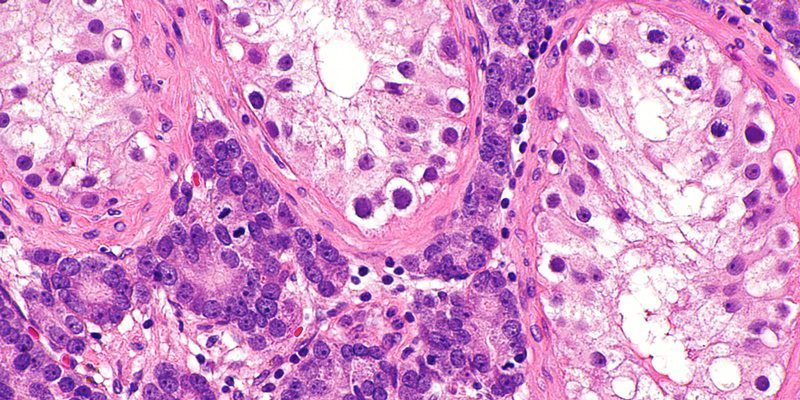
Image: PD

©2026 2 Minute Medicine, Inc. All rights reserved. No works may be reproduced without expressed written consent from 2 Minute Medicine, Inc. Inquire about licensing here. No article should be construed as medical advice and is not intended as such by the authors or by 2 Minute Medicine, Inc.

Tags: #prostate cancer screeningcancerprostate cancerprostate specific antigen (PSA)
Previous Post

Patient and provider characteristics associated with difficult clinical encounters

Next Post

Surgery-induced weight loss may be associated with lower mortality rates in women with obesity but not men

RelatedReports

Cardiology

Borderline-low hemoglobin levels linked to increased mortality

September 14, 2026
Radiation plus hormone therapy may improve prostate cancer survival
Chronic Disease

Enzalutamide (Xtandi) and abiraterone (Zytiga) may have similar effectiveness in metastatic castration-sensitive prostate cancer

July 22, 2026
Patient-reported outcomes differ significantly based on treatment in prostate cancer: The ProtecT trial
Oncology

Stockholm3 outperforms PSA for detecting significant prostate cancer 

June 22, 2026
Radiation plus hormone therapy may improve prostate cancer survival
Oncology

Pfizer’s Talzenna combo significantly delays prostate cancer progression

April 9, 2026
Next Post

Surgery-induced weight loss may be associated with lower mortality rates in women with obesity but not men

Remote patient monitoring did not reduce heart failure readmissions: The BEAT-HF trial

2 Minute Medicine Rewind

Systematic review examines benefits and adverse effects of cannabinoid therapy

Baseline cannabis use may not be associated with abstinence from vaping

EvidencePulse™ by 2 Minute Medicine 2026 evidence scan 3 reports You asked top stroke trials 2026 Synthesizing medical evidence... Top 2026 stroke trial results: OCEANIC — ischemic stroke: 6.2% vs 8.4% OPTION* — mRS 0–1: 43.6% vs 34.2% ORIENTAL* — mRS 0–2: 58.6% vs 46.6% *Higher sICH in intervention arms Participants randomizedN OCEANIC 12,327 OPTION 570 ORIENTAL 564 Ask about guidelines or landmark trials... ↑ Try EvidencePulse™ Ask the evidence.
Get the signal.
Try it now → Physician-trained medical AI by 2 Minute Medicine

2MM+ All Access

Full details →
$4.99 /month

5-day free trial · cancel anytime

  • ✓100+ physician-written reports
  • ✓EvidencePulse™ + HypeCheck™
  • ✓Ad-free reading + newsletters
Start 5-day free trial

Then $4.99/month. Manage renewal in your account.

2 Minute Medicine® is an award winning, physician-run, expert medical media company. Our content is curated, written and edited by practicing health professionals who have clinical and scientific expertise in their field of reporting. Our editorial management team is comprised of highly-trained MD physicians. Join numerous brands, companies, and hospitals who trust our licensed content.

Recent Reports

  • An ultrasound-guided percutaneous method of vagal nerve stimulation may be effective for refractory chronic pain
  • Daraxonrasib extends survival in metastatic pancreatic cancer
  • Artificial intelligence (AI) scribes showed mixed effects on documentation time and improvements in physician well-being
License Content
Terms of Use | Disclaimer
Cookie Policy
Cleantalk Pixel
2MM+ All Access Full details →

The medical literature, distilled daily.

Monthly plan selected: $4.99 /month.

$4.99/month

5-day free trial · cancel anytime

Start 5-day free trial

Then $4.99/month. Manage renewal in your account.

Yearly plan selected: $49.90 /year.

$49.90/year

2 months free · only $4.16/month

Start 5-day free trial

Then $49.90/year. Manage renewal in your account.

Membership benefits

  • ✓100+ physician-written reports
  • ✓AI EvidencePulse™ + HypeCheck™
  • ✓Ad-free reading + newsletters

Already a member? Sign in

  • About
  • Specialties
    • All Specialties, All Recent Reports
    • Cardiology
    • Chronic Disease
    • Dermatology
    • Emergency
    • Endocrinology
    • Gastroenterology
    • Imaging and Intervention
    • Infectious Disease
    • Nephrology
    • Neurology
    • Obstetrics
    • Oncology
    • Ophthalmology
    • Pediatrics
    • Pharma
    • Preclinical
    • Psychiatry
    • Public Health
    • Pulmonology
    • Rheumatology
    • Surgery
  • Tools
    • EvidencePulse™
    • HypeCheck™
    • NPI Registry Lookup
    • RVU Search
  • Pharma
  • AI Roundup
  • The Scan
  • Classics™
    • 2MM+ Online Access
    • Paperback and Ebook
  • Rewinds
  • Partners
    • License Content
    • Submit Press Release
    • Advertise with Us
  • Account
    • Subscribe
    • My account
    • Cart
    • Sign-in
No Result
View All Result

© 2026 2 Minute Medicine, Inc. - Physician-written medical news.