• About
  • Masthead
  • License Content
  • Advertise
  • Submit Press Release
  • RSS/Email List
  • 2MM Podcast
  • Write for us
  • Contact Us
2 Minute Medicine
No Result
View All Result

No products in the cart.

SUBSCRIBE
  • Specialties
    • All Specialties, All Recent Reports
    • Cardiology
    • Chronic Disease
    • Dermatology
    • Emergency
    • Endocrinology
    • Gastroenterology
    • Imaging and Intervention
    • Infectious Disease
    • Nephrology
    • Neurology
    • Obstetrics
    • Oncology
    • Ophthalmology
    • Pediatrics
    • Pharma
    • Preclinical
    • Psychiatry
    • Public Health
    • Pulmonology
    • Rheumatology
    • Surgery
  • Tools
    • EvidencePulse™
    • RVU Search
    • NPI Registry Lookup
  • Pharma
  • AI News
  • The Scan+
  • Classics™+
    • 2MM+ Online Access
    • Paperback and Ebook
  • Rewinds
  • Partners
    • License Content
    • Submit Press Release
    • Advertise with Us
  • Account
    • Subscribe
    • Sign-in
    • My account
2 Minute Medicine
  • Specialties
    • All Specialties, All Recent Reports
    • Cardiology
    • Chronic Disease
    • Dermatology
    • Emergency
    • Endocrinology
    • Gastroenterology
    • Imaging and Intervention
    • Infectious Disease
    • Nephrology
    • Neurology
    • Obstetrics
    • Oncology
    • Ophthalmology
    • Pediatrics
    • Pharma
    • Preclinical
    • Psychiatry
    • Public Health
    • Pulmonology
    • Rheumatology
    • Surgery
  • Tools
    • EvidencePulse™
    • RVU Search
    • NPI Registry Lookup
  • Pharma
  • AI News
  • The Scan+
  • Classics™+
    • 2MM+ Online Access
    • Paperback and Ebook
  • Rewinds
  • Partners
    • License Content
    • Submit Press Release
    • Advertise with Us
  • Account
    • Subscribe
    • Sign-in
    • My account
SUBSCRIBE
2 Minute Medicine
Subscribe
Home All Specialties Cardiology

No cardiac events in patients with pacemakers or ICDs who underwent MRI: The MagnaSafe registry
byShaidah Deghan, MSc. MD
February 23, 2017
in Cardiology, Imaging and Intervention
Reading Time: 2 mins read
0
Share on FacebookShare on Twitter

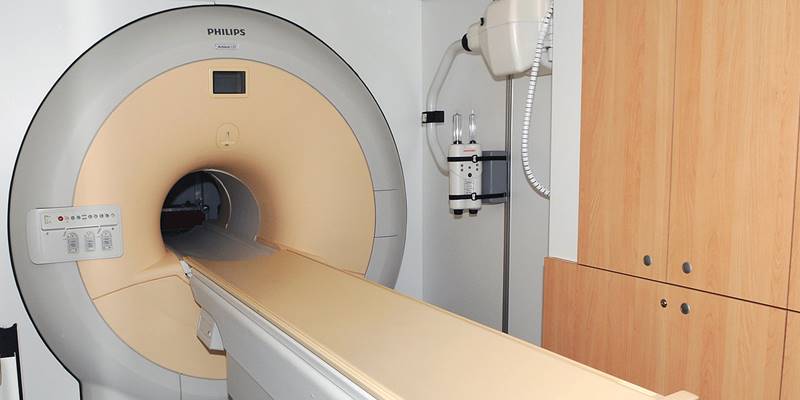
1. This prospective cohort study of patients with cardiac pacemakers or implantable cardioverter-defibrillators (ICDs) undergoing magnetic resonance imaging (MRI) demonstrated no deaths, episodes of lead failure requiring immediate replacement, or loss of capture.

2. No adverse events were reported with repeated MRI scans.

Evidence Rating Level: 2 (Good)       

Study Rundown: There are safety concerns when it comes to acquiring MRI images for patients who have implanted cardiac devices such as a cardiac pacemakers and ICDs. Therefore, such patients are excluded from undergoing MRI scanning. The MagnaSafe Registry attempted to determine the risks associated with MRI at a magnetic strength of 1.5T for patients with either a pacemaker or an ICD that was not designed to reduce the risks associated with MRI, otherwise referred to as “non-MRI-conditional” devices. The participants had to have an indication for a nonthoracic MRI for a field strength of 1.5T. The devices were interrogated before and after MRI.

The 1500 patients included in the study experienced no deaths, episodes of lead failures requiring immediate replacement, or loss of capture during MRI examination. However, a small number of cases revealed changes in pacing threshold, lead impedance, battery voltage, and R-wave and P-wave amplitude that exceeded the prespecified thresholds. While the findings suggest that MRI is safe for patients with “non-MRI-conditional devices, the prospective cohort design of the study and the fact that it included generators and leads from various manufacturers limits the strength of its conclusions and the generalizability of these results to the broader population.

Click to read the study, published today in NEJM

RELATED REPORTS

Body composition measures from magnetic resonance imaging scans may be associated with adverse health outcomes

Leqembi gains at home injection for maintenance dosing

Retinal scans powered by AI predict stroke risk over a decade

Relevant Reading: Effects of external electrical and magnetic fields on pacemakers and defibrillators: from engineering principles to clinical practice.

In-Depth [prospective cohort]: This prospective, multicenter study included 1000 patients with pacemakers and 500 patients with ICDs. The primary end points were death, induced arrhythmia, loss of capture, generator or lead failure, or electrical reset during the scanning. The secondary end points were changes in device settings.

Brain and spine MRI examinations were performed on 75% of the included patients, with patients spending a mean time of 44 minutes in the magnetic field. There were no deaths, lead failure requiring immediate replacement, or observed ventricular arrhythmias during MRI examination. There were a total of 6 observed atrial arrhythmias, with 5 such events seen in the pacemaker category (0.5%, 95%CI 0.2-1.2%) and 1 in the ICD category (0.2%, 95%CI 0.04-1.1%). A reduction of 50% or more in P-wave amplitude was identified in 0.9% of pacemaker leads and in 0.3% of ICD leads. A reduction of 25% or more in R-wave amplitude was found in 3.9% of pacemaker leads and in 1.6% of ICD leads, while a reduction of 50% or more in R-wave amplitude was found in no pacemaker leads and in 0.2% of ICD leads. There was no increase in adverse events with repeat MRI in this patient sample.

Image: PD

©2017 2 Minute Medicine, Inc. All rights reserved. No works may be reproduced without expressed written consent from 2 Minute Medicine, Inc. Inquire about licensing here. No article should be construed as medical advice and is not intended as such by the authors or by 2 Minute Medicine, Inc.
Tags: Implantable Cardioverter Defibrillator (ICD)Magnetic Resonance Imaging (MRI)mriPacemaker
Previous Post

Transient elastography may be effective in evaluating endovascular treatment of Budd-Chiari syndrome

Next Post

2 Minute Medicine Rewind February 20, 2017

RelatedReports

Time from symptom onset may not predict infarct volume in stroke
Cardiology

Body composition measures from magnetic resonance imaging scans may be associated with adverse health outcomes

September 29, 2025
Amyloid pathology may be detected decades prior to Alzheimer’s diagnosis
Pharma

Leqembi gains at home injection for maintenance dosing

September 5, 2025
Non-alcoholic fatty liver disease and risk of incident acute myocardial infarction and stroke: findings from matched cohort study of 18 million European adults
AI Roundup

Retinal scans powered by AI predict stroke risk over a decade

July 31, 2025
3D mammography (tomosynthesis) enhances accuracy of breast cancer screening
Chronic Disease

Abbreviated MRI is superior to whole-breast ultrasound for detection of cancer in dense breasts

June 25, 2025
Next Post
Non-TNF-targeted therapies more effective than anti-TNF agents in uncontrolled rheumatoid arthritis

2 Minute Medicine Rewind February 20, 2017

Unenhanced magnetic resonance imaging highly sensitive and specific for acute appendicitis

Increased ultrasound utilization in the diagnosis of acute appendicitis in children

Digital imaging detects sight-threatening retinopathy of prematurity

Tighter glucose control does not decrease ICU-free days in critically ill pediatric patients: The HALF-PINT trial

2 Minute Medicine® is an award winning, physician-run, expert medical media company. Our content is curated, written and edited by practicing health professionals who have clinical and scientific expertise in their field of reporting. Our editorial management team is comprised of highly-trained MD physicians. Join numerous brands, companies, and hospitals who trust our licensed content.

Recent Reports

  • Artificial intelligence predicts colorectal cancer in ulcerative colitis with 99% accuracy
  • Penpulimab and lenalidomide in combination with standard of care chemoimmunotherapy demonstrates promising safety and efficacy in diffuse large B-cell lymphoma
  • Artificial intelligence designed drugs Hit 90% Phase I success rate in trials
License Content
Terms of Use | Disclaimer
Cookie Policy
Privacy Statement (EU)
Disclaimer

© 2025 2 Minute Medicine, Inc. - Physician-written medical news.

  • Specialties
    • All Specialties, All Recent Reports
    • Cardiology
    • Chronic Disease
    • Dermatology
    • Emergency
    • Endocrinology
    • Gastroenterology
    • Imaging and Intervention
    • Infectious Disease
    • Nephrology
    • Neurology
    • Obstetrics
    • Oncology
    • Ophthalmology
    • Pediatrics
    • Pharma
    • Preclinical
    • Psychiatry
    • Public Health
    • Pulmonology
    • Rheumatology
    • Surgery
  • Tools
    • EvidencePulse™
    • RVU Search
    • NPI Registry Lookup
  • Pharma
  • AI News
  • The Scan
  • Classics™
    • 2MM+ Online Access
    • Paperback and Ebook
  • Rewinds
  • Partners
    • License Content
    • Submit Press Release
    • Advertise with Us
  • Account
    • Subscribe
    • Sign-in
    • My account
No Result
View All Result

© 2025 2 Minute Medicine, Inc. - Physician-written medical news.