• About
  • Masthead
  • License Content
  • Advertise
  • Submit Press Release
  • RSS/Email List
  • 2MM Podcast
  • Write for us
  • Contact Us
2 Minute Medicine
No Result
View All Result

No products in the cart.

SUBSCRIBE
  • Specialties
    • All Specialties, All Recent Reports
    • Cardiology
    • Chronic Disease
    • Dermatology
    • Emergency
    • Endocrinology
    • Gastroenterology
    • Imaging and Intervention
    • Infectious Disease
    • Nephrology
    • Neurology
    • Obstetrics
    • Oncology
    • Ophthalmology
    • Pediatrics
    • Pharma
    • Preclinical
    • Psychiatry
    • Public Health
    • Pulmonology
    • Rheumatology
    • Surgery
  • Tools
    • EvidencePulse™
    • RVU Search
    • NPI Registry Lookup
  • Pharma
  • AI News
  • The Scan+
  • Classics™+
    • 2MM+ Online Access
    • Paperback and Ebook
  • Rewinds
  • Partners
    • License Content
    • Submit Press Release
    • Advertise with Us
  • Account
    • Subscribe
    • Sign-in
    • My account
2 Minute Medicine
  • Specialties
    • All Specialties, All Recent Reports
    • Cardiology
    • Chronic Disease
    • Dermatology
    • Emergency
    • Endocrinology
    • Gastroenterology
    • Imaging and Intervention
    • Infectious Disease
    • Nephrology
    • Neurology
    • Obstetrics
    • Oncology
    • Ophthalmology
    • Pediatrics
    • Pharma
    • Preclinical
    • Psychiatry
    • Public Health
    • Pulmonology
    • Rheumatology
    • Surgery
  • Tools
    • EvidencePulse™
    • RVU Search
    • NPI Registry Lookup
  • Pharma
  • AI News
  • The Scan+
  • Classics™+
    • 2MM+ Online Access
    • Paperback and Ebook
  • Rewinds
  • Partners
    • License Content
    • Submit Press Release
    • Advertise with Us
  • Account
    • Subscribe
    • Sign-in
    • My account
SUBSCRIBE
2 Minute Medicine
Subscribe
Home StudyGraphics

#VisualAbstract: Opportunistic screening for atrial fibrillation not associated with improved diagnostic rates compared to standard care
byConstance Wu
September 29, 2020
in StudyGraphics
Reading Time: 2 mins read
0
Share on FacebookShare on Twitter

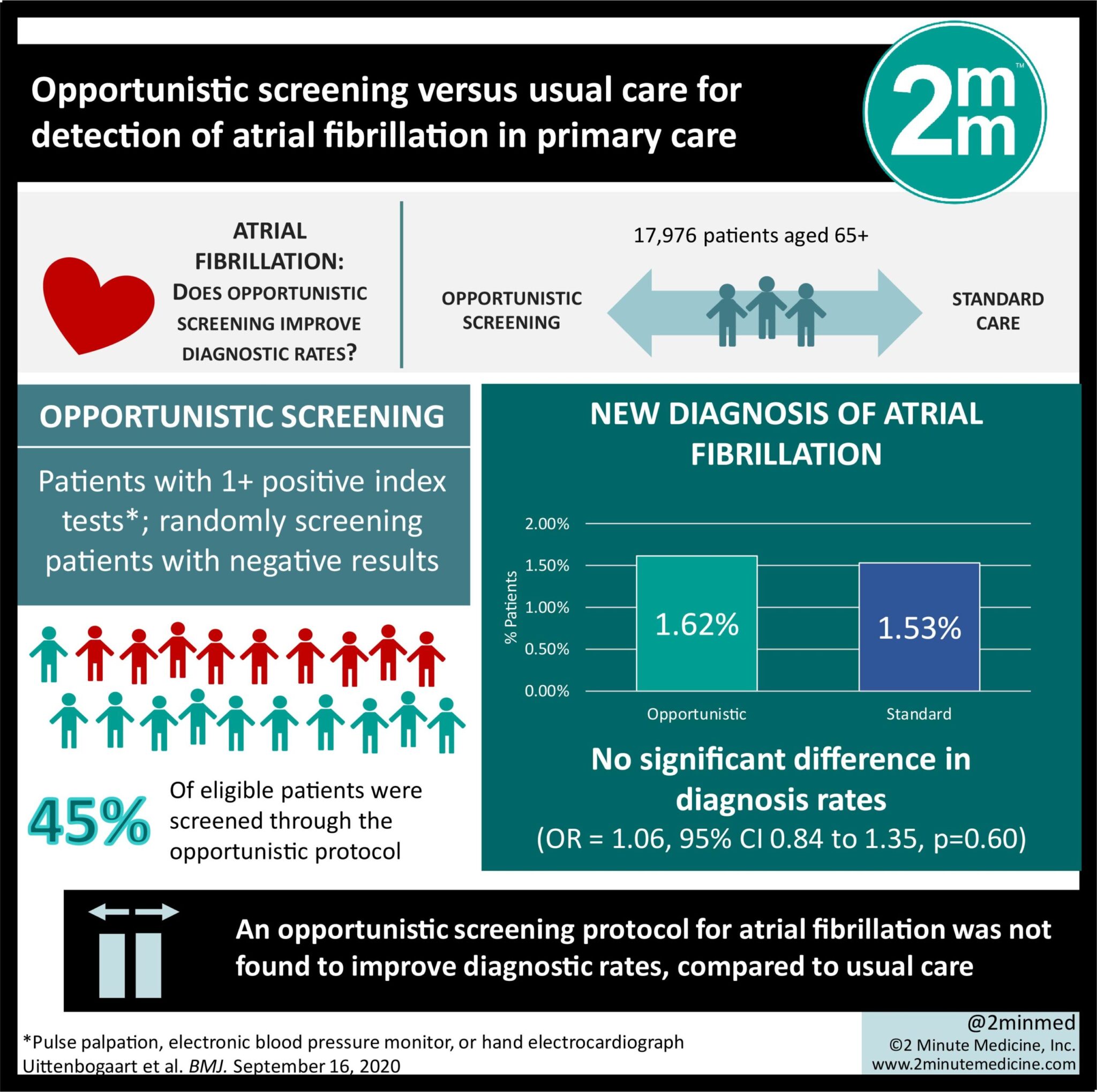
1. An opportunistic screening protocol for atrial fibrillation was not found to improve diagnostic rates, compared to usual care.

Evidence Rating Level: 1 (Excellent)

Atrial fibrillation (AF) is a cardiac arrhythmia that increases in prevalence with age. AF can also lead to cardiovascular conditions such as stroke and heart failure. Although the symptoms are well-known, such as shortness of breath, palpitations, and dizziness, AF can also appear asymptomatic at times, or occur as unpredictable flare-ups. This underlies the importance of effective AF screening and early detection. Still, only 1 other randomized controlled trial was conducted on the effects of AF screening and diagnosis, showing that opportunistic screening led to more diagnoses than usual care. However, this study was done in 2007, and technological advances in screening have been made since then, such as handheld electrocardiographic devices. The current study was a 1-year randomized controlled trial in the Netherlands, comparing AF diagnoses with opportunistic screening versus usual care. The study population included 17,976 patients aged 65 and over, from 96 primary care practices in the country; each practice was randomized into one of the two groups, stratified by the existing number of AF patients in the practice. The opportunistic group screened any primary care patient with one or more positive index tests (pulse palpation, electronic blood pressure monitor, or hand electrocardiograph), as well as randomly screening patients with negative results for all 3 tests. In the study, 45% of eligible patients were screened through the opportunistic protocol. Usual care may have differed for each physician in the study, but national guidelines suggested assessing heart rhythm in any patient presenting with AF symptoms. The study found that 1.62% of patients in the opportunistic group were newly diagnosed with AF, compared to 1.53% of patients in the usual care group. This was not a significant difference (Odds Ratio 1.06, 95% CI 0.84-1.35, P = 0.60). Therefore, an opportunistic screening protocol did not impact AF diagnostic rates, which highlights the need for exploring other methods to diagnose patients early, such as through targeted screening or heart rhythm monitoring through common wireless devices.

Click to read the study in BMJ

©2020 2 Minute Medicine, Inc. All rights reserved. No works may be reproduced without expressed written consent from 2 Minute Medicine, Inc. Inquire about licensing here. No article should be construed as medical advice and is not intended as such by the authors or by 2 Minute Medicine, Inc.


RELATED REPORTS

Replacing sedentary time with physical activity may lower risk of all-cause mortality

2 Minute Medicine Rewind March 2, 2026

2 Minute Medicine Rewind February 23, 2026

Tags: afibatrial fibrillationcardiovascular diseasecvdprimary carescreening
Previous Post

#VisualAbstract: Life’s Simple 7 and Incident Hypertension: The REGARDS Study

Next Post

#VisualAbstract: Exeter V40 femoral stem implant associated with longer implant survival time for total hip replacement

RelatedReports

Reduced gestational weight gain with lifestyle intervention
Cardiology

Replacing sedentary time with physical activity may lower risk of all-cause mortality

March 2, 2026
Few older adolescents meet recommended levels of physical activity
Weekly Rewinds

2 Minute Medicine Rewind March 2, 2026

March 2, 2026
Many new pediatric asthma cases attributable to obesity
Weekly Rewinds

2 Minute Medicine Rewind February 23, 2026

February 23, 2026
Chronic Disease

Patient and provider characteristics associated with difficult clinical encounters

January 12, 2026
Next Post
#VisualAbstract: Life’s Simple 7 and Incident Hypertension: The REGARDS Study

#VisualAbstract: Exeter V40 femoral stem implant associated with longer implant survival time for total hip replacement

Hydroxychloroquine not beneficial for early, mild COVID-19

mRNA-1273 Covid-19 vaccine exerts potent immunogenic and protective effects in nonhuman primates

Being overweight and obese associated with increased incidence of chronic kidney disease

2 Minute Medicine Rewind October 5, 2020

2 Minute Medicine® is an award winning, physician-run, expert medical media company. Our content is curated, written and edited by practicing health professionals who have clinical and scientific expertise in their field of reporting. Our editorial management team is comprised of highly-trained MD physicians. Join numerous brands, companies, and hospitals who trust our licensed content.

Recent Reports

  • α-synuclein pathology is associated with faster tau accumulation in women
  • Higher ultra-processed food intake in young children is associated with adverse early behavioural outcomes
  • Lower preoperative serum calcium is associated with increased risk of postoperative complications in patients undergoing orthopedic surgery
License Content
Terms of Use | Disclaimer
Cookie Policy
Privacy Statement (EU)
Disclaimer

© 2025 2 Minute Medicine, Inc. - Physician-written medical news.

  • Specialties
    • All Specialties, All Recent Reports
    • Cardiology
    • Chronic Disease
    • Dermatology
    • Emergency
    • Endocrinology
    • Gastroenterology
    • Imaging and Intervention
    • Infectious Disease
    • Nephrology
    • Neurology
    • Obstetrics
    • Oncology
    • Ophthalmology
    • Pediatrics
    • Pharma
    • Preclinical
    • Psychiatry
    • Public Health
    • Pulmonology
    • Rheumatology
    • Surgery
  • Tools
    • EvidencePulse™
    • RVU Search
    • NPI Registry Lookup
  • Pharma
  • AI News
  • The Scan
  • Classics™
    • 2MM+ Online Access
    • Paperback and Ebook
  • Rewinds
  • Partners
    • License Content
    • Submit Press Release
    • Advertise with Us
  • Account
    • Subscribe
    • Sign-in
    • My account
No Result
View All Result

© 2025 2 Minute Medicine, Inc. - Physician-written medical news.