• About
  • Masthead
  • License Content
  • Advertise
  • RSS/Email List
  • 2MM Podcast
  • Write for us
  • Contact Us
2 Minute Medicine
No Result
View All Result

No products in the cart.

Sign in
SUBSCRIBE
  • About
  • Specialties
    • All Specialties, All Recent Reports
    • Cardiology
    • Chronic Disease
    • Dermatology
    • Emergency
    • Endocrinology
    • Gastroenterology
    • Imaging and Intervention
    • Infectious Disease
    • Nephrology
    • Neurology
    • Obstetrics
    • Oncology
    • Ophthalmology
    • Pediatrics
    • Pharma
    • Preclinical
    • Psychiatry
    • Public Health
    • Pulmonology
    • Rheumatology
    • Surgery
  • Tools+
    • EvidencePulse™
    • HypeCheck™
    • NPI Registry Lookup
    • RVU Search
  • Pharma
  • AI Roundup
  • The Scan+
  • Classics™+
    • 2MM+ Online Access
    • Paperback and Ebook
  • Rewinds
  • Partners
    • License Content
    • Advertise with Us
2 Minute Medicine
  • About
  • Specialties
    • All Specialties, All Recent Reports
    • Cardiology
    • Chronic Disease
    • Dermatology
    • Emergency
    • Endocrinology
    • Gastroenterology
    • Imaging and Intervention
    • Infectious Disease
    • Nephrology
    • Neurology
    • Obstetrics
    • Oncology
    • Ophthalmology
    • Pediatrics
    • Pharma
    • Preclinical
    • Psychiatry
    • Public Health
    • Pulmonology
    • Rheumatology
    • Surgery
  • Tools+
    • EvidencePulse™
    • HypeCheck™
    • NPI Registry Lookup
    • RVU Search
  • Pharma
  • AI Roundup
  • The Scan+
  • Classics™+
    • 2MM+ Online Access
    • Paperback and Ebook
  • Rewinds
  • Partners
    • License Content
    • Advertise with Us
Sign in
SUBSCRIBE
2 Minute Medicine
Sign in
Subscribe
EvidencePulse™ by 2 Minute Medicine 2026 evidence scan 3 reports You asked top stroke trials 2026 Synthesizing medical evidence... Top 2026 stroke trial results: OCEANIC — ischemic stroke: 6.2% vs 8.4% OPTION* — mRS 0–1: 43.6% vs 34.2% ORIENTAL* — mRS 0–2: 58.6% vs 46.6% *Higher sICH in intervention arms Participants randomizedN OCEANIC 12,327 OPTION 570 ORIENTAL 564 Ask about guidelines or landmark trials... ↑ Try EvidencePulse™ Ask the evidence.
Get the signal.
Try it now → Physician-trained medical AI by 2 Minute Medicine
Home All Specialties Neurology

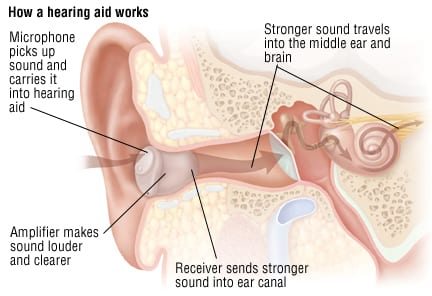
Use of restorative hearing aid devices improves cognition and reduces risk of dementia in patients with hearing loss
byGursharan SohiandYuchen Dai
December 6, 2022
in Neurology
Reading Time: 3 mins read
Patient Basics: Hearing Loss in Adults
Share on FacebookShare on TwitterShare on LinkedIn

1. The use of a restorative hearing aid in patients with hearing loss decreased the hazard of developing dementia by 19%.

2. Hearing aid use was associated with a 3% increase in cognitive test scores.

Level of Evidence Rating: 1 (Excellent)

Study Rundown: Hearing loss is a common and undertreated condition, particularly among elderly patients. It is a known risk factor for developing dementia, along with other conditions affecting perception. Due to technology such as cochlear implants and other hearing restorative devices, hearing loss is modifiable. This study sought to determine the effect of treating hearing loss on patients’ risk of developing dementia and cognitive change.

The original systematic search yielded 3243 studies, of which 31 eligible studies were included in the qualitative analysis and 18 in the quantitative meta-analysis. Eight studies were included in the meta-analysis of longitudinal (2-25 year) assessment of hearing loss and cognitive function. All studies favoured treatment of hearing loss with an overall pooled estimate of a 19% reduction in hazard. The use of restorative hearing devices was protective from cognitive decline, a new diagnosis of dementia, and a decline in cognitive function from mild impairment to dementia. Finally, analysis of studies assessing absolute cognitive test scores demonstrated a 3% increase in cognitive function from baseline in hearing-impaired patients after they started using a restorative hearing device.

The present study by Yeo et al. demonstrated a significant advantage to treating hearing loss using restorative devices with regards to protecting from cognitive decline. This work is important in quantifying the benefit of restorative hearing devices and may influence funding for this technology for patients with hearing loss. The study design and a considerable number of included studies are a major advantage with regard to the strength of reported results. A primary limitation of this study is the inability to compare the severity of hearing loss among included patients. As such, it is impossible to know whether the effect of hearing restorative devices differs based on baseline function. Future studies should seek to address the feasibility of implementing hearing aid solutions at a systems level.

RELATED REPORTS

Gabapentin (Neurontin) prescription for chronic low back pain in adults is associated with a higher risk of dementia

2 Minute Medicine Rewind October 12, 2026

Click here to read this study in JAMA Neurology

Click to read an accompanying editorial in JAMA Neurology

Relevant reading: Hearing loss and the risk of dementia in later life

In-Depth [systematic review and meta-analysis]: A systematic review and meta-analysis study was conducted, registered a priori on PROSPERO. Three databases were searched (PubMed, Embase and the Cochrane Library) for any primary observational or randomized controlled studies pertaining to cognitive decline in patients with treated hearing loss. The primary outcomes of interest were diagnosis of dementia or generalized cognitive decline measured by standard tests. Risk of bias assessments was performed using the Ottawa-Newcastle scale, and overall publication bias was determined using funnel plots as well as the Egger statistical test.

Of the 31 included studies, 2 were randomized controlled trials, 16 were prospective cohort studies, and the remainder were retrospective or cross-sectional. Twenty-one studies had a moderate, and 10 had a low risk of bias. The severity of hearing loss was variable amongst included participants.

The hazard ratio for any cognitive decline amongst patients with treated hearing loss and longitudinal follow-up greater than 2 years was 0.81 (95% confidence interval 0.76-0.87). This estimate was based on 8 studies and a pooled group of 126,903 participants. This protective hazard ratio was steadfast even when controlling for a number of possible confounding factors. The meta-analysis also revealed that patients treated with restorative hearing devices were also protected from other forms of cognitive decline: any cognitive impairment (hazard ratio 0.79, 95% confidence interval 0.65-0.97), decline from moderate cognitive impairment to dementia (0.73, 0.60-0.88), a new diagnosis of dementia (0.83, 0.77-0.90). A pooled analysis of studies assessing absolute cognitive test scores demonstrated a 3% (ratio of means 1.03, 95% confidence interval 1.02-1.04) increase in cognitive function from baseline in hearing-impaired patients after they started using a restorative hearing device.

Image: PD

©2022 2 Minute Medicine, Inc. All rights reserved. No works may be reproduced without expressed written consent from 2 Minute Medicine, Inc. Inquire about licensing here. No article should be construed as medical advice and is not intended as such by the authors or by 2 Minute Medicine, Inc.
Tags: cochlear implantscognitive functiondementiahearing aidshearing loss
Previous Post

Spirituality and religion may have various effects on mental health through neurobiological correlates

Next Post

#VisualAbstract: Continuation of renin–angiotensin system inhibitors does not impact disease progression in those with advanced chronic kidney disease

RelatedReports

A senior woman is depicted alongside images of a brain, a magnifying glass, a test tube, and playing cards, suggesting cognitive assessment related to dementia.
Chronic Disease

Gabapentin (Neurontin) prescription for chronic low back pain in adults is associated with a higher risk of dementia

October 13, 2026
A graphic featuring a heart, kidney, bladder, stethoscope, and an ultrasound machine, arranged in a flower-like design on a light blue background.
Weekly Rewinds

2 Minute Medicine Rewind October 12, 2026

October 17, 2026
An illustration showing a brain scan alongside a human brain, symbolizing brain health and cognitive decline.
Longevity

Earlier menopause is associated with faster cognitive decline and greater late-life brain changes

October 5, 2026
Few high school students, young adults get HIV testing
Chronic Disease

Low-dose hydrocortisone may improve memory in women with human immunodeficiency virus infection

September 6, 2026
Next Post
#VisualAbstract: Continuation of renin–angiotensin system inhibitors does not impact disease progression in those with advanced chronic kidney disease

#VisualAbstract: Continuation of renin–angiotensin system inhibitors does not impact disease progression in those with advanced chronic kidney disease

Appropriate use criteria for angiography may frequently miss obstructive coronary artery disease

Bivalirudin during and post-percutaneous coronary intervention reduces bleeding and mortality compared to heparin monotherapy

#VisualAbstract: Double sequential external defibrillation and vector-change defibrillation improve outcomes in patients with refractory ventricular fibrillation

#VisualAbstract: Double sequential external defibrillation and vector-change defibrillation improve outcomes in patients with refractory ventricular fibrillation

EvidencePulse™ by 2 Minute Medicine 2026 evidence scan 3 reports You asked top stroke trials 2026 Synthesizing medical evidence... Top 2026 stroke trial results: OCEANIC — ischemic stroke: 6.2% vs 8.4% OPTION* — mRS 0–1: 43.6% vs 34.2% ORIENTAL* — mRS 0–2: 58.6% vs 46.6% *Higher sICH in intervention arms Participants randomizedN OCEANIC 12,327 OPTION 570 ORIENTAL 564 Ask about guidelines or landmark trials... ↑ Try EvidencePulse™ Get the signal. Try it now → Physician-trained medical AI by 2 Minute Medicine

2MM+ All Access

Full details →
$4.99 /month

3-day free trial · cancel anytime

  • ✓100+ physician-written reports
  • ✓EvidencePulse™ + HypeCheck™
  • ✓Ad-free reading + newsletters
Start 3-day free trial

Then $4.99/month. Manage renewal in your account.

NPI Lookup · Free

Look up any US clinician

Search by name or NPI number, live from the CMS NPI Registry.

  • OIG exclusion check
  • Licenses and specialties
  • No account needed
Open NPI Lookup →

2 Minute Medicine® is an award winning, physician-run, expert medical media company. Our content is curated, written and edited by practicing health professionals who have clinical and scientific expertise in their field of reporting. Our editorial management team is comprised of highly-trained MD physicians. Join numerous brands, companies, and hospitals who trust our licensed content.

Recent Reports

  • A reduced length protocol for peripheral magnetic stimulation may be as effective compared to standard length protocol for upper trapezius myofascial pain syndrome
  • Preoperative self-preparation for total knee arthroplasty is multifactorial and can be optimized by targeting external support and internal motivation
  • Artificial intelligence (AI)-powered mental health app demonstrated improved social well-being among users
License Content
Terms of Use | Disclaimer
Cookie Policy
2MM+ All Access Full details →

The medical literature, distilled daily.

Monthly plan selected: $4.99 /month.

$4.99/month

3-day free trial · cancel anytime

Start 3-day free trial

Then $4.99/month. Manage renewal in your account.

Yearly plan selected: $49.90 /year.

$49.90/year

2 months free

Start 3-day free trial

Then $49.90/year.

Membership benefits

  • ✓100+ physician-written reports
  • ✓AI EvidencePulse™ + HypeCheck™
  • ✓Limited-time Deep research trial
  • ✓Ad-free reading + newsletters
  • ✓NPI watchlist + bulk NPI verification

Already a member? Sign in

  • About
  • Specialties
    • All Specialties, All Recent Reports
    • Cardiology
    • Chronic Disease
    • Dermatology
    • Emergency
    • Endocrinology
    • Gastroenterology
    • Imaging and Intervention
    • Infectious Disease
    • Nephrology
    • Neurology
    • Obstetrics
    • Oncology
    • Ophthalmology
    • Pediatrics
    • Pharma
    • Preclinical
    • Psychiatry
    • Public Health
    • Pulmonology
    • Rheumatology
    • Surgery
  • Tools
    • EvidencePulse™
    • HypeCheck™
    • NPI Registry Lookup
    • RVU Search
  • Pharma
  • AI Roundup
  • The Scan
  • Classics™
    • 2MM+ Online Access
    • Paperback and Ebook
  • Rewinds
  • Partners
    • License Content
    • Advertise with Us
No Result
View All Result

© 2026 2 Minute Medicine, Inc. - Physician-written medical news.