• About
  • Masthead
  • License Content
  • Advertise
  • Submit Press Release
  • RSS/Email List
  • 2MM Podcast
  • Write for us
  • Contact Us
2 Minute Medicine
No Result
View All Result

No products in the cart.

SUBSCRIBE
  • Specialties
    • All Specialties, All Recent Reports
    • Cardiology
    • Chronic Disease
    • Dermatology
    • Emergency
    • Endocrinology
    • Gastroenterology
    • Imaging and Intervention
    • Infectious Disease
    • Nephrology
    • Neurology
    • Obstetrics
    • Oncology
    • Ophthalmology
    • Pediatrics
    • Pharma
    • Preclinical
    • Psychiatry
    • Public Health
    • Pulmonology
    • Rheumatology
    • Surgery
  • Tools
    • EvidencePulse™
    • RVU Search
    • NPI Registry Lookup
  • Pharma
  • AI News
  • The Scan+
  • Classics™+
    • 2MM+ Online Access
    • Paperback and Ebook
  • Rewinds
  • Partners
    • License Content
    • Submit Press Release
    • Advertise with Us
  • Account
    • Subscribe
    • Sign-in
    • My account
2 Minute Medicine
  • Specialties
    • All Specialties, All Recent Reports
    • Cardiology
    • Chronic Disease
    • Dermatology
    • Emergency
    • Endocrinology
    • Gastroenterology
    • Imaging and Intervention
    • Infectious Disease
    • Nephrology
    • Neurology
    • Obstetrics
    • Oncology
    • Ophthalmology
    • Pediatrics
    • Pharma
    • Preclinical
    • Psychiatry
    • Public Health
    • Pulmonology
    • Rheumatology
    • Surgery
  • Tools
    • EvidencePulse™
    • RVU Search
    • NPI Registry Lookup
  • Pharma
  • AI News
  • The Scan+
  • Classics™+
    • 2MM+ Online Access
    • Paperback and Ebook
  • Rewinds
  • Partners
    • License Content
    • Submit Press Release
    • Advertise with Us
  • Account
    • Subscribe
    • Sign-in
    • My account
SUBSCRIBE
2 Minute Medicine
Subscribe
Home All Specialties Gastroenterology

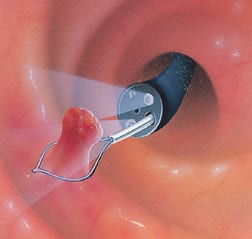
Computer-aided detection may improve detection of polyps and adenomas compared with conventional colonoscopy
byAdrian WongandThomas Su
October 21, 2024
in Gastroenterology
Reading Time: 3 mins read
0
Share on FacebookShare on Twitter

1. In this updated systematic review and meta-analysis, computer-aided detection found more polyps and adenomas per colonoscopy compared with standard detection methods.

2. While the average number of advanced colorectal neoplasms per colonoscopy was similar between the two groups, advanced lesions were detected at a slightly higher rate when using computer-aided detection.

Evidence Level: 1 (Excellent)

Study Rundown: Convolutional neural network approaches for computer-aided detection (CADe) have been shown in numerous randomized trials to be more successful in detecting polyps compared to traditional colonoscopy. However, CADe performance in identifying concerning lesions such as advanced adenomas and sessile serrated lesions has been inconsistent across studies. This systematic review and meta-analysis examined results from 44 randomized controlled trials (RCTs) to determine the efficacy of CADe in diagnosing clinically relevant colonic lesions. Compared with standard colonoscopies, CADe found more polyps per colonoscopy (PPCs) and adenomas per colonoscopy (APCs) on average and had a significantly higher polyp detection rate (PDR) and adenoma detection rate (ADR). Adenoma miss rates (AMRs) were also lower for CADe. However, the certainty of evidence for overall APCs and ADRs was rated low due to serious risk of bias and inconsistency among studies. With regard to advanced colorectal neoplasias (ACNs), CADe detected a similar number per colonoscopy as compared with standard methods but had a slightly higher overall ACN detection rate. In general, CADe also appeared to minimally extend withdrawal time, but the evidence for this finding was deemed low-certainty. This study was limited by the heterogeneity of the extracted RCTs, a lack of blinding, and an inability to account for confounding factors. Nevertheless, this updated meta-analysis provided a more comprehensive perspective on the effectiveness of CADe in polyp detection during colonoscopy.

Click to view this study in AIM

Relevant Reading: Real-Time Computer-Aided Detection of Colorectal Neoplasia During Colonoscopy: A Systematic Review and Meta-analysis

RELATED REPORTS

Deep-learning models displayed expert-level accuracy in detecting epileptiform discharges on electroencephalogram (EEG) recordings

Ambient artificial intelligence effectively reduced work exhaustion among healthcare providers

Anthropic positions Claude as workflow software for regulated healthcare, not a chatbot

In-Depth [systematic review and meta-analysis]: This systematic review and meta-analysis investigated the efficacy and safety of CADe in detecting polyps, adenomas, and other clinically important lesions, especially ACNs. Only RCTs that compared lesion detection in standard colonoscopies and CADe-assisted colonoscopies were included. Primary outcomes included average PPC, average APC, average PCN, and average NNP per colonoscopy; secondary outcomes were total PDR, total ADR, ACN detection rate, and AMR. Balancing outcomes included adverse effects relating to procedures, number of NNPs resected and the proportion of resected polyps that were NNPs, total withdrawal time, and inspection time during withdrawal. A total of 44 RCTs were ultimately included in this study, 41 of which were found in databases and 3 through reference chasing. Findings from 39 RCTs showed that CADe yielded a higher average PPC (1.59 vs. 1.27, incidence rate difference [IRD] = 0.35 [95% CI, 0.26 to 0.43]) and higher average APC (0.98 vs. 0.78, IRD = 0.22 [95% CI, 0.16 to 0.28]) compared with standard methods. CADe also had a higher PDR (54.01% vs. 46.53%; rate ratio [RR] = 1.21 [95% CI, 1.14 to 1.27]) and ADR (44.67% vs. 36.74%; RR = 1.21 [95% CI, 1.15 to 1.28]). The certainty of evidence for APC was rated low due to serious risk of bias and serious inconsistency; the certainty of evidence for ADR was rated very low due to serious risk of bias, serious inconsistency, and publication bias. Studies with baseline low detection rates showed greater improvement with CADe (27% vs. 20%, RR = 1.39 [95% CI, 1.18 to 1.63]). Both groups had similar ACN per colonoscopy, but CADe had a higher ACN detection rate (12.7% vs. 11.5%, RR = 1.16 [95% CI, 1.02 to 1.32]). CADe led to resection of approximately 0.2 more neoplastic polyps per colonoscopy (1.05 vs. 0.84, IRD = 0.22 [95% CI, 0.15 to 0.28]), but also of 0.2 more non-neoplastic polyps per colonoscopy (0.53 vs. 0.33, IRD = 0.18 [95% CI, 0.10 to 0.25]). Findings from 30,276 procedures showed that CADe increased withdrawal time in minutes (10.33 vs. 9.68, mean difference (MD) = 0.53 [95% CI, 0.30 to 0.77]) and inspection time in minutes (8.34 vs. 7.95, MD = 0.31 [95% CI, 0.14 to 0.48]). Overall, this study provided an updated view of the efficacy and safety of CADe in diagnosing colonic lesions.

Image: PD

©2024 2 Minute Medicine, Inc. All rights reserved. No works may be reproduced without expressed written consent from 2 Minute Medicine, Inc. Inquire about licensing here. No article should be construed as medical advice and is not intended as such by the authors or by 2 Minute Medicine, Inc.


Tags: advanced neoplasiaartificial intelligencecolonoscopyComputer-aided detection
Previous Post

2 Minute Medicine Rewind October 21, 2024

Next Post

Sanofi’s Sarclisa approved as first-line for transplant-ineligible multiple myeloma patients

RelatedReports

Patient Basics: Febrile Seizures
Artificial Intelligence

Deep-learning models displayed expert-level accuracy in detecting epileptiform discharges on electroencephalogram (EEG) recordings

February 16, 2026
Natural language processing may automate data extraction from radiologic reports
Artificial Intelligence

Ambient artificial intelligence effectively reduced work exhaustion among healthcare providers

February 2, 2026
Natural language processing may automate data extraction from radiologic reports
AI Roundup

Anthropic positions Claude as workflow software for regulated healthcare, not a chatbot

January 22, 2026
Patients with advanced adenomas are at increased risk of developing colorectal cancer
AI Roundup

AstraZeneca moves to own multimodal oncology AI with Modella

January 21, 2026
Next Post
Phase III trial shows survival benefit for early multiple myeloma

Sanofi’s Sarclisa approved as first-line for transplant-ineligible multiple myeloma patients

The Scan by 2 Minute Medicine®:  Ultra-Trail du Mont-Blanc, Taylor Swift, NBA rookie Chet Holmgren and Magic Mushrooms!

The Scan by 2 Minute Medicine®: One-Stop Shop for Sickle Cell Disease, Lupus and Losing Motherhood, Hurricane Danger and A Tennis Legend Retires:

Nivolumab+AVD Improves Survival in  Advanced Classic Hodgkin’s Lymphoma Compared to Brentuximab Vedotin+AVD

Nivolumab+AVD Improves Survival in Advanced Classic Hodgkin’s Lymphoma Compared to Brentuximab Vedotin+AVD

2 Minute Medicine® is an award winning, physician-run, expert medical media company. Our content is curated, written and edited by practicing health professionals who have clinical and scientific expertise in their field of reporting. Our editorial management team is comprised of highly-trained MD physicians. Join numerous brands, companies, and hospitals who trust our licensed content.

Recent Reports

  • Deep-learning models displayed expert-level accuracy in detecting epileptiform discharges on electroencephalogram (EEG) recordings
  • 2 Minute Medicine Rewind February 16, 2026
  • Early menarche and later menopause are associated with increased ovarian cancer risk
License Content
Terms of Use | Disclaimer
Cookie Policy
Privacy Statement (EU)
Disclaimer

© 2025 2 Minute Medicine, Inc. - Physician-written medical news.

  • Specialties
    • All Specialties, All Recent Reports
    • Cardiology
    • Chronic Disease
    • Dermatology
    • Emergency
    • Endocrinology
    • Gastroenterology
    • Imaging and Intervention
    • Infectious Disease
    • Nephrology
    • Neurology
    • Obstetrics
    • Oncology
    • Ophthalmology
    • Pediatrics
    • Pharma
    • Preclinical
    • Psychiatry
    • Public Health
    • Pulmonology
    • Rheumatology
    • Surgery
  • Tools
    • EvidencePulse™
    • RVU Search
    • NPI Registry Lookup
  • Pharma
  • AI News
  • The Scan
  • Classics™
    • 2MM+ Online Access
    • Paperback and Ebook
  • Rewinds
  • Partners
    • License Content
    • Submit Press Release
    • Advertise with Us
  • Account
    • Subscribe
    • Sign-in
    • My account
No Result
View All Result

© 2025 2 Minute Medicine, Inc. - Physician-written medical news.