2 Minute Medicine Rewind February 16, 2026
1. Poly-L-lysine (PLL)-coated catheters are well tolerated, safe, and noninferior in preventing bacteriuria compared to noble metal alloys (NMA)-coated catheters in adults requiring short-term catheterization.
Evidence Rating Level: 1 (Excellent)
Catheter-associated urinary tract infections (CAUTI) account for approximately 40% of all nosocomial infections, leading to greater morbidity, extended hospital stays, and increased healthcare costs. Antibiotic- or silver-coated catheters have been shown to reduce rates of CAUTI, with NMA (consisting of gold, silver, and palladium) coated catheters being the most studied. This prospective, multi-centre, randomized controlled noninferiority trial sought to assess the efficacy and safety of a newly developed catheter coated with antimicrobial PLL in reducing the risk of bacteriuria compared to NMA-coated catheters. 300 patients who required indwelling catheterization for at least 24 hours were randomized to receive either PLL (n = 150; mean [SD] age, 57.6 [13.2] years; 34.67% female) or NMA (n = 150; mean [SD] age, 58.0 [12.6] years; 32.67% female) catheters. The mean duration of catheterization was 5.2 ± 1.8 days in the PLL group and 5.8 ± 2.7 days in the NMA group. There were 10 cases (6.9%) and 15 cases (10.1%) of catheter-associated bacteriuria in the PLL and NMA groups, respectively, with a difference of − 3.1% (95% CI [− 7.2%, 6.6%], p = 0.3195). 117 patients (78.0%) and 123 patients (82%) in the PLL and NMA groups, respectively, received antibiotics (p = 0.3862). There was a significantly lower proportion of patients in the PLL group experiencing abnormal urine white blood cells (6.2% vs. 12.8%, p = 0.0194). There was no difference in the incidence of adverse events (2.0% vs. 4.0%, p = 0.5011). PLL catheters are well tolerated, safe, and noninferior in preventing bacteriuria compared with NMA catheters. Further studies with larger sample sizes are needed to confirm these results.
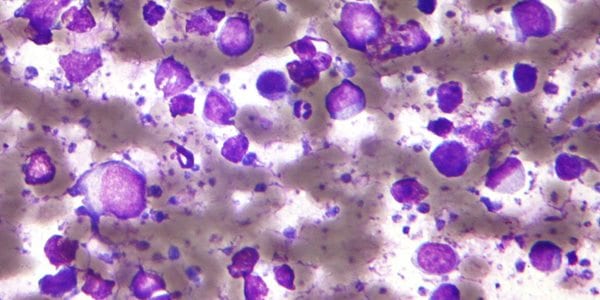
1. Penpulimab and lenalidomide in combination with rituximab, gemcitabine, and oxaliplatin (R-GemOx regimen) is safe, tolerable, and shows antitumour activity in patients with relapsed or refractory (R/R) diffuse large B-cell lymphoma (DLBCL).
Evidence Rating Level: 2 (Good)
Approximately 40% of patients with DLBCL, the most common subtype of non-Hodgkin lymphoma, experience R/R disease after the first line of treatment. R-GemOx is a commonly used chemoimmunotherapy regimen for R/R DLBCL. Lenalidomide, an immunomodulatory drug, has been shown to have good efficacy in treating DLBCL. Furthermore, synergistic effects have been shown in penpulimab, a PD-1 inhibitor, and lenalidomide combinations. The authors of this multi-center, single-arm, phase 2 trial hypothesized R-GemOx in combination with penpulimab and lenalidomide (R2-GemOx-PD1i) would be safe and efficacious. Patients were included if they were 18-80 years, had DLBCL, and failed first-line rituximab-based chemotherapy. 54 patients (median [range] years, 69 (19-80); 42.6% female) were evaluated. Twenty-nine patients (53.7%) were refractory, and 25 patients (46%) were relapsed. 38 patients were treated with R2-GemOx-PD1i without intent for consolidation with autologous stem cell transplantation (ASCT). This arm had an overall response rate (ORR) and complete response rate (CRR) of 63.2% and 52.6%, respectively. Patients had a median progression-free survival (PFS) of 21.2 months, and the median overall survival (OS) was not reached. 16 patients were treated with R2-GemOx-PD1i as a bridge to ASCT. This arm had an ORR and CRR of 75.0% and 68.8%, respectively. Neither PFS nor OS were reached. The most frequent adverse events were neutropenia (36/54, 66.6%), anemia (32/54, 59.2%) and thrombocytopenia (15/54, 27.7%). There were 14 deaths: one due to COVID-19 infection and 13 due to disease progression. All adverse events were manageable, and no deaths were considered to be treatment-related.
1. A plasma cartridge measuring Glial Fibrillary Acidic Protein (GFAP) and Ubiquitin C-terminal Hydrolase-L1 (UCH-L1) has the potential to reduce computed tomography (CT) head use and streamline clinical decision making in the emergency department in acute mild traumatic brain injury (TBI).
Evidence Rating Level: 2 (Good)
CT is the preferred imaging modality in the ED for evaluating TBIs. However, the majority of scans are negative, making their associated cost, time, and radiation exposure potentially unnecessary. Recent literature has shown promising results in using TBI biomarkers in the management of mild, low-risk TBI. Some of these markers include GFAP and UCH-L1. This single-centre observational study sought to assess the efficacy of a TBI cartridge measuring GFAP and UCH-L1 in predicting positive CT scans in adults over 17 years old who presented with a TBI, had a Glasgow Coma Scale score of 15 at presentation, and had samples collected within 12 hours of the injury. 141 patients (median age, 67 years) were included. The TBI plasma cartridge sensitivity was 100%, specificity was 34.1%, positive predictive value (PPV) was 6.3%, and negative predictive value (NPV) was 100%. The mean time for a CT scan was 2 h 12 min (132 min), and the mean time for the TBI plasma cartridge was 37 min, resulting in a savings of 1 h and 35 min (95 min). Overall, use of the TBI plasma cartridge has the potential to reduce CT head scans for acute mTBI by up to 32.6%, resulting in a 72% reduction in diagnostic time to rule out minor TBI in the ED, and reduce total diagnostic test wait times by 4.6%.
1. Sodium-glucose cotransporter 2 inhibitors (SGLT-2i) were associated with improved left ventricular diastolic function and New York Heart Association (NYHA) class in patients with hypertrophic cardiomyopathy (HCM).
Evidence Rating Level: 2 (Good)
Current management of HCM includes symptom control with beta-blockers and calcium channel blockers, and risk reduction through invasive procedures such as septal reduction therapy and implantable cardioverter-defibrillators. SGLT-2i have been shown to have strong cardioprotective properties in heart failure; however, these pivotal trials excluded patients with HCM. This single-center retrospective cohort study included patients aged 18 or older with HCM and no prior exposure to SGLT-2i. After propensity score-matching, 188 patients were included. 94 patients (mean [SD] age, 69.0 [14.0] years; 34% female) were started on an SGLT-2i during admission, and 94 patients (mean [SD] age, 65.4 [14.8] years; 30.9% female) were not. The primary endpoints were mitral annular tissue velocity (e′), early diastolic mitral inflow velocity (E)/e′, interventricular septal thickness (IVST), and NYHA class. At 6-months, the SGLT-2i group exhibited significantly greater improvements in septal e′ (0.7 ± 1.3 vs. Δ0.04 ± 1.6, p = 0.002), E/e′ (–5.1 ± 8.7 vs. 0.4 ± 6.4, p < 0.001), IVST (–1.3 (–3.1 to 0) mm vs. −0.2 (–2.0 to 0.9) mm, p = 0.005), NYHA class (−1(−1 to −0.25) vs. −1 (−1 to 0), p = 0.031), and BNP levels (0 (–607.5 to 0) pg/mL vs. 0 (–105.7 to 0) pg/mL, p = 0.023). No hypoglycemia and urinary tract infection events were recorded in either group, and no significant changes in creatinine were observed (2.3 ± 15.7 vs. 0.3 ± 15.4 mg/dL, p = 0.38).
GLP-1 Receptor Agonists Plus Progestins and Endometrial Cancer Risk in Nonmalignant Uterine Diseases
1. Glucagon-like peptide-1 receptor agonists (GLP-1RA) in combination with progestins are significantly more effective at reducing endometrial cancer (EC) risk compared to progestins alone in female patients with endometrial hyperplasia or other nonmalignant uterine conditions.
Evidence Rating Level: 2 (Good)
Among patients with abnormal uterine bleeding (AUB), the presence of metabolic conditions (e.g. obesity, insulin resistance, type 2 diabetes mellitus (T2DM)) increases the risk of EC. Progestin therapy remains the therapy of nonsurgical management of AUB. However, given the role of metabolic factors in endometrial proliferation and carcinogenesis, patients may benefit from pharmacotherapy that targets these factors. GLP-1RAs have been approved for weight loss and T2DM; emerging evidence suggests they may also have antitumorigenic properties. This retrospective cohort study evaluated whether GLP-1RA in combination with progestin therapy is associated with a reduced risk of developing EC among women with endometrial hyperplasia (EH) or other benign uterine pathologies. Female patients aged 18 years or older who were diagnosed with EH or benign uterine pathology and received progestin were included (n = 444 820; mean [SD] age, 35.5 [11.0] years). 18 414 patients received GLP-1RA combined with progestins (mean [SD] age, 43.1 [10.2] years). Patients receiving GLP-1RA and progestins had a significantly lower risk of EC than those receiving progestin alone (HR, 0.34 [95% CI, 0.27-0.44]) or progestin and metformin (HR, 0.30 [95% CI, 0.15-0.59]). Triple therapy with GLP-1RA, metformin, and progestin was more effective at reducing EC risk than metformin and progestin (HR, 0.37 [95% CI, 0.25-0.53]). Future randomized controlled trials are required to further establish this relationship.
Image: PD
©2026 2 Minute Medicine, Inc. All rights reserved. No works may be reproduced without expressed written consent from 2 Minute Medicine, Inc. Inquire about licensing here. No article should be construed as medical advice and is not intended as such by the authors or by 2 Minute Medicine, Inc.