• About
  • Masthead
  • License Content
  • Advertise
  • Submit Press Release
  • RSS/Email List
  • 2MM Podcast
  • Write for us
  • Contact Us
2 Minute Medicine
No Result
View All Result

No products in the cart.

SUBSCRIBE
  • Specialties
    • All Specialties, All Recent Reports
    • Cardiology
    • Chronic Disease
    • Dermatology
    • Emergency
    • Endocrinology
    • Gastroenterology
    • Imaging and Intervention
    • Infectious Disease
    • Nephrology
    • Neurology
    • Obstetrics
    • Oncology
    • Ophthalmology
    • Pediatrics
    • Pharma
    • Preclinical
    • Psychiatry
    • Public Health
    • Pulmonology
    • Rheumatology
    • Surgery
  • Tools
    • EvidencePulse™
    • RVU Search
    • NPI Registry Lookup
  • Pharma
  • AI News
  • The Scan+
  • Classics™+
    • 2MM+ Online Access
    • Paperback and Ebook
  • Rewinds
  • Partners
    • License Content
    • Submit Press Release
    • Advertise with Us
  • Account
    • Subscribe
    • Sign-in
    • My account
2 Minute Medicine
  • Specialties
    • All Specialties, All Recent Reports
    • Cardiology
    • Chronic Disease
    • Dermatology
    • Emergency
    • Endocrinology
    • Gastroenterology
    • Imaging and Intervention
    • Infectious Disease
    • Nephrology
    • Neurology
    • Obstetrics
    • Oncology
    • Ophthalmology
    • Pediatrics
    • Pharma
    • Preclinical
    • Psychiatry
    • Public Health
    • Pulmonology
    • Rheumatology
    • Surgery
  • Tools
    • EvidencePulse™
    • RVU Search
    • NPI Registry Lookup
  • Pharma
  • AI News
  • The Scan+
  • Classics™+
    • 2MM+ Online Access
    • Paperback and Ebook
  • Rewinds
  • Partners
    • License Content
    • Submit Press Release
    • Advertise with Us
  • Account
    • Subscribe
    • Sign-in
    • My account
SUBSCRIBE
2 Minute Medicine
Subscribe
Home All Specialties Emergency

Artificial-intelligence, deep-learning algorithm identifies papilledema from fundus photographs
byHarsh ShahandDeepti Shroff
May 9, 2020
in Emergency, Neurology, Ophthalmology
Reading Time: 3 mins read
0
Share on FacebookShare on Twitter

1. An artificial-intelligence, deep-learning algorithm was shown to differentiate between the diagnosis of papilledema and normal optic nerve from ocular fundus photographs.

2. The negative predictive value was shown to be high for the developed deep-learning system to identify papilledema from ocular fundus photographs.

Evidence Rating Level: 1 (Excellent)

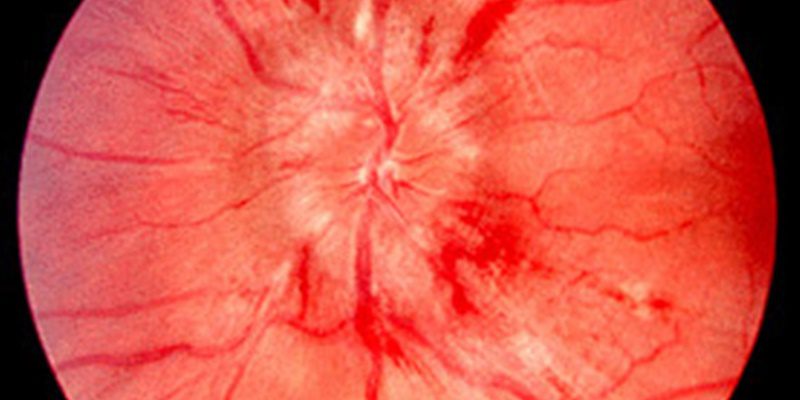
Study Rundown: Optic nerve examination is a fundamental component to detect papilledema. However, the examination through direct ophthalmoscopy is avoided or poorly performed by nonophthalmic specialists. Currently, artificial intelligence and deep learning are automatically detecting ocular pathologies such as glaucomatous optic neuropathy from ocular fundus photographs. As such, this study trained, validated, and externally tested a deep-learning system to identify and classify normal optic disks and disks with papilledema. The system was trained and validated using 14,341 fundus photographs. Furthermore, the system was externally tested on 1,505 fundus photographs. The study found a trained and validated algorithm with high specificity and sensitivity to differentiated between papilledema and normal optic nerves.

This retrospective study was limited by the method of acquiring fundus photographs after pharmacologic pupil dilation. As such, the algorithm was calibrated to artificially dilated pupil, which may not reflect general practice. Therefore, the algorithm would not be appropriate for fundus photographs without pupil dilation. Another limitation was the retrospective study design, which caused an unequal sample collection of various optic-disk conditions and convenience sampling. In regard to the algorithm, the output would be biased based upon the skewed collection of the input samples. Nonetheless, this study was strengthened by the multiethnic population, which allowed the algorithm to adjust for physiological differences of the optic nerve amongst different ethnic groups. For physicians, these findings provide a functional algorithm to utilize for the diagnosis of papilledema when an ophthalmic specialist is not present at the practice.

Click to read the study in NEJM

RELATED REPORTS

NVIDIA GTC 2026 turns healthcare AI into a pop-culture phenomenon

The Scan by 2 Minute Medicine®: Susie Wiles breast cancer diagnosis drives national screening surge, Jensen Huang’s GTC keynote turns healthcare AI into a pop-culture phenomenon, landmark ACSM guidelines simplify resistance training for longevity, and consumer alert issued for high-pressure cosmetic surgery chains

Merck and Mayo Clinic launch AI-driven precision medicine lab

Relevant Reading: Development and Validation of a Deep Learning Algorithm for Detection of Diabetic Retinopathy in Retinal Fundus Photographs

In-Depth [retrospective cohort]: This diagnostic study retrospectively collected 15,846 fundus photographs from 6,779 patients at 24 centers in 15 countries including the United States, Thailand, and France. Photographs were obtained from digital fundus cameras after the eye had undergone pharmacologic pupillary dilation. The images were centered around the macula or optic disk; however, the images always included the optic disk. Two different datasets were created to develop the deep-learning system. The first dataset consisted of 14,341 photographs from 19 sites, and the dataset was used for training and validation of the algorithm. The second data set consisted of 1,505 photographs from five other sites, and the dataset was used for external testing. Inclusion criteria included: fundus photographs of optics disks and definite corresponding clinical diagnoses made by neuro-ophthalmologists. Exclusion criteria included: presence of more than one ocular pathology on photograph and insufficient diagnostic uncertainty. Neuro-ophthalmologists provided a specific diagnosis for each photograph, and each patient had been seen by a neuro-ophthalmologist for evaluation. The deep-learning classification model consisted of a segmentation network (U-Net) to detect the optic disk location and a classification network (DenseNet) to classify the optic disk. A five-fold cross validation was performed on the first (validation) dataset, after which, the same thresholds were used to assess the classification model on the independent external dataset. The primary outcome was area under the receiver-operating-characteristic curve (AUC), which evaluated the performance of the algorithm to classify the optic disk appearance. In the validation dataset, the system discriminated disks with papilledema and all other optic disks with an AUC of 0.99 (95% confidence interval [CI], 0.98-0.99), a sensitivity of 93.2% (95% CI, 91.8-94.5), and specificity of 95.1% (95% CI, 94.7-95.6). In the external dataset, the system detected disks with papilledema with an AUC of 0.96 (95% CI, 0.95-0.97), a sensitivity of 96.4% (95% CI, 93.9-98.3), and a specificity of 84.7% (95% CI, 82.3-87.1). Additionally, with a mean prevalence of papilledema of 9.5% in the external dataset, the positive predictive value for the system was 39.8% (95% CI, 36.6-43.2), and the negative predictive value for the system was 99.6% (95% CI, 99.2-99.7). Taken together, the study concluded an artificial-intelligence, deep-learning algorithm was trained and validated to identify papilledema from ocular fundus photograph with high specificity and sensitivity.

Image: PD

©2020 2 Minute Medicine, Inc. All rights reserved. No works may be reproduced without expressed written consent from 2 Minute Medicine, Inc. Inquire about licensing here. No article should be construed as medical advice and is not intended as such by the authors or by 2 Minute Medicine, Inc.
Tags: artificial intelligencedeep learningfundusPapilledema
Previous Post

Policy statement outlines recommendations on management of youth involved in the justice system during COVID-19 pandemic

Next Post

SEP-363856 reduces symptom severity for acute exacerbation of schizophrenia

RelatedReports

Record-based algorithm may improve lung cancer screening follow-up
All Specialties

NVIDIA GTC 2026 turns healthcare AI into a pop-culture phenomenon

March 26, 2026
The Scan by 2 Minute Medicine®:  Ultra-Trail du Mont-Blanc, Taylor Swift, NBA rookie Chet Holmgren and Magic Mushrooms!
Artificial Intelligence

The Scan by 2 Minute Medicine®: Susie Wiles breast cancer diagnosis drives national screening surge, Jensen Huang’s GTC keynote turns healthcare AI into a pop-culture phenomenon, landmark ACSM guidelines simplify resistance training for longevity, and consumer alert issued for high-pressure cosmetic surgery chains

March 25, 2026
HOSPITAL score predicts risk of 30-day potentially avoidable readmission to hospital
Artificial Intelligence

Merck and Mayo Clinic launch AI-driven precision medicine lab

March 4, 2026
Patient Basics: Crossed Eyes (Strabismus)
Artificial Intelligence

Smartphone-based digital ruler achieved high diagnostic performance for strabismus screening

March 3, 2026
Next Post
Brain lesions on MRI linked with subsequent increased stroke risk

SEP-363856 reduces symptom severity for acute exacerbation of schizophrenia

Quick Take: Prevalence and Treatment of Depression, Anxiety, and Conduct Problems in US Children

Pediatric mental health ED visits has increased from 2007 to 2017

#VisualAbstract: Anticoagulant treatment is associated with decreased mortality in severe coronavirus disease 2019 patients with coagulopathy

#VisualAbstract: Anticoagulant treatment is associated with decreased mortality in severe coronavirus disease 2019 patients with coagulopathy

2 Minute Medicine® is an award winning, physician-run, expert medical media company. Our content is curated, written and edited by practicing health professionals who have clinical and scientific expertise in their field of reporting. Our editorial management team is comprised of highly-trained MD physicians. Join numerous brands, companies, and hospitals who trust our licensed content.

Recent Reports

  • Atopic dermatitis activity is not associated with cardiovascular risk
  • Zorevunersen appears safe and may alleviate symptoms in children with Dravet syndrome
  • Apixaban outperforms rivaroxaban in venous thromboembolism bleeding risk
License Content
Terms of Use | Disclaimer
Cookie Policy
Privacy Statement (EU)
Disclaimer

The Classics in Medicine Paperback Released!

Over the past 30 years, the transition from print to digital media has contributed to an exponential increase in medical literature. In response, 2 Minute Medicine presents 160+ authoritative, physician-written summaries of the most cited landmark trials in medicine.

amazon-logo_blackGet-it-on-iBooks-badge

Click anywhere to close this announcement

  • Specialties
    • All Specialties, All Recent Reports
    • Cardiology
    • Chronic Disease
    • Dermatology
    • Emergency
    • Endocrinology
    • Gastroenterology
    • Imaging and Intervention
    • Infectious Disease
    • Nephrology
    • Neurology
    • Obstetrics
    • Oncology
    • Ophthalmology
    • Pediatrics
    • Pharma
    • Preclinical
    • Psychiatry
    • Public Health
    • Pulmonology
    • Rheumatology
    • Surgery
  • Tools
    • EvidencePulse™
    • RVU Search
    • NPI Registry Lookup
  • Pharma
  • AI News
  • The Scan
  • Classics™
    • 2MM+ Online Access
    • Paperback and Ebook
  • Rewinds
  • Partners
    • License Content
    • Submit Press Release
    • Advertise with Us
  • Account
    • Subscribe
    • Sign-in
    • My account
No Result
View All Result

© 2026 2 Minute Medicine, Inc. - Physician-written medical news.