• About
  • Masthead
  • License Content
  • Advertise
  • Submit Press Release
  • RSS/Email List
  • 2MM Podcast
  • Write for us
  • Contact Us
2 Minute Medicine
No Result
View All Result

No products in the cart.

Sign in
SUBSCRIBE
  • About
  • Specialties
    • All Specialties, All Recent Reports
    • Cardiology
    • Chronic Disease
    • Dermatology
    • Emergency
    • Endocrinology
    • Gastroenterology
    • Imaging and Intervention
    • Infectious Disease
    • Nephrology
    • Neurology
    • Obstetrics
    • Oncology
    • Ophthalmology
    • Pediatrics
    • Pharma
    • Preclinical
    • Psychiatry
    • Public Health
    • Pulmonology
    • Rheumatology
    • Surgery
  • Tools+
    • EvidencePulse™
    • HypeCheck™
    • NPI Registry Lookup
    • RVU Search
  • Pharma
  • AI Roundup
  • The Scan+
  • Classics™+
    • 2MM+ Online Access
    • Paperback and Ebook
  • Rewinds
  • Partners
    • License Content
    • Advertise with Us
2 Minute Medicine
  • About
  • Specialties
    • All Specialties, All Recent Reports
    • Cardiology
    • Chronic Disease
    • Dermatology
    • Emergency
    • Endocrinology
    • Gastroenterology
    • Imaging and Intervention
    • Infectious Disease
    • Nephrology
    • Neurology
    • Obstetrics
    • Oncology
    • Ophthalmology
    • Pediatrics
    • Pharma
    • Preclinical
    • Psychiatry
    • Public Health
    • Pulmonology
    • Rheumatology
    • Surgery
  • Tools+
    • EvidencePulse™
    • HypeCheck™
    • NPI Registry Lookup
    • RVU Search
  • Pharma
  • AI Roundup
  • The Scan+
  • Classics™+
    • 2MM+ Online Access
    • Paperback and Ebook
  • Rewinds
  • Partners
    • License Content
    • Advertise with Us
Sign in
SUBSCRIBE
2 Minute Medicine
Sign in
Subscribe
EvidencePulse™ by 2 Minute Medicine 2026 evidence scan 3 reports You asked top stroke trials 2026 Synthesizing medical evidence... Top 2026 stroke trial results: OCEANIC — ischemic stroke: 6.2% vs 8.4% OPTION* — mRS 0–1: 43.6% vs 34.2% ORIENTAL* — mRS 0–2: 58.6% vs 46.6% *Higher sICH in intervention arms Participants randomizedN OCEANIC 12,327 OPTION 570 ORIENTAL 564 Ask about guidelines or landmark trials... ↑ Try EvidencePulse™ Ask the evidence.
Get the signal.
Try it now → Physician-trained medical AI by 2 Minute Medicine
Home All Specialties Chronic Disease

Voice-based conversational artificial intelligence may improve insulin management for diabetes
bySoroush NedaieandAlex Chan
February 5, 2024
in Chronic Disease, Endocrinology
Reading Time: 3 mins read
Share on FacebookShare on Twitter

1. This randomized clinical trial demonstrated that compared with the standard of care, voice-based conversational artificial intelligence (VBAI) improved time to optimal insulin dosing, insulin adherence, glycemic control, and diabetes-related distress among adults with type 2 diabetes.

Evidence Rating Level: 1 (Excellent)

Study Rundown:  Type 2 diabetes affects 33 million US adults, with nearly a quarter having poor glycemic control with a hemoglobin A1c (HbA1c) level above 8%. In these individuals, insulin therapy is essential but requires frequent titrations to achieve the optimal dose. Traditional clinic-based titration faces obstacles, leading to suboptimal doses and insufficient glycemic control. This randomized control trial aims to assess the efficacy of VBAI in enhancing medication adherence, glycemic control, and time to achieve optimal insulin dosage. From March 2021 to December 2022, English-speaking adults with type 2 diabetes who required initiation or adjustment of once-daily basal insulin were recruited and randomized to receive VBAI or standard of care. Compared with the standard care group, those in the VBAI group achieved a significantly higher mean insulin adherence, achieved optimal insulin dosing significantly faster, were more likely to achieve glycemic control, and had significantly decreased diabetes-related emotional distress. Overall, these results demonstrate the utility of employing voice-based digital health solutions for medication titration.

Click to read the study on JAMA Network Open

In-Depth [randomized controlled trial]: Many adults with Type 2 diabetes have poor glycemic control (HbA1c > 8%) and therefore require insulin therapy with frequent titrations for optimal dosing. Traditional clinic-based titration faces challenges, leading to suboptimal dosing. This randomized clinical trial conducted at 4 primary care clinics at Stanford University assesses VBAI’s efficacy in enhancing medication adherence, glycemic control, and time to optimal insulin dosage. 39 participants were randomized in a 1:1 ratio to receive basal insulin adjustments via VBAI, an AI software developed for this trial powered by Alexa, or via their clinician per usual, the standard of care. Ultimately 32 participants (mean [SD] age 55.1 [12.7] years, 59.4% women, mean [SD] HbA1c level was 9.6% [1.5%]), with 16 participants in each group completed the enrollment process. Participants in the VBAI group achieved a higher mean insulin difference compared with those in the standard of care group (difference, 32.7% [95% CI, 8.0%-57.4%]; P = .01). The VBAI group achieved optimal insulin dosage in a medium time of 15 days (IQR, 6-27 days), while the standard of care group exceeded 56 days (IQR, >29.5 to >56 days). There was a significant difference in time-to-event curves (P = .006), with fewer than half of the standard-of-care group participants achieving optimal insulin dosing at 8 weeks. Compared with participants in the standard of care group, those in the VBAI group had decreased 5-item Problem Areas in Diabetes Scale (PAID-5), a survey assessing diabetes-related distress, with a mean difference of −3.6 points (95% CI, −6.8 to −0.4 points; P = .03). More participants in the VBAI group achieved glycemic control (difference, 56.3% [95% CI, 21.4%-91.1%]; P = .005)  and had greater improvements in fasting blood glucose (difference, −68.9 mg/dL [95% CI, −107.1 to −30.7 mg/dL]; P = .001). There were no adverse events reported in the study. Overall, this trial found that participants in the VBAI group had higher insulin adherence, faster insulin dose optimization, improved FBG, and decreased diabetes-related emotional distress compared with those in the standard-of-care group. These findings demonstrate the utility of digital health tools in medication titration and highlight the effectiveness of voice user interfaces for patient-facing digital technologies.

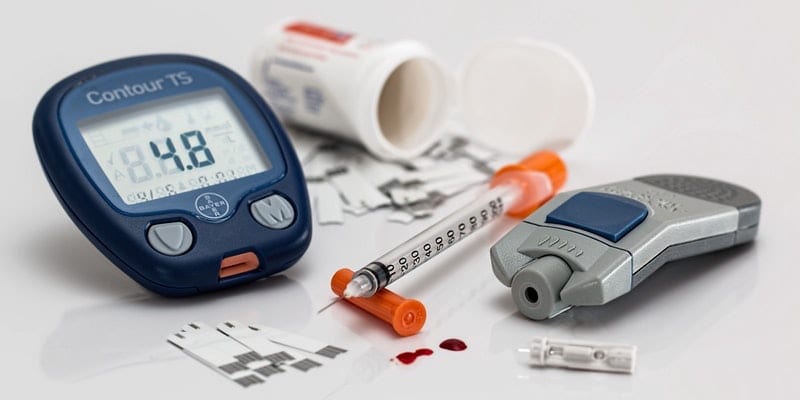
Image: PD

RELATED REPORTS

Pairing cardiac magnetic resonance with electrocardiograms (ECGs) improved artificial intelligence (AI) assessments of cardiovascular diseases

Physician edits to artificial intelligence (AI)-generated messages to patients were associated with different response time burdens

Artificial intelligence (AI)-triggered rapid response notifications were associated with lower mortality among inpatients

©2024 2 Minute Medicine, Inc. All rights reserved. No works may be reproduced without expressed written consent from 2 Minute Medicine, Inc. Inquire about licensing here. No article should be construed as medical advice and is not intended as such by the authors or by 2 Minute Medicine, Inc.

Tags: AIartificial intelligencechatbotchatGPTdiabetesinsulin
Previous Post

Spirituality and religiosity were associated with positive post-traumatic growth in nurses

Next Post

Subcutaneous daratumumab with VRd improves progression-free survival in multiple myeloma

RelatedReports

Artificial Intelligence

Pairing cardiac magnetic resonance with electrocardiograms (ECGs) improved artificial intelligence (AI) assessments of cardiovascular diseases

October 9, 2026
Artificial Intelligence

Physician edits to artificial intelligence (AI)-generated messages to patients were associated with different response time burdens

October 8, 2026
Artificial Intelligence

Artificial intelligence (AI)-triggered rapid response notifications were associated with lower mortality among inpatients

October 2, 2026
Artificial Intelligence

Deep-learning model achieved high diagnostic performance for detecting cardiac enlargement using electrocardiograms

October 1, 2026
Next Post
Prophylactic platelet transfusions prevent bleeding in hematologic cancers

Subcutaneous daratumumab with VRd improves progression-free survival in multiple myeloma

Casting versus surgery for ankle fractures in older adults

Testosterone treatment for hypogonadism did not reduce the risk of fractures

Seminal vesicle invasion predicts decreased survival in bladder cancer

Updated Outcomes of Sacituzumab Govitecan in Resistant Advanced Urothelial Carcinoma

EvidencePulse™ by 2 Minute Medicine 2026 evidence scan 3 reports You asked top stroke trials 2026 Synthesizing medical evidence... Top 2026 stroke trial results: OCEANIC — ischemic stroke: 6.2% vs 8.4% OPTION* — mRS 0–1: 43.6% vs 34.2% ORIENTAL* — mRS 0–2: 58.6% vs 46.6% *Higher sICH in intervention arms Participants randomizedN OCEANIC 12,327 OPTION 570 ORIENTAL 564 Ask about guidelines or landmark trials... ↑ Try EvidencePulse™ Get the signal. Try it now → Physician-trained medical AI by 2 Minute Medicine

2MM+ All Access

Full details →
$4.99 /month

3-day free trial · cancel anytime

  • ✓100+ physician-written reports
  • ✓EvidencePulse™ + HypeCheck™
  • ✓Ad-free reading + newsletters
Start 3-day free trial

Then $4.99/month. Manage renewal in your account.

2 Minute Medicine® is an award winning, physician-run, expert medical media company. Our content is curated, written and edited by practicing health professionals who have clinical and scientific expertise in their field of reporting. Our editorial management team is comprised of highly-trained MD physicians. Join numerous brands, companies, and hospitals who trust our licensed content.

Recent Reports

  • Gepotidacin (Blujepa) is safe and effective in women with uncomplicated urinary tract infections
  • Most routine blood tests do not require prolonged fasting
  • Pairing cardiac magnetic resonance with electrocardiograms (ECGs) improved artificial intelligence (AI) assessments of cardiovascular diseases
License Content
Terms of Use | Disclaimer
Cookie Policy
Cleantalk Pixel
2MM+ All Access Full details →

The medical literature, distilled daily.

Monthly plan selected: $4.99 /month.

$4.99/month

3-day free trial · cancel anytime

Start 3-day free trial

Then $4.99/month. Manage renewal in your account.

Yearly plan selected: $49.90 /year.

$49.90/year

2 months free

Start 3-day free trial

Then $49.90/year.

Membership benefits

  • ✓100+ physician-written reports
  • ✓AI EvidencePulse™ + HypeCheck™
  • ✓Ad-free reading + newsletters

Already a member? Sign in

  • About
  • Specialties
    • All Specialties, All Recent Reports
    • Cardiology
    • Chronic Disease
    • Dermatology
    • Emergency
    • Endocrinology
    • Gastroenterology
    • Imaging and Intervention
    • Infectious Disease
    • Nephrology
    • Neurology
    • Obstetrics
    • Oncology
    • Ophthalmology
    • Pediatrics
    • Pharma
    • Preclinical
    • Psychiatry
    • Public Health
    • Pulmonology
    • Rheumatology
    • Surgery
  • Tools
    • EvidencePulse™
    • HypeCheck™
    • NPI Registry Lookup
    • RVU Search
  • Pharma
  • AI Roundup
  • The Scan
  • Classics™
    • 2MM+ Online Access
    • Paperback and Ebook
  • Rewinds
  • Partners
    • License Content
    • Advertise with Us
No Result
View All Result

© 2026 2 Minute Medicine, Inc. - Physician-written medical news.