• About
  • Masthead
  • License Content
  • Advertise
  • Submit Press Release
  • RSS/Email List
  • 2MM Podcast
  • Write for us
  • Contact Us
2 Minute Medicine
No Result
View All Result

No products in the cart.

SUBSCRIBE
  • About
  • Specialties
    • All Specialties, All Recent Reports
    • Cardiology
    • Chronic Disease
    • Dermatology
    • Emergency
    • Endocrinology
    • Gastroenterology
    • Imaging and Intervention
    • Infectious Disease
    • Nephrology
    • Neurology
    • Obstetrics
    • Oncology
    • Ophthalmology
    • Pediatrics
    • Pharma
    • Preclinical
    • Psychiatry
    • Public Health
    • Pulmonology
    • Rheumatology
    • Surgery
  • Tools+
    • EvidencePulse™
    • HypeCheck™
    • NPI Registry Lookup
    • RVU Search
  • Pharma
  • AI Roundup
  • The Scan+
  • Classics™+
    • 2MM+ Online Access
    • Paperback and Ebook
  • Rewinds
  • Partners
    • License Content
    • Submit Press Release
    • Advertise with Us
  • Account
    • Subscribe
    • My account
    • Cart
    • Sign-in
2 Minute Medicine
  • About
  • Specialties
    • All Specialties, All Recent Reports
    • Cardiology
    • Chronic Disease
    • Dermatology
    • Emergency
    • Endocrinology
    • Gastroenterology
    • Imaging and Intervention
    • Infectious Disease
    • Nephrology
    • Neurology
    • Obstetrics
    • Oncology
    • Ophthalmology
    • Pediatrics
    • Pharma
    • Preclinical
    • Psychiatry
    • Public Health
    • Pulmonology
    • Rheumatology
    • Surgery
  • Tools+
    • EvidencePulse™
    • HypeCheck™
    • NPI Registry Lookup
    • RVU Search
  • Pharma
  • AI Roundup
  • The Scan+
  • Classics™+
    • 2MM+ Online Access
    • Paperback and Ebook
  • Rewinds
  • Partners
    • License Content
    • Submit Press Release
    • Advertise with Us
  • Account
    • Subscribe
    • My account
    • Cart
    • Sign-in
SUBSCRIBE
2 Minute Medicine
Subscribe
EvidencePulse™ by 2 Minute Medicine 2026 evidence scan 3 reports You asked top stroke trials 2026 Synthesizing medical evidence... Top 2026 stroke trial results: OCEANIC — ischemic stroke: 6.2% vs 8.4% OPTION* — mRS 0–1: 43.6% vs 34.2% ORIENTAL* — mRS 0–2: 58.6% vs 46.6% *Higher sICH in intervention arms Participants randomizedN OCEANIC 12,327 OPTION 570 ORIENTAL 564 Ask about guidelines or landmark trials... ↑ Try EvidencePulse™ Ask the evidence.
Get the signal.
Try it now → Physician-trained medical AI by 2 Minute Medicine
Home 2 Minute Medicine

Artificial intelligence-guided ultrasound lacks sufficient accuracy for deep vein thrombosis detection
byCheng En XiandDeepti Shroff
August 22, 2025
in 2 Minute Medicine, Emergency, Hematology
Reading Time: 3 mins read
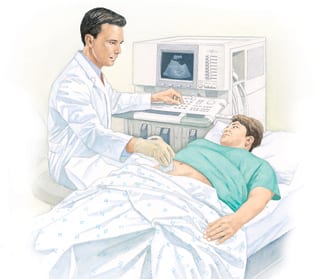
Patient Basics: Ultrasound
Share on FacebookShare on Twitter

1. Curry and colleagues tested an artificial intelligence (AI) software that guided non-radiology specialists in diagnosing proximal deep vein thrombosis (DVT).

2. The AI-guided ultrasound demonstrated failed to demonstrate safe accuracy for diagnosing proximal DVTs, and further software optimization is needed.

Evidence Rating Level: 2 (Good)

Study Rundown: DVTs are a leading cause of death and disability. However, an accurate diagnosis via compression ultrasound (CUS) often relies on trained, but scarce radiologists. AI-guided diagnostic tools have the potential to deliver care more efficiently in a resource-limited setting. Curry and colleagues conducted a multi-center, double-blind, test accuracy study on AutoDVT, an AI software that guided non-radiology specialists to perform CUS and diagnose DVTs. Adult patients with symptoms suggestive of DVTs, and if the diagnostic algorithm indicated the need for a CUS underwent an AutoDVT scan. The primary outcome was AutoDVT’s sensitivity compared to the one conducted by a radiologist as a reference standard. Secondary outcomes included the specificity, positive, and negative predictive values (PPV and NPV) of AutoDVT. The study defined the sensitivity target as 90% and the specificity target as 60%. The study found that AutoDVT achieved a sensitivity of 68% and a specificity of 80% for detecting proximal DVTs. For secondary outcomes, AutoDVT’s NPV and PPV were 95% and 28%, respectively. Overall, this study demonstrated that AutoDVT lacked sufficient test accuracy to be used safely in clinical practice compared to the reference standard.

Click here to read the study in NEJM AI

Relevant Reading: Artificial intelligence in thrombosis: transformative potential and emerging challenges

RELATED REPORTS

An ultrasound-guided percutaneous method of vagal nerve stimulation may be effective for refractory chronic pain

Artificial intelligence (AI) scribes showed mixed effects on documentation time and improvements in physician well-being

Artificial intelligence (AI)-based coronary calcium quantification successfully identified patients who could benefit from lipid-lowering therapy

In-Depth [prospective cohort]: Curry and colleagues conducted a prospective, single-arm, double-blinded pilot study at eleven UK hospitals. Eligible patients were suspected of having DVTs and if the diagnostic algorithm indicated CUS. Patients who were pregnant beyond 12 weeks, not eligible for D-dimer testing, or had a previously confirmed DVT in the symptomatic leg, were excluded from the study. All participants had a Wells score calculated and a D-dimer test. Patients underwent an AutoDVT scan before a clinical CUS, and the participants, research staff, and remote reviewers were blinded to the result of the AutoDVT scan. The primary outcome was AutoDVT’s sensitivity compared to a reference standard of 90%. Secondary outcomes included the specificity, which was compared to a target of 60%; and PPV and NPV. In the end, 294 patients were analyzed, and AutoDVT achieved a sensitivity of 68% (95% confidence interval (CI), 49-83%) and a specificity of 80% (95% CI, 74-85%). However, the sensitivity increased to 85% (95% CI, 65-96%) when diagnosis was made using remote image analysis by clinicians. For NPV and PPV, the results were 95% (95% CI, 92-98%) and 28% (95% CI, 19-40%), respectively. Additionally, 81% of the initial AutoDVT scans had to be repeated for a median of three times due to failed scanning procedures. The study’s reliability benefited from its multi-center nature and the double-blind design, but inter-operator agreement analysis was not completed due to staff shortages. The authors concluded that the sensitivity of AutoDVT alone was too low for clinical use, and better-quality images are crucial for further software development.

Image: PD

©2025 2 Minute Medicine, Inc. All rights reserved. No works may be reproduced without expressed written consent from 2 Minute Medicine, Inc. Inquire about licensing here. No article should be construed as medical advice and is not intended as such by the authors or by 2 Minute Medicine, Inc.

Tags: artificial intelligencedeep vein thrombosis (DVT)machine learningThromboembolism (Deep Vein Thrombosis and Pulmonaryultrasound
Previous Post

Clinically significant differences between different blood pressure measurement methods

Next Post

Increased risk of low birth weight and adverse pregnancy outcomes among women living with HIV

RelatedReports

Chronic Disease

An ultrasound-guided percutaneous method of vagal nerve stimulation may be effective for refractory chronic pain

September 17, 2026
Artificial Intelligence

Artificial intelligence (AI) scribes showed mixed effects on documentation time and improvements in physician well-being

September 16, 2026
Artificial Intelligence

Artificial intelligence (AI)-based coronary calcium quantification successfully identified patients who could benefit from lipid-lowering therapy

September 15, 2026
Artificial Intelligence

Artificial intelligence (AI) chatbot reduced depression, anxiety, and eating disorder risk symptoms

September 11, 2026
Next Post
Few high school students, young adults get HIV testing

Increased risk of low birth weight and adverse pregnancy outcomes among women living with HIV

2 Minute Medicine Rewind Aug 25, 2025

#VisualAbstract: Personalised Gait Retraining is an Effective Non-Surgical Treatment for Medial Compartment Knee Osteoarthritis

#VisualAbstract: Personalised Gait Retraining is an Effective Non-Surgical Treatment for Medial Compartment Knee Osteoarthritis

EvidencePulse™ by 2 Minute Medicine 2026 evidence scan 3 reports You asked top stroke trials 2026 Synthesizing medical evidence... Top 2026 stroke trial results: OCEANIC — ischemic stroke: 6.2% vs 8.4% OPTION* — mRS 0–1: 43.6% vs 34.2% ORIENTAL* — mRS 0–2: 58.6% vs 46.6% *Higher sICH in intervention arms Participants randomizedN OCEANIC 12,327 OPTION 570 ORIENTAL 564 Ask about guidelines or landmark trials... ↑ Try EvidencePulse™ Ask the evidence.
Get the signal.
Try it now → Physician-trained medical AI by 2 Minute Medicine

2MM+ All Access

Full details →
$4.99 /month

5-day free trial · cancel anytime

  • ✓100+ physician-written reports
  • ✓EvidencePulse™ + HypeCheck™
  • ✓Ad-free reading + newsletters
Start 5-day free trial

Then $4.99/month. Manage renewal in your account.

2 Minute Medicine® is an award winning, physician-run, expert medical media company. Our content is curated, written and edited by practicing health professionals who have clinical and scientific expertise in their field of reporting. Our editorial management team is comprised of highly-trained MD physicians. Join numerous brands, companies, and hospitals who trust our licensed content.

Recent Reports

  • An ultrasound-guided percutaneous method of vagal nerve stimulation may be effective for refractory chronic pain
  • Daraxonrasib extends survival in metastatic pancreatic cancer
  • Artificial intelligence (AI) scribes showed mixed effects on documentation time and improvements in physician well-being
License Content
Terms of Use | Disclaimer
Cookie Policy
Cleantalk Pixel
2MM+ All Access Full details →

The medical literature, distilled daily.

Monthly plan selected: $4.99 /month.

$4.99/month

5-day free trial · cancel anytime

Start 5-day free trial

Then $4.99/month. Manage renewal in your account.

Yearly plan selected: $49.90 /year.

$49.90/year

2 months free · only $4.16/month

Start 5-day free trial

Then $49.90/year. Manage renewal in your account.

Membership benefits

  • ✓100+ physician-written reports
  • ✓AI EvidencePulse™ + HypeCheck™
  • ✓Ad-free reading + newsletters

Already a member? Sign in

  • About
  • Specialties
    • All Specialties, All Recent Reports
    • Cardiology
    • Chronic Disease
    • Dermatology
    • Emergency
    • Endocrinology
    • Gastroenterology
    • Imaging and Intervention
    • Infectious Disease
    • Nephrology
    • Neurology
    • Obstetrics
    • Oncology
    • Ophthalmology
    • Pediatrics
    • Pharma
    • Preclinical
    • Psychiatry
    • Public Health
    • Pulmonology
    • Rheumatology
    • Surgery
  • Tools
    • EvidencePulse™
    • HypeCheck™
    • NPI Registry Lookup
    • RVU Search
  • Pharma
  • AI Roundup
  • The Scan
  • Classics™
    • 2MM+ Online Access
    • Paperback and Ebook
  • Rewinds
  • Partners
    • License Content
    • Submit Press Release
    • Advertise with Us
  • Account
    • Subscribe
    • My account
    • Cart
    • Sign-in
No Result
View All Result

© 2026 2 Minute Medicine, Inc. - Physician-written medical news.