Carvedilol linked to lower cirrhosis complication risk
1. In this retrospective cohort study, carvedilol was associated with a lower risk of major liver decompensation compared with nadolol and propranolol.
2. Carvedilol was also associated with lower risks of individual decompensation outcomes, including ascites, spontaneous bacterial peritonitis (SBP), and hepatorenal syndrome (HRS).
Evidence Rating Level: 2 (Good)
Study Rundown: Nonselective beta-blockers (NSBBs) reduce portal hypertension and help prevent complications of cirrhosis, including variceal hemorrhage, ascites, and hepatorenal syndrome, while potentially improving survival. Among available NSBBs, carvedilol has become the preferred agent because it produces greater reductions in the hepatic venous pressure gradient (HVPG). However, it remains unclear whether this greater hemodynamic effect translates into improved clinical outcomes. This study compared rates of liver decompensation and mortality among patients initiated on carvedilol, nadolol, or propranolol. Compared with nadolol, carvedilol was associated with a 20% lower risk of major liver decompensation and, compared with propranolol, a 17% lower risk. No significant difference in major liver decompensation was observed between nadolol and propranolol. Carvedilol was also associated with lower risks of ascites, spontaneous bacterial peritonitis, hepatorenal syndrome, and esophageal variceal hemorrhage than either comparator. In addition, carvedilol was associated with a modestly lower risk of all-cause mortality compared with nadolol and a lower risk compared with propranolol. Among patients with decompensated cirrhosis, subgroup analyses demonstrated a lower risk of recurrent major decompensation with carvedilol than with either nadolol or propranolol. Sensitivity analyses yielded results consistent with the primary findings. The study’s findings should be interpreted in light of its observational design and the potential for confounding due to nonrandomized treatment selection. Nevertheless, these results suggest that carvedilol may provide greater protection against liver decompensation and other major cirrhosis complications than nadolol or propranolol, further supporting its role as the preferred nonselective beta-blocker for patients with cirrhosis.
Click to read this study in AIM
Relevant Reading: Carvedilol reduces the risk of decompensation and mortality in patients with compensated cirrhosis in a competing-risk meta-analysis
In-Depth [retrospective cohort]: This retrospective cohort study compared rates of liver decompensation and death among patients initiated on carvedilol, nadolol, or propranolol. Data were obtained from the nationwide Optum deidentified Clinformatics Data Mart Database. Patients were included if they had cirrhosis and filled an initial prescription for one of the three nonselective beta-blockers between January 1, 2013, and August 31, 2025, with at least 183 days of continuous enrollment prior to cohort entry. Patients with prior beta-blocker use, cardiovascular indications for NSBB therapy, or prior use of non-dihydropyridine calcium-channel blockers were excluded. The primary outcome was major liver decompensation, defined as hospitalization for ascites, spontaneous bacterial peritonitis (SBP), hepatorenal syndrome (HRS), esophageal variceal hemorrhage (EVH), or hepatic encephalopathy. The study included 26,128 patients: 9,754 initiated on carvedilol, 6,554 on nadolol, and 9,820 on propranolol. A total of 5,096 major decompensation events occurred. Compared with nadolol, carvedilol was associated with a lower 6-month risk of major decompensation (risk ratio [RR], 0.80; 95% confidence interval [CI] 0.72-0.88), and similarly versus propranolol (RR, 0.83; 95% CI, 0.76-0.91). No significant difference was observed between nadolol and propranolol (RR, 1.05; 95% CI, 0.96-1.15). Carvedilol was associated with lower risks of ascites, SBP, or HRS versus nadolol (RR, 0.74) and propranolol (RR, 0.84), and lower risks of EVH versus nadolol (RR, 0.66) and propranolol (RR, 0.80). Hepatic encephalopathy risk was similar across groups. For all-cause mortality, carvedilol was associated with lower risk versus propranolol (RR, 0.72) and a borderline reduction versus nadolol (RR, 0.85). Compared with propranolol, nadolol showed higher risks of ascites/SBP/HRS (RR, 1.15) and EVH (RR, 1.22) but modestly lower mortality (RR, 0.85). In patients with decompensated cirrhosis, carvedilol was associated with lower recurrent decompensation versus nadolol (RR, 0.80) and propranolol (RR, 0.84), with consistent secondary outcomes. In compensated cirrhosis, no statistically significant differences were observed, likely due to fewer events and wider confidence intervals. Overall, carvedilol was associated with a lower risk of major liver decompensation compared with nadolol and propranolol.
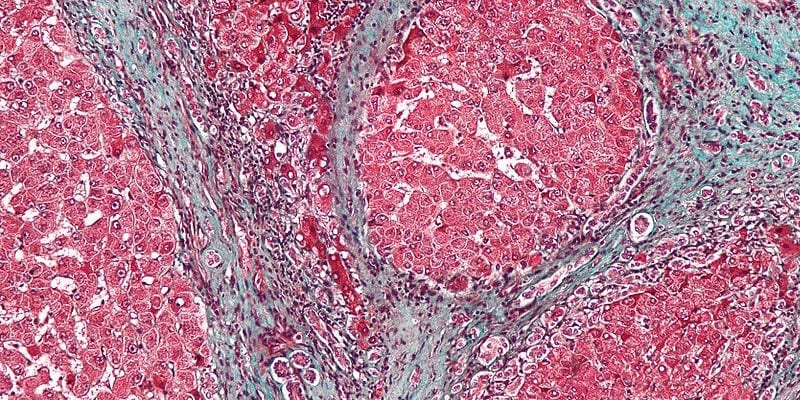
Image: PD
©2026 2 Minute Medicine, Inc. All rights reserved. No works may be reproduced without expressed written consent from 2 Minute Medicine, Inc. Inquire about licensing here. No article should be construed as medical advice and is not intended as such by the authors or by 2 Minute Medicine, Inc.