



• About
  • Masthead
  • License Content
  • Advertise
  • Submit Press Release
  • RSS/Email List
  • 2MM Podcast
  • Write for us
  • Contact Us
2 Minute Medicine
No Result
View All Result

No products in the cart.

SUBSCRIBE
  • Specialties
    • All Specialties, All Recent Reports
    • Cardiology
    • Chronic Disease
    • Dermatology
    • Emergency
    • Endocrinology
    • Gastroenterology
    • Imaging and Intervention
    • Infectious Disease
    • Nephrology
    • Neurology
    • Obstetrics
    • Oncology
    • Ophthalmology
    • Pediatrics
    • Pharma
    • Preclinical
    • Psychiatry
    • Public Health
    • Pulmonology
    • Rheumatology
    • Surgery
  • AI EvidencePulse™
  • Pharma
  • AI News
  • The Scan+
  • Classics™+
    • 2MM+ Online Access
    • Paperback and Ebook
  • Rewinds
  • Podcasts
  • Partners
    • License Content
    • Submit Press Release
    • Advertise with Us
  • Account
    • Subscribe
    • Sign-in
    • My account
2 Minute Medicine
  • Specialties
    • All Specialties, All Recent Reports
    • Cardiology
    • Chronic Disease
    • Dermatology
    • Emergency
    • Endocrinology
    • Gastroenterology
    • Imaging and Intervention
    • Infectious Disease
    • Nephrology
    • Neurology
    • Obstetrics
    • Oncology
    • Ophthalmology
    • Pediatrics
    • Pharma
    • Preclinical
    • Psychiatry
    • Public Health
    • Pulmonology
    • Rheumatology
    • Surgery
  • AI EvidencePulse™
  • Pharma
  • AI News
  • The Scan+
  • Classics™+
    • 2MM+ Online Access
    • Paperback and Ebook
  • Rewinds
  • Podcasts
  • Partners
    • License Content
    • Submit Press Release
    • Advertise with Us
  • Account
    • Subscribe
    • Sign-in
    • My account
SUBSCRIBE
2 Minute Medicine
Subscribe
Home All Specialties Chronic Disease

Co-use of methamphetamine and opioids associated with higher rates of nonfatal overdoses compared to independent use

byJake EngelandYuchen Dai
August 20, 2022
in Chronic Disease, Public Health
Reading Time: 3 mins read
0
Share on FacebookShare on Twitter

1. This cross-sectional study using survey data from individuals in US states with high overdose rates demonstrated that most individuals using drugs used both opioids and methamphetamines, and that nonfatal overdose rates were higher in co-users than those who used opioids or methamphetamines alone.

2. The findings from this study suggest a need to address opioid and methamphetamine use to mitigate the overdose crisis.

Evidence Rating Level: 3 (Average)

Study Rundown: Drug overdose in the US is on the rise despite increasing treatments for opioid use disorders and interventions to prevent overdoses. Methamphetamine is a known culprit of overdoses, often combined with opioids or on its own; yet, limited literature exists describing the use of methamphetamines in rural communities and its role in the national overdose crisis. This cross-sectional study estimated the prevalence of methamphetamine use in rural communities and investigated whether its use with opioids is associated with increased nonfatal overdoses. Cross-sectional surveys were completed by individuals who reported any past-30-day recreational injection drug use or non-injection opioid use from ten states in the US. Among respondents who reported using any methamphetamine or opioid, most used both; in fact, approximately 80% of individuals using drugs reported using methamphetamines in the past 30-days. Co-use of opioids and methamphetamine was associated with greater daily injection and a higher likelihood of past-30-day benzodiazepine use than those who used only opioids or methamphetamines. Respondents using both drugs had less access to substance use treatment and were more likely to have experienced an overdose than those who used only opioids or methamphetamines. Overall, this survey demonstrated that methamphetamine use might be intertwined with the opioid overdose epidemic. Most individuals in this study appear to be using both drugs, which was associated with higher rates of overdoses and increased difficulty accessing treatment. There is likely a need for interventions that address both opioid and methamphetamine use to help mitigate this ongoing crisis. One limitation of this study is that data was self-reported; the actual use of these drugs is likely higher, and recall abilities regarding overdoses may have been unreliable.

Click to read the study in JAMA

Relevant Reading: Evaluation of amphetamine-related hospitalizations and associated clinical outcomes and costs in the United States

RELATED REPORTS

2 Minute Medicine Rewind December 1st, 2025

Vertex: non-opioid pain reliever Journavx shows success in post operative pain control

Communities That HEAL intervention does not reduce opioid-related mortality

In-Depth [cross-sectional study]: This study conducted a cross-sectional survey between January 2018 and March 2020 using individuals who use recreational drugs in rural US areas with high overdose rates (eight sites from ten states). Eligible individuals included those who reported any past 30-day injection drug use or non-injection opioid use “to get high.” Participants completed a 35- to 90-minute computer questionnaire; key questions included the use of opioids and methamphetamines in the past 30 days, any overdoses in the past 180 days, and total overdoses in their lifetimes. The main exposures were the use of methamphetamine alone, opioids alone, or co-use. The primary outcomes were the prevalence of methamphetamine use and any past-180-day nonfatal overdose. Co-use of methamphetamine and opioids was reported in 63% of participants. Additionally, co-use was associated with greater likelihood of injecting drugs (co-use: 65%, opioids alone: 41%, methamphetamine alone: 54%; c2/2 = 122.6; p< 0.001), of failing to access substance use treatment (co-use: 44%, opioids alone: 36%, methamphetamine alone: 30%; c2/2 = 33.8; p<0.001), and non-fatal overdose in the past 180 days (co-use: 22%, opioids alone: 14%, methamphetamine alone: 6%; c2/2 = 60.7; p< 0.001). Furthermore, the mean numbers of lifetime overdoses were: 2.39 for those with co-use, 1.70 for those who use opioids alone, and 1.07 for those who use methamphetamine alone (p< 0.001).

Image: PD

©2022 2 Minute Medicine, Inc. All rights reserved. No works may be reproduced without expressed written consent from 2 Minute Medicine, Inc. Inquire about licensing here. No article should be construed as medical advice and is not intended as such by the authors or by 2 Minute Medicine, Inc.

Tags: methamphetamineopioidoverdose
Previous Post

Preterm birth associated with lower rates of school readiness for kindergarten

Next Post

Chronic kidney disease associated with increased risk of spontaneous intracranial hemorrhage

RelatedReports

Lariat device for left atrial appendage exclusion associated with adverse events
Weekly Rewinds

2 Minute Medicine Rewind December 1st, 2025

December 1, 2025
Parental nonmedical prescription opioid use linked to adolescent use
Pharma

Vertex: non-opioid pain reliever Journavx shows success in post operative pain control

March 4, 2025
Institute of Medicine identifies cost variation between geographic regions
Psychiatry

Communities That HEAL intervention does not reduce opioid-related mortality

October 8, 2024
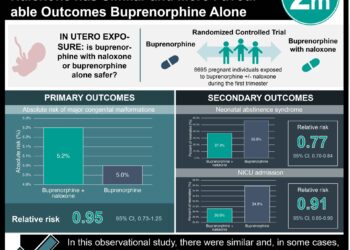
#VisualAbstract: In Utero Exposure to Buprenorphine and Naloxone has Similar and More Favourable Outcomes Buprenorphine Alone
StudyGraphics

#VisualAbstract: In Utero Exposure to Buprenorphine and Naloxone has Similar and More Favourable Outcomes Buprenorphine Alone

August 26, 2024
Next Post
Use of aspirin for primary prevention linked to increased risk of intracranial hemorrhage

Chronic kidney disease associated with increased risk of spontaneous intracranial hemorrhage

Thrombophilia-associated stillbirth risk appears limited to factor V Leiden

Hospitalization due to COVID-19 increases risk of venous thromboembolism compared to hospitalization due to influenza

Risk of autism in offspring linked to maternal pregestational diabetes and severe obesity

2 Minute Medicine Rewind August 22, 2022

2 Minute Medicine® is an award winning, physician-run, expert medical media company. Our content is curated, written and edited by practicing health professionals who have clinical and scientific expertise in their field of reporting. Our editorial management team is comprised of highly-trained MD physicians. Join numerous brands, companies, and hospitals who trust our licensed content.

Recent Reports

  • 2 Minute Medicine Rewind December 15, 2025
  • Vitamin D Levels During Pregnancy and Dental Caries in Offspring
  • Arthroscopic subacromial decompression versus placebo surgery for subacromial pain syndrome: 10 year follow-up of the FIMPACT randomised, placebo surgery controlled trial 
License Content
Terms of Use | Disclaimer
Cookie Policy
Privacy Statement (EU)
Disclaimer

© 2025 2 Minute Medicine, Inc. - Physician-written medical news.

  • Specialties
    • All Specialties, All Recent Reports
    • Cardiology
    • Chronic Disease
    • Dermatology
    • Emergency
    • Endocrinology
    • Gastroenterology
    • Imaging and Intervention
    • Infectious Disease
    • Nephrology
    • Neurology
    • Obstetrics
    • Oncology
    • Ophthalmology
    • Pediatrics
    • Pharma
    • Preclinical
    • Psychiatry
    • Public Health
    • Pulmonology
    • Rheumatology
    • Surgery
  • AI EvidencePulse™
  • Pharma
  • AI News
  • The Scan
  • Classics™
    • 2MM+ Online Access
    • Paperback and Ebook
  • Rewinds
  • Podcasts
  • Partners
    • License Content
    • Submit Press Release
    • Advertise with Us
  • Account
    • Subscribe
    • Sign-in
    • My account
No Result
View All Result

© 2025 2 Minute Medicine, Inc. - Physician-written medical news.