• About
  • Masthead
  • License Content
  • Advertise
  • Submit Press Release
  • RSS/Email List
  • 2MM Podcast
  • Write for us
  • Contact Us
2 Minute Medicine
No Result
View All Result

No products in the cart.

SUBSCRIBE
  • Specialties
    • All Specialties, All Recent Reports
    • Cardiology
    • Chronic Disease
    • Dermatology
    • Emergency
    • Endocrinology
    • Gastroenterology
    • Imaging and Intervention
    • Infectious Disease
    • Nephrology
    • Neurology
    • Obstetrics
    • Oncology
    • Ophthalmology
    • Pediatrics
    • Pharma
    • Preclinical
    • Psychiatry
    • Public Health
    • Pulmonology
    • Rheumatology
    • Surgery
  • Tools
    • EvidencePulse™
    • RVU Search
    • NPI Registry Lookup
  • Pharma
  • AI News
  • The Scan+
  • Classics™+
    • 2MM+ Online Access
    • Paperback and Ebook
  • Rewinds
  • Partners
    • License Content
    • Submit Press Release
    • Advertise with Us
  • Account
    • Subscribe
    • Sign-in
    • My account
2 Minute Medicine
  • Specialties
    • All Specialties, All Recent Reports
    • Cardiology
    • Chronic Disease
    • Dermatology
    • Emergency
    • Endocrinology
    • Gastroenterology
    • Imaging and Intervention
    • Infectious Disease
    • Nephrology
    • Neurology
    • Obstetrics
    • Oncology
    • Ophthalmology
    • Pediatrics
    • Pharma
    • Preclinical
    • Psychiatry
    • Public Health
    • Pulmonology
    • Rheumatology
    • Surgery
  • Tools
    • EvidencePulse™
    • RVU Search
    • NPI Registry Lookup
  • Pharma
  • AI News
  • The Scan+
  • Classics™+
    • 2MM+ Online Access
    • Paperback and Ebook
  • Rewinds
  • Partners
    • License Content
    • Submit Press Release
    • Advertise with Us
  • Account
    • Subscribe
    • Sign-in
    • My account
SUBSCRIBE
2 Minute Medicine
Subscribe
Home All Specialties Imaging and Intervention

High-frequency oscillatory ventilation may reduce the incidence of bronchopulmonary dysplasia in neonatal respiratory distress syndrome

byAlex XiangandSimon Pan
March 20, 2026
in Imaging and Intervention, Pediatrics, Pulmonology
Reading Time: 2 mins read
0
Share on FacebookShare on Twitter

1. High-frequency oscillatory ventilation (HFOV) may reduce the incidence of bronchopulmonary dysplasia (BPD) compared with conventional mechanical ventilation (CMV) in infants born at 34 weeks’ gestation or earlier with neonatal respiratory distress syndrome (NARDS).

Evidence Rating Level: 1 (Excellent)

NARDS is a serious condition in premature infants and remains a leading cause of neonatal mortality. However, it is unclear if HFOV or CMV should be the preferred first-line therapy. A previous study found HFOV did not significantly reduce BPD risk compared with CMV in infants born between 24 and 42 weeks with NARDS, although subgroup analysis suggested benefit in infants born at 34 weeks or less. This single-center, single-blinded randomized controlled trial sought to compare the incidence of BPD in infants born between 25 weeks 0 days and 34 weeks 6 days and diagnosed with NARDS. Patients were initially stabilized with CMV and randomized to transition to HFOV (n = 181; mean [SD] age, 30.60 [2.42] weeks; 44.2% female) or continue with CMV (n = 205; mean [SD] age, 31.00 [ 2.42] weeks; 37.1% female). BPD was assessed using 2 definitions: 1) Eunice Kennedy Shriver National Institute of Child Health and Human Development (NICHD); 2) Jensen et al, 2019. Overall, 154 (39.9%) and 83 (21.5%) developed BPD according to definitions 1 and 2, respectively. Elective HFOV reduced the risk of BPD by 8.0% (34.3% vs 44.9%; relative risk, 0.92; 95% CI, 0.86-0.99) according to definition 1 and by 32.0% (17.1% vs 25.4%; relative risk 0.68; 95% CI, 0.45-1.00) according to definition 2 compared with CMV. There were no significant differences in mortality, stage 2 or higher retinopathy of prematurity, stage 2 or higher necrotizing enterocolitis, or grade 3 or higher intraventricular hemorrhage. Overall, HFOV may reduce the incidence of BPD compared with CMV in infants born at 34 weeks’ gestation or earlier with NARDS.

Click here to read the study in JAMA Network Open

Image: PD

©2026 2 Minute Medicine, Inc. All rights reserved. No works may be reproduced without expressed written consent from 2 Minute Medicine, Inc. Inquire about licensing here. No article should be construed as medical advice and is not intended as such by the authors or by 2 Minute Medicine, Inc.

RELATED REPORTS

What Is the Cricothyroid Membrane and Why It Matters in Medicine

Preoxygenation with noninvasive ventilation reduces hypoxemia during intubation

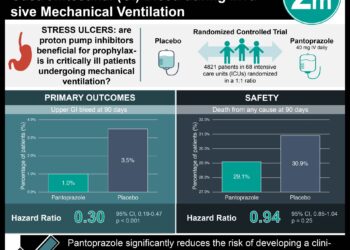
#VisualAbstract: Stress Ulcer Prophylaxis Lowers Risk of Gastrointestinal (GI) Bleed during Invasive Mechanical Ventilation

Tags: Bronchopulmonary dysplasianeonatalrespiratory distressventilation
Previous Post

Neoadjuvant chemotherapy does not improve disease-free survival in patients with locally advanced colon cancer

Next Post

2 Minute Medicine Rewind March 23, 2026

RelatedReports

Patient Basics: Graves’ Disease
Career Development

What Is the Cricothyroid Membrane and Why It Matters in Medicine

September 17, 2025
Emergency

Preoxygenation with noninvasive ventilation reduces hypoxemia during intubation

June 27, 2024
#VisualAbstract: Stress Ulcer Prophylaxis Lowers Risk of Gastrointestinal (GI) Bleed during Invasive Mechanical Ventilation
StudyGraphics

#VisualAbstract: Stress Ulcer Prophylaxis Lowers Risk of Gastrointestinal (GI) Bleed during Invasive Mechanical Ventilation

June 25, 2024
Wide international variation in survival for periviable neonates
Obstetrics

Ibuprofen does not improve bronchopulmonary dysplasia outcomes

February 12, 2024
Next Post
Risk of autism in offspring linked to maternal pregestational diabetes and severe obesity

2 Minute Medicine Rewind March 23, 2026

siRNA against antithrombin alleviates symptoms of hemophilia [PreClinical]

Apixaban reduces bleeding risk versus rivaroxaban in acute venous thromboembolism

Variability in interpretation of breast biopsy slides associated with low verification of atypia and ductal carcinoma in situ

Pyrotinib provides survival benefit in human epidermal growth factor receptor 2-positive metastatic breast cancer when combined with trastuzumab and docetaxel

2 Minute Medicine® is an award winning, physician-run, expert medical media company. Our content is curated, written and edited by practicing health professionals who have clinical and scientific expertise in their field of reporting. Our editorial management team is comprised of highly-trained MD physicians. Join numerous brands, companies, and hospitals who trust our licensed content.

Recent Reports

  • Bottom-vented bottles may not reduce gastrointestinal discomfort in infants
  • Ketorolac administration after cesarean delivery may reduce postoperative opioid use
  • One Big Beautiful Bill could impact half of Medicaid beneficiaries
License Content
Terms of Use | Disclaimer
Cookie Policy
Privacy Statement (EU)
Disclaimer

© 2025 2 Minute Medicine, Inc. - Physician-written medical news.

  • Specialties
    • All Specialties, All Recent Reports
    • Cardiology
    • Chronic Disease
    • Dermatology
    • Emergency
    • Endocrinology
    • Gastroenterology
    • Imaging and Intervention
    • Infectious Disease
    • Nephrology
    • Neurology
    • Obstetrics
    • Oncology
    • Ophthalmology
    • Pediatrics
    • Pharma
    • Preclinical
    • Psychiatry
    • Public Health
    • Pulmonology
    • Rheumatology
    • Surgery
  • Tools
    • EvidencePulse™
    • RVU Search
    • NPI Registry Lookup
  • Pharma
  • AI News
  • The Scan
  • Classics™
    • 2MM+ Online Access
    • Paperback and Ebook
  • Rewinds
  • Partners
    • License Content
    • Submit Press Release
    • Advertise with Us
  • Account
    • Subscribe
    • Sign-in
    • My account
No Result
View All Result

© 2025 2 Minute Medicine, Inc. - Physician-written medical news.