Cryoprobe improves diagnostic yield compared with forceps in bronchoscopic lung biopsy
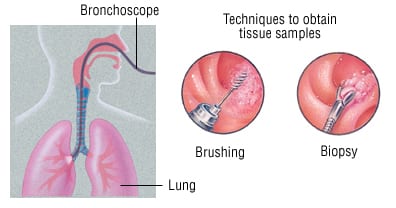
1. Transbronchial biopsy performed with a cryoprobe demonstrated a significantly higher diagnostic yield compared to conventional forceps biopsy in patients undergoing evaluative bronchoscopy.
2. Cryobiopsy produced larger and higher-quality tissue samples with less crush artifact without increasing rates of major bleeding, respiratory failure, or pneumothorax requiring intervention.
Evidence Rating Level: 1 (Excellent)
Study Rundown: Transbronchial lung biopsy is commonly performed during bronchoscopy to evaluate pulmonary nodules, diffuse parenchymal lung disease, and lung transplant rejection. Although forceps biopsy is the conventional approach, it may be limited by small tissue samples and crush artifact, which can reduce diagnostic accuracy. This multicenter randomized clinical trial evaluated whether transbronchial biopsy using a 1.1-mm cryoprobe improved diagnostic yield compared with standard 2.0-mm forceps biopsy. Patients undergoing bronchoscopy for lung nodules or masses, diffuse parenchymal lung disease, or post-lung transplant evaluation were randomized 1:1 to cryobiopsy or forceps biopsy. Overall, cryobiopsy resulted in a significantly higher diagnostic yield than forceps biopsy. Diagnostic yield was specifically improved in patients undergoing biopsy for pulmonary nodules or masses and lung transplant evaluation, while no statistically significant difference was observed in the diffuse parenchymal lung disease subgroup. Notably, cryobiopsy specimens were larger, contained more alveolated tissue, and demonstrated less crush artifact than forceps specimens. Further, rates of major complications including severe bleeding, respiratory failure, and pneumothorax requiring tube thoracostomy were low and did not increase with cryobiopsy. These findings suggest that the 1.1-mm cryoprobe may improve tissue acquisition and diagnostic performance during routine bronchoscopic biopsy without increased procedural risks. In practice, this supports consideration of cryobiopsy as a preferred bronchoscopic sampling technique in appropriate patients undergoing transbronchial lung biopsy. Strengths of this study included its randomized, multicenter design, centralized masked pathology review, and inclusion of multiple common indications for transbronchial biopsy, which improved both internal and external validity. Limitations included performance at predominantly large academic centers with experienced bronchoscopists and a lack of operator blinding, which limited external validity and potentially introduced bias.
Click to read the study in JAMA Surgery
Relevant Reading: A Prospective Randomized Comparative Study of Three Guided Bronchoscopic Approaches for Investigating Pulmonary Nodules
In-Depth [randomized controlled trial]: This multicenter, open-label randomized clinical trial enrolled 500 adults undergoing transbronchial biopsy across nine U.S. academic medical centers between February 2023 and September 2024. Patients were randomized 1:1 to biopsy using either a 1.1-mm cryoprobe or standard 2.0-mm forceps. Indications for biopsy included pulmonary nodules or masses, lung transplant evaluation, and diffuse parenchymal lung disease. The primary outcome was diagnostic yield, defined as the proportion of patients whose biopsy specimen established a specific histopathologic diagnosis on centralized, masked pathology review. Among the 490 patients included in the primary analysis, diagnostic yield was significantly higher in the cryoprobe group than in the forceps group (88.6% vs. 78.8%; 95% CI, 3.3%-16.3%; P = .003). In subgroup analyses, cryobiopsy significantly improved diagnostic yield in patients with pulmonary nodules or masses (83.2% vs. 70.1%; 95% CI, 1.0%-24.6%; P = .04) and in lung transplant recipients (96.0% vs. 88.7%; 95% CI, 0.6%-14.4%; P = .03) but not in patients with diffuse parenchymal lung disease (72.0% vs. 62.5%; 95% CI, -16.0%-33.6%; P = .55). Cryobiopsy also yielded significantly larger tissue specimens with greater alveolated area and lower proportions of crush artifact. Safety outcomes were comparable between groups, with no major bleeding events, respiratory failure, or deaths reported. Pneumothoraces requiring chest tube placement occurred only in the forceps group (1.6%). These findings demonstrated that the use of a 1.1-mm cryoprobe improved bronchoscopic diagnostic yield and tissue quality without increasing major procedural complications.
Image: PD
©2026 2 Minute Medicine, Inc. All rights reserved. No works may be reproduced without expressed written consent from 2 Minute Medicine, Inc. Inquire about licensing here. No article should be construed as medical advice and is not intended as such by the authors or by 2 Minute Medicine, Inc.