• About
  • Masthead
  • License Content
  • Advertise
  • Submit Press Release
  • RSS/Email List
  • 2MM Podcast
  • Write for us
  • Contact Us
2 Minute Medicine
No Result
View All Result

No products in the cart.

SUBSCRIBE
  • About
  • Specialties
    • All Specialties, All Recent Reports
    • Cardiology
    • Chronic Disease
    • Dermatology
    • Emergency
    • Endocrinology
    • Gastroenterology
    • Imaging and Intervention
    • Infectious Disease
    • Nephrology
    • Neurology
    • Obstetrics
    • Oncology
    • Ophthalmology
    • Pediatrics
    • Pharma
    • Preclinical
    • Psychiatry
    • Public Health
    • Pulmonology
    • Rheumatology
    • Surgery
  • Tools+
    • EvidencePulse™
    • HypeCheck™
    • NPI Registry Lookup
    • RVU Search
  • Pharma
  • AI Roundup
  • The Scan+
  • Classics™+
    • 2MM+ Online Access
    • Paperback and Ebook
  • Rewinds
  • Partners
    • License Content
    • Submit Press Release
    • Advertise with Us
  • Account
    • Subscribe
    • My account
    • Cart
    • Sign in
2 Minute Medicine
  • About
  • Specialties
    • All Specialties, All Recent Reports
    • Cardiology
    • Chronic Disease
    • Dermatology
    • Emergency
    • Endocrinology
    • Gastroenterology
    • Imaging and Intervention
    • Infectious Disease
    • Nephrology
    • Neurology
    • Obstetrics
    • Oncology
    • Ophthalmology
    • Pediatrics
    • Pharma
    • Preclinical
    • Psychiatry
    • Public Health
    • Pulmonology
    • Rheumatology
    • Surgery
  • Tools+
    • EvidencePulse™
    • HypeCheck™
    • NPI Registry Lookup
    • RVU Search
  • Pharma
  • AI Roundup
  • The Scan+
  • Classics™+
    • 2MM+ Online Access
    • Paperback and Ebook
  • Rewinds
  • Partners
    • License Content
    • Submit Press Release
    • Advertise with Us
  • Account
    • Subscribe
    • My account
    • Cart
    • Sign in
SUBSCRIBE
2 Minute Medicine
Subscribe
EvidencePulse™ by 2 Minute Medicine 2026 evidence scan 3 reports You asked top stroke trials 2026 Synthesizing medical evidence... Top 2026 stroke trial results: OCEANIC — ischemic stroke: 6.2% vs 8.4% OPTION* — mRS 0–1: 43.6% vs 34.2% ORIENTAL* — mRS 0–2: 58.6% vs 46.6% *Higher sICH in intervention arms Participants randomizedN OCEANIC 12,327 OPTION 570 ORIENTAL 564 Ask about guidelines or landmark trials... ↑ Try EvidencePulse™ Ask the evidence.
Get the signal.
Try it now → Physician-trained medical AI by 2 Minute Medicine
Home All Specialties Cardiology

Decreased facial expression variability linked with serious cardiac disease
byDaniel FisherandRavi Shah
July 16, 2014
in Cardiology
Reading Time: 3 mins read
Antidepressant may reduce mental stress-induced myocardial ischemia (REMIT Trial)
Share on FacebookShare on Twitter

1. Patients with acutely life-threatening cardiopulmonary diseases had less variability in facial expressions than those with less serious illnesses. 

2. Variability in the surprise expression had the highest degree of difference between these two populations of patients. 

Evidence Rating Level: 2 (Good) 

Study Rundown: Clinical gestalt, or the ability to set pre-test probability from internal references of experience, is an important aspect of clinical decision making. Clinicians frequently ask the question, does the patient look sick? However, variability in clinician experience and lack of transparency in using gestalt to construct these pre-test probabilities can be problematic. In order to give a more concrete justification for this practice, 50 emergency department patients with chest pain and shortness of breath were shown pictures meant to evoke an emotional response. Three expressions, surprise, smiling, and frowning were assessed using the Facial Action Coding System (FACS). It was found that expression variability of disease-positive (+) patients, those with life threatening cardiopulmonary disease, was significantly less than those that were disease-negative (-). Decreased variability in surprise was most likely to predict whether a patient had a life-threatening disease.

The major weakness of this study is its small sample size, though this is not unexpected for a pilot project. Further, the use of facial expression variability as a predictive tool was weakened by overlap of FACS values in Disease+ and Disease- groups. Finally, only two of the three facial expressions, surprise and frowning, were significantly different between the Disease+ and Disease- groups. While this study was unable to give conclusive evidence establishing a link between cardiopulmonary disease severity and facial expression variability, it does begin to explain how this process may be utilized by clinicians and give empirical data supporting clinical gestalt.

Click to read the study, published in today in BMJ

RELATED REPORTS

Frailty in older adults with atrial fibrillation is multifactorial and associated with metabolic and cognitive factors

Artificial intelligence (AI) capable of identifying uncommon gastrointestinal pathologies despite no targeted disease training

Prognostic associations of anthropometric indices vary by clinical outcomes

Relevant Reading: Clinician Gestalt Estimate of Pretest Probability for Acute Coronary Syndrome and Pulmonary Embolism in Patients With Chest Pain and Dyspnea

In-Depth [prospective study]: This study sought to prove the association between clinical gestalt and the diagnosis of life-threatening disease. A convenience sample of 50 patients was enrolled from an ED in an urban setting from May to September 2011. All patients had chief complaints of both dyspnea and chest pain. Exclusion criteria were known diagnosis, inability to consent, intoxication, altered mental status, visual impairment, dementia, or preclusion to follow-up. FACS analysis was used to document changes in facial action units as well as intensity of appearance on a five point scale. It was carried out by two observers who analyzed video data of three facial expressions, surprise, frowning, and smiling, in response to three pictures shown to the patients for 10 seconds each. Each patient had a CT Pulmonary Angiogram, and the results from this test and a fourteen day follow-up were used to categorize the patients into Disease+ and Disease- groups. Disease+ patients were defined as having life-threatening illness that was not an exacerbation of a pre-existing condition such as atrial fibrillation, existing lung disease, or heart failure. Ability of facial variability score to predict disease was done by estimating area under the receive operating characteristic (ROC) curve.  16% of patients were Disease+ and had a median facial expression score over all three pictures of 13.5, which was significantly less than 27.5 for Disease- patients. Area under the curve analysis of ROC curve showed significance for surprise (p = 0.033) and frowning (p = 0.022) but not smiling (p = 0.12).

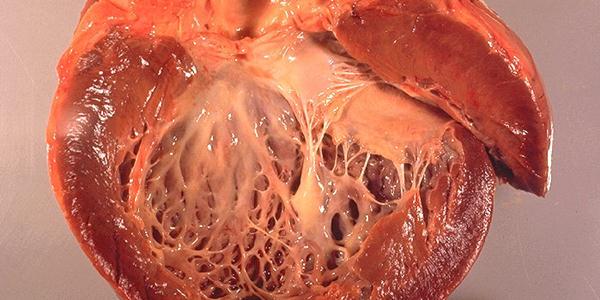
Image: PD

©2012-2014 2minutemedicine.com. All rights reserved. No works may be reproduced without expressed written consent from 2minutemedicine.com. Disclaimer: We present factual information directly from peer reviewed medical journals. No post should be construed as medical advice and is not intended as such by the authors, editors, staff or by 2minutemedicine.com. PLEASE SEE A HEALTHCARE PROVIDER IN YOUR AREA IF YOU SEEK MEDICAL ADVICE OF ANY SORT.

Previous Post

Population-based risk factors and geographical trends identified for vitiligo

Next Post

Stroke within past 9 months linked with adverse surgical outcomes

RelatedReports

Cardiology

Frailty in older adults with atrial fibrillation is multifactorial and associated with metabolic and cognitive factors

September 30, 2026
A collection of symbolic items such as a microscope
Artificial Intelligence

Artificial intelligence (AI) capable of identifying uncommon gastrointestinal pathologies despite no targeted disease training

September 30, 2026
Cardiology

Prognostic associations of anthropometric indices vary by clinical outcomes

September 28, 2026
Chronic Disease

Anitocabtagene autoleucel associated with sustained clinical response in heavily pretreated multiple myeloma

September 28, 2026
Next Post
No obesity paradox found between BMI, stroke, and death

Stroke within past 9 months linked with adverse surgical outcomes

Positive physician experience in the Pediatric AIDS Corps

New second-line antiretroviral regimens effective for HIV in resource-limited settings

Pre-operative transcranial magnetic stimulation useful for language mapping

Risk of cerebral palsy linked with relatedness to cerebral palsy patient

EvidencePulse™ by 2 Minute Medicine 2026 evidence scan 3 reports You asked top stroke trials 2026 Synthesizing medical evidence... Top 2026 stroke trial results: OCEANIC — ischemic stroke: 6.2% vs 8.4% OPTION* — mRS 0–1: 43.6% vs 34.2% ORIENTAL* — mRS 0–2: 58.6% vs 46.6% *Higher sICH in intervention arms Participants randomizedN OCEANIC 12,327 OPTION 570 ORIENTAL 564 Ask about guidelines or landmark trials... ↑ Try EvidencePulse™ Get the signal. Try it now → Physician-trained medical AI by 2 Minute Medicine

2MM+ All Access

Full details →
$4.99 /month

3-day free trial · cancel anytime

  • ✓100+ physician-written reports
  • ✓EvidencePulse™ + HypeCheck™
  • ✓Ad-free reading + newsletters
Start 3-day free trial

Then $4.99/month. Manage renewal in your account.

2 Minute Medicine® is an award winning, physician-run, expert medical media company. Our content is curated, written and edited by practicing health professionals who have clinical and scientific expertise in their field of reporting. Our editorial management team is comprised of highly-trained MD physicians. Join numerous brands, companies, and hospitals who trust our licensed content.

Recent Reports

  • Frailty in older adults with atrial fibrillation is multifactorial and associated with metabolic and cognitive factors
  • Artificial intelligence (AI) capable of identifying uncommon gastrointestinal pathologies despite no targeted disease training
  • Prognostic associations of anthropometric indices vary by clinical outcomes
License Content
Terms of Use | Disclaimer
Cookie Policy
2MM+ All Access Full details →

The medical literature, distilled daily.

Monthly plan selected: $4.99 /month.

$4.99/month

3-day free trial · cancel anytime

Start 3-day free trial

Then $4.99/month. Manage renewal in your account.

Yearly plan selected: $49.90 /year.

$49.90/year

2 months free

Start 3-day free trial

Then $49.90/year.

Membership benefits

  • ✓100+ physician-written reports
  • ✓AI EvidencePulse™ + HypeCheck™
  • ✓Ad-free reading + newsletters

Already a member? Sign in

  • About
  • Specialties
    • All Specialties, All Recent Reports
    • Cardiology
    • Chronic Disease
    • Dermatology
    • Emergency
    • Endocrinology
    • Gastroenterology
    • Imaging and Intervention
    • Infectious Disease
    • Nephrology
    • Neurology
    • Obstetrics
    • Oncology
    • Ophthalmology
    • Pediatrics
    • Pharma
    • Preclinical
    • Psychiatry
    • Public Health
    • Pulmonology
    • Rheumatology
    • Surgery
  • Tools
    • EvidencePulse™
    • HypeCheck™
    • NPI Registry Lookup
    • RVU Search
  • Pharma
  • AI Roundup
  • The Scan
  • Classics™
    • 2MM+ Online Access
    • Paperback and Ebook
  • Rewinds
  • Partners
    • License Content
    • Submit Press Release
    • Advertise with Us
  • Account
    • Subscribe
    • My account
    • Cart
    • Sign in
No Result
View All Result

© 2026 2 Minute Medicine, Inc. - Physician-written medical news.