• About
  • Masthead
  • License Content
  • Advertise
  • Submit Press Release
  • RSS/Email List
  • 2MM Podcast
  • Write for us
  • Contact Us
2 Minute Medicine
No Result
View All Result

No products in the cart.

SUBSCRIBE
  • About
  • Specialties
    • All Specialties, All Recent Reports
    • Cardiology
    • Chronic Disease
    • Dermatology
    • Emergency
    • Endocrinology
    • Gastroenterology
    • Imaging and Intervention
    • Infectious Disease
    • Nephrology
    • Neurology
    • Obstetrics
    • Oncology
    • Ophthalmology
    • Pediatrics
    • Pharma
    • Preclinical
    • Psychiatry
    • Public Health
    • Pulmonology
    • Rheumatology
    • Surgery
  • Tools+
    • EvidencePulse™
    • HypeCheck™
    • NPI Registry Lookup
    • RVU Search
  • Pharma
  • AI Roundup
  • The Scan+
  • Classics™+
    • 2MM+ Online Access
    • Paperback and Ebook
  • Rewinds
  • Partners
    • License Content
    • Submit Press Release
    • Advertise with Us
  • Account
    • Subscribe
    • My account
    • Cart
    • Sign-in
2 Minute Medicine
  • About
  • Specialties
    • All Specialties, All Recent Reports
    • Cardiology
    • Chronic Disease
    • Dermatology
    • Emergency
    • Endocrinology
    • Gastroenterology
    • Imaging and Intervention
    • Infectious Disease
    • Nephrology
    • Neurology
    • Obstetrics
    • Oncology
    • Ophthalmology
    • Pediatrics
    • Pharma
    • Preclinical
    • Psychiatry
    • Public Health
    • Pulmonology
    • Rheumatology
    • Surgery
  • Tools+
    • EvidencePulse™
    • HypeCheck™
    • NPI Registry Lookup
    • RVU Search
  • Pharma
  • AI Roundup
  • The Scan+
  • Classics™+
    • 2MM+ Online Access
    • Paperback and Ebook
  • Rewinds
  • Partners
    • License Content
    • Submit Press Release
    • Advertise with Us
  • Account
    • Subscribe
    • My account
    • Cart
    • Sign-in
SUBSCRIBE
2 Minute Medicine
Subscribe
Home All Specialties Surgery

Earlier Genetic Testing Predicts Bilateral Mastectomy in Young BRCA Carriers

byDavid Painter, MD
September 4, 2026
in Surgery
Reading Time: 3 mins read
USPSTF recommends chemoprevention for women at high risk for breast cancer
Share on FacebookShare on Twitter

1. Across two decades, utilization of bilateral mastectomy increased among BRCA carriers 40 years old or younger with early breast cancer, while breast conservation became less common.

2. Learning one’s BRCA result before or at diagnosis was the strongest predictor of opting for bilateral surgery.

Evidence Rating Level: 2 (Good)

Study Rundown: Women who develop breast cancer at younger ages carry inherited BRCA1 or BRCA2 changes more often than older patients, and these underlying genomic changes increase the chances that a new, separate cancer will occur in the opposite breast. At diagnosis, a genetic carrier and her surgeon must weigh options including breast conservation, removal of the affected breast only, or removal of both breasts. However, the forces shaping that choice worldwide have been poorly understood. This international study tracked thousands of young BRCA carriers treated across two decades and found that double mastectomy grew steadily more common while breast conservation faded. The strongest influence toward removing both breasts was whether a woman knew she carried a BRCA mutation before or at the time of her diagnosis, since early knowledge permits a single planned operation rather than a later return to surgery. Patient locale mattered too, with patients electing for double mastectomy more frequently in North America than in Asia or Africa. Carriers with larger or more advanced tumors were somewhat less likely to opt for bilateral mastectomy. Because medical records were reviewed retrospectively, the study was unable to capture the more nuanced considerations behind patient decisions, including those such as insurance coverage barriers or fertility plans. Even so, the findings argue for earlier testing of potential carriers to preserve the full degree of surgical options.

Click to read the study in JAMA Network Open

Relevant Reading: Comparison of Outcomes Between BRCA Pathogenic Variant Carriers Undergoing Breast-Conserving Surgery Versus Mastectomy

RELATED REPORTS

Roche and NVIDIA deploy the pharmaceutical industry’s largest artificial intelligence factory

2MM: AI Roundup – Roche and NVIDIA’s AI drug discovery factory and surgical robotics foundation model, Amazon’s nationwide health AI expansion, and Brown’s AI therapy ethics warning [March 2026]

Merck and Mayo Clinic launch AI-driven precision medicine lab

In-Depth [retrospective cohort]: This multinational study spanned 109 institutions across five continents. The study examined 4,715 women aged 40 or younger with germline BRCA1/2 pathogenic or likely pathogenic variants who had surgery for stage I to III invasive disease diagnosed from 2000 through 2020. Surgery was classified as breast conservation (n = 1,805, 38.3%), unilateral mastectomy (n = 1,752, 37.2%), or bilateral mastectomy (n = 1,158, 24.6%), the last combining therapeutic and contralateral risk-reducing procedures. Conservation fell from roughly 56% of surgical elections in 2000 to 27% in 2020, whereas bilateral mastectomy rose from 8% to 44% (P < .001). Multivariable logistic regression identified pre-diagnosis testing as the dominant correlate of bilateral surgery compared with post-diagnosis testing (AOR 20.72, 95% CI 15.27-28.13), with testing at diagnosis also influential (AOR 6.83, 95% CI 5.39-8.66). North America had the highest regional odds of undergoing bilateral mastectomy compared to Southern Europe (AOR 4.79, 95% CI 3.69-6.21), while Asia and Africa were the least likely (AOR 0.65, 95% CI 0.51-0.84). Bulkier tumors (T3-T4: AOR 0.55, 95% CI 0.41-0.73) and greater nodal involvement (N2-N3: AOR 0.68, 95% CI 0.51-0.91) reduced the odds of undergoing bilateral mastectomy, as did upfront surgery instead of neoadjuvant therapy (AOR 0.27, 95% CI 0.22-0.33). Among 2,327 women who knew their genetic status within six months of their breast cancer diagnosis, 42.0% chose bilateral mastectomy, ranging from 26.1% in Asia and Africa to 66.4% in North America. Reconstruction after mastectomy reached 78.4% by 2020. These findings, spanning the largest global cohort of its kind, indicated that earlier genetic testing is the strongest actionable factor for informing local therapy choices in young BRCA1/2 carriers.

Image: PD

©2026 2 Minute Medicine, Inc. All rights reserved. No works may be reproduced without expressed written consent from 2 Minute Medicine, Inc. Inquire about licensing here. No article should be construed as medical advice and is not intended as such by the authors or by 2 Minute Medicine, Inc.


Tags: BRCA mutationbreast conservationgenomicsmastectomy
Previous Post

Uterine-Sparing Mesh Repair Outperforms Hysterectomy for Prolapse

RelatedReports

Natural language processing may automate data extraction from radiologic reports
Pharma

Roche and NVIDIA deploy the pharmaceutical industry’s largest artificial intelligence factory

September 4, 2026
Collage of medical tech icons circling a central chip with 'AI Roundup' title and 2 Minute Medicine logo in teal background.
AI Roundup

2MM: AI Roundup – Roche and NVIDIA’s AI drug discovery factory and surgical robotics foundation model, Amazon’s nationwide health AI expansion, and Brown’s AI therapy ethics warning [March 2026]

April 6, 2026
HOSPITAL score predicts risk of 30-day potentially avoidable readmission to hospital
Artificial Intelligence

Merck and Mayo Clinic launch AI-driven precision medicine lab

March 4, 2026
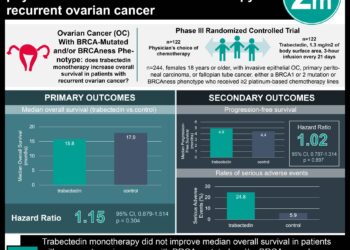
#VisualAbstract: Single-Agent Trabectedin was noninferior to physician’s choice control chemotherapy in recurrent ovarian cancer
StudyGraphics

#VisualAbstract: Single-Agent Trabectedin was noninferior to physician’s choice control chemotherapy in recurrent ovarian cancer

May 24, 2024
EvidencePulse™ by 2 Minute Medicine 2026 evidence scan 3 reports You asked top stroke trials 2026 Synthesizing medical evidence... Top 2026 stroke trial results: OCEANIC — ischemic stroke: 6.2% vs 8.4% OPTION* — mRS 0–1: 43.6% vs 34.2% ORIENTAL* — mRS 0–2: 58.6% vs 46.6% *Higher sICH in intervention arms Participants randomizedN OCEANIC 12,327 OPTION 570 ORIENTAL 564 Ask about guidelines or landmark trials... ↑ Try EvidencePulse™ Ask the evidence.
Get the signal.
Try it now → Physician-trained medical AI by 2 Minute Medicine

2MM+ All Access

Full details →
$4.99 /month

5-day free trial · cancel anytime

  • ✓100+ physician-written reports
  • ✓EvidencePulse™ + HypeCheck™
  • ✓Ad-free reading + newsletters
Start 5-day free trial

Then $4.99/month. Manage renewal in your account.

2 Minute Medicine® is an award winning, physician-run, expert medical media company. Our content is curated, written and edited by practicing health professionals who have clinical and scientific expertise in their field of reporting. Our editorial management team is comprised of highly-trained MD physicians. Join numerous brands, companies, and hospitals who trust our licensed content.

Recent Reports

  • Earlier Genetic Testing Predicts Bilateral Mastectomy in Young BRCA Carriers
  • Uterine-Sparing Mesh Repair Outperforms Hysterectomy for Prolapse
  • Daraxonrasib showed antitumor activity in previously treated RAS-mutant non–small-cell lung cancer
License Content
Terms of Use | Disclaimer
Cookie Policy
Cleantalk Pixel
  • About
  • Specialties
    • All Specialties, All Recent Reports
    • Cardiology
    • Chronic Disease
    • Dermatology
    • Emergency
    • Endocrinology
    • Gastroenterology
    • Imaging and Intervention
    • Infectious Disease
    • Nephrology
    • Neurology
    • Obstetrics
    • Oncology
    • Ophthalmology
    • Pediatrics
    • Pharma
    • Preclinical
    • Psychiatry
    • Public Health
    • Pulmonology
    • Rheumatology
    • Surgery
  • Tools
    • EvidencePulse™
    • HypeCheck™
    • NPI Registry Lookup
    • RVU Search
  • Pharma
  • AI Roundup
  • The Scan
  • Classics™
    • 2MM+ Online Access
    • Paperback and Ebook
  • Rewinds
  • Partners
    • License Content
    • Submit Press Release
    • Advertise with Us
  • Account
    • Subscribe
    • My account
    • Cart
    • Sign-in
No Result
View All Result

© 2026 2 Minute Medicine, Inc. - Physician-written medical news.

2MM+ All Access Full details →

The medical literature, distilled daily.

Monthly plan selected: $4.99 /month.

$4.99/month

5-day free trial · cancel anytime

Start 5-day free trial

Then $4.99/month. Manage renewal in your account.

Yearly plan selected: $49.90 /year.

$49.90/year

2 months free · only $4.16/month

Start 5-day free trial

Then $49.90/year. Manage renewal in your account.

Membership benefits

  • ✓100+ physician-written reports
  • ✓AI EvidencePulse™ + HypeCheck™
  • ✓Ad-free reading + newsletters

Already a member? Sign in