• About
  • Masthead
  • License Content
  • Advertise
  • Submit Press Release
  • RSS/Email List
  • 2MM Podcast
  • Write for us
  • Contact Us
2 Minute Medicine
No Result
View All Result

No products in the cart.

SUBSCRIBE
  • About
  • Specialties
    • All Specialties, All Recent Reports
    • Cardiology
    • Chronic Disease
    • Dermatology
    • Emergency
    • Endocrinology
    • Gastroenterology
    • Imaging and Intervention
    • Infectious Disease
    • Nephrology
    • Neurology
    • Obstetrics
    • Oncology
    • Ophthalmology
    • Pediatrics
    • Pharma
    • Preclinical
    • Psychiatry
    • Public Health
    • Pulmonology
    • Rheumatology
    • Surgery
  • Tools+
    • EvidencePulse™
    • HypeCheck™
    • NPI Registry Lookup
    • RVU Search
  • Pharma
  • AI Roundup
  • The Scan+
  • Classics™+
    • 2MM+ Online Access
    • Paperback and Ebook
  • Rewinds
  • Partners
    • License Content
    • Submit Press Release
    • Advertise with Us
  • Account
    • Subscribe
    • My account
    • Cart
    • Sign-in
2 Minute Medicine
  • About
  • Specialties
    • All Specialties, All Recent Reports
    • Cardiology
    • Chronic Disease
    • Dermatology
    • Emergency
    • Endocrinology
    • Gastroenterology
    • Imaging and Intervention
    • Infectious Disease
    • Nephrology
    • Neurology
    • Obstetrics
    • Oncology
    • Ophthalmology
    • Pediatrics
    • Pharma
    • Preclinical
    • Psychiatry
    • Public Health
    • Pulmonology
    • Rheumatology
    • Surgery
  • Tools+
    • EvidencePulse™
    • HypeCheck™
    • NPI Registry Lookup
    • RVU Search
  • Pharma
  • AI Roundup
  • The Scan+
  • Classics™+
    • 2MM+ Online Access
    • Paperback and Ebook
  • Rewinds
  • Partners
    • License Content
    • Submit Press Release
    • Advertise with Us
  • Account
    • Subscribe
    • My account
    • Cart
    • Sign-in
SUBSCRIBE
2 Minute Medicine
Subscribe
EvidencePulse™ by 2 Minute Medicine 2026 evidence scan 3 reports You asked top stroke trials 2026 Synthesizing medical evidence... Top 2026 stroke trial results: OCEANIC — ischemic stroke: 6.2% vs 8.4% OPTION* — mRS 0–1: 43.6% vs 34.2% ORIENTAL* — mRS 0–2: 58.6% vs 46.6% *Higher sICH in intervention arms Participants randomizedN OCEANIC 12,327 OPTION 570 ORIENTAL 564 Ask about guidelines or landmark trials... ↑ Try EvidencePulse™ Ask the evidence.
Get the signal.
Try it now → Physician-trained medical AI by 2 Minute Medicine
Home All Specialties Chronic Disease

Early diagnosis of HIV infection through analysis of oral fluid [Pre-Clinical]
byCorinne FoleyandRadhika Agarwal
March 2, 2018
in Chronic Disease, Infectious Disease, Preclinical
Reading Time: 3 mins read
Government-funded initiatives provide important supports to low-income HIV patients
Share on FacebookShare on Twitter

1. A novel method – Antibody Detection by Agglutination-PCR (ADAP) – was developed to diagnose HIV in oral fluid samples.

2. ADAP is both highly sensitive and highly specific and may allow noninvasive early diagnosis of HIV in population-based screening efforts.

Evidence Rating Level: 3 (Average)

Study Rundown: Despite the high infectivity of the HIV virus during early infection, there is currently no rapid, non-invasive method for detecting viral infection at this stage. Current methods for diagnosing HIV infection rely on detection of HIV antibodies in blood samples. However, collection of blood samples is invasive and cumbersome, and requires special handling considerations. On the other hand, saliva is easily collected and is a non-infective fluid, thanks to low viral loads and the presence of natural inhibitors in oral fluid (OF). Historically, OF HIV detection has proven difficult due to low antibody titers in OF compared to blood. However, a new method – the ADAP test – represents a novel approach to detect multiple low-affinity HIV antibodies in OF with high sensitivity and specificity.

Like other HIV detection assays, ADAP relies on the formation of antigen-antibody complexes. However, the sensitivity of ADAP is much greater than other assays due to a subsequent DNA amplification step that is dependent on the formation of antigen-antibody complexes. The capability of these viral protein-DNA conjugates to identify HIV antibodies in OF samples was tested on OF samples from a California Public Health Screening program. ADAP was able to correctly classify HIV-negative and HIV-positive samples with 100% accuracy. Moreover, this test was able to identify HIV-positive samples that had been deemed inconclusive by other methods.

As a non-invasive and highly sensitive and specific test, ADAP has the potential to meet a crucial clinical need in HIV diagnostics. It remains to be seen whether ADAP will prove feasible and cost-effective in large population-level early HIV-detection programs.

RELATED REPORTS

Few interventions improve posthospitalization follow-up for alcohol use disorder

Borderline-low hemoglobin levels linked to increased mortality

2MM: Pharma Roundup – mRNA flu vaccine debuts, RAS inhibition extends pancreatic cancer survival, and new therapies advance for dermatomyositis and Tourette syndrome

Click to read the study in PNAS

Relevant Reading: How can we better identify early HIV infections?

In-Depth [in vitro assay]: Recombinant HIV proteins, p24, gp41, gp120, and gp160 were used as substrates for DNA conjugation. These antigen-DNA conjugates were generated through lysine modification and reaction with thiolated nucleotides, One antigen-DNA conjugate bears the 5’ half of a PCR amplicon, while another conjugate bears the 3’ half. These pooled conjugates were incubated with 1 µL OF and incubated to allow antibody binding. DNA ligase and a bridge oligonucleotide were subsequently added. Ligation into a full-length amplicon is dependent on the formation of an immune complex. A subsequent qPCR reaction allows the quantification of the amount of immune complex present in the OF sample.

The ability of these antigen-DNA conjugates to bind and detect antibody was tested on a panel of purified human p24, gp41, and gp160 antibodies. Using ADAP, a concentration-dependent increase in detection was observed. Compared with a common enzyme-linked immunoassay (EIA) used in many clinical setting, ADAP had over one thousand fold increased analytical sensitivity.

The accuracy of ADAP in correctly discriminating HIV-positive and HIV-negative samples was assessed through ADAP analysis of 22 EIA positive and 22 EIA negative samples. ADAP was found to be 100% sensitive and specific. When comparing the signal intensity between these two assays, a high correlation was noted (R= 0.80, p< 0.05). ADAP was then modified to simultaneously evaluate 3 antibodies in one test. This was accomplished by generating each antigen-DNA conjugate with unique DNA barcodes, resulting in antibody-conjugate discrimination. The same analyses as described above were performed, with a similar 100% sensitivity and specificity.

Finally, ADAP was tested on 8 samples that had previously been deemed inconclusive by EIA. ADAP was able to reclassify 6 out of 8 samples as HIV positive due to the presence of two or more HIV antibodies. One of these patients was confirmed HIV-infected by a follow-up blood test. These results suggest that ADAP might be superior to current methods for its ability to detect low levels of multiple HIV antibodies in OF samples.

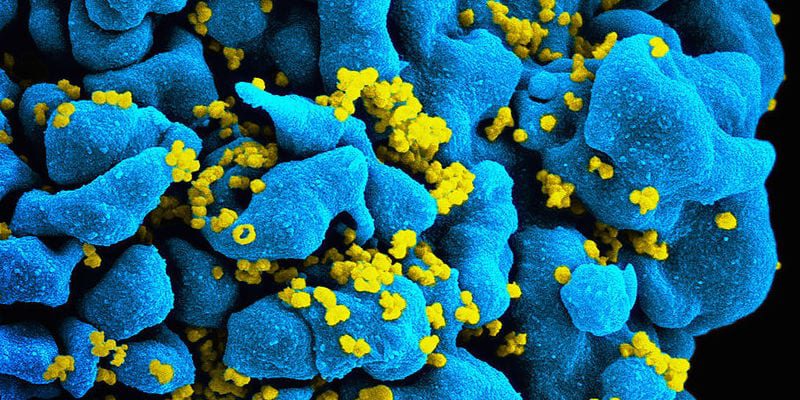
Image: PD

©2018 2 Minute Medicine, Inc. All rights reserved. No works may be reproduced without expressed written consent from 2 Minute Medicine, Inc. Inquire about licensing here. No article should be construed as medical advice and is not intended as such by the authors or by 2 Minute Medicine, Inc.

Previous Post

Meropenem-vaborbactam non-inferior to piperacillin-tazobactam for complicated urinary tract infections: The TANGO I trial

Next Post

Opioid-related pediatric ICU admissions on the rise over past decade

RelatedReports

Chronic Disease

Few interventions improve posthospitalization follow-up for alcohol use disorder

September 14, 2026
Cardiology

Borderline-low hemoglobin levels linked to increased mortality

September 14, 2026
2 Minute Medicine: Pharma Roundup: Price Hikes, Breakthrough Approvals, Legal Showdowns, Biotech Expansion, and Europe’s Pricing Debate [May 12nd, 2025]
Pharma Roundup

2MM: Pharma Roundup – mRNA flu vaccine debuts, RAS inhibition extends pancreatic cancer survival, and new therapies advance for dermatomyositis and Tourette syndrome

September 14, 2026
Weekly Rewinds

2 Minute Medicine Rewind September 14, 2026

September 14, 2026
Next Post
Implementation of pneumococcal vaccine programs linked to decreased antibiotic prescription

Opioid-related pediatric ICU admissions on the rise over past decade

Adjunctive glucocorticoid therapy does not lower mortality in septic shock

Treatment of subclinical hypothyroidism ineffective in older adults

No effect of crystalloid type on in-hospital death and length of stay in non-critically ill patients

EvidencePulse™ by 2 Minute Medicine 2026 evidence scan 3 reports You asked top stroke trials 2026 Synthesizing medical evidence... Top 2026 stroke trial results: OCEANIC — ischemic stroke: 6.2% vs 8.4% OPTION* — mRS 0–1: 43.6% vs 34.2% ORIENTAL* — mRS 0–2: 58.6% vs 46.6% *Higher sICH in intervention arms Participants randomizedN OCEANIC 12,327 OPTION 570 ORIENTAL 564 Ask about guidelines or landmark trials... ↑ Try EvidencePulse™ Ask the evidence.
Get the signal.
Try it now → Physician-trained medical AI by 2 Minute Medicine

2MM+ All Access

Full details →
$4.99 /month

5-day free trial · cancel anytime

  • ✓100+ physician-written reports
  • ✓EvidencePulse™ + HypeCheck™
  • ✓Ad-free reading + newsletters
Start 5-day free trial

Then $4.99/month. Manage renewal in your account.

2 Minute Medicine® is an award winning, physician-run, expert medical media company. Our content is curated, written and edited by practicing health professionals who have clinical and scientific expertise in their field of reporting. Our editorial management team is comprised of highly-trained MD physicians. Join numerous brands, companies, and hospitals who trust our licensed content.

Recent Reports

  • Few interventions improve posthospitalization follow-up for alcohol use disorder
  • Borderline-low hemoglobin levels linked to increased mortality
  • 2MM: Pharma Roundup – mRNA flu vaccine debuts, RAS inhibition extends pancreatic cancer survival, and new therapies advance for dermatomyositis and Tourette syndrome
License Content
Terms of Use | Disclaimer
Cookie Policy
Cleantalk Pixel
2MM+ All Access Full details →

The medical literature, distilled daily.

Monthly plan selected: $4.99 /month.

$4.99/month

5-day free trial · cancel anytime

Start 5-day free trial

Then $4.99/month. Manage renewal in your account.

Yearly plan selected: $49.90 /year.

$49.90/year

2 months free · only $4.16/month

Start 5-day free trial

Then $49.90/year. Manage renewal in your account.

Membership benefits

  • ✓100+ physician-written reports
  • ✓AI EvidencePulse™ + HypeCheck™
  • ✓Ad-free reading + newsletters

Already a member? Sign in

  • About
  • Specialties
    • All Specialties, All Recent Reports
    • Cardiology
    • Chronic Disease
    • Dermatology
    • Emergency
    • Endocrinology
    • Gastroenterology
    • Imaging and Intervention
    • Infectious Disease
    • Nephrology
    • Neurology
    • Obstetrics
    • Oncology
    • Ophthalmology
    • Pediatrics
    • Pharma
    • Preclinical
    • Psychiatry
    • Public Health
    • Pulmonology
    • Rheumatology
    • Surgery
  • Tools
    • EvidencePulse™
    • HypeCheck™
    • NPI Registry Lookup
    • RVU Search
  • Pharma
  • AI Roundup
  • The Scan
  • Classics™
    • 2MM+ Online Access
    • Paperback and Ebook
  • Rewinds
  • Partners
    • License Content
    • Submit Press Release
    • Advertise with Us
  • Account
    • Subscribe
    • My account
    • Cart
    • Sign-in
No Result
View All Result

© 2026 2 Minute Medicine, Inc. - Physician-written medical news.