• About
  • Masthead
  • License Content
  • Advertise
  • Press Releases
  • Newsroom
  • RSS/Email List
  • 2MM Podcast
  • Write for us
  • Contact Us
2 Minute Medicine
No Result
View All Result

No products in the cart.

Sign in
SUBSCRIBE
  • About
  • Specialties
    • All Specialties, All Recent Reports
    • Cardiology
    • Chronic Disease
    • Dermatology
    • Emergency
    • Endocrinology
    • Gastroenterology
    • Imaging and Intervention
    • Infectious Disease
    • Nephrology
    • Neurology
    • Obstetrics
    • Oncology
    • Ophthalmology
    • Pediatrics
    • Pharma
    • Preclinical
    • Psychiatry
    • Public Health
    • Pulmonology
    • Rheumatology
    • Surgery
    • Rewinds
    • The Scan
  • EvidencePulse™
  • HypeCheck™
  • AI News
  • Classics™
    • 2MM+ Online Access
    • Paperback and Ebook
  • Tools
    • NPI Registry Lookup
    • RVU Search
  • Partners
    • License Content
    • Advertise with Us
2 Minute Medicine
  • About
  • Specialties
    • All Specialties, All Recent Reports
    • Cardiology
    • Chronic Disease
    • Dermatology
    • Emergency
    • Endocrinology
    • Gastroenterology
    • Imaging and Intervention
    • Infectious Disease
    • Nephrology
    • Neurology
    • Obstetrics
    • Oncology
    • Ophthalmology
    • Pediatrics
    • Pharma
    • Preclinical
    • Psychiatry
    • Public Health
    • Pulmonology
    • Rheumatology
    • Surgery
    • Rewinds
    • The Scan
  • EvidencePulse™
  • HypeCheck™
  • AI News
  • Classics™
    • 2MM+ Online Access
    • Paperback and Ebook
  • Tools
    • NPI Registry Lookup
    • RVU Search
  • Partners
    • License Content
    • Advertise with Us
Sign in
SUBSCRIBE
2 Minute Medicine
Sign in
Subscribe
2 Minute MedicineFree on Google PlayGet
✦ EvidencePulse™ by 2 Minute Medicine 2026 evidence scan 3 reports You asked top stroke trials 2026 Synthesizing medical evidence... Top 2026 stroke trial results: OCEANIC — ischemic stroke: 6.2% vs 8.4% OPTION* — mRS 0–1: 43.6% vs 34.2% ORIENTAL* — mRS 0–2: 58.6% vs 46.6% *Higher sICH in intervention arms Participants randomizedN OCEANIC 12,327 OPTION 570 ORIENTAL 564 Ask about guidelines or landmark trials... ↑ Try EvidencePulse™ Ask the evidence.
Get the signal.
Try it now → Physician-trained medical AI by 2 Minute Medicine
Home All Specialties Oncology

Lenvatinib plus pembrolizumab increased survival for advanced endometrial cancer patients when compared to chemotherapy

byJohan PushaniandSze Wah Samuel Chan
March 27, 2022
in Oncology
Reading Time: 2 mins read
Recurrence of endometrial hyperplasia following medical therapy is common
Share on FacebookShare on TwitterShare on LinkedIn

1. The median progression-free survival and overall survival was longer with lenvatinib plus pembrolizumab than with chemotherapy.

2. Clinically important adverse events in the combination group included hypertension, thyroid dysfunction, colitis and diarrhea

Evidence Rating Level: 1 (Excellent)

Study Rundown: Advanced endometrial cancer after platinum treatment remains difficult to treat and fiver-year survival remains poor. This study explored lenvatinib (a vascular endothelial growth factor receptors tyrosine kinase inhibitor) plus pembrolizumab (programmed cell death 1 inhibitor) as a therapy regimen for patients with advanced endometrial cancer who had progressed on platinum-based chemotherapy regimen. These patients were randomly assigned to either lenvatinib plus pembrolizumab or chemotherapy of the treating physician’s choice (either doxorubicin or paclitaxel). The two primary endpoints were progression-free survival and overall survival. Efficacy was also compared based on mismatch repair status (mismatch repair-proficient (pMMR) vs. mismatch repair-deficient (dMMR). The median progression-free survival and overall survival were significantly longer with lenvatinib plus pembrolizumab than with chemotherapy. Superiority was preserved across pMMR and dMMR subgroups. Adverse events of grade 3 or higher occurred similarly between both groups but with different side effect profiles. In the combination group, hypertension, urinary tract infections and diarrhea were commonly observed. At 12 weeks, the quality-of-life scores were not substantially different. Limitations to this study included variability in each physician’s choice of chemotherapy and a short follow-up period. The strength of this study was that it had limited bias and showed a strong signal of improved survival in the combination group. Overall, the study demonstrated that lenvatinib plus pembrolizumab when compared to later lines of chemotherapy is a viable treatment option.

Click to read the study in NEJM

Relevant Reading: Treatment for advanced and recurrent endometrial carcinoma: combined modalities

RELATED REPORTS

Enfortumab vedotin plus pembrolizumab associated with improved survival in bladder cancer

Enfortumab vedotin plus pembrolizumab is more effective than platinum-based chemotherapy in metastatic urothelial carcinoma

In-Depth [randomized control trial]: This phase III international randomized control trial included 827 patients with advanced endometrial cancer who previously progressed on platinum-based chemotherapy regimen; 697 patients had pMMR disease and 130 had dMMR disease. These patients were randomly assigned in a 1:1 ratio to receive lenvatinib plus pembrolizumab or chemotherapy of the treating physician’s choice (either doxorubicin or paclitaxel). The median progression-free survival for patients receiving lenvatinib plus pembrolizumab was 7.2 months and was 3.8 months for the chemotherapy group (hazard ratio [HR], 0.56; 95% confidence interval [CI], 0.47 to 0.66; P<0.001). The median overall survival for patients receiving lenvatinib plus pembrolizumab was 18.3 months and was 11.4 months for the chemotherapy group (HR 0.62; 95% CI, 0.51 to 0.75; P<0.001). Superiority was maintained across pMMR and dMMR subgroups. Adverse events of grade 3 or higher occurred in 88.9% of patients in the lenvatinib plus pembrolizumab treatment group and 72.7% in the chemotherapy treatment group. Common adverse events in the combination group include hypertension, urinary tract infections and diarrhea. Immune-related adverse events most commonly included thyroid dysfunction, colitis and dermatological reactions. Overall, lenvatinib plus pembrolizumab led to significantly longer progression-free survival and overall survival for patients with advanced endometrial cancer compared to chemotherapy.

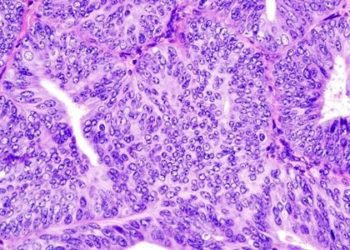
Image: PD

©2022 2 Minute Medicine, Inc. All rights reserved. No works may be reproduced without expressed written consent from 2 Minute Medicine, Inc. Inquire about licensing here. No article should be construed as medical advice and is not intended as such by the authors or by 2 Minute Medicine, Inc.

Tags: endometrial cancerlenvatinibPembrolizumab
Previous Post

BRCA1/2 pathogenic variants are associated with an increased risk of male breast, pancreatic, and stomach cancer.

Next Post

Tricuspid repair in patients with mitral regurgitation offers clinical benefits

RelatedReports

Niraparib may lengthen progression-free survival for patients with recurrent ovarian cancer
Oncology

Enfortumab vedotin plus pembrolizumab associated with improved survival in bladder cancer

August 27, 2026
Chronic Disease

Enfortumab vedotin plus pembrolizumab is more effective than platinum-based chemotherapy in metastatic urothelial carcinoma

July 9, 2026
Survivors of adult-onset cancers associated with increased incidence of cardiovascular disease
Oncology

Neoadjuvant therapy regimen improves outcomes in high-risk intrahepatic cholangiocarcinoma

March 18, 2026
American-born Asian women more likely to have endometrial cancer
Endocrinology

Glucagon-like peptide-1 receptor agonists may reduce endometrial cancer risk in endometrial hyperplasia

February 16, 2026
Next Post
Quick Take: Left ventricular mechanical dispersion predicts arrhythmic risk in mitral valve prolapse

Tricuspid repair in patients with mitral regurgitation offers clinical benefits

Parents with poor sleep quality report sleep problems in kids

Australian RSV epidemic seasonality – but not severity – altered by COVID-19

Low evidence for glycerin use in preterm infants

Extreme prematurity associated with increased prevalence of visual and ocular deficits in young adults

✦ EvidencePulse™ by 2 Minute Medicine 2026 evidence scan 3 reports You asked top stroke trials 2026 Synthesizing medical evidence... Top 2026 stroke trial results: OCEANIC — ischemic stroke: 6.2% vs 8.4% OPTION* — mRS 0–1: 43.6% vs 34.2% ORIENTAL* — mRS 0–2: 58.6% vs 46.6% *Higher sICH in intervention arms Participants randomizedN OCEANIC 12,327 OPTION 570 ORIENTAL 564 Ask about guidelines or landmark trials... Try EvidencePulse™ Get the signal. Try it now → Physician-trained medical AI by 2 Minute Medicine

2MM+ All Access

Full details →
$4.99 /month

3-day free trial · cancel anytime

  • ✓100+ physician-written reports
  • ✓EvidencePulse™ + HypeCheck™
  • ✓Ad-free reading + newsletters
Start 3-day free trial

Then $4.99/month. Manage renewal in your account.

NPI Lookup · Free

Look up any US clinician

Search by name or NPI number, live from the CMS NPI Registry.

  • OIG exclusion check
  • Licenses and specialties
  • No account needed
Open NPI Lookup →

2 Minute Medicine® is an award winning, physician-run, expert medical media company. Our content is curated, written and edited by practicing health professionals who have clinical and scientific expertise in their field of reporting. Our editorial management team is comprised of highly-trained MD physicians. Join numerous brands, companies, and hospitals who trust our licensed content.

Recent Reports

  • Optogenetic therapy may partially restore vision in retinitis pigmentosa
  • An artificial intelligence system for human papillomavirus-positive dual stain cervical cancer screening reads p16-Ki67 slides
  • Elevated low-density lipoprotein cholesterol is a risk factor for atherosclerotic disease irrespective of familial hypercholesterolemia status
License Content
Terms of Use | Disclaimer
Cookie Policy

Get the app

Read 2 Minute Medicine on iPhone, iPad and Android.

Download on the App StoreGet it on Google Play
QR code for www.2minutemedicine.com/app
On a computer? Scan this with your phone’s camera.
2MM+ All Access Full details →

The medical literature, distilled daily.

Monthly plan selected: $4.99 /month.

$4.99/month

3-day free trial · cancel anytime

Start 3-day free trial

Then $4.99/month. Manage renewal in your account.

Yearly plan selected: $49.90 /year.

$49.90/year

2 months free

Start 3-day free trial

Then $49.90/year.

Membership benefits

  • ✓100+ physician-written reports
  • ✓AI EvidencePulse™ + HypeCheck™
  • ✓Ad-free reading + newsletters
  • ✓NPI watchlist + bulk NPI verification

Already a member? Sign in

  • About
  • Specialties
    • All Specialties, All Recent Reports
    • Cardiology
    • Chronic Disease
    • Dermatology
    • Emergency
    • Endocrinology
    • Gastroenterology
    • Imaging and Intervention
    • Infectious Disease
    • Nephrology
    • Neurology
    • Obstetrics
    • Oncology
    • Ophthalmology
    • Pediatrics
    • Pharma
    • Preclinical
    • Psychiatry
    • Public Health
    • Pulmonology
    • Rheumatology
    • Surgery
    • Rewinds
    • The Scan
  • EvidencePulse™
  • HypeCheck™
  • AI News
  • Classics™
    • 2MM+ Online Access
    • Paperback and Ebook
  • Tools
    • NPI Registry Lookup
    • RVU Search
  • Partners
    • License Content
    • Advertise with Us
No Result
View All Result

© 2026 2 Minute Medicine, Inc. - Physician-written medical news.