• About
  • Masthead
  • License Content
  • Advertise
  • Press Releases
  • Newsroom
  • RSS/Email List
  • 2MM Podcast
  • Write for us
  • Contact Us
2 Minute Medicine
No Result
View All Result

No products in the cart.

Sign in
SUBSCRIBE
  • About
  • Specialties
    • All Specialties, All Recent Reports
    • Cardiology
    • Chronic Disease
    • Dermatology
    • Emergency
    • Endocrinology
    • Gastroenterology
    • Imaging and Intervention
    • Infectious Disease
    • Nephrology
    • Neurology
    • Obstetrics
    • Oncology
    • Ophthalmology
    • Pediatrics
    • Pharma
    • Preclinical
    • Psychiatry
    • Public Health
    • Pulmonology
    • Rheumatology
    • Surgery
    • Rewinds
    • The Scan
  • EvidencePulse™
  • HypeCheck™
  • AI News
  • Classics™
    • 2MM+ Online Access
    • Paperback and Ebook
  • Tools
    • NPI Registry Lookup
    • RVU Search
  • Partners
    • License Content
    • Advertise with Us
2 Minute Medicine
  • About
  • Specialties
    • All Specialties, All Recent Reports
    • Cardiology
    • Chronic Disease
    • Dermatology
    • Emergency
    • Endocrinology
    • Gastroenterology
    • Imaging and Intervention
    • Infectious Disease
    • Nephrology
    • Neurology
    • Obstetrics
    • Oncology
    • Ophthalmology
    • Pediatrics
    • Pharma
    • Preclinical
    • Psychiatry
    • Public Health
    • Pulmonology
    • Rheumatology
    • Surgery
    • Rewinds
    • The Scan
  • EvidencePulse™
  • HypeCheck™
  • AI News
  • Classics™
    • 2MM+ Online Access
    • Paperback and Ebook
  • Tools
    • NPI Registry Lookup
    • RVU Search
  • Partners
    • License Content
    • Advertise with Us
Sign in
SUBSCRIBE
2 Minute Medicine
Sign in
Subscribe
2 Minute MedicineFree on Google PlayGet
✦ EvidencePulse™ by 2 Minute Medicine 2026 evidence scan 3 reports You asked top stroke trials 2026 Synthesizing medical evidence... Top 2026 stroke trial results: OCEANIC — ischemic stroke: 6.2% vs 8.4% OPTION* — mRS 0–1: 43.6% vs 34.2% ORIENTAL* — mRS 0–2: 58.6% vs 46.6% *Higher sICH in intervention arms Participants randomizedN OCEANIC 12,327 OPTION 570 ORIENTAL 564 Ask about guidelines or landmark trials... ↑ Try EvidencePulse™ Ask the evidence.
Get the signal.
Try it now → Physician-trained medical AI by 2 Minute Medicine
Home All Specialties Chronic Disease

Metformin does not improve the progression-free survival of stage IIIA or IIIB locally advanced non-small cell lung cancer patients compared to chemoradiation alone
byMeagan WiedermanandMichael Pratte
August 7, 2021
in Chronic Disease, Oncology, Pulmonology
Reading Time: 3 mins read
Lessons from real-world implementation of lung cancer screening
Share on FacebookShare on TwitterShare on LinkedIn

1. Metformin, in addition to standard chemoradiation therapy, did not improve the progression-free survival, overall survival, local-regional recurrence, or distant metastasis occurrence compared to the control group of stage IIIA or IIIB locally advanced non-small cell lung cancer patients.

2. Serious adverse events were equally as common in the metformin and control groups, however, only 63.4% of participants could tolerate the metformin protocol.

Evidence Rating Level: 1 (Excellent)

Study Rundown: Locally advanced (LA) non-small cell lung cancer (NSCLC) has a poor prognosis due to a lack of treatments. Some evidence exists that metformin has antineoplastic effects, including in NSCLC. The primary outcome of this study was progression-free survival (PFS), defined using the Response Evaluation Criteria in Solid Tumors (RECIST) criteria of LA-NSCLC patients treated with metformin. Additionally, the overall survival (OS), local-regional recurrence (LRR), distant metastasis (DM), and toxicity, defined using the Common Terminology Criteria for Adverse Events, were secondary outcomes. Stage IIIA or IIIB, LA-NSCLC patients were randomized to standard chemoradiation therapy (n = 81) or chemoradiation with metformin (n = 86), stratified performance by participant performance status, their histology, and stage. Most participants received their radiation and chemotherapy, but only 63.4% of the metformin group patients adhered fully to the metformin protocol. The one-year PFS and OS did not differ between the metformin and control group. While there were fewer deaths due to cancer in the metformin group, there were more unexplained or other-disease deaths. LRR and DM at 2 years did not differ in the metformin group compared to in the control group. Serious adverse events were equally as common in the metformin group as in the control group. Only 39% of participants were able to maintain the metformin dose as prescribed without adjustments, limiting this study’s power. The low adherence to the chemoradiation limits the generalizability of this study. Another limitation is that the trial wasn’t blinded since the control group did not receive a placebo.

Click to read the study in JAMA Oncology

Click to read an accompanying editorial in JAMA Oncology

RELATED REPORTS

Sacituzumab tirumotecan improved overall survival versus platinum chemotherapy in final phase 3 results

Daraxonrasib showed antitumor activity in previously treated RAS-mutant non–small-cell lung cancer

Relevant Reading: Metformin for non-small cell lung cancer patients: Opportunities and pitfalls

In-Depth [randomized controlled trial]: This study, NRG-LU001, was a phase 2 study comparing metformin in addition to standard therapy to standard therapy alone at treating unresectable, stage IIIA or IIIB, LA-NSCLC. Patients who did not have cancer in the past 3 years, or a history of diabetes, who could perform at least light work (“performance status”, where light = 0 and heavy = 1) were enrolled. All patients received 60 Gy of radiation, weekly carboplatin and paclitaxel chemotherapy for 28 – 42 days, and then consolidative carboplatin and paclitaxel chemotherapy every 3 weeks for 2 cycles. Half of the patients were randomized to also receive 2000 mg metformin daily. The randomization was stratified by performance status, histology (SCC vs non-SCC), and stage (IIIA vs IIIB). Recurrence was monitored using regularly scheduled contrast-enhancement computed tomography (CT) or magnetic resonance imaging (MRI). At those same scheduled time points, the patient’s performance status and toxic response were measured. 170 patients from 79 institutions in the US, Canada, and Israel were recruited, who had demographics that were representative of NSCLC for age (64 years), sex (58.1% male), and ethnicity (82.0% White). While 3 were found to be ineligible after randomization, the metformin group (n = 86) and control group (n = 81) remained balanced for age, sex, and ethnicity, and all stratified variables. 86.0% of the metformin group and 92.6% of the control group received radiation. Many patients received their radiation and chemotherapy per protocol, with the bulk who did not receive therapy per protocol instead receiving appropriate minor deviations. 63.4% of the metformin group patients took the metformin throughout the trial. Patients were followed for an average of 27.7 months. PFS at one-year was not different between the metformin group (51.3%, 95% CI = 39.8%-61.7%) and the control group (60.4%, 95% CI = 48.5%-70.4%) (HR = 1.15, 95% CI = 0.77-1.73; P = 0.24). Shorter PFS was associated with higher stage (HR = 1.79; 95%CI = 1.19-2.69; P = 0.005), but not metformin treatment (HR = 1.20; 95% CI = 0.81-1.78; P = 0.36), histology (HR = 1.24; 95% CI = 0.83-1.85; P = 0.30), or performance status (HR = 0.70; 95% CI = 0.47-1.05; P = 0.09). A sensitivity analysis supported these results (HR = 1.09; 95%CI = 0.69-1.73; P = 0.36). OS, similarly, did not differ between the metformin (80.8%, 95% CI = 70.2%-87.9%) and control group (80.2%, 95% CI = 69.3%-87.6%) (HR = 1.03; 95% CI = 0.64-1.68; P = 0.89). Fewer deaths were due to disease in the metformin group (70.6%) compared to the control group (90.9%). At 2 years follow-up, there was no differences between the groups for LRR (HR = 0.91; 95% CI = 0.51-1.62; P = 0.75) or DM (HR = 1.29; 95% CI = 0.71-2.34; P = 0.41). Grade 3 adverse events also were not more frequent in the metformin group (65.8%) compared to the control group (68.0%). 1 metformin group patient and 4 control group patients experienced a grade 5 adverse event. Pneumonitis was uncommon in both the metformin (1.3%) and control (2.7%) group.

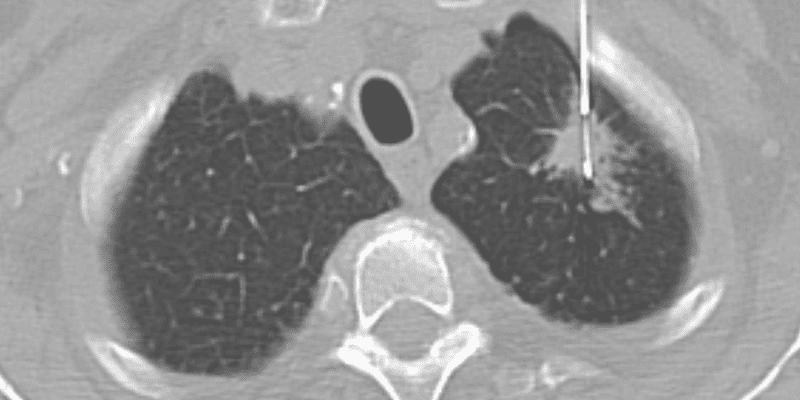
Image: PD

©2021 2 Minute Medicine, Inc. All rights reserved. No works may be reproduced without expressed written consent from 2 Minute Medicine, Inc. Inquire about licensing here. No article should be construed as medical advice and is not intended as such by the authors or by 2 Minute Medicine, Inc.

Tags: metforminnon-small cell lung cancer (NSCLC)nsclc
Previous Post

Dose-tapering might be associated with increased risk of overdose and mental health crisis in patients prescribed long-term opioids

Next Post

2 Minute Medicine Rewind August 9, 2021

RelatedReports

Illustration showing the lungs with a tumor, a vial representing medication, and surgical tools, indicating lung cancer treatment involving toripalimab.
2MM Trial Briefs

Sacituzumab tirumotecan improved overall survival versus platinum chemotherapy in final phase 3 results

October 26, 2026
Dacomitinib may be effective in EGFR-associated lung cancer
Oncology

Daraxonrasib showed antitumor activity in previously treated RAS-mutant non–small-cell lung cancer

September 4, 2026
Nivolumab may be effective in platinum-resistant ovarian cancer
Surgery

Perioperative toripalimab improves event-free survival in non-small cell lung cancer

August 9, 2026
Chronic Disease

Intermittent metformin (Glucophage) is non-inferior to continuous metformin for prediabetes in post-partum women with prior gestational diabetes mellitus

July 21, 2026
Next Post

2 Minute Medicine Rewind August 9, 2021

Provision of medically-tailored meals linked with lower admissions and medical spending

Plant‐centered diet and risk of incident cardiovascular disease during young to middle adulthood

Parents with poor sleep quality report sleep problems in kids

Napping associated with improved performance in memory tasks  

✦ EvidencePulse™ by 2 Minute Medicine 2026 evidence scan 3 reports You asked top stroke trials 2026 Synthesizing medical evidence... Top 2026 stroke trial results: OCEANIC — ischemic stroke: 6.2% vs 8.4% OPTION* — mRS 0–1: 43.6% vs 34.2% ORIENTAL* — mRS 0–2: 58.6% vs 46.6% *Higher sICH in intervention arms Participants randomizedN OCEANIC 12,327 OPTION 570 ORIENTAL 564 Ask about guidelines or landmark trials... Try EvidencePulse™ Get the signal. Try it now → Physician-trained medical AI by 2 Minute Medicine

2MM+ All Access

Full details →
$4.99 /month

3-day free trial · cancel anytime

  • ✓100+ physician-written reports
  • ✓EvidencePulse™ + HypeCheck™
  • ✓Ad-free reading + newsletters
Start 3-day free trial

Then $4.99/month. Manage renewal in your account.

NPI Lookup · Free

Look up any US clinician

Search by name or NPI number, live from the CMS NPI Registry.

  • OIG exclusion check
  • Licenses and specialties
  • No account needed
Open NPI Lookup →

2 Minute Medicine® is an award winning, physician-run, expert medical media company. Our content is curated, written and edited by practicing health professionals who have clinical and scientific expertise in their field of reporting. Our editorial management team is comprised of highly-trained MD physicians. Join numerous brands, companies, and hospitals who trust our licensed content.

Recent Reports

  • Zanidatamab-hrii combinations improved survival in first-line HER2-positive advanced gastroesophageal adenocarcinoma
  • Upacicalcet reduced parathyroid hormone in hemodialysis patients with secondary hyperparathyroidism in PATH-1 and PATH-2
  • WGS Oncodetect showed higher recurrence sensitivity than WES Oncodetect in colorectal cancer
License Content
Terms of Use | Disclaimer
Cookie Policy

Get the app

Read 2 Minute Medicine on iPhone, iPad and Android.

Download on the App StoreGet it on Google Play
QR code for www.2minutemedicine.com/app
On a computer? Scan this with your phone’s camera.
2MM+ All Access Full details →

The medical literature, distilled daily.

Monthly plan selected: $4.99 /month.

$4.99/month

3-day free trial · cancel anytime

Start 3-day free trial

Then $4.99/month. Manage renewal in your account.

Yearly plan selected: $49.90 /year.

$49.90/year

2 months free

Start 3-day free trial

Then $49.90/year.

Membership benefits

  • ✓100+ physician-written reports
  • ✓AI EvidencePulse™ + HypeCheck™
  • ✓Ad-free reading + newsletters
  • ✓NPI watchlist + bulk NPI verification

Already a member? Sign in

  • Get the app
  • About
  • Specialties
    • All Specialties, All Recent Reports
    • Cardiology
    • Chronic Disease
    • Dermatology
    • Emergency
    • Endocrinology
    • Gastroenterology
    • Imaging and Intervention
    • Infectious Disease
    • Nephrology
    • Neurology
    • Obstetrics
    • Oncology
    • Ophthalmology
    • Pediatrics
    • Pharma
    • Preclinical
    • Psychiatry
    • Public Health
    • Pulmonology
    • Rheumatology
    • Surgery
    • Rewinds
    • The Scan
  • EvidencePulse™
  • HypeCheck™
  • AI News
  • Classics™
    • 2MM+ Online Access
    • Paperback and Ebook
  • Tools
    • NPI Registry Lookup
    • RVU Search
  • Partners
    • License Content
    • Advertise with Us
No Result
View All Result

© 2026 2 Minute Medicine, Inc. - Physician-written medical news.