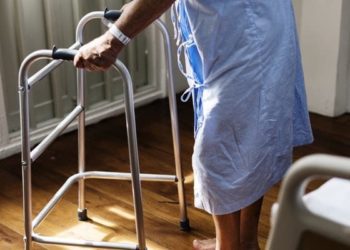






Neighbourhood socioeconomic status may be associated with days spent at home following hip fracture in older adults
1. Among older adults with a fall-related hip fracture, residence in an economically deprived area was associated with fewer days spent at home within the 12 months following the fracture.
Evidence Rating Level: 2 (Good)
Among adults over the age of 65, the vast majority of hip fractures are due to a fall. Such injuries are associated with significant healthcare costs and a reduction in long-term function in many patients. While several social factors associated with aging following such a fracture have been investigated, there is a lack of research examining neighbourhood socioeconomic status and its association with this injury. This study therefore sought to investigate the association between neighbourhood socioeconomic status and days spent at home following hip fracture. Data from adults aged 65 and older who underwent surgery for a fall-related hip fracture were obtained using standard Centers for Medicare & Medicaid Services (CMS) research identifiable files. Neighborhood deprivation was defined using the Area Deprivation Index (ADI), which incorporates items related to poverty, education and housing. 52,012 older adults (mean[SD] age, 82.2[8.1] years; 73.8% women) were included for analysis. Individuals living in the highest neighborhood deprivation group had fewer days at home in the 12-month recovery period following fracture (mean[SD] days at home, 246.1[127.5] days) compared with patients in the middle deprivation group (mean[SD] days at home, 257.4[120.4] days) and lowest deprivation group (mean[SD] days at home, 272.2[109.3] days). Overall, this study found that among older adults with a fall-related hip fracture, residence in higher neighborhood deprivation groups was associated with fewer days spent at home during the 12-month recovery period following the fracture.
Click here to read this study in JAMA Network Open
Image: PD
©2026 2 Minute Medicine, Inc. All rights reserved. No works may be reproduced without expressed written consent from 2 Minute Medicine, Inc. Inquire about licensing here. No article should be construed as medical advice and is not intended as such by the authors or by 2 Minute Medicine, Inc.
RelatedReports