• About
  • Masthead
  • License Content
  • Advertise
  • Submit Press Release
  • RSS/Email List
  • 2MM Podcast
  • Write for us
  • Contact Us
2 Minute Medicine
No Result
View All Result

No products in the cart.

SUBSCRIBE
  • Specialties
    • All Specialties, All Recent Reports
    • Cardiology
    • Chronic Disease
    • Dermatology
    • Emergency
    • Endocrinology
    • Gastroenterology
    • Imaging and Intervention
    • Infectious Disease
    • Nephrology
    • Neurology
    • Obstetrics
    • Oncology
    • Ophthalmology
    • Pediatrics
    • Pharma
    • Preclinical
    • Psychiatry
    • Public Health
    • Pulmonology
    • Rheumatology
    • Surgery
  • AI EvidencePulse™
  • Pharma
  • AI News
  • The Scan+
  • Classics™+
    • 2MM+ Online Access
    • Paperback and Ebook
  • Rewinds
  • Podcasts
  • Partners
    • License Content
    • Submit Press Release
    • Advertise with Us
  • Account
    • Subscribe
    • Sign-in
    • My account
2 Minute Medicine
  • Specialties
    • All Specialties, All Recent Reports
    • Cardiology
    • Chronic Disease
    • Dermatology
    • Emergency
    • Endocrinology
    • Gastroenterology
    • Imaging and Intervention
    • Infectious Disease
    • Nephrology
    • Neurology
    • Obstetrics
    • Oncology
    • Ophthalmology
    • Pediatrics
    • Pharma
    • Preclinical
    • Psychiatry
    • Public Health
    • Pulmonology
    • Rheumatology
    • Surgery
  • AI EvidencePulse™
  • Pharma
  • AI News
  • The Scan+
  • Classics™+
    • 2MM+ Online Access
    • Paperback and Ebook
  • Rewinds
  • Podcasts
  • Partners
    • License Content
    • Submit Press Release
    • Advertise with Us
  • Account
    • Subscribe
    • Sign-in
    • My account
SUBSCRIBE
2 Minute Medicine
Subscribe
Home All Specialties Cardiology

Novel mTOR inhibitor may prolong heart transplant survival in mice

bySarah StapletonandChaz Carrier
August 7, 2014
in Cardiology, Chronic Disease, Surgery
Reading Time: 3 mins read
0
Share on FacebookShare on Twitter

1. Chemotherapy agent AZD80559, a competitive mTOR inhibitor, suppressed T cell proliferation in vitro more effectively than Rapamycin. 

2. Like Rapamycin, AZD80559 increased cardiac allograft survival when compared with graft survival in mice having received no immunosuppressive therapy. 

Evidence Rating Level: 2 (Good) 

Study Rundown: Transplant rejection is mediated by a strong host immune response against the graft and immunosuppressive therapies have been shown to decrease acute rejection events. One such agent is Rapamycin (Rapa), which blocks T- and B-cell activation by inhibiting the pathway of the immune regulator mTOR through binding of the mTOR complex I. Recent studies have shown that Rapa inhibition of mTOR is somewhat incomplete, as mTOR complex 2, which is not blocked by Rapa, may also play a role in immune cell activation. Alternatively, ATP-competitive mTOR inhibitors block both mTOR complexes and thus may suppress Rapa-resistant immune responses against transplants.

This study investigated  the role of AZ, an ATP-competitive mTOR inhibitor, in suppressing T cell proliferation in vitro and in improving murine cardiac allograft survival in vivo. The authors found that AZ treatment was more effective than Rapa at preventing CD4+ and CD8+ T cell proliferation when compared at concentrations greater than 200nM. In the cardiac allograft mouse model, a 10-day course of AZ promoted long-term (> 80 days) graft survival in 20% of recipients. This result was not significantly different when compared to Rapa results (50% long-term survival), but was significantly better than those for mice having received no immunosuppressive therapy (0% long-term survival). Both AZ and Rapa therapy led to increased populations of regulatory T cells (T-Regs) and decreased T cell cytokine production.  This study highlights a potential future role for ATP-competitive mTOR inhibitor in increasing graft survival either through combination therapies or improved pharmacokinetics. Phase I trails AZ and AZD2014 (improved pharmacokinetics) to investigate inhibition of cancer progression are currently underway and may provide further insight into ATP-competitive mTOR inhibitors mechanisms of action.

Click to read the study in the American Journal of Transplantation

RELATED REPORTS

Influenza vaccination improves survival and reduces readmissions in patients hospitalized for acute heart failure

Steroidal mineralocorticoid receptor antagonists show little mortality benefit in patients receiving dialysis

Corstasis’ Enbumyst nasal spray approved for edema

Relevant Reading: An ATP-competitive mammalian target of rapamycin inhibitor reveals rapamycin-resistant functions of mTORC1

In-Depth [animal study]: This study examined the effects of Rapa or AZ treatment on T cell proliferation in vitro and cardiac allograft survival in 8- to 12-week old C57BL/6 or BALB/c male mice. BALB/c to B6 heterotypic heart transplants were performed before a 10-day treatment of either Rapa (2mg/kg loading dose followed by 1 mg/kg delivered once daily intraperitoneally) or AZ (10 mg/kg delivered twice daily intraperitoneally). Plasma levels of AZ and whole blood levels of Rapa were collected. Graft rejection was determined by full cessation of cardiac contraction and confirmed with histology. Evaluation of immune cells and graft histology were performed for mice sacrificed at days 10-11, 20 or 80.

CD8+ and CD4+ T cell proliferation in vitro was evaluated under treatments of AZ or Rapa at concentrations ranging 1.95 to 1000 nM. At concentrations greater than 200nM, AZ was significantly more effective at suppressing T cell proliferation when compared to Rapa (n = 3-4 experiments, p < 0.05). In subsequent the in vivo studies, mouse plasma levels of AZ were measured at ≥ 200 nM. Both AZ and Rapa significantly increased allograft survival when compared to no immunosuppressive therapy (p < 0.001). Median graft survival time was 28 days following AZ therapy and 68 days following Rapa therapy, though this difference was not significant (p=0.26). Without immunosuppressive therapy no long-term (>80 days) graft survival was achieved, whereas 80% of Rapa recipients and 20% of AZ recipients achieved long-term survival.

More from this author: The 3C Study: Alemtuzumab may reduce acute rejection following kidney transplant, Paclitaxel-coated balloons may decrease bronchial stenosis in lung transplants,Chemokines in cardiac allografts promote graft rejection in mice, Modulating lymphocyte populations decreases graft rejection in mice,Adding Evolocumab to statin therapy further decreases LDL-C levels

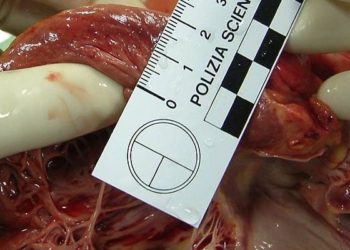
Image: PD

©2012-2014 2minutemedicine.com. All rights reserved. No works may be reproduced without expressed written consent from 2minutemedicine.com. Disclaimer: We present factual information directly from peer reviewed medical journals. No post should be construed as medical advice and is not intended as such by the authors, editors, staff or by 2minutemedicine.com. PLEASE SEE A HEALTHCARE PROVIDER IN YOUR AREA IF YOU SEEK MEDICAL ADVICE OF ANY SORT.

Tags: heart failureSirolimus (rapamycin)transplant
Previous Post

Corticosteroids and physical therapy equally effective for shoulder impingement syndrome

Next Post

Smoking bans in prisons associated with reduced prisoner mortality

RelatedReports

Medical vaccine exemptions increase after elimination of nonmedical exemptions
Cardiology

Influenza vaccination improves survival and reduces readmissions in patients hospitalized for acute heart failure

October 29, 2025
Nearly Half of All Pediatric Buprenorphine Exposures Result in Hospitalization
Cardiology

Steroidal mineralocorticoid receptor antagonists show little mortality benefit in patients receiving dialysis

September 18, 2025
Variation noted across pre- and post-marketing studies for FDA approved devices
Pharma

Corstasis’ Enbumyst nasal spray approved for edema

September 18, 2025
Fish oil and aspirin did not reduce arteriovenous fistula failure: The FAVOURED trail
Cardiology

Spironolactone does not reduce cardiovascular events in patients receiving maintenance dialysis

September 17, 2025
Next Post
Adolescent smoking heavily influenced by parents and siblings

Smoking bans in prisons associated with reduced prisoner mortality

Androgen deprivation in prostate cancer: intermittent may compromise survival

Prostate cancer screening shows reduction in mortality after 13 year follow-up [ERSPC trial]

Patient transfers to trauma centers often unnecessary

Centralized stroke care linked to improved mortality and reduced length of stay

2 Minute Medicine® is an award winning, physician-run, expert medical media company. Our content is curated, written and edited by practicing health professionals who have clinical and scientific expertise in their field of reporting. Our editorial management team is comprised of highly-trained MD physicians. Join numerous brands, companies, and hospitals who trust our licensed content.

Recent Reports

  • 2 Minute Medicine Rewind December 15, 2025
  • Vitamin D Levels During Pregnancy and Dental Caries in Offspring
  • Arthroscopic subacromial decompression versus placebo surgery for subacromial pain syndrome: 10 year follow-up of the FIMPACT randomised, placebo surgery controlled trial 
License Content
Terms of Use | Disclaimer
Cookie Policy
Privacy Statement (EU)
Disclaimer

© 2025 2 Minute Medicine, Inc. - Physician-written medical news.

  • Specialties
    • All Specialties, All Recent Reports
    • Cardiology
    • Chronic Disease
    • Dermatology
    • Emergency
    • Endocrinology
    • Gastroenterology
    • Imaging and Intervention
    • Infectious Disease
    • Nephrology
    • Neurology
    • Obstetrics
    • Oncology
    • Ophthalmology
    • Pediatrics
    • Pharma
    • Preclinical
    • Psychiatry
    • Public Health
    • Pulmonology
    • Rheumatology
    • Surgery
  • AI EvidencePulse™
  • Pharma
  • AI News
  • The Scan
  • Classics™
    • 2MM+ Online Access
    • Paperback and Ebook
  • Rewinds
  • Podcasts
  • Partners
    • License Content
    • Submit Press Release
    • Advertise with Us
  • Account
    • Subscribe
    • Sign-in
    • My account
No Result
View All Result

© 2025 2 Minute Medicine, Inc. - Physician-written medical news.