
• About
  • Masthead
  • License Content
  • Advertise
  • Press Releases
  • Newsroom
  • RSS/Email List
  • 2MM Podcast
  • Write for us
  • Contact Us
2 Minute Medicine
No Result
View All Result

No products in the cart.

Sign in
SUBSCRIBE
  • About
  • Specialties
    • All Specialties, All Recent Reports
    • Cardiology
    • Chronic Disease
    • Dermatology
    • Emergency
    • Endocrinology
    • Gastroenterology
    • Imaging and Intervention
    • Infectious Disease
    • Nephrology
    • Neurology
    • Obstetrics
    • Oncology
    • Ophthalmology
    • Pediatrics
    • Pharma
    • Preclinical
    • Psychiatry
    • Public Health
    • Pulmonology
    • Rheumatology
    • Surgery
    • Rewinds
    • The Scan
  • EvidencePulse™
  • HypeCheck™
  • AI News
  • Classics™
    • 2MM+ Online Access
    • Paperback and Ebook
  • Tools
    • NPI Registry Lookup
    • RVU Search
    • Physician Pay by Specialty
    • ICD-10 Code Lookup
    • FDA Drug Approvals
    • Drug Safety for Breastfeeding/Pregnancy
    • Clinical Guidelines
    • Medical Calculators
    • ECG Reference
      • QTc Calculator
      • Sgarbossa Criteria
      • ECG Axis Calculator
      • AV Block Helper
  • Rankings
    • Medical School Rankings
    • Residency Rankings
  • Partners
    • License Content
    • Advertise with Us
2 Minute Medicine
  • About
  • Specialties
    • All Specialties, All Recent Reports
    • Cardiology
    • Chronic Disease
    • Dermatology
    • Emergency
    • Endocrinology
    • Gastroenterology
    • Imaging and Intervention
    • Infectious Disease
    • Nephrology
    • Neurology
    • Obstetrics
    • Oncology
    • Ophthalmology
    • Pediatrics
    • Pharma
    • Preclinical
    • Psychiatry
    • Public Health
    • Pulmonology
    • Rheumatology
    • Surgery
    • Rewinds
    • The Scan
  • EvidencePulse™
  • HypeCheck™
  • AI News
  • Classics™
    • 2MM+ Online Access
    • Paperback and Ebook
  • Tools
    • NPI Registry Lookup
    • RVU Search
    • Physician Pay by Specialty
    • ICD-10 Code Lookup
    • FDA Drug Approvals
    • Drug Safety for Breastfeeding/Pregnancy
    • Clinical Guidelines
    • Medical Calculators
    • ECG Reference
      • QTc Calculator
      • Sgarbossa Criteria
      • ECG Axis Calculator
      • AV Block Helper
  • Rankings
    • Medical School Rankings
    • Residency Rankings
  • Partners
    • License Content
    • Advertise with Us
Sign in
SUBSCRIBE
2 Minute Medicine
Sign in
Subscribe
2 Minute MedicineFree on Google PlayGet
✦EvidencePulse™by 2 Minute Medicine3 reportsYou askedtop stroke trials 2026Synthesizing medical evidence...Top 2026 stroke trial results:OCEANIC — ischemic stroke: 6.2% vs 8.4%OPTION* — mRS 0–1: 43.6% vs 34.2%ORIENTAL* — mRS 0–2: 58.6% vs 46.6%*Higher sICH in intervention armsParticipants randomizedNOCEANIC12,327OPTION570ORIENTAL564Ask about guidelines or landmark trials...↑Try EvidencePulse™Ask the evidence. Get the signal.Try it now →
Home Health A to Z

Patient Basics: Antiphospholipid Antibody Syndrome (APS)

by2 Minute Medicine
October 30, 2026
in Health A to Z
Reading Time: 6 mins read
Antiphospholipid syndrome collage: a vessel with a knotted teal ribbon, Y-shaped antibodies, lab tubes and a pill organizer
Share on FacebookShare on TwitterShare on LinkedIn

Antiphospholipid syndrome (APS), also called antiphospholipid antibody syndrome or Hughes syndrome, is an immune system disorder that makes the blood clot too easily. The body makes antibodies that target proteins attached to fats in the blood, and these antibodies make clots more likely. APS can cause clots in the legs, lungs or brain, as well as miscarriage and other pregnancy problems. Blood thinners lower the risk of new clots, and treatment during pregnancy helps most women have a healthy baby.

Key points

  • APS can cause clots in veins (such as deep vein thrombosis) or in arteries (such as stroke or heart attack), often at a young age.
  • It can also cause repeat miscarriages, stillbirth, preeclampsia and early delivery.
  • Diagnosis needs a history of clots or pregnancy problems, plus positive blood tests on two occasions at least 12 weeks apart.
  • Warfarin is the main long-term blood thinner. Some newer blood thinners don’t work as well in APS.
  • Call 911 for signs of a clot in the lungs, a stroke or a heart attack.

What causes antiphospholipid syndrome

Antibodies usually fight germs. In APS, the immune system makes antibodies that attach to certain blood proteins. This switches on the clotting system and affects the lining of blood vessels and the placenta. Doctors don’t fully know why some people make these antibodies. APS is more common in women and usually shows up between ages 20 and 50.

Some people have these antibodies but never have a clot. Things that add to the risk include smoking, high blood pressure, high cholesterol, diabetes, birth control with estrogen, pregnancy, surgery and long periods without moving.

Types of APS

  • Primary APS happens on its own, without another autoimmune disease.
  • Secondary APS happens along with another autoimmune disease, most often lupus.
  • Thrombotic APS is the term for APS that shows up as blood clots.
  • Obstetric APS is the term for APS that shows up as pregnancy problems. Some people have both.
  • Catastrophic APS is rare. Many small clots form in several organs over a few days. It is life-threatening and needs intensive care in the hospital.

Symptoms

APS doesn’t cause symptoms until a clot or pregnancy problem happens. Signs depend on where the clot forms:

  • Leg vein (deep vein thrombosis, or DVT). Swelling, pain, warmth or redness in one leg.
  • Lungs (pulmonary embolism). Sudden shortness of breath, chest pain that’s worse with a deep breath, a fast heartbeat or coughing up blood.
  • Brain. Stroke or a mini-stroke (TIA), with face drooping, arm or leg weakness, or trouble speaking.
  • Heart. Chest pain or pressure from a heart attack.

Other signs can include a lacy, purplish pattern on the skin of the legs or arms (livedo reticularis), a low platelet count, thickened heart valves, kidney problems and headaches.

Pregnancy problems

  • Three or more miscarriages in a row early in pregnancy
  • Loss of a pregnancy after 10 weeks
  • Severe preeclampsia (high blood pressure in pregnancy) or a baby who isn’t growing well, leading to delivery before 34 weeks

How antiphospholipid syndrome is diagnosed

Doctors look for APS when someone has a clot without a clear reason, a clot at a young age or in an unusual place, repeat pregnancy losses, or lupus. APS antibody testing is a set of blood tests for three types of antibodies:

RELATED REPORTS

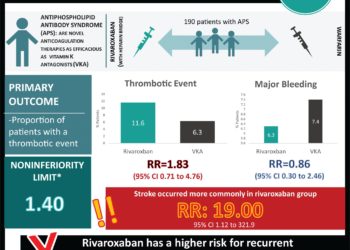
#VisualAbstract: Rivaroxaban Versus Vitamin K Antagonist in Antiphospholipid Syndrome

Rivaroxaban potentially inferior to vitamin K antagonists for treatment of thrombotic antiphospholipid antibody syndrome

  • Lupus anticoagulant. The name is confusing, because it causes clotting in the body even though it slows clotting in a test tube. Many people with it don’t have lupus.
  • Anticardiolipin antibodies
  • Anti-beta-2 glycoprotein I antibodies

A positive result means these antibodies are in your blood. It doesn’t mean you have APS unless you’ve also had a clot or pregnancy problem. Infections and some medicines can cause a short-term positive test, so a positive result must be repeated at least 12 weeks later. Having all three antibodies (“triple positive”) carries the highest risk. Blood thinners can affect some of these tests, so tell the lab what you take. Scans, such as an ultrasound of the leg or a CT scan of the chest, find clots.

Treatment

After a clot

Most people need a blood thinner long term, often for life. Warfarin is the usual choice. It requires regular blood tests (INR) to keep the dose in the right range. Studies found that newer blood thinners, such as rivaroxaban and apixaban, led to more clots in some people with APS, especially those with arterial clots or all three antibodies. After a stroke or other arterial clot, aspirin is sometimes added.

Antibodies but no clots

Your doctor may suggest low-dose aspirin, especially if your antibody pattern carries a higher risk. Treating blood pressure, cholesterol and diabetes, and not smoking, matter even more for you.

During pregnancy

Warfarin can harm a developing baby, so women who take it switch to heparin injections, often enoxaparin, before about 6 weeks of pregnancy. Treatment usually combines low-dose aspirin with heparin, and sometimes hydroxychloroquine. You’ll have close checks of your blood pressure and the baby’s growth. Plan ahead with your doctor before you try to get pregnant.

Catastrophic APS

Treatment combines blood thinners, steroids, and plasma exchange or immune globulin given through a vein.

Living with antiphospholipid syndrome

  • Don’t smoke, and stay active.
  • On long trips, get up and walk every hour or two, and drink water.
  • Tell every doctor and dentist that you have APS and take a blood thinner, especially before surgery.
  • If you take warfarin, keep the amount of leafy green vegetables you eat steady, and check with your doctor before starting any new medicine or supplement.
  • Wear a medical ID.

When to see a doctor

  • Swelling, pain or redness in one leg
  • Two or more miscarriages, or a pregnancy loss after the first trimester
  • Planning a pregnancy if you have APS or lupus
  • Signs of bleeding on a blood thinner, such as easy bruising, nosebleeds or blood in your urine

Call 911 for sudden shortness of breath or chest pain, face drooping, weakness on one side, trouble speaking, a sudden severe headache, black or bloody stools, vomiting blood, or a hard hit to the head while on a blood thinner.

Common questions about antiphospholipid syndrome

Is APS the same as lupus?

No, but the two often go together. Lupus is an autoimmune disease that can affect the skin, joints, kidneys and other organs. Many people with lupus have antiphospholipid antibodies, and some of them develop APS. Many people with APS, though, never have lupus. Doctors often check for both.

What does APS mean in pregnancy?

In pregnancy, APS means antiphospholipid syndrome, a cause of repeat miscarriage, stillbirth and early, severe preeclampsia. Women known to have it are usually treated with low-dose aspirin and heparin shots during pregnancy and have extra checkups. With this care, most go on to have a healthy baby.

Is antiphospholipid syndrome curable?

There’s no cure yet, but it can be managed. Antibody levels sometimes fall over time, yet the clotting risk usually stays, so most people who’ve had a clot keep taking a blood thinner. With steady treatment and attention to other risks, many people with APS live full, active lives.

Can I take birth control pills with APS?

Birth control with estrogen, including most pills, the patch and the ring, isn’t recommended with APS or positive antibodies, because estrogen raises the risk of clots. Safer choices include copper or hormonal IUDs, the implant and progestin-only pills. Ask your doctor which fits your health and plans.

Questions to ask your doctor

  • Which antibodies do I have, and how high is my risk?
  • How long will I need a blood thinner?
  • Is warfarin or another blood thinner best for me?
  • What should I do before I try to get pregnant?
  • Which birth control methods are safe for me?

Learn more

  • Antiphospholipid syndrome (National Heart, Lung, and Blood Institute)
  • Antiphospholipid syndrome (APS) (MedlinePlus, U.S. National Library of Medicine)

This guide is general information and doesn’t replace advice from your own doctor. Last updated October 2026.
Tags: Antiphospholipid Antibody Syndrome
Previous Post

Patient Basics: Antibiotic-Associated Diarrhea

Next Post

Patient Basics: Ankle Sprain

RelatedReports

#VisualAbstract: Rivaroxaban Versus Vitamin K Antagonist in Antiphospholipid Syndrome
StudyGraphics

#VisualAbstract: Rivaroxaban Versus Vitamin K Antagonist in Antiphospholipid Syndrome

November 2, 2019
Thrombophilia-associated stillbirth risk appears limited to factor V Leiden
Chronic Disease

Rivaroxaban potentially inferior to vitamin K antagonists for treatment of thrombotic antiphospholipid antibody syndrome

October 20, 2019
Next Post
Ankle sprain collage of a foot and ankle with a ligament drawing, an ice pack and a rolled elastic bandage

Patient Basics: Ankle Sprain

Ankylosing spondylitis collage of a man in his thirties beside an engraved spine and pelvis, a rolled mat and a kickboard

Patient Basics: Ankylosing Spondylitis

Anorexia nervosa collage: a calm young woman beside a bowl of soup with a spoon, a small teapot and a sprouting green leaf

Patient Basics: Anorexia Nervosa

✦ EvidencePulse™ by 2 Minute Medicine 3 reports You asked top stroke trials 2026 Synthesizing medical evidence... Top 2026 stroke trial results: OCEANIC — ischemic stroke: 6.2% vs 8.4% OPTION* — mRS 0–1: 43.6% vs 34.2% ORIENTAL* — mRS 0–2: 58.6% vs 46.6% *Higher sICH in intervention arms Participants randomizedN OCEANIC 12,327 OPTION 570 ORIENTAL 564 Ask about guidelines or landmark trials... Try EvidencePulse™ Get the signal. Try it now → Physician-trained medical AI by 2 Minute Medicine

2MM+ All Access

Full details →
$4.99 /month

3-day free trial · cancel anytime

  • ✓100+ physician-written reports
  • ✓EvidencePulse™ + HypeCheck™
  • ✓Ad-free reading + newsletters
Start 3-day free trial

Then $4.99/month. Manage renewal in your account.

2 Minute Medicine® is an award winning, physician-run, expert medical media company. Our content is curated, written and edited by practicing health professionals who have clinical and scientific expertise in their field of reporting. Our editorial management team is comprised of highly-trained MD physicians. Join numerous brands, companies, and hospitals who trust our licensed content.

Recent Reports

  • Pelacarsen lowers lipoprotein(a) but does not reduce major cardiovascular events in patients with established cardiovascular disease
  • Durvalumab plus enfortumab vedotin was approved for perioperative treatment of muscle-invasive bladder cancer
  • CDC reports 5,412 confirmed measles cases in the United States in 2026
License Content
Terms of Use | Disclaimer
Cookie Policy

Get the app

Read 2 Minute Medicine on iPhone, iPad and Android.

Download on the App StoreGet it on Google Play
QR code for www.2minutemedicine.com/app
On a computer? Scan this with your phone’s camera.
2MM+ All Access Full details →

The medical literature, distilled daily.

Monthly plan selected: $4.99 /month.

$4.99/month

3-day free trial · cancel anytime

Start 3-day free trial

Then $4.99/month. Manage renewal in your account.

Yearly plan selected: $49.90 /year.

$49.90/year

2 months free

Start 3-day free trial

Then $49.90/year.

Membership benefits

  • ✓100+ new physician-written study summaries monthly, 12,000+ searchable
  • ✓AI EvidencePulse™ + HypeCheck™
  • ✓Ad-free reading + newsletters
  • ✓FDA drug approvals + clinical calculators

Already a member? Sign in

  • Get the app
  • About
  • Specialties
    • All Specialties, All Recent Reports
    • Cardiology
    • Chronic Disease
    • Dermatology
    • Emergency
    • Endocrinology
    • Gastroenterology
    • Imaging and Intervention
    • Infectious Disease
    • Nephrology
    • Neurology
    • Obstetrics
    • Oncology
    • Ophthalmology
    • Pediatrics
    • Pharma
    • Preclinical
    • Psychiatry
    • Public Health
    • Pulmonology
    • Rheumatology
    • Surgery
    • Rewinds
    • The Scan
  • EvidencePulse™
  • HypeCheck™
  • AI News
  • Classics™
    • 2MM+ Online Access
    • Paperback and Ebook
  • Tools
    • NPI Registry Lookup
    • RVU Search
    • Physician Pay by Specialty
    • ICD-10 Code Lookup
    • FDA Drug Approvals
    • Drug Safety for Breastfeeding/Pregnancy
    • Clinical Guidelines
    • Medical Calculators
    • ECG Reference
      • QTc Calculator
      • Sgarbossa Criteria
      • ECG Axis Calculator
      • AV Block Helper
  • Rankings
    • Medical School Rankings
    • Residency Rankings
  • Partners
    • License Content
    • Advertise with Us
No Result
View All Result

© 2026 2 Minute Medicine, Inc. - Physician-written medical news.


