

Patient Basics: Carpal Tunnel Syndrome
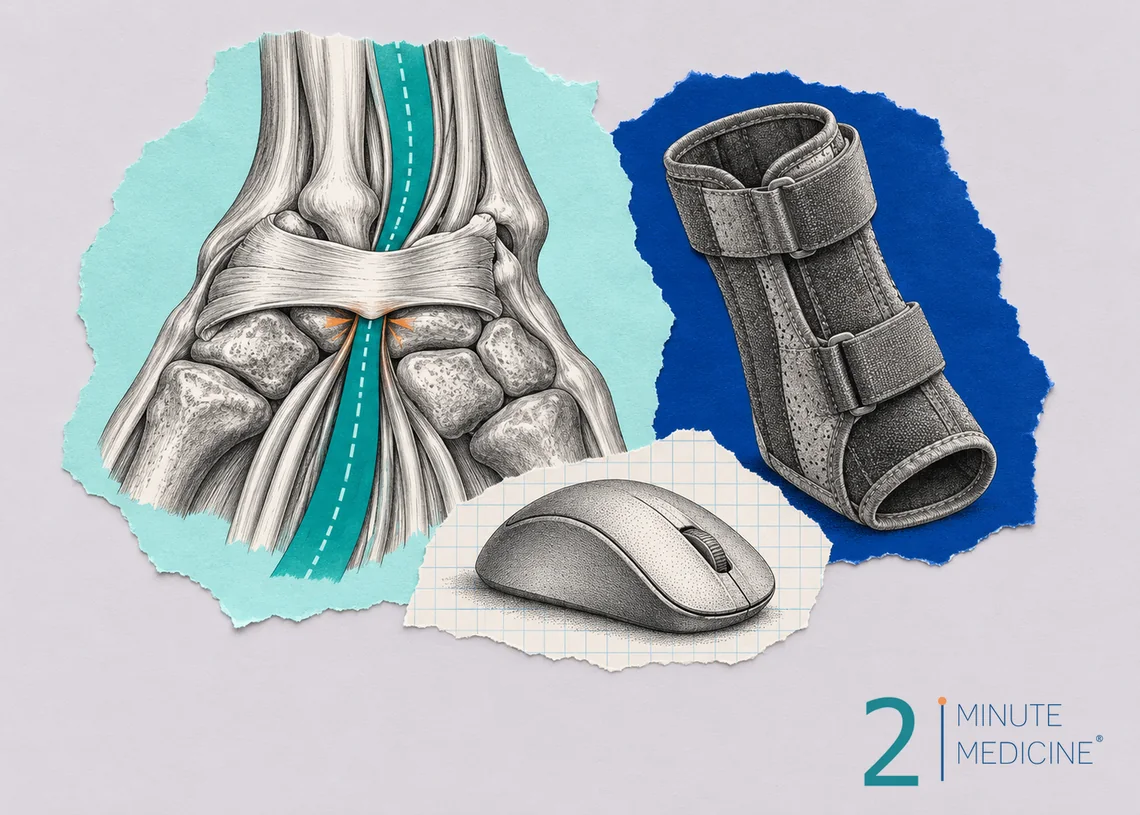
Carpal tunnel syndrome happens when the median nerve, which runs through a narrow passage in the wrist, gets squeezed. It causes numbness, tingling and pain in the thumb and first two fingers, and sometimes part of the fourth finger, often worse at night. It is the most common pinched nerve in the arm. Wrist splints and other simple treatments help many people, and a short surgery works well when they don’t.
Key points
- Symptoms often wake people at night, and shaking the hand brings relief.
- The little finger is usually not affected, which helps tell carpal tunnel syndrome apart from other nerve problems.
- Pregnancy, diabetes, an underactive thyroid, rheumatoid arthritis and forceful, repeated hand work raise the risk.
- A wrist splint worn at night is the usual first treatment.
- Constant numbness or weak thumb muscles are signs of nerve damage and need prompt care.
What causes carpal tunnel syndrome
The carpal tunnel is a narrow channel at the base of the palm. Small wrist bones form its floor and sides, and a tough band of tissue (a ligament) forms its roof. Nine tendons that bend the fingers pass through it, along with the median nerve. The median nerve carries feeling from the thumb side of the hand and powers some thumb muscles. Anything that crowds the tunnel can press on the nerve.
Risk factors include:
- Being a woman, or being 40 to 60 years old
- Pregnancy, because of fluid buildup. It often gets better after the baby is born.
- Diabetes, an underactive thyroid, rheumatoid arthritis and kidney failure
- Obesity
- A wrist fracture or arthritis in the wrist
- Work with forceful gripping, repeated wrist bending or vibrating tools, such as on assembly lines or with power tools
- A family history of carpal tunnel syndrome
Signs of carpal tunnel syndrome
- Numbness, tingling or pins and needles in the thumb, the next two fingers and the thumb side of the ring finger
- Symptoms that wake you at night or are there when you wake up
- Tingling while holding a phone, steering wheel or book
- Pain in the wrist or palm that may spread up the forearm
- Clumsiness, a weak grip, or dropping things
- Trouble with fine tasks, such as buttoning a shirt
Symptoms usually come and go at first. Over time they may become constant. In severe cases, the muscles of the thumb pad shrink, leaving a hollow.
How carpal tunnel syndrome is diagnosed
Your doctor will ask about your symptoms and which fingers are involved, and will check feeling and strength in your hand. Common tests in the office include:
- Phalen’s test. You hold the backs of your hands together with the wrists bent down for about a minute. Tingling in the fingers suggests carpal tunnel syndrome.
- Tinel’s sign. The doctor taps over the nerve at the wrist. Tingling into the fingers is a positive sign.
- Thumb strength and a look for shrinking of the thumb muscles.
A nerve conduction study measures how fast signals travel along the nerve, and an electromyogram (EMG) checks the muscles. These tests confirm the diagnosis, show how severe it is, and rule out other causes, such as a pinched nerve in the neck or nerve damage from diabetes. An ultrasound of the wrist can also show a swollen nerve. Blood tests may check for diabetes or thyroid disease.
Treatment
Without surgery
- Wrist splint. A brace that keeps the wrist straight, worn at night, takes pressure off the nerve while you sleep. Some people wear it during tasks that bring on symptoms.
- Changing how you work. Keep your wrist straight, loosen your grip, take short breaks, and avoid leaning on the heel of your hand.
- Steroid injection. A shot of corticosteroid into the carpal tunnel often eases symptoms for weeks to months.
- Pain relievers such as ibuprofen may ease discomfort for a short time, though they don’t treat the pressure on the nerve.
- Treating related conditions, such as diabetes or an underactive thyroid.
Surgery
Carpal tunnel release is one of the most common hand operations. The surgeon cuts the ligament that forms the roof of the tunnel, which takes the squeeze off the nerve. It can be done through a small cut in the palm or with a tiny camera (endoscopic surgery). It is usually done as an outpatient with numbing medicine. Surgery is advised when numbness is constant, the thumb muscles are weak or shrinking, nerve tests show severe pressure, or other treatments haven’t helped.
Night tingling often improves within days. Most people can do light tasks within a week or two, but grip strength can take a few months to return. If the nerve was badly damaged for a long time, some numbness may remain.
Lowering your risk
- Keep your wrists in a straight, relaxed position when typing, using a mouse or using tools.
- Use a lighter grip and switch hands when you can.
- Take breaks every hour to stretch your hands and wrists.
- Keep your hands warm in cold work areas.
- Manage diabetes and keep a healthy weight.
Common questions about carpal tunnel syndrome
Can carpal tunnel syndrome go away on its own?
Mild cases sometimes do, especially during pregnancy, when symptoms often fade after the baby is born. Changing how you use your hands and wearing a night splint help many others. Symptoms that are constant or getting worse usually need a steroid shot or surgery to prevent lasting nerve damage.
Why is the tip of my thumb numb?
A common cause is carpal tunnel syndrome, especially if the index and middle fingers also tingle. Other causes include a pinched nerve in the neck, pressure on a small finger nerve from gripping a tool or phone, and nerve damage from diabetes. Numbness that lasts more than a few days should be checked.
Why does my hand hurt when I make a fist?
Pain when making a fist is more often from arthritis, a swollen tendon (such as trigger finger), or an injury than from carpal tunnel syndrome, which mainly causes numbness and tingling. See a doctor if the pain lasts, and get care quickly if the hand is red, hot or swollen, which can mean infection.
Does typing cause carpal tunnel syndrome?
Research hasn’t found a strong link between typing and carpal tunnel syndrome. Long hours at a keyboard can make existing symptoms worse, though, especially with bent wrists. Forceful gripping and vibrating tools are more clearly linked. Keeping your wrists straight and taking breaks helps either way.
When to see a doctor
- Numbness or tingling in your fingers that keeps coming back or wakes you at night
- Numbness that doesn’t go away
- Weak grip, dropping things, or a flattened thumb pad
- Symptoms that don’t improve after a few weeks of wearing a splint
Call 911 for sudden numbness or weakness in one arm or hand along with a drooping face, trouble speaking or confusion, which can be signs of a stroke.
Questions to ask your doctor
- Do I need a nerve conduction test?
- How long should I wear a splint, and when?
- Would a steroid shot help me?
- When should I think about surgery?
- Could my job or another condition be contributing?
Learn more
- Carpal tunnel syndrome (MedlinePlus, U.S. National Library of Medicine)
- Carpal tunnel syndrome (National Institute of Arthritis and Musculoskeletal and Skin Diseases)
This guide is general information and doesn’t replace advice from your own doctor. Last updated October 2026.







 Get the app