

Patient Basics: Carbon Monoxide Poisoning
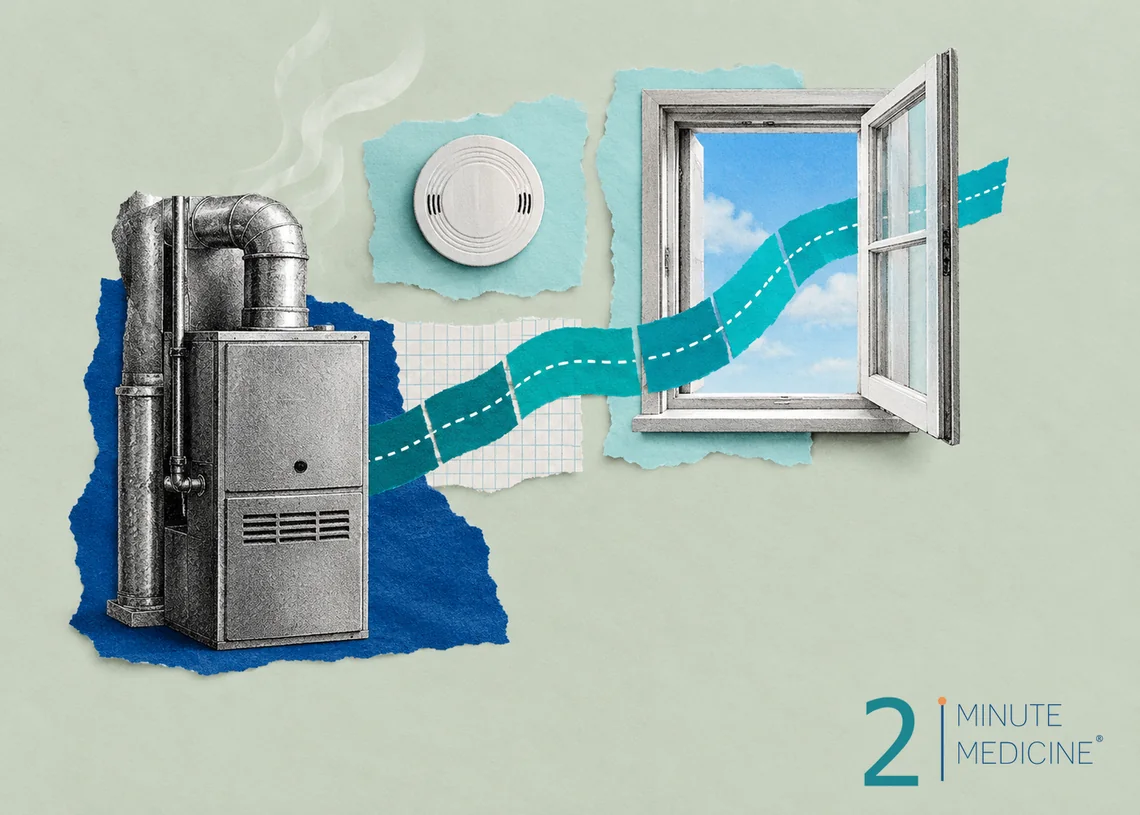
Carbon monoxide poisoning happens when you breathe in carbon monoxide (CO), a gas you can’t see, smell or taste. CO builds up when fuel burns without enough fresh air, and it stops your blood from carrying oxygen. If a CO alarm goes off, or several people in a home feel sick at the same time, get everyone outside and call 911.
Key points
- CO comes from furnaces, water heaters, gas stoves, fireplaces, generators, car engines and grills.
- Early symptoms feel like the flu without a fever: headache, dizziness, weakness, nausea and confusion.
- People who are asleep or have been drinking can die before they notice anything is wrong.
- The main treatment is pure oxygen. Some severe cases are treated in a pressurized oxygen chamber.
- A working CO alarm on every level of your home is the best protection.
How carbon monoxide harms the body
Red blood cells carry oxygen using a protein called hemoglobin. CO grabs onto hemoglobin more than 200 times more tightly than oxygen does, so less oxygen reaches your organs. The brain and heart use the most oxygen, so they are hurt first. In a heavy exposure, a person passes out and the heart can slip into a deadly rhythm. CO also damages cells directly, which is why some problems show up days or weeks after the exposure.
Where it comes from
- Furnaces, boilers, water heaters and dryers that burn gas, oil or wood, especially if they are broken or poorly vented
- Gas stoves and ovens used to heat a room
- Portable generators, pressure washers and other gas-powered tools run indoors, in a garage or near a window
- Cars left running in a garage, even with the door open, or with snow blocking the tailpipe
- Charcoal grills and camp stoves used inside a home, tent or camper
- Blocked chimneys and flues
- Boat engines, which can let off CO near the back of the boat
The risk goes up during winter storms and power outages, when people turn to generators and other backup heat.
Carbon monoxide poisoning symptoms
Mild to moderate poisoning can cause:
- Headache, the most common symptom
- Dizziness and weakness
- Nausea or vomiting
- Shortness of breath
- Chest pain
- Confusion or blurred vision
A few clues point to CO and away from the flu. There’s no fever, several people or pets in the same place get sick, and symptoms ease after you leave the building and return when you come back.
Heavier exposure can cause fainting, seizures, a racing or irregular heartbeat, coma and death. Unborn babies, infants, older adults, and people with heart disease, lung disease or anemia are at the highest risk.
What to do right away
- Get everyone, including pets, out into fresh air. Don’t stop to open windows or hunt for the source.
- Call 911 from outside. Tell the dispatcher if anyone has collapsed, isn’t breathing or can’t be woken.
- Stay out until firefighters or the gas company say it’s safe to go back in. Once the source is shut off and the home is aired out, the CO usually clears within a few hours.
If symptoms are mild and you’re already in fresh air, you can call Poison Help at 1-800-222-1222 for advice. Even if you feel better outside, a doctor should check you.
How it’s diagnosed
A blood test measures carboxyhemoglobin, the share of your hemoglobin carrying CO instead of oxygen. The level may have dropped by the time you reach the hospital, especially if you got oxygen on the way, so doctors also go by your symptoms and what happened. People who smoke have a slightly higher level every day.
A standard fingertip oxygen reading can look normal even in serious poisoning, so doctors don’t rely on it. You may also have a heart tracing (ECG), blood tests to check for strain on the heart, and a pregnancy test.
How carbon monoxide poisoning is treated
Oxygen
Breathing pure oxygen through a tight-fitting mask clears CO from the blood much faster than normal air does. Treatment usually lasts several hours, until symptoms ease and blood levels fall.
Hyperbaric oxygen
For some severe cases, doctors use a hyperbaric chamber. This is a sealed room or tube where you breathe pure oxygen at higher than normal air pressure. It’s most often considered for people who passed out, have very high CO levels, have heart or brain symptoms, or are pregnant. Not every hospital has a chamber, so you may be moved to one that does.
Recovery
Most people with mild poisoning recover fully. Headache and nausea usually fade within hours of breathing fresh air or oxygen, though some people feel tired or headachy for a few days. After serious poisoning, some people develop new problems days to weeks later, such as memory loss, trouble focusing, mood changes, headaches or unsteady movement. Tell your doctor about any new symptoms in the weeks after you go home. Many of these problems improve over months.
Lowering your risk
- Put battery-powered or battery-backup CO alarms on every level of your home and outside each sleeping area. Test them every month and replace them when the maker says to.
- Have a professional check your furnace, water heater, chimney and other fuel-burning appliances every year.
- Run generators outside only, at least 20 feet from doors, windows and vents.
- Never heat your home with a gas stove or oven.
- Never use a charcoal grill or camp stove indoors, in a garage or in a tent.
- Never leave a car running in a garage. Clear snow from the tailpipe before you start the engine.
- Keep outdoor vents and flues clear of snow, leaves and nests.
Get emergency care if
- A CO alarm sounds and anyone feels sick
- Someone faints, has a seizure, is confused or can’t be woken
- You have chest pain or trouble breathing after a possible exposure
- You are pregnant and may have been exposed, even if you feel fine
If the alarm sounds and no one feels sick, still go outside and call 911 or the fire department.
Common questions about carbon monoxide poisoning
How long does it take for carbon monoxide to leave your body?
Most of it is gone within about a day of breathing fresh air. The CO level in your blood drops by half every 4 to 6 hours on normal air. Pure oxygen through a mask cuts that to about an hour, and a hyperbaric chamber to about 20 to 30 minutes.
How long does it take for carbon monoxide poisoning to kick in?
It depends on how much CO is in the air. Very high levels, such as from a car or generator running in a closed garage, can make you pass out within minutes. Low levels from a faulty furnace may cause headaches and tiredness that build over hours or days.
What level of carbon monoxide is dangerous?
CO is measured in parts per million (ppm), and a safe home has little or none. Home alarms are built to sound if CO stays around 70 ppm for 1 to 4 hours, and within minutes at higher levels. A few hundred ppm can cause headaches within hours, and thousands can kill within an hour.
Is a gas leak the same as carbon monoxide?
No. A natural gas leak lets out unburned gas, which has a rotten-egg smell added so you notice it, and its main danger is fire. CO comes from burning fuel and has no smell. Breathing gas or gasoline fumes can still cause headache and dizziness, so leave and call 911 or the gas company from outside.
Questions to ask your doctor
- How much CO was in my blood, and what does that mean for me?
- Do I need hyperbaric oxygen?
- Which symptoms should I watch for over the next few weeks?
- Is my home safe to go back to?
- Should the other people in my household be checked?
Learn more
- Carbon monoxide (CO) poisoning basics (Centers for Disease Control and Prevention)
- Carbon monoxide poisoning (MedlinePlus, U.S. National Library of Medicine)
This guide is general information and doesn’t replace advice from your own doctor. Last updated October 2026.






 Get the app