

Patient Basics: Colon Polyps
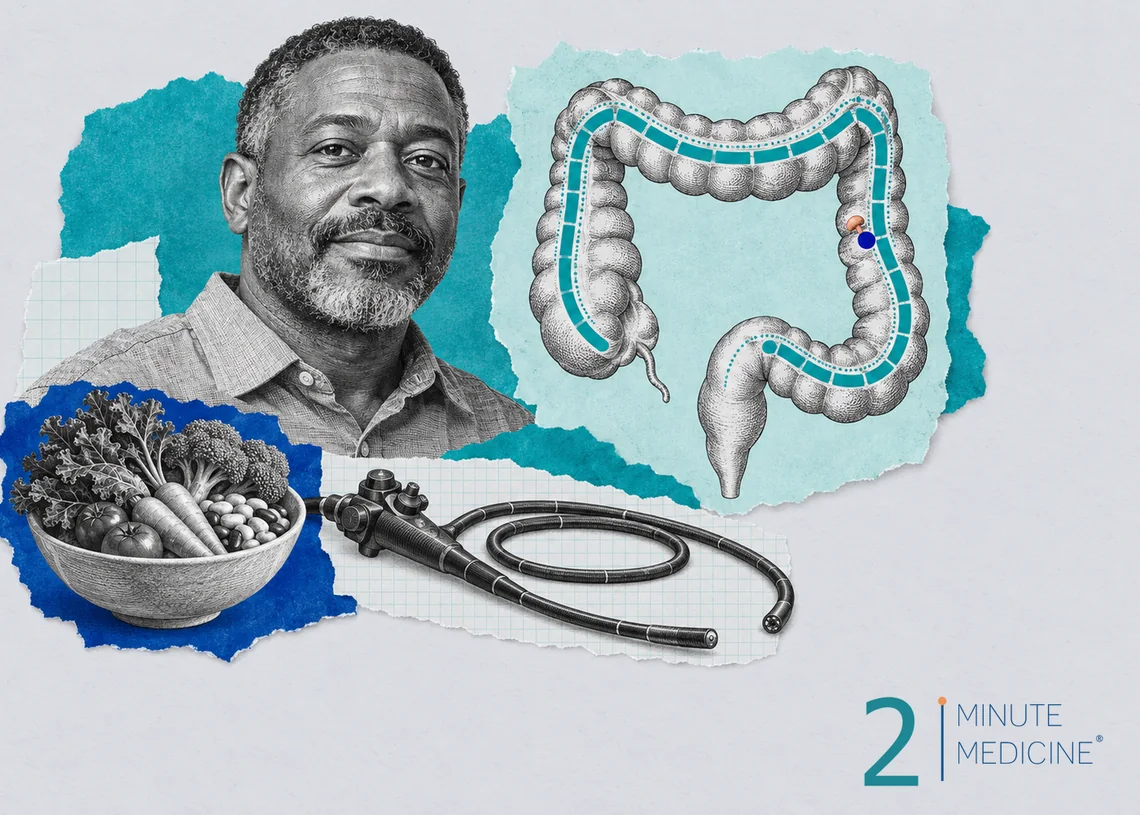
Colon polyps are small growths on the inner lining of the colon (large intestine) or rectum. They are common, especially after age 50, and most never turn into cancer. Some types can slowly become cancer over many years, though, so finding and removing them during screening is one of the best ways to prevent colon cancer.
Key points
- Most colon polyps cause no symptoms, which is why screening matters.
- Adults at average risk should start colon cancer screening at age 45.
- Polyps are usually removed during a colonoscopy, painlessly and without surgery.
- Adenomas and serrated polyps can turn into cancer if left in place. Hyperplastic polyps rarely do.
- How soon you need your next colonoscopy depends on the number, size and type of polyps found.
What colon polyps look like
A polyp is a clump of extra cells that grows from the lining of the bowel. Some sit on a thin stalk, like a small mushroom. Doctors call these pedunculated. Others are flat or dome-shaped and sit close to the wall. These are called sessile. Polyps range from smaller than a pencil eraser to larger than a grape. You can have one or several.
Types of colon polyps
- Adenomas are the most common type that can turn into cancer. Under the microscope they are described as tubular, villous or tubulovillous. Tubular adenomas are the most common and lowest risk.
- Serrated polyps, including sessile serrated lesions, have a saw-tooth pattern under the microscope. Some can become cancer, and flat ones can be hard to spot.
- Hyperplastic polyps are usually small and found in the lower colon and rectum. They almost never become cancer.
- Inflammatory polyps can form in people with Crohn’s disease or ulcerative colitis. They are not cancer, but the underlying inflammation raises cancer risk.
Larger polyps, those with villous features and those with cell changes called high-grade dysplasia are more likely to become cancer. The change usually takes about 10 years or more, which gives screening time to catch them.
What causes colon polyps
Polyps form when changes in genes cause cells in the bowel lining to grow when they shouldn’t. Things that raise your chance of polyps include:
- Being 45 or older
- A parent, brother, sister or child with colon polyps or colon cancer
- Having had polyps before
- Crohn’s disease or ulcerative colitis affecting the colon
- Smoking and heavy drinking
- Obesity, type 2 diabetes and low physical activity
- Eating a lot of red meat and processed meat such as bacon and hot dogs
Inherited polyp conditions
A few families carry gene changes that cause many polyps, often at a young age. In familial adenomatous polyposis (FAP), hundreds or even thousands of polyps can grow, and cancer is almost certain without treatment. Lynch syndrome causes fewer polyps, but they turn into cancer faster. People with these conditions start colonoscopy in their teens or 20s and may meet with a genetic counselor.
Symptoms
Most people with polyps feel nothing. When there are signs, they can include:
- Blood on the toilet paper, in the toilet or mixed in the stool
- Dark or black stool
- Tiredness, shortness of breath or pale skin from anemia (low iron), caused by slow bleeding you can’t see
- A change in bowel habits that lasts more than a few weeks
- Belly pain, which is rare and usually only with large polyps
Narrow, ribbon-like stools now and then are usually harmless. If they last, see a doctor, because a growth in the lower colon can narrow the passage.
How colon polyps are found
Screening tests look for polyps and cancer before symptoms start. Your doctor can help you choose.
- Colonoscopy. A thin, flexible tube with a camera looks at the whole colon while you are sedated. Polyps can be removed during the same test. If it’s normal, it is usually repeated every 10 years.
- Stool tests. A FIT test, done every year at home, finds hidden blood. A stool DNA test, usually every 3 years, also looks for abnormal genes from polyps or cancer.
- CT colonography, a scan of the colon, every 5 years
- Flexible sigmoidoscopy, which checks the lower third of the colon, every 5 to 10 years
A blood test is also approved for screening, but it misses most precancerous polyps. Any abnormal result on a stool, blood or scan test needs a follow-up colonoscopy.
Removing colon polyps
During colonoscopy, the doctor removes polyps with tiny forceps or a thin wire loop (snare) passed through the scope. The bowel lining has no pain nerves, so you don’t feel it. Very large or flat polyps may need a special technique, a second procedure or, rarely, surgery. Each polyp goes to a lab, where a pathologist checks its type and any cell changes.
Afterward, a little blood in your stool for a day or two can be normal. Bleeding or a hole in the bowel wall is uncommon. Your doctor may ask you to avoid aspirin or blood thinners for a short time after a large polyp is removed.
When to have your next colonoscopy
Your doctor will set the timing from the lab report. After one or two small tubular adenomas, the next test is often 7 to 10 years later. More polyps, larger ones or higher-risk types mean a shorter wait, sometimes 1 to 3 years. Small hyperplastic polyps in the rectum usually don’t change the usual 10-year schedule.
Lowering your risk
- Get screened on time, starting at 45, or earlier if a close relative had colon cancer or advanced polyps.
- Stay active and keep a healthy weight.
- Don’t smoke, and limit alcohol.
- Eat plenty of vegetables, fruit, beans and whole grains, and cut back on red and processed meat.
- Don’t start aspirin to prevent polyps unless your doctor advises it, because it can cause bleeding.
When to see a doctor
- Blood in or on your stool, or black stool
- A change in bowel habits lasting more than a few weeks
- Unexplained tiredness or weight loss
- You’re 45 or older and haven’t been screened
- A family history of colon cancer, polyps at a young age, or many polyps
Get emergency care for heavy rectal bleeding, dizziness or fainting, or severe belly pain.
Common questions about colon polyps
What is the difference between a polyp and a hemorrhoid?
A hemorrhoid is a swollen vein in or near the anus. It often causes bright red blood, itching or a tender lump. A polyp is a growth of the bowel lining, usually higher up and painless. Both can bleed, so new rectal bleeding should be checked rather than blamed on hemorrhoids.
Can polyps form in the anus?
True polyps grow in the colon and rectum. Lumps at the anus are more often hemorrhoids, skin tags or small bumps at the inner edge of the anus called anal papillae. A rectal polyp on a stalk can sometimes slip out during a bowel movement. Have any new lump or bleeding checked.
How fast do colon polyps turn into cancer?
Usually slowly. Most adenomas that become cancer take about 10 years or more to do so, and most polyps never become cancer at all. In people with Lynch syndrome, the change can happen within a few years. That is why the timing of follow-up tests depends on your polyps and your family history.
What is polyposis?
Polyposis means having many polyps, often dozens to thousands, usually because of an inherited gene change such as FAP. It needs frequent colonoscopies and often surgery to remove the colon before cancer develops. If a colonoscopy finds 10 or more adenomas, your doctor may suggest genetic testing for you and your family.
Questions to ask your doctor
- How many polyps did you find, and what type were they?
- Were they all removed completely?
- When should I have my next colonoscopy?
- Should my brothers, sisters or children be screened early?
- Do I need genetic counseling?
Learn more
- Colon polyps (National Institute of Diabetes and Digestive and Kidney Diseases)
- Colonic polyps (MedlinePlus, U.S. National Library of Medicine)
This guide is general information and doesn’t replace advice from your own doctor. Last updated October 2026.
RelatedReports






 Get the app